Whether Neutering Resolves a Mastiff’s Cystinuria
Mastiff cystinuria and the genetic mutations causing painful cystine stones and dangerous urinary blockages in intact males.
Know what to watch for.
Breed-specific conditions, screening and DNA tests, what surgery actually costs, and the daily habits that stretch a healthy lifespan.

Mastiff cystinuria and the genetic mutations causing painful cystine stones and dangerous urinary blockages in intact males.
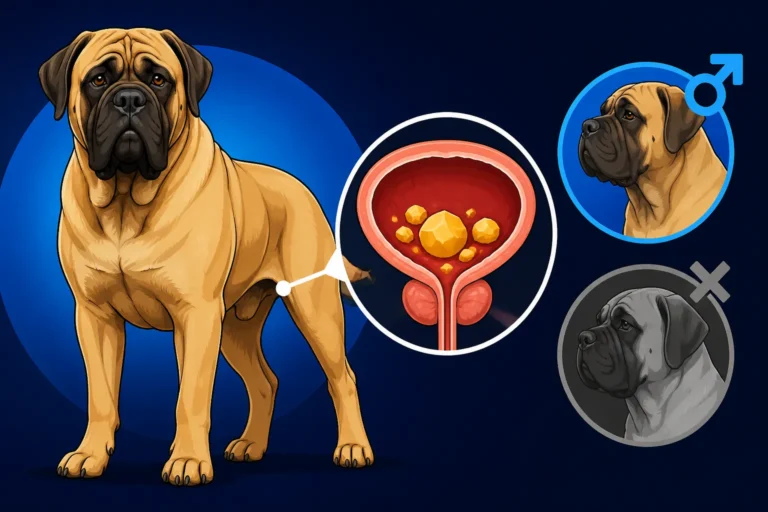
Cystinuria Type III in intact male Mastiffs explains how male hormones and kidney genetics create dangerous cystine stones.
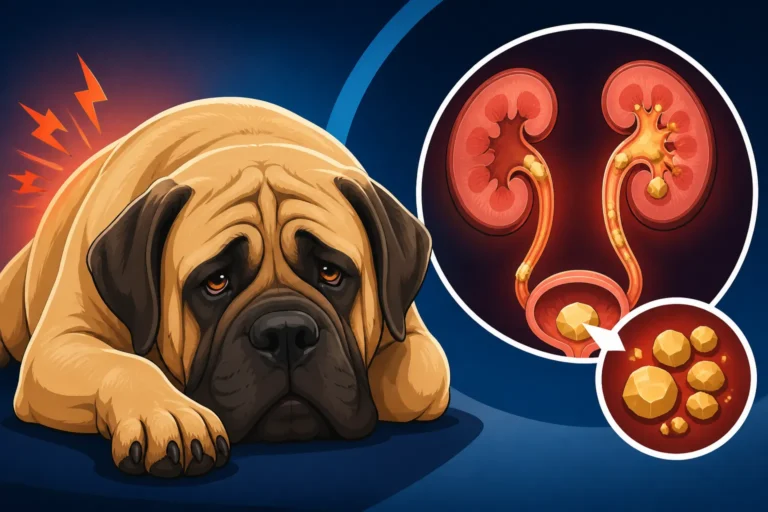
Cystinuria Type III in male Mastiffs causes kidney amino acid transport defects, forming painful cystine stones and urinary blockages.

Mastiff puppy eye exams detect inherited vision problems like Progressive Retinal Atrophy and Canine Multifocal Retinopathy early.
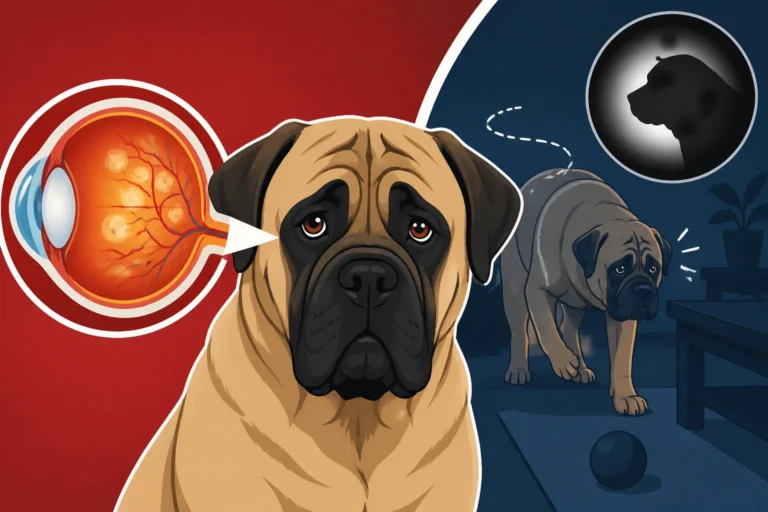
Canine multifocal retinopathy causes genetic retinal lesions in Mastiffs through an autosomal recessive pattern, usually causing minimal vision loss.
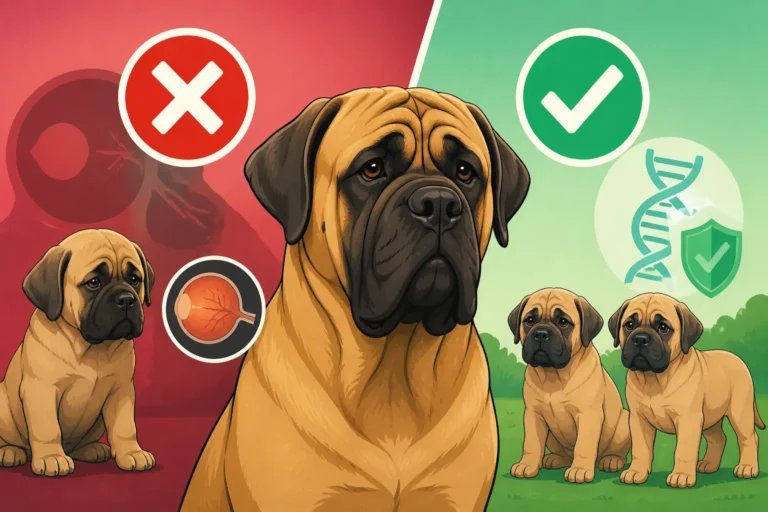
Progressive retinal atrophy in Mastiffs involves genetic traits causing gradual blindness, explaining why affected dogs should not be bred.

Mastiff Progressive Retinal Atrophy is an inherited degenerative eye disorder that causes eventual blindness through faulty genes.

Mastiff vision changes and nuclear sclerosis typically begin between five and eight years of age, causing lens clouding.
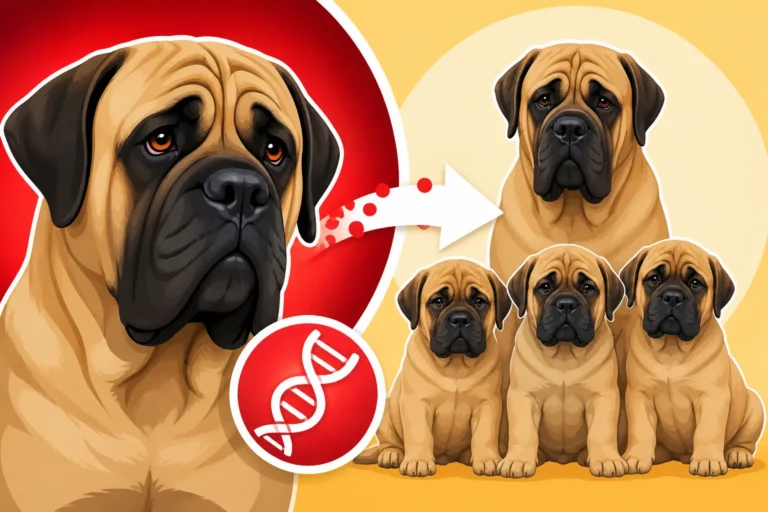
Dominant genetic inheritance in Mastiffs explains why one affected parent can pass conditions like Progressive Retinal Atrophy to litters.
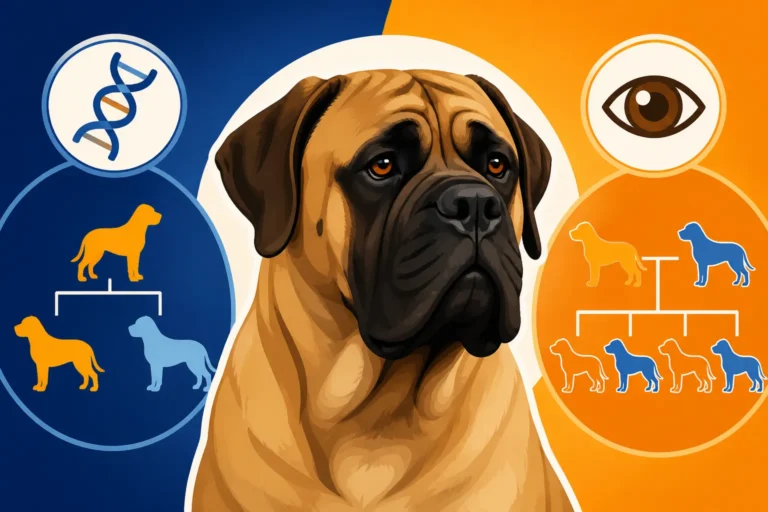
Dominant inheritance in Mastiff progressive retinal atrophy means inheriting one mutated gene copy causes gradual photoreceptor cell degeneration and blindness.