When a Mastiff’s Gastropexy Should Be Done
Prophylactic gastropexy timing and surgical methods help protect Mastiffs from fatal stomach twisting and bloat emergencies.
Know what to watch for.
Breed-specific conditions, screening and DNA tests, what surgery actually costs, and the daily habits that stretch a healthy lifespan.
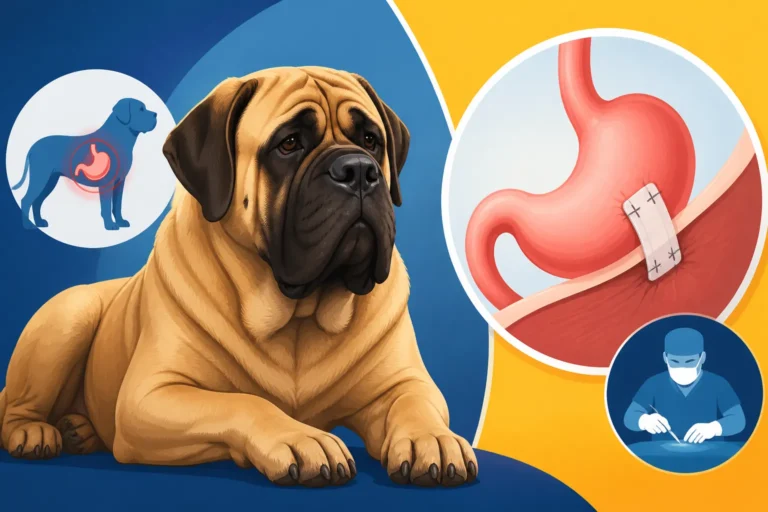
Prophylactic gastropexy timing and surgical methods help protect Mastiffs from fatal stomach twisting and bloat emergencies.
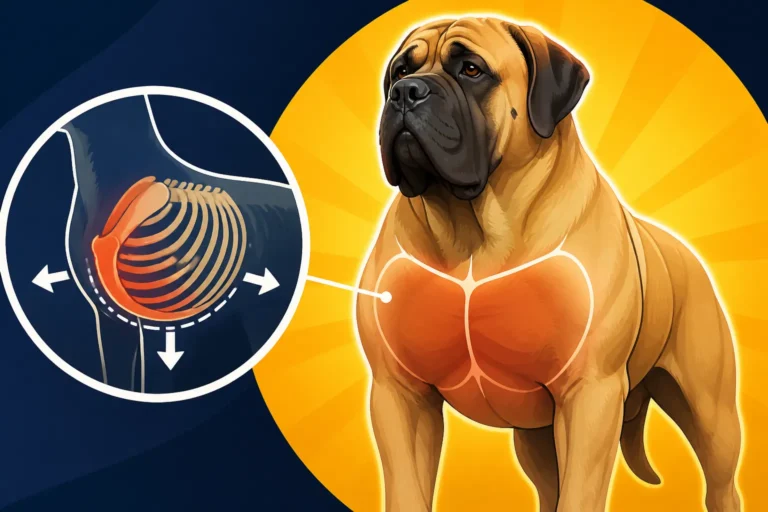
Mastiff thoracic anatomy, selective breeding history, and evolutionary factors explain why the breed possesses the deepest chest.
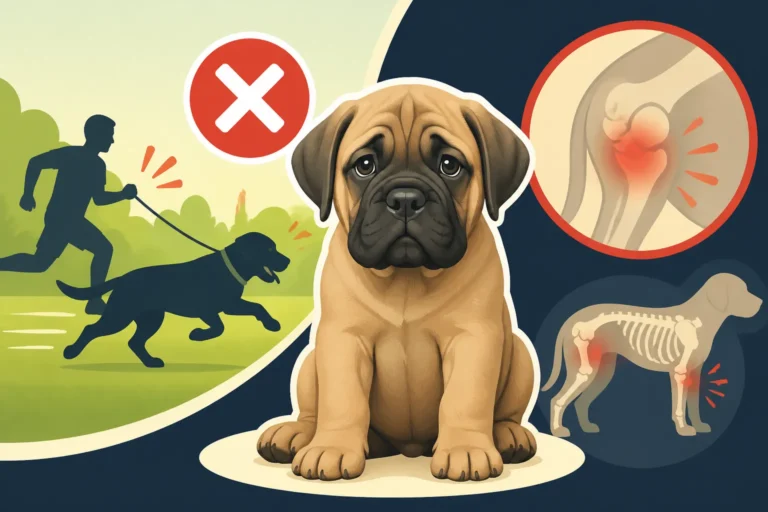
Hard exercise damages soft growth plates and joints in growing Mastiff puppies, risking permanent skeletal damage and bone pain.
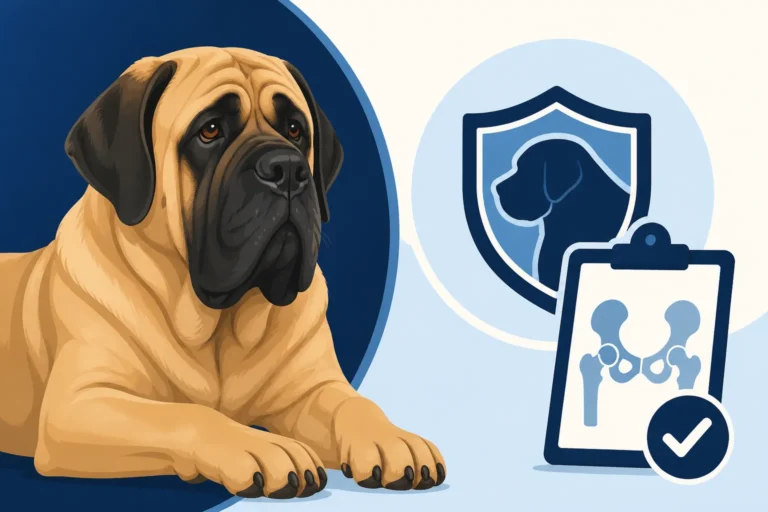
Orthopedic Foundation for Animals certification for Mastiff hips and elbows requires dogs to be at least twenty four months old.
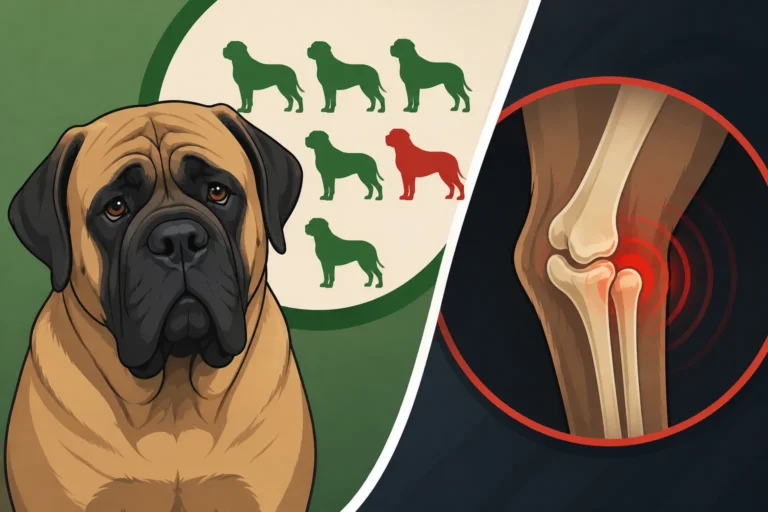
Elbow dysplasia in giant Mastiffs and the four distinct bone conditions causing one in seven dogs to fail joint grades are explained here.
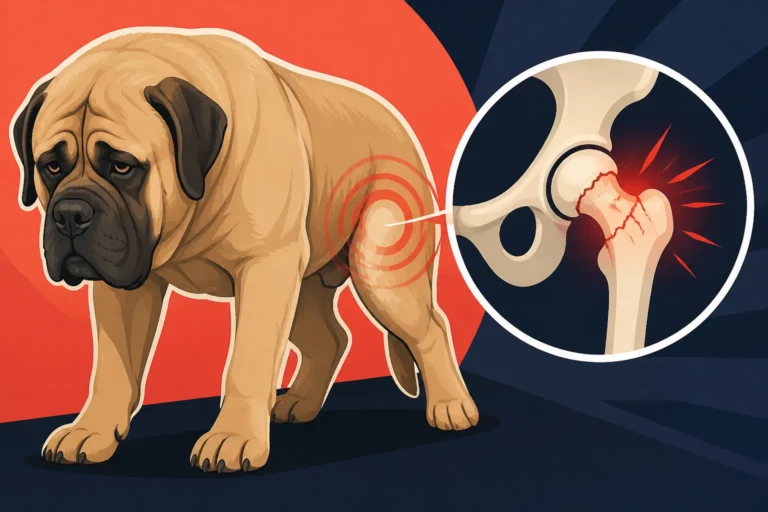
Mastiff hip failure happens when 160 to 230 pound body weight and rapid puppy growth overwhelm joint cartilage and bone structures.
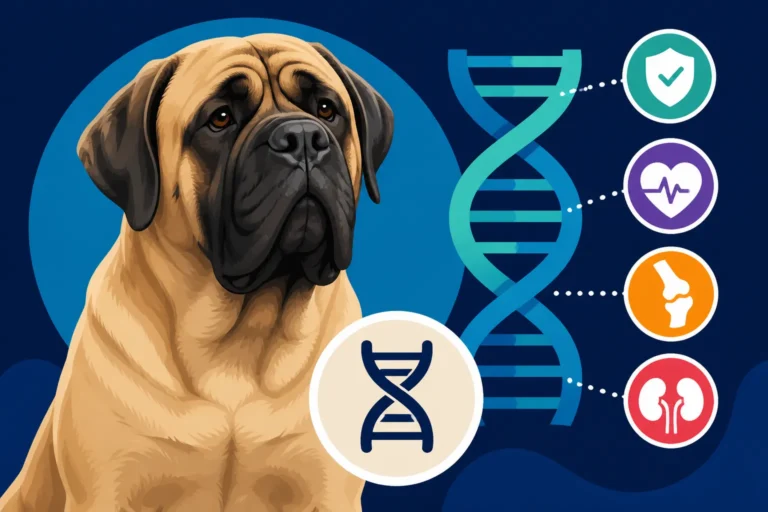
Additional DNA tests for Mastiff breeders explain specific genetic risks like Progressive Retinal Atrophy beyond basic clearances.
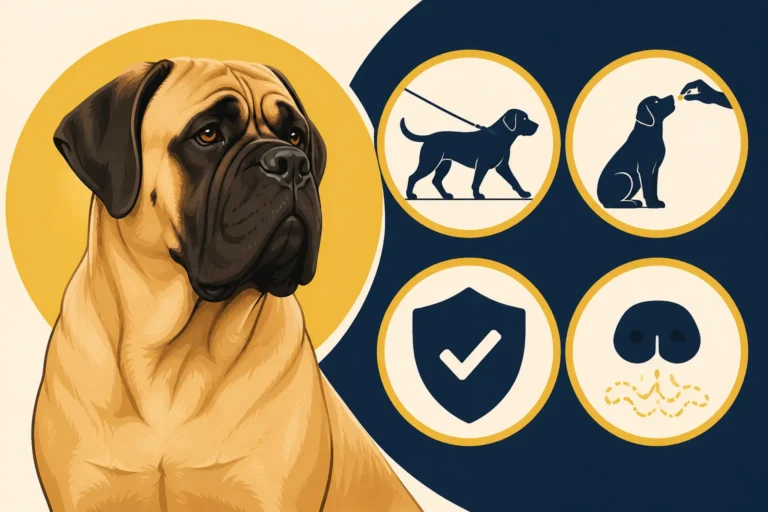
The Mastiff Club of America requires four specific health evaluations, explaining how hip dysplasia tests protect giant breed dogs.

Neutering reduces androgen levels in cystinuric Mastiffs, lowering cystine excretion and simplifying their specialized dietary management.
Male Mastiff urinary blockages require urgent veterinary care to prevent bladder damage, severe pain, and rapid death.