How Much a Mastiff Puppy Should Eat
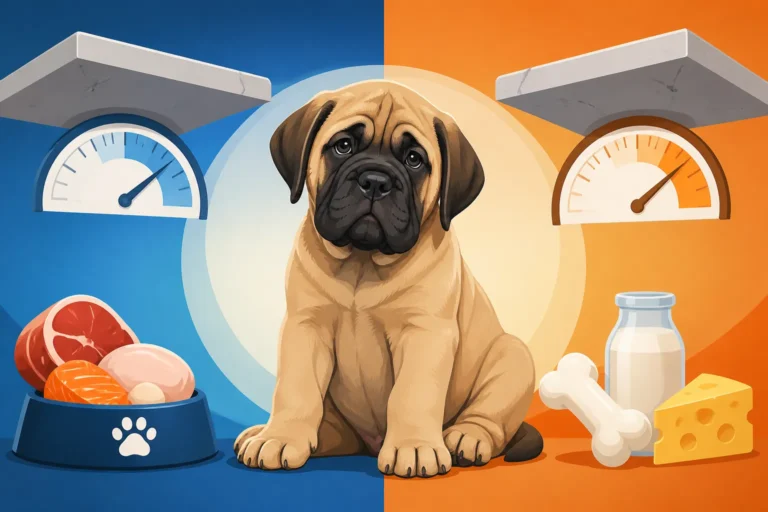
One of the biggest anxieties for new Mastiff puppy parents is knowing how much to feed their enormous, rapidly growing fluffball. It feels like they're a bottomless pit, yet you're constantly warned not to let them grow too fast, leading to a confusing tightrope walk between nourishment and restraint. This guide will walk you through the specifics of feeding your Mastiff puppy, helping you understand their unique needs and how to ensure they grow up strong and healthy, not too quickly or too heavily.
Understanding the Unique Growth Needs of a Mastiff Puppy
Bringing home a Mastiff puppy is an exercise in managing expectations, especially when it comes to their growth. These aren't your average medium-sized pups; they're on an accelerated track to becoming massive, and that journey requires careful nutritional oversight. Many owners are naturally eager to see their puppy grow into that impressive adult size, but with Mastiffs, restraint is key.
The Rapid Growth Phase and Its Implications
Mastiff puppies undergo an astonishing growth spurt in their first year, often doubling or tripling their weight in just a few months. This rapid increase in size puts immense strain on their developing bones, joints, and soft tissues. Imagine building a skyscraper: if you rush the foundation, the entire structure is compromised. The same applies to your Mastiff. Their skeletal system, cartilage, and ligaments are all trying to keep up with the incredible rate of weight gain and linear growth. This rapid expansion phase is not just about getting bigger; it's about forming the very framework that will support their colossal adult weight for the rest of their lives. Ignoring this critical developmental period can set the stage for a lifetime of orthopedic problems, which are already unfortunately common in giant breeds.
Why Slow and Steady Wins the Race for Giants
For Mastiffs, the goal isn't to reach their adult size as quickly as possible. In fact, it's the opposite. We want them to grow slowly and steadily, allowing their bones and joints to mature and solidify at a controlled pace. This principle is so vital that it forms the cornerstone of giant breed puppy nutrition. Studies have consistently shown that controlling growth rate in large and giant breed puppies significantly reduces the incidence and severity of developmental orthopedic diseases like hip and elbow dysplasia. Restraining the Growth of a Mastiff Puppy is not about underfeeding; it's about providing optimal nutrition without excess calories or unbalanced minerals that can fuel an unhealthy growth rate. It's about letting nature take its course, but with a guiding hand that ensures their structural integrity.
The Risks of Overfeeding a Mastiff Puppy
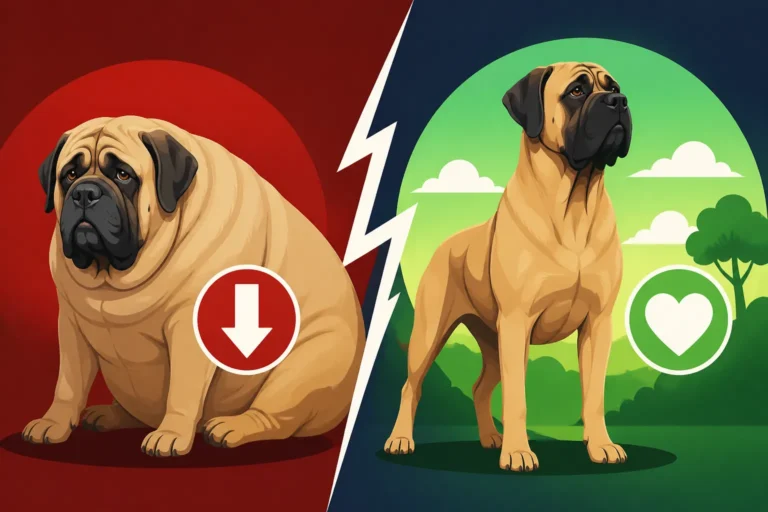
The temptation to let a Mastiff puppy eat until their belly is distended is powerful; they're just so cute and hungry! However, overfeeding can be one of the most detrimental things an owner does. Excess calories, particularly in puppyhood, lead to faster weight gain than the skeleton can adequately support. This increased load on immature joints can lead to deformities, inflammation, and degenerative changes. Think of it this way: a tiny sapling can't bear the weight of a mature tree without its branches snapping. Similarly, a Mastiff puppy's soft, developing bones aren't ready for the sheer mass that rapid growth encourages. Beyond orthopedic issues, overfeeding can lead to obesity, even in puppyhood, predisposing them to other health problems down the line. It's a difficult lesson to learn, but sometimes, tough love at the food bowl is the kindest thing you can do for your puppy's long-term health. Whether Overfeeding a Mastiff Puppy Ruins Its Elbows is a question many new owners grapple with, and the answer is a resounding yes, it absolutely can.
Deciphering Puppy Food Labels and Nutritional Content
Choosing the right food for your Mastiff puppy isn't as simple as grabbing any bag labeled "puppy food." Their unique growth trajectory demands a specialized diet. You'll need to become a bit of a detective, sifting through labels and understanding the nuances of giant breed specific formulas.
Protein and Fat Ratios for Giant Breeds
When you look at a typical puppy food label, you'll often see high protein and fat percentages, designed for the rapid energy needs of smaller, faster-metabolizing breeds. However, for a Mastiff, these numbers need to be approached with caution. While protein is crucial for muscle development, excessive protein, coupled with high fat, means too many calories. A common guideline for giant breed puppy foods is a protein content in the range of 23-28% and fat content around 12-16%. These slightly lower ranges, compared to regular puppy foods, help prevent the overly rapid growth we just discussed. The goal is adequate, not excessive, nutrient intake to support lean muscle mass without pushing growth speed beyond what their skeleton can handle. This delicate balance helps ensure they get all the building blocks they need without the caloric overload.
The Crucial Role of Calcium and Phosphorus
Perhaps even more critical than protein and fat are the levels of calcium and phosphorus, and their ratio. These minerals are fundamental for bone development. For a giant breed puppy, the calcium content should ideally be between 1.0-1.5% on a dry matter basis, and phosphorus between 0.8-1.2%. Crucially, the calcium-to-phosphorus ratio should be maintained between 1.1:1 and 1.4:1. Anything outside these ranges can be disastrous. Too much calcium can interfere with bone mineralization, leading to conditions like osteochondritis dissecans (OCD) and hypertrophic osteodystrophy (HOD). What Excess Calcium Does to a Mastiff's Elbows can be devastating, causing painful lameness and irreversible joint damage. This is why adding calcium supplements to a commercial puppy food formulated for giant breeds is almost always a terrible idea, unless explicitly directed by a veterinarian for a specific medical reason.
Choosing a High-Quality Giant Breed Puppy Food
Given these specific requirements, the best choice for your Mastiff puppy is a premium commercial diet specifically formulated for "large breed" or, even better, "giant breed" puppies. These formulas are designed with the controlled growth rate in mind, offering appropriate calorie density and carefully balanced mineral levels. Don't be swayed by foods simply labeled "all life stages," as these are rarely ideal for giant breed puppies. When shopping, whether you're browsing on Chewy or comparing options on Amazon, always scrutinize the guaranteed analysis on the bag. Look for meat as the first ingredient, avoid excessive fillers, and verify those critical protein, fat, calcium, and phosphorus percentages. If you're considering a fresh food option like Ollie, discuss it thoroughly with your vet to ensure it meets the specific giant breed puppy requirements, as balancing these diets yourself can be incredibly challenging and risky without expert guidance.
Establishing a Healthy Feeding Schedule for Your Mastiff Puppy
Once you've chosen the right food, how and when you feed your Mastiff puppy are just as important as what you feed them. Consistency and measured portions are your allies in promoting healthy, steady growth.
Frequency of Meals by Age
Mastiff puppies, like all young dogs, benefit from multiple smaller meals throughout the day, especially when they are very young. This helps with digestion and prevents them from overeating in one sitting.
- 8 weeks to 4 months: Most Mastiff puppies will thrive on three to four meals a day. Their tiny stomachs can't hold a huge volume, and frequent meals keep their blood sugar stable and energy levels consistent. This stage is crucial for establishing good eating habits.
- 4 months to 6-8 months: You can generally reduce the feeding frequency to three meals a day. They're growing quickly and need that sustained energy. Why a Mastiff Stays on Three Meals Longer than smaller breeds is directly related to their rapid growth and preventing bloat.
- 8 months to adult (around 18-24 months): Many giant breed owners transition to two meals a day at this point, though some prefer to stick to three smaller meals, especially if their dog is prone to bloat or has sensitive digestion. Discuss this transition with your vet.
Spreading out meals also helps to reduce the risk of bloat, a life-threatening condition common in deep-chested breeds like Mastiffs.
Measuring Portions Accurately
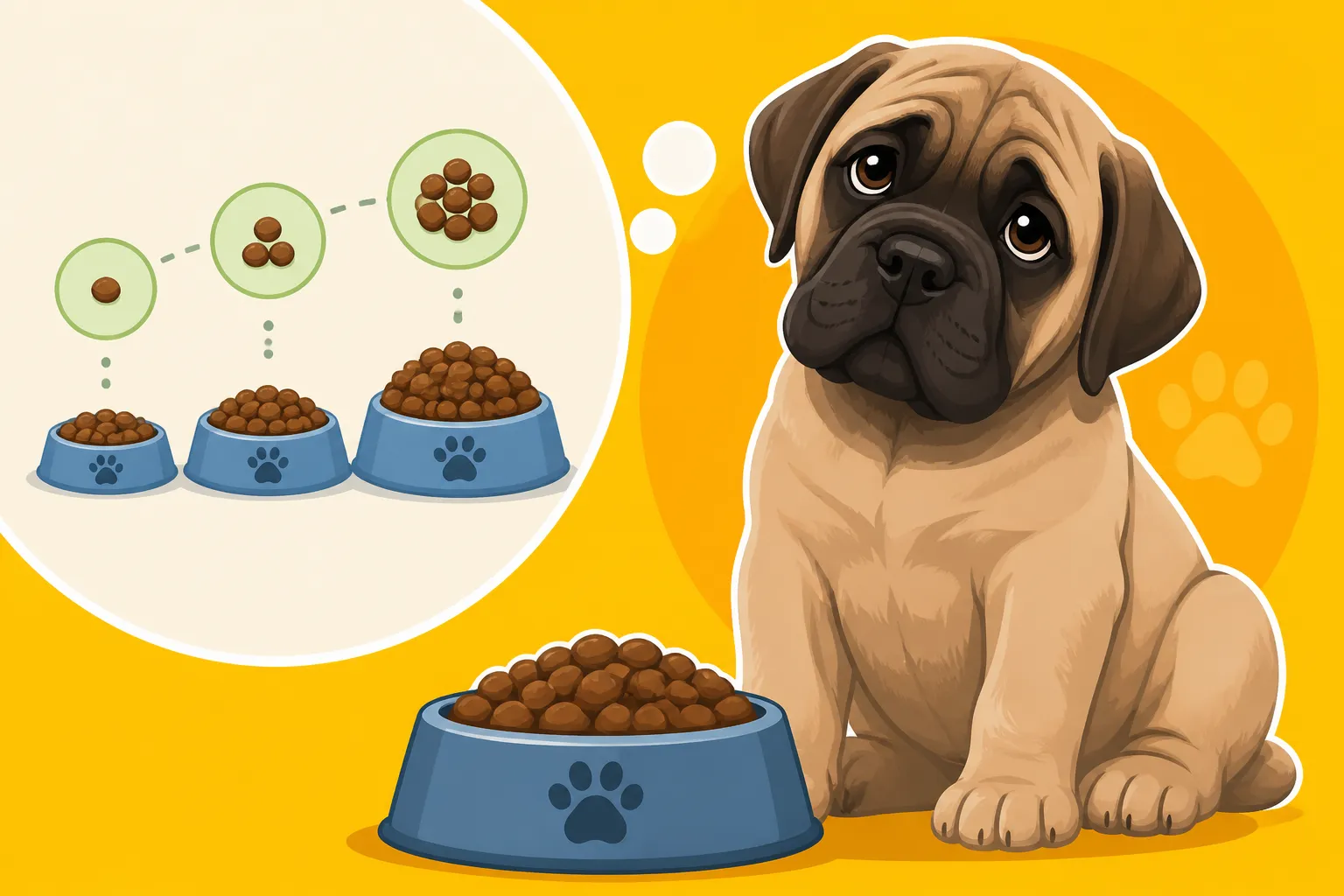
Guessing portion sizes is a recipe for disaster with a Mastiff puppy. You absolutely need a reliable measuring cup or a kitchen scale to ensure accuracy. The feeding guidelines on the food bag are a starting point, not a rigid rule. These guidelines often give a range, and it's almost always better to aim for the lower end of that range for a giant breed puppy to encourage slow growth. Remember, you're feeding for lean growth, not maximum weight.
A general approach might look something like this, but always consult your veterinarian for specific amounts tailored to your puppy's individual needs and the specific food you are using:
| Age of Puppy | Daily Meals | Typical Total Daily Volume (Dry Kibble) | Notes |
|---|---|---|---|
| 8-12 Weeks | 3-4 | 3-5 cups | Divide into equal portions. Monitor body condition closely. |
| 3-4 Months | 3 | 4-7 cups | Growth is accelerating. Keep a close eye on rib coverage. |
| 4-6 Months | 3 | 6-10 cups | Still growing rapidly. Adjust based on activity and body condition. |
| 6-12 Months | 2-3 | 8-12 cups | Continue to prioritize lean growth. Some Mastiffs may need more, some less. |
| 12-18+ Months | 2 | 10-14 cups (transition to adult food) | Gradually transition to an adult giant breed formula. Monitor condition. |
Note: These amounts are approximate and vary wildly based on the specific food's caloric density, your puppy's metabolism, activity level, and individual growth rate. Always follow your vet's advice and the specific recommendations on your chosen large breed puppy food package as a baseline.
It’s tempting to increase food rapidly as they get bigger, but slow and steady wins the race. The Feeding Chart a Mastiff Puppy Should Follow should always emphasize gradual adjustments rather than sudden jumps.
Transitioning from Puppy Food to Adult Formula
The question of when to switch from puppy food to an adult formula is often misunderstood, especially for giant breeds. Unlike smaller dogs who might transition around 9-12 months, Mastiffs should typically remain on a giant breed puppy formula until they are 18-24 months old, or even longer, depending on their individual growth and development. The key here is "giant breed puppy formula," which is specifically designed for their prolonged growth phase.
Switching too early to a regular adult food might mean they miss out on crucial nutrients still needed for bone and joint development, while sticking with a regular puppy food for too long could lead to excessive calorie intake and mineral imbalances. The transition should be gradual, typically over 7-10 days, slowly mixing increasing amounts of the new food with decreasing amounts of the old food. This minimizes digestive upset. The Month a Mastiff Should Leave Puppy Food is a critical decision point that should be made in consultation with your vet, considering your specific dog's growth trajectory.
Monitoring Your Mastiff Puppy's Growth and Adjusting Food Intake
Feeding your Mastiff puppy isn't a one-and-done decision; it's an ongoing process of observation and adjustment. What they need at 3 months will be different from 9 months, and what your puppy needs might be different from another Mastiff puppy in the same litter.
Body Condition Scoring: More Than Just the Scale
One of the biggest mistakes owners make is relying solely on the number on the scale. While weight is a data point, body condition scoring (BCS) is far more important for a growing Mastiff. BCS is a visual and tactile assessment of your dog's fat reserves, giving you a much better picture of their overall health and whether they are at an ideal weight.
A Mastiff puppy should always be kept on the lean side. You should be able to easily feel their ribs without pressing hard, but not see them prominently. When viewed from above, there should be a discernible waist, and from the side, a slight tuck-up. If you see their ribs, hip bones, and spine easily, they might be too thin. If you have to press firmly to feel the ribs, or they look like a barrel from above, they are likely carrying too much weight. Aim for a BCS of 4/9 or 2/5. This lean body condition allows their joints to develop with minimal stress. Your vet can demonstrate how to accurately assess your puppy's BCS, providing a valuable tool you can use at home every week. How Ribby a Mastiff Puppy Should Look is often leaner than what many owners perceive as healthy for a large breed.
Recognizing Signs of Under or Overfeeding
Becoming attuned to your Mastiff puppy's subtle cues is important.
Signs of Underfeeding:
- Visible ribs, hips, and spine with no fat covering.
- Lethargy or low energy (though puppies naturally have active and sleepy phases).
- Poor coat condition or excessive shedding not related to seasonal changes.
- Slowed or stunted growth (though this is difficult to assess without regular vet checks).
- Constant begging for food, especially if paired with other signs.
Signs of Overfeeding:
- Difficulty feeling ribs without significant pressure.
- No discernible waist or tuck-up; a "barrel" shape.
- Reluctance to play or move, excessive panting after minimal exertion.
- Lameness or stiffness, particularly in the mornings, which could indicate joint stress.
- Rapid, sudden growth spurts, which are often undesirable for giant breeds.
It's a delicate balance, and sometimes the signs can be ambiguous. When in doubt, it's always best to consult your veterinarian.
Working with Your Vet to Tailor a Plan
Your veterinarian is your most valuable partner in navigating your Mastiff puppy's growth and nutritional needs. During every check-up, your vet will assess your puppy's weight, height, and body condition. They can help you interpret feeding charts, adjust portion sizes, and identify any potential orthopedic issues early on. They can also advise on the best time to transition foods, and whether specific supplements (which are generally discouraged for giant breed puppies unless prescribed) are truly necessary. Don't hesitate to ask questions, bring your food bag for them to review, or voice your concerns. A proactive approach with your vet will ensure your Mastiff puppy has the best possible start to a long, healthy life. This partnership is especially crucial for a breed as prone to growth-related issues as the Mastiff.
Common Feeding Mistakes and How to Avoid Them
Even with the best intentions, it's easy to fall into common feeding traps with a Mastiff puppy. Their size and endearing personalities can sometimes lead owners astray from optimal practices.
Free-Feeding vs. Scheduled Meals
One of the most significant mistakes, especially for a giant breed puppy, is free-feeding. This means leaving a bowl of food out all day for your puppy to graze on whenever they please. While it might seem convenient, it presents several major problems for a Mastiff:
- Overeating and Rapid Growth: Free-feeding makes it incredibly difficult to control calorie intake. A Mastiff puppy, given unlimited access, will often eat too much, leading to excessive weight gain and accelerated growth, which, as we've discussed, is detrimental to their developing joints.
- Increased Bloat Risk: Eating large quantities sporadically throughout the day, or gulping down a lot of food when finally hungry, can increase the risk of Gastric Dilatation-Volvulus (GDV), or bloat, a life-threatening emergency in deep-chested breeds like Mastiffs.
- Difficulty Monitoring Intake: If your puppy suddenly stops eating or eats less, you won't notice it immediately with free-feeding. This can delay the identification of illness or other health issues.
- House Training Challenges: Scheduled meals lead to predictable potty breaks, making house training much easier.
Instead, stick to a strict schedule of two or three measured meals per day. Why a Mastiff Puppy Is Never Free Fed cannot be stressed enough; it's a fundamental principle of responsible giant breed ownership.
Supplementing Without Veterinary Guidance
The desire to give your Mastiff puppy "everything they need" is natural, but indiscriminate supplementation, especially with calcium, phosphorus, or multi-vitamins, is incredibly dangerous. As highlighted earlier, commercially prepared large or giant breed puppy foods are meticulously balanced to provide the correct ratios of minerals and vitamins needed for controlled growth.
Adding extra calcium, for example, can throw off the critical calcium-to-phosphorus balance, leading to severe bone and joint abnormalities. Many well-meaning owners believe more is better, especially for such a large breed, but with growth plates, it's about precision. If your vet diagnoses a specific deficiency or condition that warrants supplementation, they will prescribe the exact type and dosage. Otherwise, trust the food you've chosen, provided it's a high-quality, giant breed specific formula. You can find excellent, vet-approved foods that meet these needs on platforms like Chewy or your local pet supply store.
Ignoring the Impact of Treats and Scraps
It's easy to forget that treats, chews, and even tiny table scraps contribute to your puppy's daily caloric intake. For a breed that needs controlled growth, these extra calories can quickly add up and sabotage your carefully planned feeding regimen.
- Treats: Choose low-calorie, healthy treats and use them sparingly for training. Break larger treats into smaller pieces. Remember, even a small treat for a human can be a significant caloric contribution for a puppy. If you're using a lot of treats for training, consider deducting a small portion from their daily kibble allowance.
- Table Scraps: Avoid feeding table scraps altogether. Not only do they add empty calories, but many human foods can be harmful or even toxic to dogs. It also encourages begging, which can be an overwhelming problem with a two-hundred-pound adult Mastiff.
- Chews: While chews can be great for dental health and mental stimulation, choose appropriate sizes and types, and remember they often contain calories. Opt for non-edible chews or dental chews specifically formulated for puppies and factor in their caloric content if edible.
Be mindful of every morsel that goes into your Mastiff puppy's mouth. Every calorie counts towards their overall growth trajectory, and consistency across all food sources is vital for their long-term health. Whether Training Treats Count Against a Mastiff's Calories is a definite yes, and should always be considered.
Disclaimer
This article is for general informational purposes only and does not constitute professional advice. Laws, prices and regulations vary by location and change over time. Consult a qualified professional for guidance on your specific situation.