Whether a Mastiff Ignores a Cue It Knows
It's incredibly frustrating, isn't it, when your magnificent Mastiff, a dog you've spent countless hours training, suddenly seems to develop selective hearing? One minute they're performing a perfect 'sit' for a treat, the next they're staring blankly when you ask for it, as if the word has never crossed your lips. This guide is all about peeling back the layers of that behavior, helping you understand why your Mastiff might be ignoring a cue it knows, and giving you practical, empathetic strategies to get back on track.
The Myth of "Stubbornness" vs. Mastiff Deliberation
Before we dive into the nitty-gritty, let's address a common misconception that Mastiff owners often encounter: the idea that their dog is simply "stubborn." While it might feel that way in the moment, especially when your two-hundred-pound companion decides to become an immovable object, it's rarely about deliberate defiance. Mastiffs are thinkers, and their sheer size often means their reactions are more measured, more… deliberate.
Why a Mastiff Is Not Simply Being Difficult
Imagine trying to get out of a comfy armchair when you're half-asleep and someone is shouting directions at you. It's not that you can't understand them, but your body isn't quite ready to respond, or perhaps you're just not motivated enough to move quickly. For a Mastiff, this "stubbornness" is often a misinterpretation of their natural temperament. They are not a breed known for lightning-fast obedience or eager-to-please frantic energy. Instead, they possess a quiet dignity and a thoughtful nature. If they're not responding, there's usually a reason, and it's rarely about trying to vex you. It's about weighing their options, assessing the environment, or simply needing a moment to process. You might even want to read more about The Stubbornness That Is Actually a Mastiff Thinking to fully appreciate this characteristic.
When we label a Mastiff as stubborn, we might inadvertently shut down our empathy and curiosity, leading to less effective training strategies. Instead, let's approach it with the understanding that a Mastiff's default setting isn't "ignore," but rather "consider." Their large brains and calm demeanor mean they often take a beat longer than some high-drive breeds to react to a command. It's not a flaw; it's just part of who they are.
The Role of Processing Time in a Mastiff's Response
Think about the sheer scale of a Mastiff. Every movement, every shift of weight, requires significant effort and coordination. It's not like a quick, nimble terrier that can pivot on a dime. When you give a cue, your Mastiff might be processing multiple things at once: the sound of your voice, the visual cue, the scent in the air, the feel of the ground beneath their giant paws, and any discomfort they might be experiencing. All of this takes time.
Sometimes, what looks like ignoring is simply a delayed response. They heard you, they're thinking about it, and they're preparing their body to execute the command. If we rush them, repeat the cue incessantly, or get frustrated, we can actually make the situation worse. They might become hesitant, confused, or even shut down. Patience is truly a virtue with this magnificent breed. Giving them that extra second or two before repeating a cue can make all the difference in their willingness and ability to comply. It's a dance of communication where understanding their rhythm is key.
Common Reasons a Mastiff Ignores a Known Cue
When your Mastiff isn't responding as expected, it's helpful to play detective. There are numerous reasons beyond simple "stubbornness" that could be at play. Understanding these can help you pinpoint the issue and adjust your approach.
Distraction and Environmental Factors
Mastiffs, for all their calm demeanor, are still dogs with senses keenly tuned to their environment. A familiar cue might suddenly go unheard if there's something more compelling vying for their attention. Imagine you're trying to focus on a book, but there's a loud party next door or the smell of your favorite food cooking. Your book might suddenly seem much less interesting.
For a Mastiff, a squirrel scampering across the yard, the distant sound of another dog barking, the arrival of a new scent carried on the breeze, or even a child's sudden laughter could be enough to completely hijack their focus. They might genuinely not register your cue, or they might process it but deem the environmental stimulus far more rewarding or important in that moment. It's not malicious; it's simply a hierarchy of what's stimulating them most. This is why practicing known cues in varying environments, slowly increasing the level of distraction, is so crucial. A cue that's solid in your quiet living room might fall apart in a busy park. Consider whether Whether a Mastiff Can Be Walked by One Person ties into controlling distractions on a walk.
Health, Discomfort, or Fatigue
This is a critical, and often overlooked, reason why a Mastiff might ignore a cue. Given their large size and propensity for certain health issues, subtle discomfort can significantly impact their willingness to move or engage. If a dog is feeling pain, even mild, in their hips, elbows, or back, a request to "sit" or "down" might cause them discomfort, making them hesitate or refuse. Similarly, if they're experiencing an upset stomach, a headache, or simply feeling unwell, their priority will be their physical state, not your training cue.
Fatigue is another major factor. Mastiffs, while large, are not endurance athletes. A long walk, a strenuous play session, or even just a warm day can leave them feeling tired. Asking a tired Mastiff to perform a complex or physically demanding cue might be met with a blank stare or a slow, reluctant response. It's important to rule out any underlying health issues with a vet check if your Mastiff's behavior change is sudden or persistent. Things like arthritis, joint pain, or even something as simple as an ear infection can make a well-known cue feel like a huge imposition. The Age a Mastiff Starts to Slow can offer some perspective on age-related changes that might affect their energy and comfort levels.
Lack of Motivation or Perceived Value
Let's be honest, sometimes we ask our dogs to do things that, from their perspective, just aren't that exciting. If the reward for performing a known cue isn't compelling enough, or if they've performed it countless times for the same, predictable, low-value treat, they might simply decide it's not worth their effort. Mastiffs are smart; they perform cost-benefit analyses just like we do. If staying put and sniffing that interesting patch of grass is more rewarding than a dry biscuit for a 'come,' then the grass wins.
Your Mastiff's motivation can fluctuate based on the environment, their hunger levels, and the perceived value of the reward. Maybe that piece of kibble was fantastic in the kitchen, but outside with all those fascinating smells, it suddenly seems terribly dull. This isn't defiance; it's just good business sense from your Mastiff's point of view. You need to know What Actually Motivates a Mastiff to keep them engaged.
| Reason for Ignoring Cue | Potential Signs | Solutions |
|---|---|---|
| Distraction | Head up, ears swiveling, sniffing intensely, staring off | Practice in quiet spaces first, gradually add distractions, use higher-value rewards, shorten sessions. |
| Discomfort/Pain | Reluctance to move, shifting weight, limping (subtle), lethargy, groaning, altered posture | Vet check immediately, observe specific movements, consider pain management/supplements. |
| Fatigue | Slow responses, lying down, heavy panting (if warm), drooping eyelids, lack of enthusiasm | Shorter training sessions, train when well-rested, provide cool resting spots, offer plenty of water. |
| Lack of Motivation | Blank stare, slow response, looking away from you, no excitement for reward | Use higher-value treats (cheese, cooked meat), rotate rewards, make it a game, increase praise. |
| Confusion | Hesitation, attempting a different cue, looking to you for more information | Simplify cues, reduce distractions, be consistent with hand signals/verbal cues, revisit basics. |
| Over-correction/Fear | Cowering, avoiding eye contact, tail tucked, cringing when cue is given | Re-establish positive association, use positive reinforcement only, seek professional help. |
Strategies to Re-Engage Your Mastiff When Cues Are Ignored
Once you've done a bit of detective work to understand why your Mastiff might be tuning you out, it's time to implement some strategies to bring them back into the fold. Remember, consistency and patience are your best friends with a Mastiff.
Re-evaluating Your Training Approach
Sometimes, the issue isn't with the dog, but with how the information is being presented. We all fall into habits, and training is no exception. Take an honest look at your methods. Are your cues clear and consistent? Are you using the same word and hand signal every time? If you're sometimes saying "sit" and sometimes "sit down," your Mastiff might be confused. Consistency across all family members is also paramount.
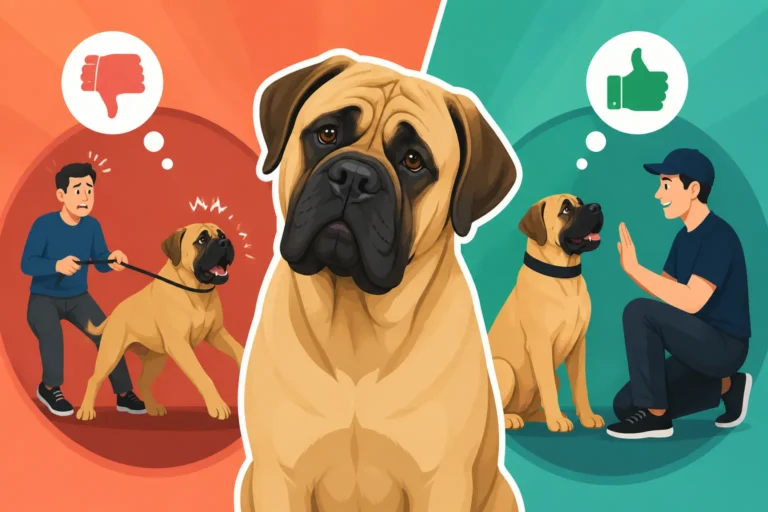
Are you inadvertently punishing your Mastiff for a slow response by repeating the cue rapidly or getting frustrated? Mastiffs are highly sensitive, and harsh corrections or even a raised voice can shut them down. They remember negative experiences keenly. As we discuss in Why Harsh Correction Ruins a Mastiff, a gentle, positive approach works best. If you're feeling stuck, consider investing in a structured program. Brands like BAXTER & Bella offer online puppy training programs that can help you refresh your skills and ensure a consistent, positive foundation, which can be invaluable for navigating those moments of "selective hearing." Even if your Mastiff isn't a puppy, the principles of positive reinforcement and clear communication remain the same.
Building Stronger Cue Associations
The key to a reliable cue is a strong, positive association. Your Mastiff needs to believe that performing the cue always leads to something wonderful. This means ramping up your rewards, especially when you're working in distracting environments or trying to re-establish a cue. Forget the dry kibble for a moment and bring out the "jackpot" treats – small pieces of cooked chicken, cheese, or high-quality commercial soft treats. These can be found readily on Amazon, often in bulk packs which is a huge plus for a Mastiff owner!
Make training fun and unpredictable. Don't just drill cues in a robotic fashion. Incorporate play, vary your rewards, and end sessions on a high note. If your Mastiff loves to play, a quick game of tug or fetch (if appropriate for their joints) can be a reward for a good "stay." The goal is for your Mastiff to want to engage with you, even when the world around them is full of tempting distractions. Remember, a Mastiff's motivation isn't always about food; it can also be about praise, attention, or a favorite toy. Knowing The Job a Mastiff Actually Wants can help you tailor these rewards.
Managing Expectations and Environment
It's easy to forget that our Mastiffs are still living beings with good days and bad days, just like us. On some days, they might be incredibly responsive and eager to please, while on others, they might be more reserved or easily distracted. Adjust your expectations accordingly. If your Mastiff is struggling in a busy environment, move to a quieter one. If they're tired, make the session shorter and less demanding.
Create an environment for success. Before asking for a cue, ensure you have their attention. Make eye contact, use their name, or lightly touch them if they're particularly zoned out. If you know a certain area is too distracting, avoid asking for complex cues there until you've built up a stronger foundation. Sometimes, the simplest solution is to reduce the variables that are making it hard for your Mastiff to succeed. This means being smart about when and where you train, and not setting them up to fail. Also, ensure their physical comfort. An orthopedic bed, easily available on Amazon, can make a huge difference if joint discomfort is contributing to their reluctance to move.
When to Seek Professional Help and What to Look For
While many of these issues can be addressed with patience and consistent training, there are times when seeking professional guidance is the smartest, safest, and kindest thing you can do for your Mastiff and yourself.
Recognizing Red Flags in Behavior
If your Mastiff's refusal to respond is accompanied by other concerning behaviors, it's time to call in the experts. These red flags could include:
- Sudden onset of aggression or fear: If your Mastiff growls, snaps, or shows extreme fear when you give a cue, especially one they previously knew, this is a serious sign.
- Persistent pain or limping: If your Mastiff is consistently reluctant to move, seems stiff, or favors a limb, a vet visit is paramount to rule out injury or illness. What might seem like stubbornness could be a cry for help.
- General unresponsiveness or lethargy: If your Mastiff seems generally disengaged, isn't interested in food or play, and ignores not just cues but also your attempts to interact, this warrants a trip to the vet.
- Escalating frustration from your side: If you find yourself consistently losing your temper, feeling overwhelmed, or dreading training sessions, a professional can offer strategies to break the cycle and rebuild a positive relationship.
- Inability to break focus: If your Mastiff consistently locks onto a distraction and cannot be re-engaged, even with high-value rewards, it might indicate a need for more specialized training techniques.
Don't ignore these signs. Your Mastiff relies on you to advocate for their well-being. Understanding Whether a Mastiff Reads Its Owner's Mood can help you recognize when your frustration might be escalating, and act accordingly.
Finding the Right Professional Support
When you decide to seek help, it's crucial to find a professional who understands Mastiffs and uses positive, force-free training methods. Not all trainers are created equal, and an approach that works for a high-drive working dog might be disastrous for a sensitive Mastiff. You'll want to find someone who:
- Has experience with giant breeds: Mastiffs have unique physical and behavioral considerations that a trainer experienced with smaller dogs might not fully grasp.
- Uses positive reinforcement: Avoid trainers who advocate for harsh corrections, choke chains, prong collars, or e-collars. These methods can damage your Mastiff's trust and exacerbate behavioral issues.
- Is certified and reputable: Look for certifications from recognized professional organizations (e.g., CCPDT, KPA-CTP). Ask for references and read reviews.
- Offers in-home or private sessions: For a Mastiff, especially one struggling with distractions, a private setting can be far more beneficial than a group class initially.
- Communicates clearly and empathetically: You need a trainer who can not only work with your dog but also teach you effectively and supportively.
Asking Whether a Mastiff Needs a Professional Trainer is a valid question, and for some issues, it's the best investment you can make. A good professional can offer fresh eyes, pinpoint subtle nuances you might have missed, and provide a tailored plan to help you and your Mastiff overcome challenges and strengthen your bond. Remember, it's never a sign of failure to ask for help; it's a sign of a responsible and loving owner.
Disclaimer
This article is for general informational purposes only and does not constitute professional advice. Laws, prices and regulations vary by location and change over time. Consult a qualified professional for guidance on your specific situation.