Whether a Mastiff Can Be Walked by One Person
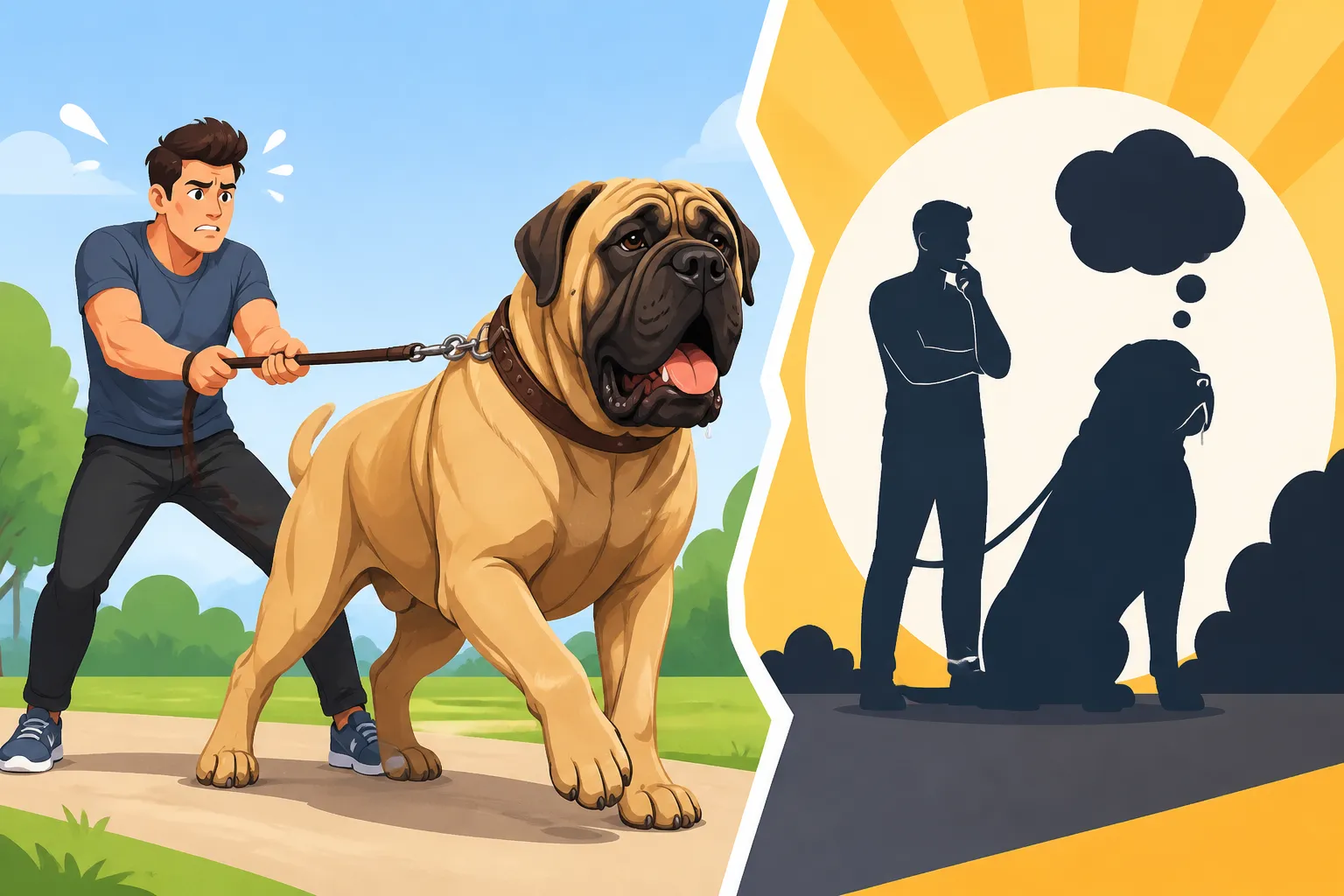
The sheer size and powerful physique of a Mastiff can make the thought of walking them alone feel incredibly daunting. Many owners worry they'll be dragged down the street, unable to control their beloved giant if a squirrel darts by, or find themselves in a wrestling match just trying to get out the door. This guide is here to walk you through the realities and equip you with the knowledge, tools, and training strategies to confidently and safely walk your magnificent Mastiff by yourself.
The Reality of Walking a Mastiff Alone
Let's be honest, trying to control a dog that can easily outweigh an adult human is no small feat. The physical disparity between a Mastiff and most owners is significant, and it’s a valid concern that you might feel overwhelmed. However, it’s not about brute strength; it’s about technique, proper equipment, and consistent training. Many single individuals successfully walk their Mastiffs every day, proving it's absolutely achievable with the right approach.
The Sheer Power of a Mastiff
A Mastiff, even a well-behaved one, possesses an incredible amount of raw power. When they decide to move, especially with intent, that momentum can be difficult to counteract. Imagine a solid wall of muscle, typically weighing between 120 and 230 pounds, deciding to investigate an interesting scent or greet another dog. Their center of gravity is low, their stride is powerful, and their desire can sometimes override their manners, particularly if they haven't been properly trained or are easily excitable. It's not about malice; it's simply the physics of a large animal. Understanding How Much Force a Mastiff Can Apply on a Leash can help you appreciate the need for strong equipment and solid training.
This isn't to say your Mastiff is a wild beast, far from it. Mastiffs are generally calm and gentle giants. But even a gentle giant can exert considerable force without intending to cause harm. A sudden lunge for a dropped treat, a quick dart after a blowing leaf, or a simple change of direction can pull an unprepared person off balance. It's this potential for accidental power, rather than intentional aggression, that makes walking a Mastiff a unique challenge for one person. It requires anticipation, a firm grip, and a reliable connection to your dog.
The "Immovable Object" Phenomenon
On the flip side of the pulling challenge, Mastiffs are also famously prone to becoming "immovable objects." You might be halfway through your walk, and suddenly, your Mastiff decides it's had enough of that particular patch of sidewalk, or perhaps a captivating smell demands further investigation. They plant their feet, lean into their massive frame, and effectively become a statue. Trying to physically drag a two-hundred-pound dog that refuses to move is not only futile but can also be harmful to both you and your dog. It's frustrating, embarrassing, and can turn a pleasant stroll into a very public standoff.
This characteristic behavior highlights why physical strength alone isn't the answer. Instead, it calls for patience, clever redirection, and positive motivation. Understanding Stopping a Mastiff That Plants Itself and Will Not Move is crucial for any solo walker. It's a testament to their deliberate nature and, yes, sometimes their stubborn streak. You can't out-muscle them, so you must outwit them, offering something more appealing than standing still or investigating that fascinating lamppost for the fifth minute. This might mean carrying high-value treats or knowing their favorite squeaky toy can instantly break their focus and get them moving again.
Essential Gear for Solo Mastiff Walking
While training is paramount, the right equipment acts as an essential extension of that training, providing you with leverage and control. Trying to walk a Mastiff with inadequate gear is like trying to drive a truck with bicycle tires – it's simply not going to work safely or effectively. Investing in sturdy, reliable tools is non-negotiable for a solo walker.
Choosing the Right Leash and Collar/Harness
The choice of leash and collar or harness is critical when you're the only one holding the other end. For leashes, skip the retractable ones entirely. They offer zero control and can be dangerous with a dog of this size. Opt for a sturdy, fixed-length leash made of strong nylon or leather, ideally 4 to 6 feet long. The shorter length gives you more immediate control, especially in crowded areas. A quality leash can be found readily on platforms like Amazon, but ensure the hardware is robust enough for a giant breed.
When it comes to what goes on your Mastiff, you have a few options, each with pros and cons. A wide, flat buckle collar is standard, but for a powerful dog, it may not provide enough control, especially if they pull. Whether a Mastiff Should Wear a Harness or a Collar is a common question. A front-clip harness is often recommended for Mastiffs, as it redirects their pulling power to their chest, turning them back towards you rather than allowing them to lean into the pull. This provides much more leverage for the walker. Another option might be a head halter (like a Gentle Leader or Halti), which gives you control over the head, and where the head goes, the body often follows. Always introduce any new equipment slowly and positively, associating it with treats and praise.
| Equipment Type | Pros for Solo Walking | Cons for Solo Walking |
|---|---|---|
| Flat Collar | Simple, traditional, good for well-trained dogs. | Minimal control if dog pulls; can cause choking/gagging if dog pulls. |
| Front-Clip Harness | Redirects pulling, provides good body control, reduces choking. | Can chafe underarms if not fitted well; some dogs still pull. |
| Back-Clip Harness | Comfortable, good for dogs that don't pull. | Encourages pulling; offers little control for a strong dog. |
| Head Halter | Excellent control over the head, prevents pulling and lunging. | Requires desensitization; some dogs dislike it; not for all owners. |
| Martingale Collar | Prevents slipping out of the collar; gentle tightening. | Only effective if dog tries to back out; still relies on neck pressure. |
Tools to Aid Control and Safety
Beyond the basic leash and collar/harness, a few other tools can significantly enhance your solo walking experience. A treat pouch worn around your waist allows for immediate positive reinforcement, which is vital for keeping your Mastiff engaged and motivated. High-value treats are your secret weapon against distraction or stubbornness. Consider a brand like BAXTER & Bella, which emphasizes positive reinforcement in their training philosophies and product recommendations. Having treats readily accessible means you can reward good behavior the instant it happens, solidifying those good habits.
Another invaluable tool is a sturdy, comfortable handle on your leash, or even a leash with a padded handle to prevent rope burn if your Mastiff decides to lunge. Some owners even use a second leash attached to a different point on their dog's gear (e.g., one to a collar, one to a harness) for extra security, though this takes practice to manage alone. For added safety, reflective gear for both you and your Mastiff is crucial if you walk in low light conditions. Remember, these tools are there to support your training, not replace it. They are aids to communicate more effectively and keep everyone safe.
Training Strategies for a Well-Mannered Mastiff on Leash
No amount of fancy gear will replace solid training. For a Mastiff, whose size amplifies any behavioral issue, consistent and early training is the cornerstone of successful solo walks. The goal isn't to dominate your dog but to teach them politely how to navigate the world by your side. Teaching a Mastiff Before It Outweighs You is probably the best advice you'll ever receive.
Starting Early with Loose-Leash Training
The absolute best time to start loose-leash training is the moment your Mastiff puppy comes home, after they’ve had their vaccinations and are safe to be out and about. Even though they're small then, they're already learning habits. Begin in a low-distraction environment, like your backyard, and make walking on a loose leash a positive experience. Use treats and praise to reward every step your puppy takes with a loose leash. The moment they pull, stop dead in your tracks. Movement is the reward for a loose leash. This teaches them that pulling gets them nowhere, while walking calmly by your side keeps the adventure going. This method, often called "be a tree," is highly effective for building the foundation.
For a Mastiff, consistency is everything. Short, frequent training sessions are much more effective than long, arduous ones. Aim for 5-10 minutes, several times a day. As your puppy grows, gradually introduce more distractions, always returning to a simpler environment if they become overwhelmed. Remember that a Mastiff puppy needs very little strenuous exercise to protect their developing joints, so these short training walks are perfect. Why a Mastiff Puppy Must Not Be Exercised Hard is something every Mastiff owner should know. Early positive experiences will shape a Mastiff who wants to walk nicely with you.
Reinforcement and Consistency Are Key
Mastiffs respond best to positive reinforcement. They are intelligent and sensitive souls, and harsh corrections or punishment can make them shut down, become fearful, or simply refuse to cooperate. Instead, focus on rewarding the behaviors you want to see. When your Mastiff walks beside you with a loose leash, mark that moment with a verbal cue like "Yes!" or a clicker, followed immediately by a high-value treat. This instant feedback tells them exactly what they did right. You can find excellent positive reinforcement training programs, such as those offered by BAXTER & Bella, which provide structured guidance for owners.
Consistency extends beyond just rewarding good behavior; it means every family member must adhere to the same rules and cues. If one person allows pulling and another doesn't, your Mastiff will get confused and be less likely to comply. Establish clear expectations and stick to them. This might mean practicing in different environments and with different distractions, gradually increasing the challenge. Think of it as building a muscle – each successful loose-leash step strengthens the habit, making it easier and more natural for both of you. Remembering What Actually Motivates a Mastiff is crucial for effective training.
Overcoming Common Solo Walking Challenges
Even with the best gear and training, you're bound to encounter common challenges when walking a Mastiff by yourself. These magnificent dogs have minds of their own, and the world is full of interesting (and sometimes alarming) things that can capture their attention. Knowing how to anticipate and manage these situations is vital for a stress-free walk.
Managing Reactivity and Distractions
Leash reactivity is a common issue, especially with large, protective breeds. A Mastiff might react by barking, lunging, or freezing when they see another dog, a person, or even a bicycle. When you're walking alone, a reactive Mastiff can quickly become unmanageable. The key is prevention and proactive management. If you see a potential trigger approaching, create distance or change direction before your dog goes over their threshold. If your Mastiff is particularly reactive, consider Leash Reactivity in a Two Hundred Pound Mastiff for more in-depth strategies.
Work on counter-conditioning and desensitization. This means changing your dog's emotional response to the trigger. If your Mastiff sees another dog, immediately start feeding them high-value treats before they react. The goal is for them to associate the presence of other dogs with good things (treats!) rather than anxiety or excitement. Keep the sessions short and positive, always ending on a good note. If you're struggling, a certified professional dog trainer can provide invaluable guidance, as managing reactivity in a powerful dog like a Mastiff is not something to tackle lightly on your own.
Dealing with Unplanned Stops and Refusals
As mentioned, the "immovable object" phenomenon is real. Your Mastiff might suddenly decide a walk is over, or that they need to deeply investigate a specific bush for an extended period. When you're alone, physically moving them is usually impossible and counterproductive. Instead, use a combination of motivation and redirection. Have those high-value treats ready. Get down to their level, show them the treat, and make an enticing noise to lure them forward. Sometimes, a silly voice or a game of "find the treat" on the ground a few feet ahead can break their focus and get them moving again.
Another tactic for a refusal is simply to wait them out. If you're not in a dangerous spot, just stand still, hold the leash loosely, and wait. Often, after a minute or two, they'll decide that nothing interesting is happening and will eventually move on. When they do, reward that movement instantly. If they're completely ignoring you, try a gentle tug and release on the leash with a verbal cue like "Let's go!" followed by an immediate reward if they respond. Patience is a virtue when walking a Mastiff, especially when you're flying solo. Remember that A Mastiff Does Not Pull You Over, It Simply Stops, and understanding why they do this can help you respond appropriately.
Physical and Environmental Considerations
Walking a Mastiff alone isn't just about the dog; it's also about you. Your physical capabilities and the environment you choose for your walks play significant roles in whether it's a safe and enjoyable experience for both of you. Being realistic about these factors can help you set yourself up for success.
Your Own Strength and Stamina
While training and proper gear minimize the need for brute strength, it's still important to be realistic about your own physical capabilities. If you have mobility issues, balance problems, or limited upper body strength, walking a full-grown Mastiff alone might pose a higher risk. Even a well-trained Mastiff can have an unexpected moment, and you need to be able to brace yourself. Think about Whether a Mastiff Can Be Walked by an Older Owner – it's less about age and more about physical condition and technique.
Regular exercise for yourself can help. Building core strength and arm strength will make you more stable and confident. However, remember that you should never rely solely on your strength to control your Mastiff. If you find yourself consistently struggling, it might be time to invest in additional training or consider specific tools designed for people with limited physical strength, such as leashes that can be clipped around your waist (with safety quick-release mechanisms, never just wrap it around your hand or body!). Your safety is paramount.
Navigating Public Spaces Alone
Walking a Mastiff alone in public spaces requires an extra layer of awareness and control. Not everyone is comfortable around large dogs, and you'll inevitably encounter people who are nervous or even fearful. It's your responsibility to ensure your Mastiff is well-behaved and doesn't inadvertently cause alarm. Always keep your Mastiff on a short leash in crowded areas, and practice a solid "heel" command. Be prepared to step off the path or cross the street if you see someone who looks uncomfortable or another dog whose owner seems to be struggling.
Choosing your walking routes wisely can also help. Start with quieter parks or neighborhoods before venturing into bustling areas. Avoid dog parks, especially when walking alone, as they can be unpredictable environments for a Mastiff. Why a Dog Park Is Wrong for a Mastiff outlines many reasons these spaces are ill-suited for the breed. The goal is to set your Mastiff up for success and to manage their environment so they can remain calm and focused on you. A well-behaved Mastiff being walked calmly by one person is a wonderful ambassador for the breed, showing the world just how gentle and manageable these giants can be.
| Challenge | Recommended Solo Strategy | Why it Works for Mastiffs |
|---|---|---|
| Pulling | Front-clip harness, stop-and-go method, reward loose leash. | Redirects power, teaches pulling is ineffective, reinforces good behavior. |
| Refusal to Move | High-value treats, patience, verbal lures. | Motivates movement without force, respects their deliberate nature. |
| Distraction/Reactivity | Anticipation, distance, "look at me" command, counter-conditioning. | Prevents over-threshold reactions, changes emotional associations, builds focus. |
| Unpredictable Encounters | Short leash, tight heel, avoid triggers, situational awareness. | Maintains control, allows quick reactions, respects public comfort. |
| Owner Fatigue/Injury | Proper form, supportive gear, short walks, assess personal limits. | Reduces physical strain, prevents accidents, ensures consistent positive experience. |
Disclaimer
This article is for general informational purposes only and does not constitute professional advice. Laws, prices and regulations vary by location and change over time. Consult a qualified professional for guidance on your specific situation.