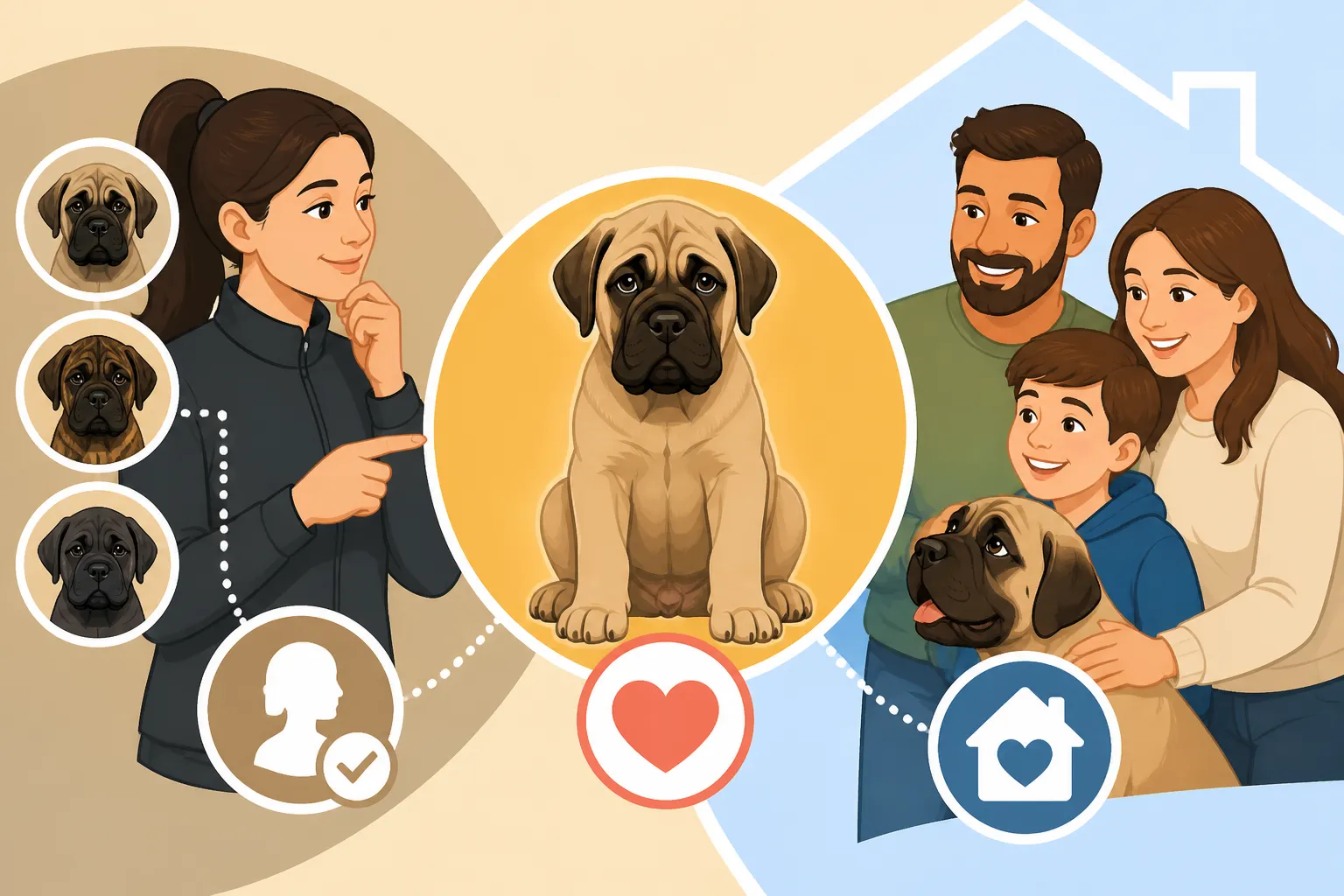
How a Mastiff Breeder Matches a Puppy to a Home
Bringing a Mastiff puppy into your home is an incredibly exciting prospect, but the sheer number of adorable faces in a litter can make choosing the "right" one feel like an impossible task. Many first-time owners feel overwhelmed, unsure how to tell a bold puppy from a shy one, or if their lifestyle truly matches a particular dog's future needs. This guide will walk you through the thoughtful process responsible Mastiff breeders use to match puppies with their forever families, ensuring a harmonious and successful partnership from day one.
More Than Just "First Come, First Served": Understanding the Breeder's Role
When you look at a litter of Mastiff puppies, it’s easy to fall in love with the first fluffy face that tumbles into your lap. But a truly responsible breeder isn't just looking to sell puppies; they're acting as matchmakers, aiming for the perfect lifelong partnership between dog and owner. They understand their lines intimately, knowing the subtle nuances in temperament, potential size, and even future health predispositions that might make one puppy a better fit for a quiet senior couple and another for an active family with older children. This isn't about creating obstacles; it's about setting both you and the puppy up for success.
Temperament and the Future Home Environment
Imagine bringing home a Mastiff puppy that's naturally reserved and easily startled, only to place it in a bustling household with three energetic toddlers and constant visitors. That sweet, sensitive pup would likely be stressed, potentially developing behavioral issues down the line. Conversely, a bold, boisterous puppy might drive a more sedate owner to distraction, constantly pushing boundaries and demanding more engagement than the owner can provide. Breeders carefully consider the dynamics of your home – your energy levels, daily routines, noise levels, other pets, and even your experience with giant breeds – to determine which puppy’s inherent personality will thrive. They're trying to prevent mismatches that often lead to frustration for both dog and human, and sometimes, sadly, even rehoming. They know that a Mastiff, despite its impressive size, can have The Sensitivity Nobody Expects in a Two Hundred Pound Mastiff.
Early Assessment: How Breeders Observe Puppies
A responsible Mastiff breeder starts assessing puppies from the moment they're born, observing their development and individual quirks. They're not just watching for which one is the biggest or the loudest. They're looking at how each puppy interacts with its littermates, how it responds to new sounds and sights, how it approaches novel objects, and how it seeks attention from humans. Do they immediately run to you for cuddles, or do they hang back, observing from a distance? Are they rough and tumble in play, or more gentle? Do they recover quickly from a startling noise, or remain cautious? These subtle observations, often done daily over eight weeks, provide a wealth of information. They might introduce different textures, sounds, or even small, safe toys to see how the puppies react. This meticulous observation allows them to build a personality profile for each puppy, far beyond what a single visit from a prospective owner could reveal. This long-term perspective is why a breeder's guidance is invaluable when it comes to predicting how a tiny puppy will mature into a 200-pound dog.
The Application and Interview Process: Your Role in the Match
Finding the right Mastiff puppy isn't a passive process where you just show up and point. It’s an interactive journey where your transparency and engagement are key to a successful match. Responsible breeders are incredibly invested in their puppies' futures, and they expect the same level of commitment from you.
The Comprehensive Puppy Application
Don't be surprised when a reputable Mastiff breeder presents you with a detailed application form. This isn't a test to see if you're "good enough"; it's a vital tool for them to understand your household and lifestyle. They'll ask about everything from your living situation (house, apartment, yard size) to your work schedule, family members (including children and their ages), previous dog experience, and even your intentions for the dog (pet, show, therapy work). They'll want to know about your commitment to training, how you plan to manage their massive size, and your understanding of the breed's specific needs. For instance, they'll want to ensure you grasp the importance of slow, controlled growth and that Why a Mastiff Puppy Must Not Be Exercised Hard. They might also ask for vet references to ensure you're a responsible pet owner in general. This application is often the first step in a longer conversation, helping the breeder narrow down potential fits before you even meet the puppies. Remember, they often have specific clauses in their agreements, so understanding What a Mastiff Contract Says About Breeding Rights is also important.
Open Communication and Mutual Trust
The application is just the beginning. A good breeder will engage in open, honest conversations, asking follow-up questions and encouraging you to do the same. This is your opportunity to ask about the dam and sire's health history, temperament, and any genetic screenings they've undergone, such as The Four CHIC Tests a Mastiff Breeder Must Clear. Don't be afraid to voice your concerns or preferences. Maybe you're looking for a calm companion for quiet evenings, or perhaps you're hoping for a moderately active dog to join you on gentle walks once it's old enough for The Age a Mastiff Can Start Real Walks. The breeder wants to hear this! They'll also be upfront about any potential challenges with their particular lines or the breed in general. This mutual trust is crucial. If you're considering pet insurance to help manage the inevitable costs of a giant breed, mentioning a provider like Healthy Paws can show your proactive approach to long-term care and financial planning for your new companion.
Meeting the Puppies and the Dam
Once the breeder feels your application and conversations indicate a good potential match, they'll typically arrange a visit for you to meet the puppies and their dam. This isn't generally a "pick your puppy" session. Instead, it's a chance for you to observe the litter dynamics, interact with the puppies under the breeder's guidance, and see the dam's temperament firsthand. The breeder will often point out specific puppies they believe are a good fit for your home based on their prior assessments. They'll watch how you interact with the puppies, noting which ones gravitate towards you, how you handle them, and your overall demeanor. This visit helps confirm their initial thoughts and gives you a chance to feel a connection without the pressure of making the final decision on the spot.
Factors in the Matching Equation: What Breeders Look For
Matching a Mastiff puppy to a home is a complex puzzle with many pieces. Breeders consider a multitude of factors, weighing them against your declared lifestyle and preferences. It's truly an art form, honed over years of experience with the breed.
Temperament Traits
Mastiffs, despite their size, come with a range of personalities, even within the same litter. Breeders look for specific temperament traits:
- Bold and Confident: These puppies are often the first to explore, aren't easily fazed by new things, and recover quickly from minor startling events. They might be a good fit for an experienced owner who can provide consistent training and boundaries, or a home that is somewhat busy but structured, as long as they are taught Teaching a Mastiff Before It Outweighs You.
- Reserved and Observant: These puppies tend to watch before acting, might be a little slower to approach, and prefer a calmer environment. They'll thrive in a quiet, predictable home where they feel secure and aren't constantly barraged by new stimuli. They need an owner patient enough to build confidence gradually.
- Mellow and Easygoing: Often called the "furniture" Mastiffs, these pups are generally calm, content to cuddle, and less prone to intense bursts of energy. They're wonderful for families seeking a gentle giant companion, perhaps a retired couple or a home where a steady presence is preferred. However, even a mellow Mastiff will have moments of what appears to be pure defiance, often just a sign of The Stubbornness That Is Actually a Mastiff Thinking.
- Playful and Affectionate: While all Mastiffs are generally affectionate, some puppies are simply more exuberant in their displays of love and play. They might need a family ready for more interactive playtimes and who enjoys a dog that’s a bit more "in your face" with its affection.
The breeder's goal is to find the puppy whose natural inclinations will align best with your expectations and capacity.
Lifestyle Compatibility
Beyond basic temperament, the breeder delves into how a Mastiff puppy will integrate into your daily life.
- Activity Level: How active are you? Mastiffs are not high-energy dogs, but they do require regular, moderate exercise, especially as puppies to avoid damaging growing joints. A sedentary family might struggle with even a moderately active Mastiff puppy, while an overly active one could push a puppy beyond what's healthy for its developing bones. The breeder wants to ensure you understand the unique exercise needs of a giant breed puppy, recognizing that too much can be just as harmful as too little.
- Time Commitment: How much time can you realistically dedicate to training, socialization, and simply being with your dog? Mastiffs thrive on companionship and can develop separation anxiety if left alone for long stretches. A breeder will want to know that someone is usually home or that plans are in place for adequate care and interaction.
- Training Philosophy: Are you committed to positive reinforcement? Do you understand the importance of early and ongoing socialization? Mastiffs are sensitive, and harsh training methods can damage their trust and lead to fear-based behaviors. A breeder wants to ensure your approach to training will be gentle, consistent, and effective for such a large and intelligent breed.
- Feeding and Care Routine: Giant breeds have specific dietary needs, especially during growth. Breeders often recommend particular feeding schedules and types of food. If you're planning on using a specific diet, perhaps ordered from a service like Chewy or a fresh food provider like Ollie, it's good to discuss this. They want to ensure you're prepared for the sheer volume of food a Mastiff consumes, and the commitment to proper nutrition, which is vital for their development and health.
Health Considerations and Long-Term Care
A responsible breeder is also thinking about the long-term health of their puppies. While no breeder can guarantee a dog will never have health issues, they do their utmost to minimize risks through careful breeding and health testing. They will discuss common Mastiff health concerns, such as hip and elbow dysplasia – Elbow Dysplasia Affects One Mastiff in Seven – or the serious risk of bloat, a life-threatening condition for which Bloat in the Deepest Chest of Any Breed: the Mastiff is particularly susceptible. They'll want to know you're aware of these possibilities and prepared for the financial and emotional commitment that can come with caring for a giant breed. This is where discussing potential pet insurance plans, like those offered by Healthy Paws, reinforces your preparedness for their lifespan, which is typically Six to Ten Years Is What a Mastiff Gets.
The Benefits of a Thoughtful Match: A Lifetime of Harmony
The meticulous process a responsible Mastiff breeder goes through isn't just for their peace of mind; it's profoundly beneficial for you and your future companion. A good match lays the foundation for a lifetime of joy, understanding, and fewer behavioral challenges.
Reduced Risk of Rehoming
One of the most heartbreaking outcomes for any dog is ending up in a shelter or rescue, often through no fault of their own, but due to a mismatch with their initial family. Sadly, Why Mastiffs Reach Rescue at Two is a common scenario, often because owners weren't prepared for their size, needs, or potential health challenges. A breeder who takes the time to match a puppy carefully significantly reduces this risk. When a puppy's temperament and needs align with its new family's lifestyle, the chances of the dog thriving and staying in its forever home skyrocket. This thoughtful placement means less stress and confusion for the dog and a much more rewarding experience for the owners.
A Happier, More Adjusted Dog
When a Mastiff puppy is placed in a home where its natural instincts and personality are understood and catered to, it flourishes. A bold puppy in an appropriately stimulating environment will grow into a confident, well-adjusted adult. A sensitive puppy in a calm, predictable home will develop into a secure and loving companion. This isn't about molding a dog into something it's not, but rather finding the environment that allows its true self to shine without undue stress. A well-matched dog is typically calmer, easier to train, and more content, leading to a stronger bond with its family. Understanding What a Mastiff Actually Weighs and how that impacts every aspect of their life is part of preparing for that adjustment.
Support Beyond Placement
The relationship with a responsible Mastiff breeder doesn't end when you take your puppy home. In fact, that's often just the beginning of a lifelong mentorship. A good breeder provides ongoing support, answering questions, offering advice on everything from training tips to dietary adjustments, and even acting as a safety net if, for unforeseen reasons, you're ever unable to care for your Mastiff. They want to see their puppies succeed and will be a valuable resource throughout your Mastiff's life, even into their senior years when you might be Caring for a Mastiff Past Five. This kind of unwavering support is a hallmark of a truly dedicated breeder and an invaluable benefit of trusting their matching process.
Mastiff Puppy Temperament & Ideal Home Environment Guide
| Temperament Trait | Key Characteristics | Ideal Home Environment | Considerations |
|---|---|---|---|
| Bold & Confident | Explorer, resilient to new stimuli, quick recovery | Experienced owner, active household (older children), consistent training, clear boundaries, exposure to various environments from an early age. | Needs strong leadership to prevent over-assertiveness; can be prone to "testing" limits. |
| Reserved & Observant | Watches before acting, cautious with new things | Calm, predictable, quiet home (senior/single owner), patient and gentle training, gradual introduction to new experiences, consistent routine. | Can be prone to shyness if not properly socialized; needs secure environment to build confidence. |
| Mellow & Easygoing | Content to relax, low energy, affectionate | Gentle giant companion, less active family, stable home environment, enjoys cuddling and quiet companionship, regular but moderate exercise. | Still requires basic training and socialization; can be prone to weight gain if not managed properly. |
| Playful & Affectionate | Enthusiastic, loves interaction, happy-go-lucky | Family ready for active play sessions, enjoys engaging with their dog, consistent positive reinforcement, clear communication of expectations. | Needs outlets for play; can accidentally bowl over small children or elderly due to size if not taught manners. |
Choosing a Mastiff puppy is a big decision, one that will bring immense joy and responsibility into your life. The careful, considered approach of a responsible breeder in matching puppies to homes is not about control, but about ensuring the best possible outcome for these magnificent dogs and their future families. By embracing their guidance and being honest about your lifestyle, you set the stage for a loving, long-lasting relationship with a well-adjusted Mastiff who is perfectly suited to become your devoted companion.
Disclaimer
This article is for general informational purposes only and does not constitute professional advice. Laws, prices and regulations vary by location and change over time. Consult a qualified professional for guidance on your specific situation.