Whether a Mastiff Damages Hardwood Floors
It's a common dilemma for Mastiff owners: you adore your giant companion, but you also love your beautiful hardwood floors. The worry about scratches, dings, and general wear and tear from a two-hundred-pound dog can be a constant source of stress. This guide will delve into exactly how a Mastiff interacts with hardwood, what specific types of damage you might face, and most importantly, practical strategies to protect both your floors and your beloved, clumsy giant.
The Unseen Force: How a Mastiff's Weight and Movement Challenge Your Hardwood
Let's be real, a Mastiff isn't a dainty little dog. They are immense, often weighing as much as a small human, and this sheer mass fundamentally changes how they interact with your home, especially your floors. Their weight, combined with their movements, creates forces that smaller breeds simply don't. It's not just about sharp claws; it's about the physics of a large, heavy animal moving across a surface.
The Peril of Claws and Paws on Polished Surfaces
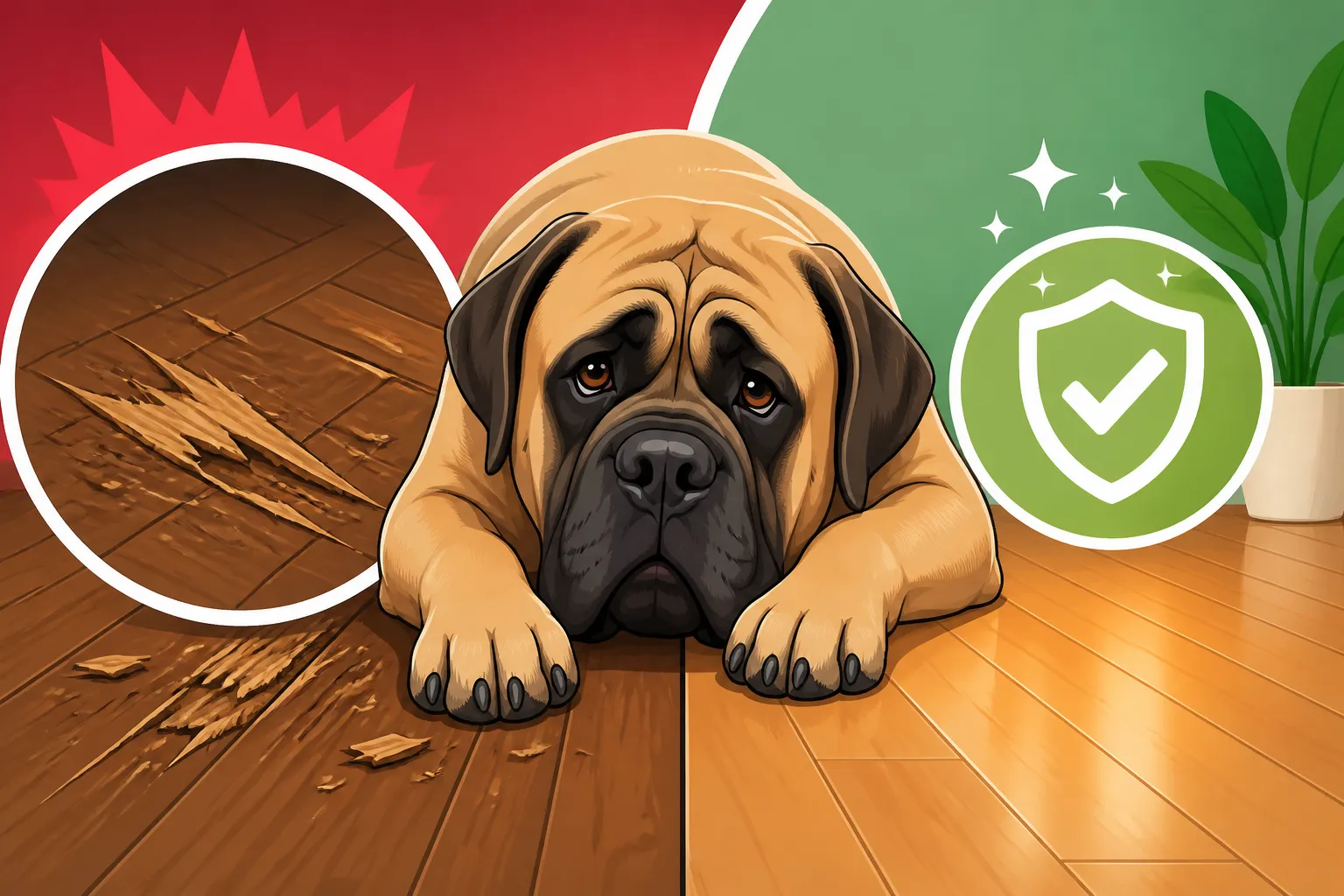
First and foremost, the most obvious culprit in hardwood floor damage from any dog is their nails. For a Mastiff, this concern is amplified tenfold. Imagine a dog the size of a pony, with nails designed for traction on natural terrain, walking across your smooth, finished wood. Even perfectly trimmed nails can exert significant pressure, leaving tiny indentations or superficial scratches, especially when a Mastiff suddenly changes direction, pushes off to stand, or gets a burst of zoomies. The problem becomes exponentially worse if nail care is neglected. Overgrown nails act like tiny chisels, digging into the wood grain with every step. When a Mastiff walks with long nails, their toes splay, and the nails hit the floor before the paw pads, digging in and leaving crescent-shaped marks. This isn't just an aesthetic issue; it can also be very uncomfortable for your Mastiff, affecting their gait and potentially leading to joint problems. Keeping a Mastiff's Nails Short Enough for Traction is crucial not just for your floors, but for their well-being.
Moreover, the paw pads themselves, while soft, can track in dirt, grit, and moisture, which act like sandpaper under the immense weight of a Mastiff. Fine particles get trapped under their massive paws, and as they walk, these particles grind against the finish, slowly but surely eroding its protective layer. A quick dash across the living room can leave a trail of micro-abrasions that, over time, dull the floor's luster and make it more susceptible to deeper scratches.
The Silent Impact of Sudden Momentum
Beyond the direct action of claws, the sheer momentum of a Mastiff can be incredibly damaging. Think about your Mastiff getting up from a deep nap on the floor. That sudden surge of two hundred pounds, pushing off the ground to gain footing, can create incredible stress on the floorboards. Their paws might slip and splay, creating friction burns or deep gouges as they struggle for purchase. This is why What Bare Floors Do to a Growing Mastiff can be such a concern for their developing joints, as repetitive slipping can lead to long-term orthopedic issues.
Excitement, too, plays a role. When the doorbell rings, or you come home after a long day, a Mastiff's joyful dash to greet you can turn your hallway into a slip-and-slide. The frantic scrabbling for grip can leave a trail of marks. While a Mastiff isn't typically known for explosive, high-energy antics like some smaller breeds, their bursts of speed, even if brief, carry considerable force. A Mastiff planting its feet and pushing off for a game of tug-of-war, or simply leaning its immense weight against a doorway, can cause unseen stress to the floorboards. The pressure from A Mastiff Lying Two Hundred Pounds on One Elbow All Day can even, over time, subtly affect the finish in favorite resting spots, making them more vulnerable to subsequent damage.
Not All Hardwood is Created Equal: Understanding Vulnerability
The type of hardwood flooring you have plays a significant role in its susceptibility to Mastiff-induced damage. Just like dogs, not all wood is made with the same strength or resilience. Understanding your specific floor type can help you assess the risk and implement the most effective preventative measures.
Softwoods, Hardwoods, and the Janka Scale
The primary differentiator in wood strength is its hardness, typically measured on the Janka hardness scale. This scale measures the force required to embed a steel ball halfway into a piece of wood. The higher the number, the harder and more dent-resistant the wood.
- Softwoods: Woods like pine, fir, or even some types of cherry are at the lower end of the Janka scale. These are beautiful, but incredibly prone to denting and scratching, even from moderate dog activity. A Mastiff's weight alone, let alone their nails, can easily leave lasting impressions on these softer surfaces. If you have softwoods, you'll need to be extra vigilant with protection.
- Hardwoods: Options like oak (both red and white), maple, and hickory are much harder and offer better resistance. White oak, for instance, has a Janka rating significantly higher than pine, making it a much more forgiving choice for a Mastiff household. Exotic hardwoods like Brazilian cherry or Santos mahogany boast even higher Janka ratings, offering superior durability against heavy traffic and pet activity. However, even the hardest wood isn't impervious to a two-hundred-pound dog with untrimmed nails, or repeated abuse. It's about resistance, not invincibility.
The Crucial Role of Finish and Protective Layers
Beyond the wood itself, the finish applied to your hardwood floors is your first line of defense. This protective layer is what truly takes the brunt of daily wear and tear.
- Polyurethane: This is a common and relatively durable finish. It creates a clear, protective layer that resists scratches and moisture. However, it can wear down over time, especially in high-traffic areas where your Mastiff frequently roams. Once the polyurethane wears through, the raw wood underneath is exposed and far more vulnerable to damage.
- Aluminum Oxide: Found in many prefinished hardwood floors, aluminum oxide is incredibly tough. It's essentially microscopic ceramic particles suspended in a urethane finish, making it highly resistant to scratches and abrasions. Floors with this type of finish generally hold up better against Mastiff claws, but they're not indestructible.
- Oil-based Finishes: These penetrate the wood, offering a more natural look and feel. They are generally less resistant to scratches and moisture than surface finishes, but they can be spot-repaired more easily. This can be a pro and a con for Mastiff owners; while minor scratches blend better, deeper damage is more likely to reach the wood.
The quality of the application matters too. A poorly applied finish, or one that's too thin, won't provide adequate protection, regardless of the type. Regular maintenance, including cleaning with appropriate wood floor cleaners (never harsh chemicals!), helps preserve the finish.
Beyond Solid Wood: Engineered and Laminate Options
Many homes today feature alternatives to traditional solid hardwood. These have their own unique vulnerabilities and benefits when it comes to Mastiffs.
- Engineered Hardwood: This type has a real wood veneer on top of multiple layers of plywood or high-density fiberboard. The top layer is real wood, so its scratch resistance depends on the wood species and finish, just like solid hardwood. However, engineered wood can be less prone to warping from moisture than solid wood, which could be a small advantage in a drool-prone Mastiff household. The thickness of the veneer matters; a thicker veneer can be refinished a few times, extending its life, whereas a very thin one cannot.
- Laminate Flooring: Laminate isn't real wood; it's a photographic image of wood (or stone, etc.) topped with a clear, durable wear layer. Good quality laminate can be very scratch-resistant due to its tough wear layer. However, if that wear layer is compromised, the printed image underneath is exposed and cannot be repaired like wood. Furthermore, laminate is very susceptible to water damage. If a significant amount of water or drool seeps between the planks, it can cause swelling and irreparable damage to the core layer. This makes it a tricky choice for Mastiff homes, given their proclivity for water messes and drool.
Proactive Measures to Safeguard Your Floors and Your Gentle Giant
Protecting your hardwood floors from your Mastiff doesn't have to be a losing battle. With some consistent effort and smart choices, you can significantly reduce the risk of damage. Many of these solutions also benefit your Mastiff by providing better traction and joint support.
The Non-Negotiable Art of Nail Maintenance
This cannot be stressed enough: meticulously maintained nails are your single most effective defense against floor damage. A Mastiff's nails should be kept short enough that they don't click on the floor when your dog is standing. If you hear clicking, they're too long.
Regular trimming, at least once a week, is essential. For Mastiffs, a Dremel or nail grinder is often more effective than clippers, as it allows for smoother, shorter nails without the risk of cutting into the quick. Desensitize your Mastiff to the process early with positive reinforcement and high-value treats. You can find quality grinders and clippers on sites like Chewy, along with plenty of tutorials on how to safely use them. Remember, consistency is key. Even a few days of overgrown nails can lead to scratches. This practice isn't just for your floors; short nails ensure proper foot structure and comfort for your Mastiff, preventing splaying and joint strain.
Strategic Soft Landings: The Power of Rugs and Runners
The simplest, most effective, and often most aesthetically pleasing solution is to strategically place rugs and runners in high-traffic areas. Think about where your Mastiff walks most often: pathways from the living room to the kitchen, hallways, areas around their food and water bowls, and their favorite napping spots.
- Rugs: Large area rugs can define spaces, add warmth, and provide excellent cushioning and traction. Choose durable, low-pile rugs that are easy to clean. You might even consider outdoor rugs for indoor use in very high-traffic or drool-prone areas, as they are designed for resilience and moisture resistance.
- Runners: Long runners are perfect for hallways, offering a continuous path of protection. Make sure they have a non-slip backing, or use rug pads underneath to prevent them from sliding around, which could actually be a hazard for your Mastiff.
- Orthopedic Beds: For your Mastiff's favorite lounging spots, invest in a high-quality, thick orthopedic bed. Not only does this keep their weight off your floor, but it provides crucial joint support, especially as they age. Look for beds with supportive foam that won't flatten quickly under a Mastiff's immense weight. You can find excellent options on Chewy designed for giant breeds. This is also a perfect example of a dual benefit: floor protection and dog comfort. Whether a Mastiff Needs Runners Through the House is less about aesthetics and more about safety and floor preservation.
Guarding Paws: Waxes, Booties, and Common Sense
While less common for everyday use, there are products designed to protect your Mastiff's paws, which in turn protects your floors.
- Paw Wax: Products like Musher's Secret or other paw balms create a protective barrier on your Mastiff's paw pads. This can improve traction, reducing slips and slides that can scratch floors. It also keeps pads healthy, preventing cracks that might track more dirt. While not a complete scratch preventative, it helps.
- Dog Booties: For specific situations, such as when you know your Mastiff will be very excited (e.g., guests arriving, or a quick dash outdoors and back in), dog booties can offer excellent floor protection. They provide superior traction and completely cover the nails. The challenge is getting a Mastiff to wear them consistently and comfortably, so they are often best reserved for short periods or specific problem behaviors. Ensure they fit well to avoid discomfort or tripping.
- Training for Calmness: A well-trained Mastiff, while still a giant, can be taught to move more deliberately indoors. Working on "place" commands, waiting at doorways, and discouraging frantic indoor play can significantly reduce the impact on your floors. Positive reinforcement training works wonders with these sensitive giants. For instance, teaching your Mastiff to "settle" or "wait" before being released to greet you can prevent excited, floor-damaging rushes. How Much Force a Mastiff Can Apply on a Leash gives you an idea of the power you're dealing with, and translating that control indoors is key.
Beyond Physical Damage: Moisture, Accidents, and Wear
It's not just scratches and dents you need to worry about with a Mastiff on hardwood. Their size and physiological characteristics bring other challenges that can lead to significant floor damage if not addressed.
The Drool Factor: Protecting Against Water Stains
Let's face it: Mastiffs drool. A lot. And they love to drink water, often leaving substantial puddles around their bowl. This constant exposure to moisture is a silent killer for hardwood floors. Water can seep into the seams between floorboards, causing the wood to swell, buckle, or warp. It can also lead to unsightly dark water stains that are notoriously difficult, if not impossible, to remove. The Staining a Mastiff's Drool Leaves can become a permanent fixture if not addressed quickly.
To combat this:
- Elevated Bowls with Mats: Use elevated food and water bowls to reduce neck strain for your Mastiff and potentially lessen the amount of water flung from their mouths. Always place the bowls on a waterproof, absorbent mat. Look for extra-large silicone mats on Chewy designed to catch spills. These mats should be cleaned daily to prevent mildew and lingering moisture.
- Frequent Wiping: Keep a dedicated "drool towel" handy near their water bowl and in high-traffic areas. Wipe up puddles and drool trails immediately.
- Protective Finishes: As mentioned earlier, robust finishes are more water-resistant, but no finish makes wood entirely waterproof. Stay on top of recoating your floors as needed to maintain this protective barrier.
Potty Training and Preventing Lasting Marks
Puppy accidents are an inevitable part of bringing any dog home, but with a Mastiff puppy, the volume of urine can be quite substantial. And as Mastiffs age, incontinence can become a concern. Urine can quickly penetrate hardwood floors, leaving behind dark stains and odors that are almost impossible to eradicate. The ammonia in urine can chemically react with the wood and its finish, causing permanent discoloration.
- Diligent Potty Training: This is paramount from day one. Take your Mastiff puppy out frequently, reward successes, and supervise closely indoors. For a giant breed puppy, How Long a Mastiff Puppy Takes to House Train can sometimes feel like an eternity, but consistency pays off.
- Immediate Cleanup: If an accident happens, clean it up immediately. Blot, don't wipe, to absorb as much liquid as possible. Use an enzymatic cleaner specifically designed for pet urine on wood floors. These cleaners break down the urine at a molecular level, removing both the stain and the odor. Avoid steam cleaners, as the heat can set stains and force moisture deeper into the wood.
- Senior Dog Solutions: For older Mastiffs experiencing incontinence, waterproof beds, belly bands (for males), and doggy diapers can provide invaluable protection. Just remember to change them frequently. While pet insurance providers like Healthy Paws cover medical conditions that might lead to incontinence, they won't cover the resulting damage to your floors.
Protecting your hardwood floors from your Mastiff is an ongoing commitment, but it's one that ensures a beautiful home and a comfortable, healthy life for your gentle giant.
| Preventative Measure | Benefits for Floors | Benefits for Mastiff | Cost/Effort Level (1-5) |
|---|---|---|---|
| Consistent Nail Trimming | Prevents scratches, dents, and deep gouges | Improves gait, prevents splayed toes, reduces joint strain | 2 |
| Strategic Rugs & Runners | Shields high-traffic areas, absorbs impact | Provides traction, prevents slips, cushions joints | 3 |
| Waterproof Mats Under Bowls | Prevents water damage, swelling, and stains | N/A | 1 |
| Prompt Drool Cleanup | Prevents water rings and wood discoloration | N/A | 2 |
| Paw Waxes | Improves traction, minor scratch resistance | Protects paw pads, prevents cracking | 1 |
| Quality Orthopedic Beds | Keeps weight off floors, prevents pressure marks | Crucial joint support, comfort for heavy dogs | 3 |
| Strict Potty Training | Prevents urine stains and odors | Establishes good habits | 4 |
Disclaimer
This article is for general informational purposes only and does not constitute professional advice. Laws, prices and regulations vary by location and change over time. Consult a qualified professional for guidance on your specific situation.