Whether a Mastiff Gets Wobbler Syndrome
One of the biggest worries for any Mastiff owner is the health of their magnificent, heavy-boned companion. When you have a dog of such immense size, concerns about their joints and spine are always at the forefront, and hearing about conditions like Wobbler Syndrome can be truly unsettling. This guide aims to thoroughly explore whether Mastiffs are indeed susceptible to Wobbler Syndrome, what signs to watch for, and how best to manage or even prevent this challenging neurological condition.
Understanding Wobbler Syndrome in Giant Breeds
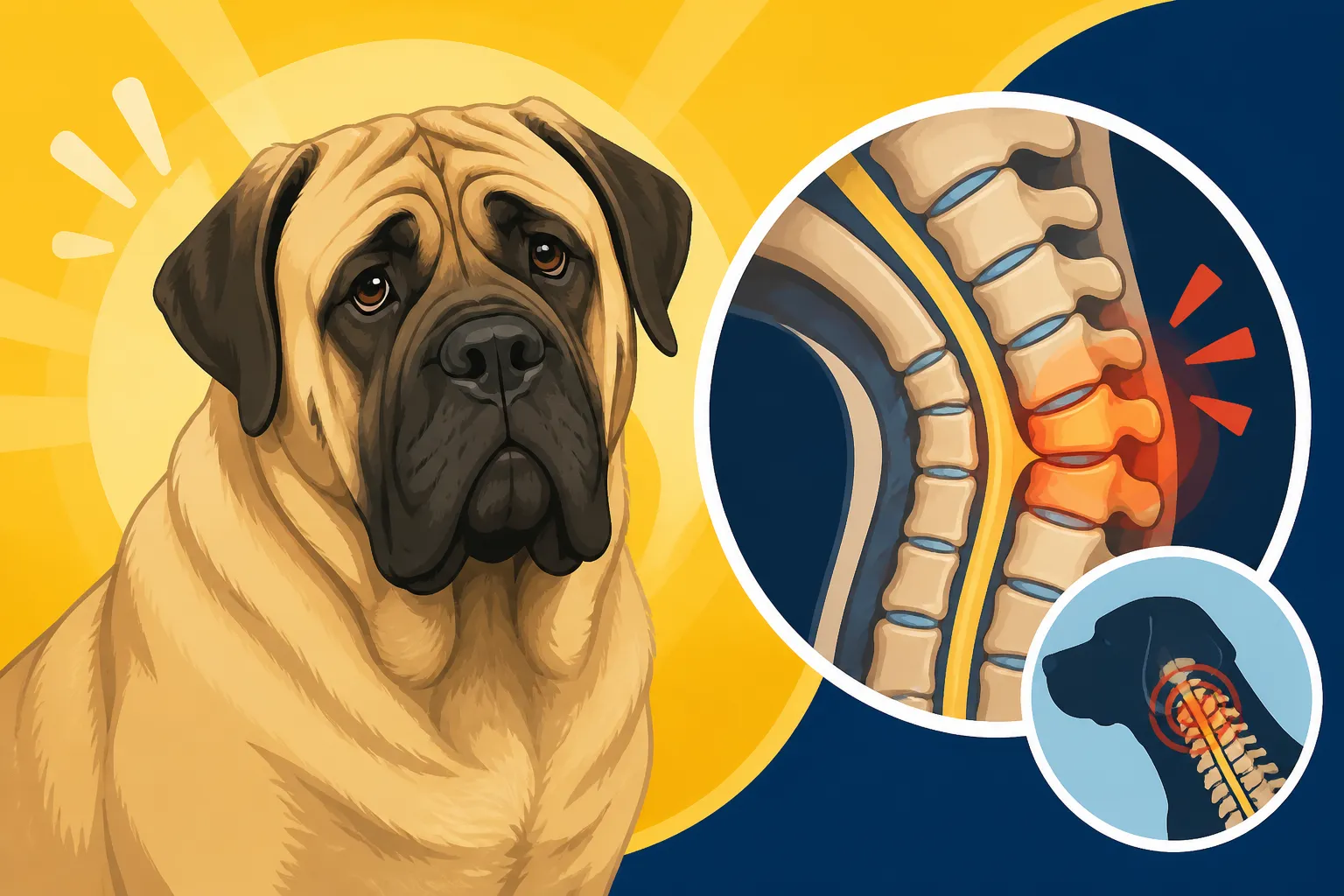
Wobbler Syndrome, formally known as Cervical Spondylomyelopathy (CSM), is a neurological condition that affects the spinal cord in the neck region. It’s characterized by compression of the spinal cord and/or nerve roots, leading to a distinctive wobbly gait, hence the name. For us Mastiff owners, the very idea of our powerful, sometimes clumsy, giants struggling with their balance is heartbreaking, and the unique challenges presented by their sheer mass only amplify these concerns.
It's not just a simple ache or stiffness; Wobbler Syndrome typically involves changes in the vertebrae, ligaments, or intervertebral discs that put pressure on the delicate spinal cord. This compression disrupts the signals traveling between the brain and the limbs, particularly the hind legs, though front leg issues can also occur. Imagine trying to walk while your brain can't quite tell your legs what to do – that's a bit of what our dogs might be experiencing. While it’s more commonly associated with breeds like Doberman Pinschers and Great Danes, given the Mastiff’s rapid growth and heavy bone structure, it's a valid concern we need to address head-on.
What is Cervical Spondylomyelopathy (CSM)?
Cervical Spondylomyelopathy isn't a single condition but rather a collection of abnormalities in the cervical spine (the neck) that lead to spinal cord compression. There are generally two main types. The first is disc-associated Wobbler Syndrome (DAWS), which often affects middle-aged to older large breeds. This type is caused by a herniated or bulging disc in the neck pushing against the spinal cord. Think of it like a squishy jelly donut with the jelly pushing out and pressing on nerves. The second type is bony-associated Wobbler Syndrome (BAWS), which typically affects younger, giant breeds, often appearing before two years of age. This involves bony changes, such as malformations of the vertebrae or thickening of ligaments, that narrow the spinal canal.
For Mastiffs, both types are theoretically possible, but the rapid growth and genetic factors that contribute to giant breed development make bony abnormalities a particularly pertinent concern. These structural issues can arise as a puppy grows, sometimes unnoticed until symptoms become apparent. This is why careful management of a Mastiff puppy's growth rate is so critical, a topic we touch on in Why a Mastiff Puppy Must Grow Slowly.
Why Mastiffs Are Included in the Discussion
While Mastiffs might not be the poster child for Wobbler Syndrome like some other breeds, their inherent characteristics place them at risk. They are a profoundly heavy-boned, fast-growing breed, and these traits are often linked to developmental orthopedic diseases, including those affecting the spine. The sheer weight and muscular structure of a Mastiff’s neck and head mean that any structural abnormality can lead to significant pressure on the spinal cord.
Consider the immense stress placed on a Mastiff’s developing skeletal system. From tiny puppy to colossal adult, their bones, joints, and spine are undergoing rapid, intense changes. If there's an underlying genetic predisposition or environmental factors, like improper nutrition during critical growth phases, it can manifest in problems down the line. It's not just about their size, but the way they grow that makes them part of this conversation. As owners, we need to be vigilant and aware of the potential for such issues.
Recognizing the Signs and Getting a Diagnosis
Spotting Wobbler Syndrome in its early stages can be tricky, especially with a breed like the Mastiff known for its stoic nature. They might not complain loudly, and early signs can be subtle. However, the sooner it’s identified, the better the chances for effective management. If you notice anything unusual in your Mastiff’s movement or demeanor, it’s always best to consult your vet promptly.
Early Symptoms and Progression
The hallmark symptom of Wobbler Syndrome is, as the name suggests, a wobbly, uncoordinated gait, often described as a "drunken sailor" walk. This ataxia typically affects the hind limbs first, giving them a swaying appearance. You might notice your Mastiff dragging their back paws, scuffing their nails on walks, or having difficulty navigating stairs. They might also appear to be over-flexing their hind legs, resulting in a high-stepping movement sometimes called "two-engine gait" or "four-engine gait" if all four legs are affected.
Other early signs can include:
- Neck pain or stiffness: Your Mastiff might be reluctant to lower their head to eat or drink, or show discomfort when you try to touch their neck. This ties into concerns about Whether a Mastiff's Neck Pain Means Wobblers.
- Weakness: They might stumble more frequently, struggle to get up from a lying position, or seem generally less energetic.
- Paresis: A partial loss of voluntary movement, particularly in the hind limbs.
- Muscle atrophy: Over time, the muscles in the affected limbs might start to waste away due to lack of use.
As the condition progresses, these symptoms worsen. A dog might become unable to stand or walk without support, leading to profound weakness and paralysis. It's a progressive disease, meaning it tends to get worse over time without intervention.
The Diagnostic Journey
If you suspect Wobbler Syndrome, your veterinarian will start with a thorough physical and neurological examination. They'll observe your Mastiff's gait, reflexes, and proprioception (awareness of body position in space). This initial exam helps localize the problem to the cervical spine.
To confirm the diagnosis and pinpoint the exact location and nature of the spinal cord compression, advanced imaging is usually required:
- X-rays: While standard X-rays can show bony abnormalities, they often don't provide enough detail of the spinal cord itself. However, they are a good first step to rule out other issues.
- Myelography: This involves injecting a contrast dye into the spinal canal and then taking X-rays. The dye highlights areas of compression by showing where the spinal fluid flow is obstructed. This procedure carries some risks, but it can be very informative.
- Magnetic Resonance Imaging (MRI): An MRI is often considered the gold standard for diagnosing Wobbler Syndrome. It provides detailed images of soft tissues, including the spinal cord, discs, and ligaments, without the need for contrast agents that carry risk. It can show the exact location and severity of the compression. For a dog as large as a Mastiff, an MRI often requires a specialized facility and can be quite an undertaking, both logistically and financially. You might want to review Whether a Mastiff Needs an MRI for more details on this.
- Computed Tomography (CT) Scan: A CT scan can also provide detailed images, particularly of bony structures, and is sometimes used in conjunction with a myelogram (CT myelogram) for an even clearer picture.
Your vet might also recommend blood tests to rule out other conditions that could mimic Wobbler Syndrome. Getting a precise diagnosis is crucial, as the treatment approach will depend heavily on the specific cause and location of the compression.
Causes and Contributing Factors
Wobbler Syndrome in giant breeds like the Mastiff is rarely due to a single cause; it's often a complex interplay of genetics, nutrition, and mechanical stress. Understanding these factors can help us make informed decisions about their care, especially during their critical growth phases.
Genetic Predisposition and Conformation
There's strong evidence pointing to a genetic component in Wobbler Syndrome. Certain breeds, as mentioned, are simply more predisposed. For Mastiffs, their specific conformation – particularly their heavy heads, thick necks, and broad shoulders – can contribute. Imagine the leverage and strain put on the cervical spine by such a substantial structure. If there are any underlying vertebral malformations or laxity in the ligaments, this heavy load can exacerbate compression over time.
Research continues to explore the exact genetic markers, but it's clear that responsible breeding practices are paramount. Breeders should aim for sound structure and avoid propagating lines known for spinal issues. Unfortunately, even with the best intentions, the rapid growth trajectory of a Mastiff puppy means their developing spine can be vulnerable.
Nutritional Influences During Growth
Nutrition plays a surprisingly significant role, particularly in young, fast-growing giant breed puppies. Overfeeding, especially with diets too high in protein, calories, or calcium, can lead to excessively rapid growth, which can outpace the healthy development of bones, joints, and cartilage. This imbalance can result in developmental orthopedic diseases, including those affecting the spine.
Many Mastiff owners are, understandably, eager to see their puppies grow into majestic adults. However, the mantra for giant breed puppies should always be slow and steady. Feeding a high-quality, large-breed puppy food specifically formulated to promote slower growth is essential. You’ll want to be mindful of The Protein and Calcium Ceiling for a Mastiff Puppy and adhere strictly to recommended feeding guidelines to prevent your Mastiff puppy from growing too fast. This careful approach to diet can significantly mitigate the risk of conditions like Wobbler Syndrome and other skeletal issues.
Trauma and Mechanical Stress
While less common as a primary cause, trauma to the neck can certainly trigger or worsen Wobbler Syndrome. A sudden fall, a collision during boisterous play, or even chronic stress from pulling on a leash could potentially contribute to spinal compression, especially if there's an underlying predisposition. For a Mastiff, their sheer size means that any physical impact can be substantial.
Think about how a young, energetic Mastiff puppy might play. Their zest for life can lead to clumsy moments. Preventing undue stress on their neck and spine, especially during their growth, is crucial. This includes using appropriate harnesses instead of neck collars for walks, especially if they are prone to pulling. Also, being mindful of their environment, ensuring they have good traction and don't routinely jump off high surfaces, can help minimize risk. This is also why Why a Mastiff Puppy Must Not Be Exercised Hard is such important advice.
Treatment Approaches and Long-Term Outlook
Receiving a diagnosis of Wobbler Syndrome can feel overwhelming, but there are various treatment options available, ranging from conservative management to surgical intervention. The best course of action will depend on the severity of the compression, the specific type of Wobbler Syndrome, and your Mastiff’s overall health and age.
Conservative Management
For Mastiffs with mild symptoms, conservative management is often the first approach. This typically involves:
- Strict Rest: Limiting activity to prevent further injury and allow inflammation to subside. This might mean kennel rest or very restricted leash walks for several weeks.
- Medication: Anti-inflammatory drugs (NSAIDs or corticosteroids) can help reduce swelling and pain around the spinal cord. Muscle relaxants may also be prescribed.
- Pain Management: Your vet might also prescribe specific pain medications to keep your Mastiff comfortable.
- Physical Therapy: Once the initial inflammation is under control, physical therapy, including gentle range-of-motion exercises, hydrotherapy, and controlled short walks, can help strengthen muscles and improve coordination. This can be a long-term commitment.
- Neck Brace: In some cases, a neck brace may be used to limit neck movement.
The goal of conservative management is to reduce inflammation, alleviate pain, and prevent further spinal cord damage. It's a commitment, requiring patience and consistent effort from the owner. For some dogs, this can significantly improve their quality of life, allowing them to cope with their condition for years. However, conservative treatment doesn't fix the underlying structural issue, so symptoms can recur or worsen. The financial aspect of ongoing medication and physical therapy can add up, making pet insurance providers like Healthy Paws a crucial consideration for many Mastiff owners facing chronic conditions.
Surgical Intervention
When conservative management isn't effective, or if the compression is severe, surgery may be recommended. The aim of surgery is to decompress the spinal cord and stabilize the cervical spine. Various surgical techniques exist, and the choice depends on the specific cause and location of the compression:
- Dorsal Laminectomy: This involves removing a portion of the vertebral arch to relieve pressure on the spinal cord.
- Ventral Slot Procedure: A common technique where a small window is created in the underside of the vertebra to remove disc material or bone pressing on the cord.
- Distraction-Stabilization: This involves using implants (screws, plates) to spread the vertebrae apart and stabilize the segment, thereby relieving pressure.
Surgery for Wobbler Syndrome, especially on a Mastiff, is a major undertaking. It requires a highly skilled veterinary neurosurgeon and often a specialist hospital. Post-operative care is intensive, involving strict rest, pain management, and extensive physical rehabilitation. The recovery period can be long, often months, and there's always a risk of complications.
Table: Conservative vs. Surgical Management for Wobbler Syndrome
| Feature | Conservative Management | Surgical Intervention |
|---|---|---|
| Severity | Mild to moderate symptoms | Moderate to severe, or non-responsive to conservative |
| Primary Goal | Manage pain, reduce inflammation, slow progression | Decompress spinal cord, stabilize spine |
| Key Methods | Rest, medication (NSAIDs, steroids), physical therapy | Laminectomy, ventral slot, distraction-stabilization |
| Recovery Time | Weeks to months (ongoing management) | Months (intensive post-op, then rehabilitation) |
| Cost | Moderate (ongoing medication, PT) | High (specialist surgery, intensive post-op care, PT) |
| Risks | Recurrence/progression of symptoms | Anesthesia, infection, neurological deterioration, failure of implants |
| Prognosis | Variable, often good for symptom control; not curative | Variable, can lead to significant improvement or cure; risks involved |
Prognosis and Quality of Life
The prognosis for Mastiffs with Wobbler Syndrome varies greatly depending on the severity of the compression, the specific treatment chosen, and how early the condition was diagnosed. Some dogs treated conservatively can live comfortably for years with managed symptoms, while others may eventually require surgery. For those undergoing successful surgery, significant improvement or even a return to a good quality of life is possible, though some degree of neurological deficit might remain.
It's a long road, and considering the immense costs involved in diagnosis, surgery, and rehabilitation, having pet insurance like Healthy Paws can be a lifesaver. They can help alleviate the financial strain, allowing you to focus on your Mastiff’s recovery. Owners must be prepared for a long-term commitment to their Mastiff's care, which might include continued physical therapy, environmental modifications to prevent slips (like runners on hardwood floors), and ongoing monitoring for any worsening signs.
Preventative measures, particularly in puppies, cannot be stressed enough. Ensuring a proper, controlled growth rate through appropriate nutrition (as discussed in Why a Mastiff Puppy Must Grow Slowly), avoiding excessive exercise or trauma during critical developmental stages, and opting for a responsible breeder who screens for genetic predispositions, are all vital steps in giving your Mastiff the best chance at a long, healthy life. While Wobbler Syndrome might be a concern, with awareness and proactive care, you can help your Mastiff navigate this potential challenge. This diligence is part of the larger commitment to Caring for a Mastiff Past Five, ensuring they remain comfortable and happy in their later years.
Disclaimer
The information provided in this article is for educational purposes only and should not be considered a substitute for professional veterinary advice. Always consult with a qualified veterinarian for any health concerns or before making any decisions about your pet's medical care.