What Bare Floors Do to a Growing Mastiff
It’s a common, gut-wrenching sight for any Mastiff owner: your clumsy, fast-growing puppy scrambling for purchase on a slick kitchen floor, legs splaying out, and that desperate look in their eyes as they try to regain footing. This isn’t just adorable puppy antics; it’s a real and serious concern that can have lasting, detrimental effects on your Mastiff's developing joints and overall health. This guide will walk you through exactly why bare floors are such a problem for these giant youngsters and, more importantly, what you can do about it.
The Immediate Dangers of Slippery Floors for a Growing Mastiff
When you bring home a Mastiff puppy, you're not just getting a dog; you're adopting a furry, rapidly expanding tank. These puppies gain weight at an astonishing rate, sometimes several pounds a week, and their coordination often can't keep up with their growth spurts. Bare, slick floors exacerbate this imbalance, turning everyday movements into potential hazards.
Acute Injuries and Traumas
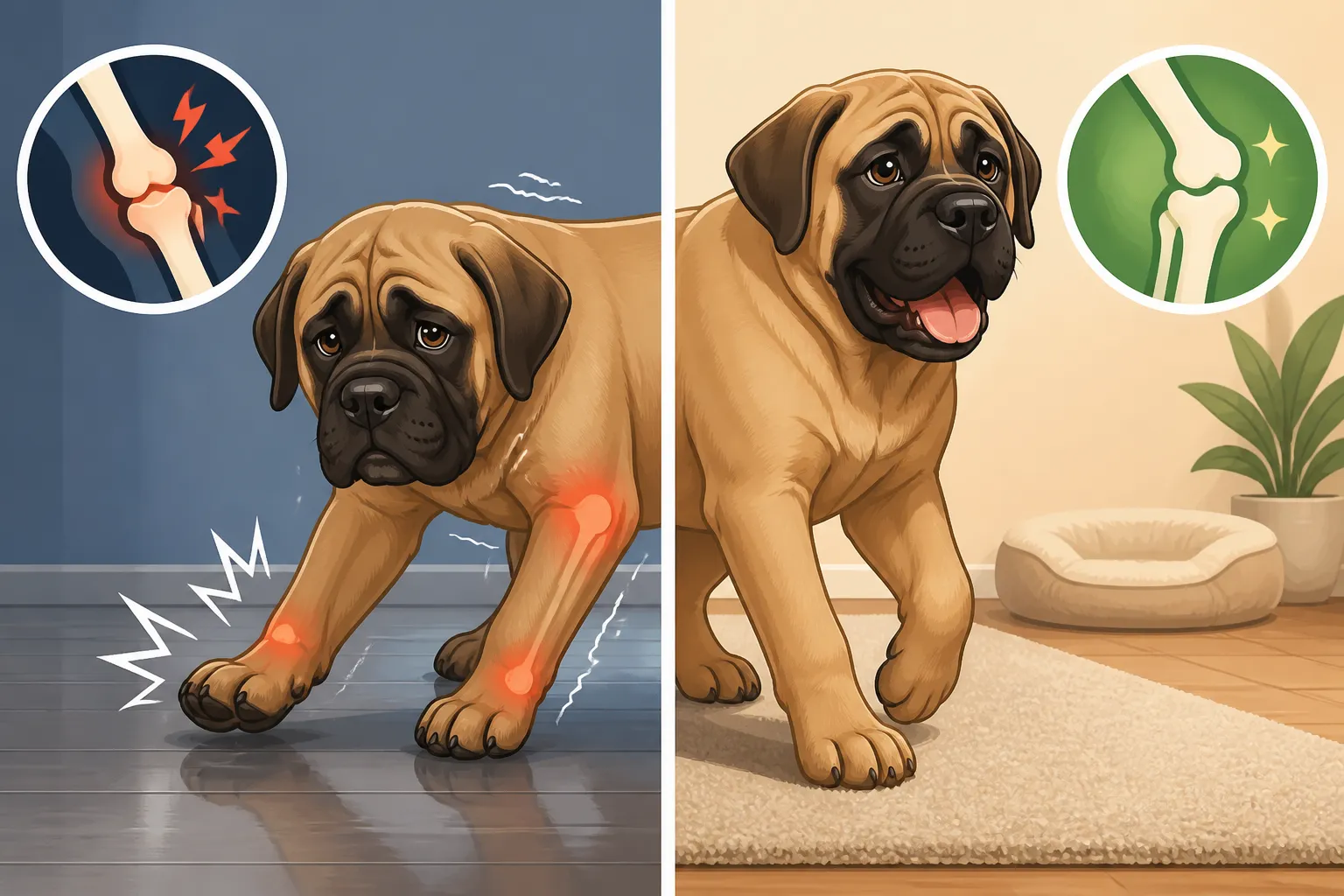
Imagine a human toddler learning to walk on ice – that’s pretty close to what a Mastiff puppy experiences on hardwood, tile, or laminate. Their powerful limbs aren't yet fully controlled, and their sheer mass means any slip or fall carries significant momentum. A sudden splay of the legs, a frantic attempt to stop, or a misguided leap can result in immediate and painful injuries.
Common acute traumas we see in Mastiff puppies navigating slippery surfaces include muscle strains, ligament sprains, and even bruised growth plates. The rapid weight gain means their bones and soft tissues are under immense pressure, and a single bad slip can cause micro-traumas or more severe damage. We're talking about pulled groin muscles from legs splaying too wide, hyperextended joints from trying to stop quickly, or even injuries to the spine from twisting awkwardly. These aren’t trivial injuries; they can be very painful and require immediate veterinary attention, sometimes leading to weeks of crate rest, which is difficult with a giant breed puppy that still needs to learn manners and socialization. The initial veterinary bills can be substantial, and ongoing physical therapy might be needed.
Psychological Impact and Confidence Issues
Beyond the physical risks, there’s a real psychological toll. A puppy that constantly slips and falls on your floors can become hesitant, fearful, and lose confidence in their own movement. They might start to move gingerly, avoid certain rooms, or become reluctant to play or even stand up quickly. This learned helplessness can affect their overall demeanor and willingness to engage with their environment.
Think about it from their perspective: every time they try to walk, run, or play, their world literally slides out from under them. This instability can be incredibly disorienting and scary. We want our Mastiff puppies to be bold and confident, exploring their world with joyful curiosity, not tiptoeing around like they're walking on eggshells. A confident Mastiff is a well-adjusted Mastiff, and fostering that confidence starts with providing a safe, stable environment where they feel secure in their own paws. This is especially important during their critical socialization periods.
Long-Term Consequences for Developing Joints
While immediate injuries are alarming, the insidious, long-term damage that bare floors can inflict on a Mastiff's developing skeletal system is arguably even more concerning. Mastiffs are already predisposed to a host of orthopedic issues due to their rapid growth and eventual immense size. Adding slippery floors into the mix is like pouring gasoline on an already burning fire.
Worsening Hip and Elbow Dysplasia Risk
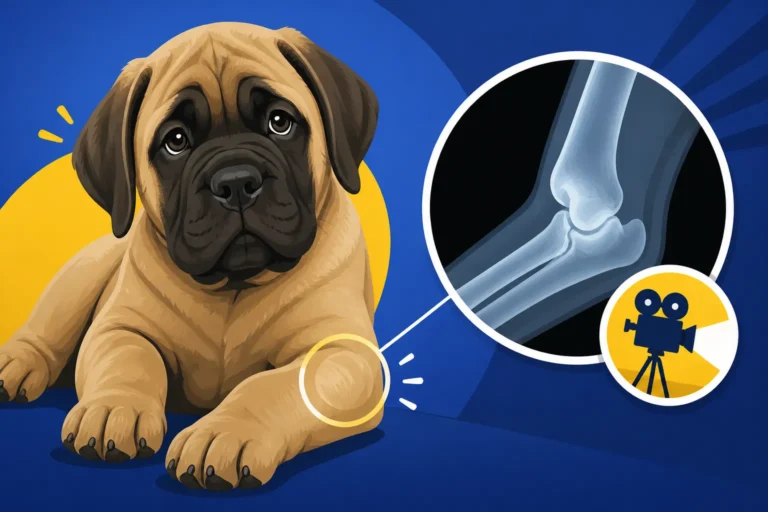
Hip and elbow dysplasia are unfortunately common in large breeds, and Mastiffs are no exception. These conditions are complex, with genetic components playing a significant role, but environmental factors, especially during puppyhood, can drastically influence their severity. Constant slipping, splaying, and uncontrolled movements on bare floors put abnormal stresses on developing joints.
When a puppy slips, their legs often splay outwards, forcing their hip and elbow joints into extreme, unnatural angles. This repeated stress can cause the soft cartilage and developing bone to form incorrectly. The ball of the femur might not fit snugly into the hip socket, or the bones of the elbow might not articulate smoothly. This micro-trauma, sustained daily, can worsen existing genetic predispositions or even contribute to the development of dysplasia in puppies that might otherwise have had mild or subclinical forms. Ensuring your Mastiff has controlled growth is paramount, and minimizing joint stress is a huge part of that. Imagine your puppy trying to push off the floor to stand or get up quickly; on a slick surface, their muscles tense, but their paws slide, putting immense shearing forces on the joints. This can impact Why a Mastiff's Hips Fail Under Its Own Weight and contribute to Elbow Dysplasia Affects One Mastiff in Seven.
Impact on Overall Skeletal Development
Beyond just hips and elbows, the entire skeletal system of a growing Mastiff is vulnerable. Their growth plates, which are areas of soft, rapidly dividing cartilage at the ends of long bones, are not fully closed until they are often 18-24 months old. These plates are particularly susceptible to injury. Repeated concussive forces from slipping and hard landings can damage these delicate areas, leading to abnormal bone growth, bowed legs, or other deformities.
Even something as seemingly innocuous as a puppy scrambling to get up from a lying position on a slick floor can cause undue stress on their spine and other joints. The unnatural compensation they make to maintain balance can lead to poor posture and gait development, which might not be immediately apparent but can manifest as lameness or discomfort later in life. It's crucial to understand that a Mastiff puppy is not just a smaller version of an adult dog; their bodies are actively under construction, and we need to provide the best possible environment for that construction to proceed correctly. It's why efforts like avoiding excessive exercise, which you can read more about in Why a Mastiff Puppy Must Not Be Exercised Hard, are so important.
Creating a Safe Environment: Practical Solutions
So, you have bare floors and a Mastiff puppy. Don't panic! There are many practical steps you can take to create a safer, more stable environment that supports healthy joint development and builds your puppy's confidence.
Investing in Area Rugs and Runners
This is perhaps the most immediate and impactful solution. Laying down area rugs and runners throughout your home, especially in high-traffic areas where your Mastiff puppy spends most of its time, provides much-needed traction. Think about the paths your dog takes: from their bed to the water bowl, from the living room to the door, around the kitchen. These are the areas that absolutely need coverage.
Look for rugs with non-slip backings or purchase separate rug pads to prevent the rugs themselves from sliding. While this might mean a temporary change to your aesthetic preferences, your Mastiff’s health is worth it. For an extra layer of grip, consider using double-sided rug tape in areas where rugs might shift. You don't necessarily need wall-to-wall carpeting, but strategically placed, stable rugs can make a world of difference. This also helps with another common Mastiff issue: providing soft places for them to lie down to prevent conditions like elbow hygromas, which can form when a heavy dog constantly lies on hard surfaces.
Paw Grips and Traction Aids
Sometimes, rugs aren't feasible everywhere, or your Mastiff might need extra help. This is where paw grips, traction socks, or even trimming paw hair come in handy. Paw grips are essentially rubber pads with adhesive that you stick to the bottom of your dog's paws. They provide immediate traction and can be a lifesaver for older or less stable dogs, but they can also benefit puppies learning to navigate slick surfaces.
Dog socks with rubberized bottoms are another option, though some Mastiffs might find them irritating or try to pull them off. If you go this route, ensure they fit well and aren't too tight or too loose. Another simple, yet often overlooked, tip is keeping the hair between your Mastiff's paw pads trimmed short. Excess hair can reduce natural traction, essentially acting like little slippers. Regularly trimming this hair can improve their grip on all surfaces. Brands like PawZ make rubber dog boots that can also offer excellent traction, especially if you need a temporary solution for a particularly challenging area. While it's always best to modify the environment, these aids can bridge the gap.
| Traction Aid | Pros | Cons | Best Use Case |
|---|---|---|---|
| Area Rugs/Runners | Best overall traction, comfortable, covers large areas | Can be expensive, aesthetic changes, requires maintenance | High-traffic areas, main living spaces |
| Paw Grips/Pads | Targeted traction, good for specific slipping issues | Can fall off, some dogs pick at them, frequent reapplication | Small areas, temporary solutions, elderly dogs with weakness |
| Traction Socks | Easy to put on/take off, variety of designs | May restrict paw movement, can slip down, dogs may remove them | Short-term use, cold weather, minor slipping issues |
| Trimmed Paw Hair | Natural, free, easy to maintain | Only effective for dogs with long paw hair, mild improvement | General maintenance for all dogs, combined with other aids |
| Rubber Dog Boots | Excellent grip, protection from elements, durable | Can be uncomfortable, some dogs refuse to wear them, costly | Outdoor adventures, severe traction problems, medical needs |
Smart Management and Supervision
Beyond physical modifications, smart management and supervision are vital, especially during your Mastiff’s most vulnerable puppy stages. Until their growth plates close and their muscles fully develop, actively manage their interactions with bare floors.
Limit their access to overly slick areas without supervision. If you have a kitchen with tile, consider using baby gates to block it off or supervise closely when they're in there. Teach them to walk slowly and deliberately on bare surfaces rather than letting them run or play zoomies. If they constantly launch themselves off the sofa onto a bare floor, you might need to restrict sofa access until they're older and more stable. Remember, The Shifting Lameness of a Growing Mastiff, a common issue where puppies may show intermittent lameness in different limbs, can sometimes be linked to the cumulative stress on joints. Every effort to reduce joint stress helps.
Consider incorporating physical therapy exercises on safe, non-slip surfaces to build core strength and body awareness. Gentle exercises that encourage slow, controlled movements can help strengthen the muscles surrounding the joints, providing better support. This proactive approach helps mitigate risks and builds a stronger, more confident dog.
Understanding the Mastiff's Unique Growth Challenges
It’s easy to look at a Mastiff puppy and see a big, strong dog. But beneath that impressive exterior lies a delicate, rapidly changing physiology that makes them particularly susceptible to environmental hazards like bare floors. Their growth isn't just fast; it's unique, and understanding it helps us be better guardians.
Rapid Growth and Immense Weight
No other breed quite matches the sheer speed and volume of growth seen in a Mastiff. They are one of the fastest-growing and heaviest breeds on the planet. A Mastiff puppy can go from a few pounds at birth to over 100 pounds by six months, and then continue to gain substantial weight for another year or two, potentially reaching well over 200 pounds as adults. This means their bones, muscles, and ligaments are constantly trying to catch up with their rapidly increasing body mass.
This rapid expansion leaves their skeletal system in a state of flux for an extended period. Their bones are soft, and their growth plates remain open longer than smaller breeds. The ligaments and tendons supporting their joints are still developing tensile strength. This combination of heavy weight and immature structures creates a perfect storm for injury on slippery surfaces. Every time they slip, the force of their heavy body is transmitted through these still-developing structures, increasing the risk of damage. You can read more about how their weight impacts their health in general with What a Mastiff's Weight Does to Every Line on the Vet Invoice.
Soft Bones and Vulnerable Growth Plates
During puppyhood, a Mastiff's bones are not yet fully ossified (hardened). They are softer, more porous, and more prone to bending or fracturing under stress compared to an adult dog's bones. The growth plates, specifically, are cartilage structures that are the sites of all longitudinal bone growth. Because they are cartilaginous, they are weaker than the surrounding bone and are the "weak link" in the skeletal system of a growing puppy.
A hard slip or fall, particularly one that involves twisting or splaying, can easily injure these growth plates. Damage to a growth plate can lead to pain, lameness, and, in severe cases, abnormal bone growth. If a growth plate is damaged unevenly, it can cause the bone to grow crookedly, leading to permanent orthopedic deformities. This is a critical reason why it's so important to prevent uncontrolled movements and falls on bare floors. The vulnerability of these plates is also why activities like jumping and prolonged strenuous exercise are heavily discouraged in Mastiff puppies – a topic explored further in The Mastiff Puppy You Are Not Allowed to Exercise.
Long-Term Joint Health and Preventative Measures
The steps you take during your Mastiff’s puppyhood lay the groundwork for their lifelong joint health. Addressing the issue of bare floors isn't just about preventing immediate injury; it's an investment in their future comfort and mobility.
The Role of Nutrition and Controlled Growth
While not directly related to floor surfaces, it’s impossible to talk about Mastiff joint health without mentioning nutrition and controlled growth. Feeding a diet specifically formulated for large breed puppies is crucial, as these diets are designed with carefully balanced calcium and phosphorus levels to support slow, steady bone development. Overfeeding, which leads to too-rapid weight gain, puts even more stress on vulnerable joints.
A lean puppy is a healthy puppy. Keeping your Mastiff puppy on the leaner side, where you can easily feel but not necessarily see their ribs, minimizes the load on their developing joints. This careful balance, combined with providing good traction, forms a holistic approach to preventing orthopedic issues. The question of How Much a Mastiff Puppy Puts On Weight is directly tied to this. If you’re ever worried your Mastiff is growing too fast or too slow, your vet is your best resource.
Regular Veterinary Check-ups and Monitoring
Regular veterinary check-ups are essential for monitoring your Mastiff’s growth and detecting any early signs of orthopedic issues. Your vet can assess your puppy's gait, check their joints, and discuss any concerns you have about their development. They might even recommend X-rays if they suspect a problem, though generally, X-rays for certification, such as for hip and elbow dysplasia, aren't done until a Mastiff is at least two years old, as discussed in The Age a Mastiff Is Certified by OFA.
If your Mastiff puppy has had a significant fall or shows persistent lameness, don't hesitate to seek veterinary attention. Early intervention can often lead to better outcomes. In some cases, your vet might suggest joint supplements, even for puppies, to support cartilage health. However, always consult your veterinarian before adding any supplements to your Mastiff's diet.
It's also worth noting that pet insurance can be a huge help when dealing with unexpected injuries or long-term joint conditions. Companies like Healthy Paws offer comprehensive plans that can cover everything from emergency vet visits for a sprained leg due to a fall to ongoing treatment for dysplasia, which can add up quickly with a giant breed. Investing in a good pet insurance policy early on can provide peace of mind and ensure you can always make the best medical decisions for your beloved companion without financial stress.
Commitment to a Safe Home Environment
Ultimately, the responsibility for creating a safe environment falls on us, the Mastiff owners. These magnificent dogs give us so much joy and companionship, and in return, they deserve every possible advantage for a healthy, comfortable life. This means a long-term commitment to keeping your home free of unnecessary hazards, especially bare, slippery floors.
It's not just a puppy problem, either. As Mastiffs age, they may develop arthritis or become less stable on their feet. The same bare floors that challenged them as puppies can become even greater hazards as they enter their senior years. Maintaining rugs and runners, ensuring good paw traction, and adapting your home as your Mastiff grows and ages is part of Caring for a Mastiff Past Five. This commitment ensures they can move freely, confidently, and safely throughout their entire lives, from clumsy puppyhood to their golden years.
Disclaimer
As a responsible Mastiff owner, it's crucial to consult with your veterinarian for any specific health concerns or before making significant changes to your dog's diet, exercise, or living environment. This article provides general information and should not replace professional veterinary advice.