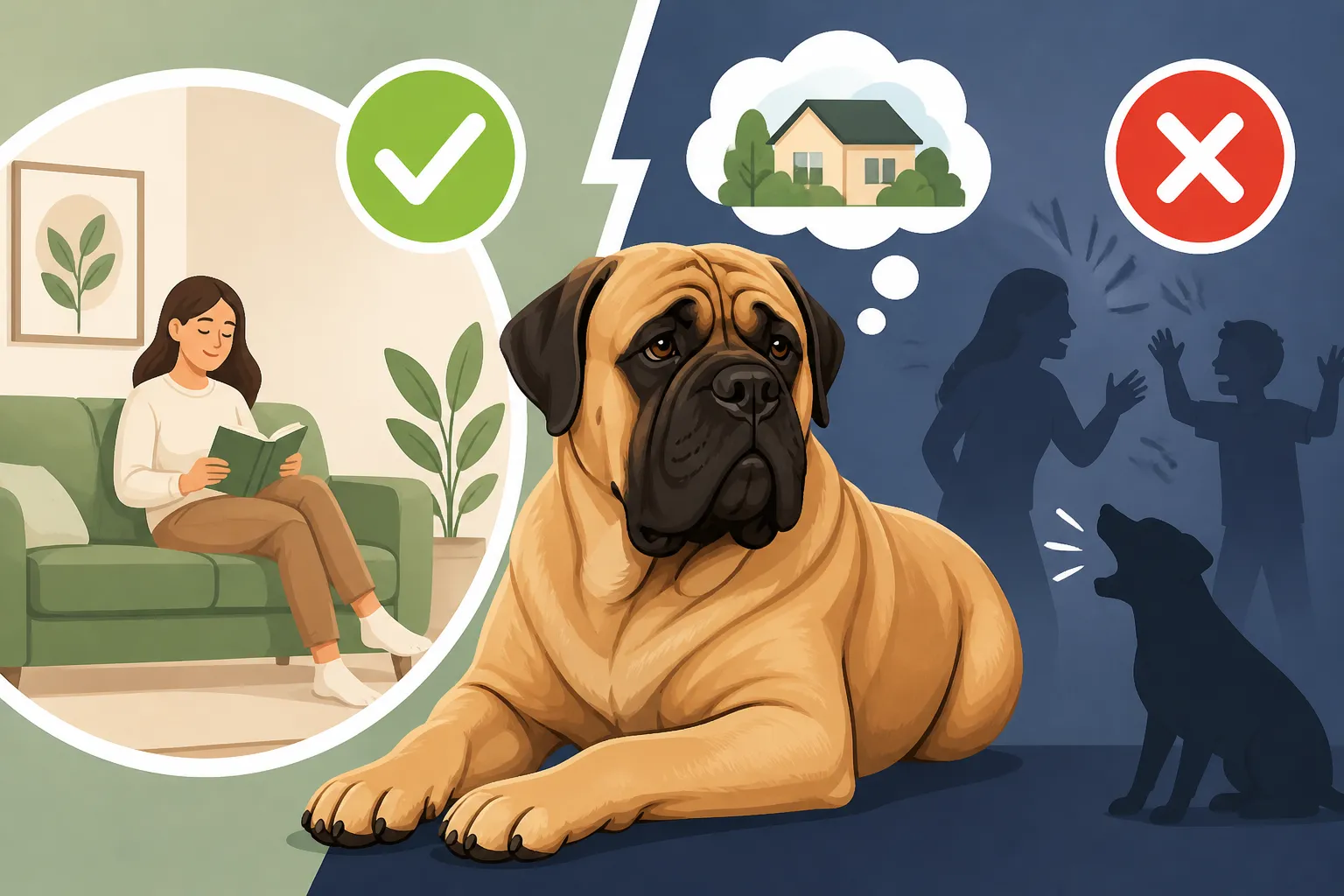
Whether a Mastiff Suits a Quiet Household
A quiet household can sound like a perfect match for a Mastiff: fewer noisy visitors, a calm place to nap, and a slower pace of life. But quiet does not automatically mean suitable. A Mastiff may be a gentle homebody while still needing company, training, room to move, and a plan for visitors. This guide explains what a peaceful home can—and cannot—offer this giant breed.
What a Quiet Household Means to a Mastiff
Calm surroundings can suit the breed
Many Mastiffs are content to spend much of the day close to their people, resting between short periods of activity. They usually don’t need a household full of constant entertainment, and a quiet home may make it easier for them to settle. A dog that likes to snooze near the sofa can be comfortable in a low-key routine of meals, brief training, walks suited to its age and health, and time with family.
Still, calm is not the same as having no needs. A Mastiff needs regular chances to go outside, social contact, basic training, and appropriate veterinary care. A predictable household can help, but a dog left alone for long stretches every day may become distressed or develop unwanted habits. If your schedule involves long absences, consider whether you can arrange a midday visit or other company. How Long a Mastiff Copes Alone
It also helps to think about the kind of quiet you mean. A home with a few people and steady routines may suit a Mastiff well. A home where no one interacts with the dog for most of the day is different. Mastiffs often value being near their people, even when they are doing little more than lying on the floor while someone reads or works.
Quiet does not mean inactive
Mastiffs are not typically endurance athletes, but they still need movement and engagement. A relaxed walk, a little scent work, short training sessions, and time to explore a safe yard can all be part of a calm day. The right activity level depends on the individual dog’s age, health, and conditioning. A young Mastiff, an older dog with sore joints, and a healthy adult will not have identical needs.
The point is not to exhaust the dog. In fact, strenuous exercise can be inappropriate for a growing puppy, while a senior Mastiff may need shorter, easier outings. A suitable routine is one the dog can manage comfortably and consistently. If you are unsure what exercise is appropriate for your dog’s life stage, ask your veterinarian rather than relying on a one-size-fits-all schedule. Why a Mastiff Only Needs One Hour a Day
Mental activity can fit naturally into a peaceful home. Ask for a sit before meals, practice calm leash manners, hide a few pieces of kibble for the dog to sniff out, or work on settling on a mat while you read. These small activities give the dog useful interaction without turning the home into a noisy, high-energy environment.
The people in the home matter more than the noise level
A quiet household can still be a poor match if nobody has time to care for the dog. Conversely, a home with children, regular visitors, or other pets may work if the adults can supervise, set boundaries, and give the dog a safe place to rest. The key is not silence; it is whether the household’s routines and expectations suit the particular Mastiff.
Consider how much handling the dog will experience. A Mastiff may be large enough to knock someone off balance by leaning, turning quickly, or stepping into their path, even without meaning to. Everyone in the household should understand how to give the dog space, avoid disturbing it while sleeping or eating, and use calm, consistent cues. A peaceful environment is especially helpful when people respect the dog’s need to rest instead of treating its size as an invitation to climb on or crowd it.
The Main Challenges in a Peaceful Home
Visitors and unfamiliar sounds still need a plan
A quiet home can make an unexpected knock, delivery, or visitor feel like a big event. Some Mastiffs are watchful and may respond by barking, standing between their person and the door, or taking time to accept a newcomer. That behavior is not necessarily aggression, but it can be intimidating when a large dog meets a guest in a narrow entryway.
Think through the arrival routine before bringing a Mastiff home. You might teach the dog to go to a bed or designated room while someone enters, use a leash for controlled greetings, and let the dog observe visitors without being pressured to approach. Avoid allowing guests to reach over the dog, corner it, or insist on petting it. Calm introductions give everyone a better chance to feel safe. For a closer look at how a Mastiff may respond to someone at the entrance, read How a Mastiff Judges a Stranger at the Door.
A quiet household should not mean keeping the dog isolated from ordinary life. Thoughtful exposure to different people, places, and everyday sounds can help a puppy or newly adopted adult learn that unfamiliar things are manageable. Socialization means creating safe, positive experiences, not forcing a dog into a crowded situation and hoping it gets used to it. Whether a Mastiff Is Wary of Strangers
A dog that is peaceful indoors may still be physically powerful
Mastiffs can be calm companions, but their size changes the consequences of ordinary behavior. A dog that lunges toward a squirrel, pulls suddenly, blocks a doorway, or gets startled near the front door can be difficult for one person to manage. Training should begin early, while the dog is still physically manageable, and continue through adulthood.
Focus on practical skills: walking on a loose leash, waiting at doors, coming when called in safe settings, moving away from food or household items on cue, and settling when asked. Reward the behavior you want and keep practice short enough that the dog stays engaged. Avoid relying on yelling or physical force; those methods can make an uncertain situation more stressful and may damage trust. Teaching a Mastiff Before It Outweighs You
The layout of the home matters too. A Mastiff stretched across a hallway can turn a narrow passage into an obstacle course. Rugs or runners may help on slippery floors, and a bed placed away from busy walkways gives the dog somewhere to rest without being stepped over. If you’re thinking about apartment living as well as a quiet routine, see Whether a Mastiff Suits an Apartment. Space alone does not determine suitability, but access, traction, stairs, and practical movement around the home deserve consideration.
Silence can hide stress rather than solve it
Some dogs are quiet because they are relaxed. Others are quiet because they are uncertain, uncomfortable, or still adjusting. Watch the dog’s body language: a loose posture, soft expression, and willingness to rest near the family are reassuring signs. Persistent pacing, hiding, panting when the room is comfortable, refusing food, or remaining tense around routine household events may signal that the dog needs more support.
This distinction matters for a newly adopted Mastiff. A dog may be unusually subdued during its first days in a new home, then become more confident as it learns the routine. Give it time, keep changes manageable, and avoid interpreting a lack of barking as proof that everything is fine. If concerning signs continue, seek help from a veterinarian or qualified behavior professional.
A quiet home can help a sensitive dog settle, but it should not become a bubble where every new experience is avoided. Introduce normal household sounds and visitors gradually, pairing them with space and positive experiences. The goal is a dog that can relax—not one that never encounters anything unfamiliar. Whether a Mastiff Is Genuinely Sensitive
How to Decide if Your Household Is a Good Match
Compare your routine with the dog’s needs
Before deciding, picture an ordinary weekday rather than an ideal weekend. Who feeds the dog, handles walks, cleans up drool, and takes it to appointments? What happens when you have a visitor, need to leave for several hours, or the dog is reluctant to get into the car? These practical details often matter more than whether your home is generally quiet.
| Household situation | Why it may work | What to plan for |
|---|---|---|
| Adults with predictable routines | Consistency can help a dog settle | Daily companionship, exercise, and training still matter |
| A person working from home | The dog can enjoy company without constant activity | Teach independent resting so it does not depend on attention every minute |
| A household with occasional visitors | A calm home can make controlled introductions easier | Create a visitor routine and a comfortable retreat |
| A home with children or other pets | A Mastiff may adapt when interactions are managed | Supervise closely and give the dog undisturbed resting space |
| A household where everyone is away much of the day | A quiet home may reduce noise but not loneliness | Arrange reliable care and consider whether another time in life would be better |
A Mastiff’s temperament, background, and age can change the answer. A confident adult that has lived peacefully with visitors may be a different prospect from a puppy with little experience or a rescue dog still adjusting. Ask about the dog’s behavior in the situations that matter to you: being left alone, meeting unfamiliar people, sharing space with other animals, and settling indoors.
Look beyond the word “quiet” when choosing a dog
If you are considering a breeder, ask specific questions about the parents’ temperaments and the puppy’s experience with ordinary household life. Responsible selection should consider more than size and appearance. Ask how the puppies respond to handling, new sounds, and people, and what support is available if the dog struggles after coming home.
If you are considering a rescue, ask what is known about the dog’s previous home and how it behaves in foster care or around staff. A rescue may not know every detail of a dog’s history, so be ready for some uncertainty. A gradual introduction and a realistic adjustment period are especially important for an adult dog moving into a new routine. Settling a Rehomed Adult Mastiff
Do not choose solely because a dog seems quiet during a brief meeting. Dogs can behave differently in a new place, and a short visit may not reveal how they respond to doorbells, solitude, or daily household movement. If possible, discuss a thoughtful transition plan with the breeder or rescue and make sure everyone who will live with the dog is prepared for its needs.
Make the home peaceful without making the dog socially isolated
A comfortable resting spot gives the Mastiff a choice to step away when the home is busy. Teach family members not to disturb the dog there, and use gates or doors when needed to manage greetings or protect a resting dog from curious children. Keep food, medication, and tempting household items out of reach; a tall dog can often access surfaces people assume are safe.
Plan the practical supplies around the dog’s size. A sturdy leash, suitable bedding, food storage, grooming tools, towels, and cleaning supplies can make ordinary care easier. For routine items, some households use Chewy to arrange delivery of bulky food or restock supplies; check that anything you order fits your storage space and suits your dog’s needs. A predictable supply routine can be useful, but it does not replace veterinary guidance when choosing food or care products.
If your Mastiff has a medical condition, mobility difficulty, or special diet, ask your veterinarian what products are appropriate before switching. Chewy may be one option for finding everyday pet supplies, but the right choice depends on the individual dog and the product itself. Keep the contact details for your veterinarian and emergency clinic accessible, especially if you are new to caring for a giant breed.
Building a Calm Routine That Works
Set up predictable rest and interaction
A peaceful home works best when the dog can anticipate what happens next. Keep meals, outdoor breaks, and bedtime reasonably consistent. That does not mean every day must follow a rigid timetable; it means the dog can learn the household rhythm and has regular chances to meet its needs.
Make rest an active part of the routine. A Mastiff may choose to sleep near you, but it should also be able to relax without being touched or entertained. Offer a comfortable spot where the dog will not be repeatedly asked to move for foot traffic. If you have several rooms where the family spends time, decide which places are safe and comfortable for the dog rather than letting it settle in a narrow route that everyone must cross.
Keep social contact gentle and deliberate. A few minutes of training, a relaxed walk, or quiet companionship can be more useful than an overfull calendar of outings. You can also plan for practical care: Chewy can help some households keep routine supplies on hand, while a veterinarian can advise on health-related choices such as diet, supplements, or treatment products.
Teach household rules while the dog is still learning
Decide in advance whether the dog may lie on furniture, enter bedrooms, or greet people at the door. Consistency matters because a Mastiff can be difficult to redirect physically once it is fully grown. If one person invites the dog onto the sofa and another repeatedly pushes it off, the dog receives confusing instructions and the disagreement can become a daily source of frustration.
Use cues that are easy for everyone to follow. “Go to your bed,” “wait,” and “leave it” can make busy moments more manageable when taught gradually and rewarded consistently. Practice when the house is calm before relying on a cue during a delivery or family gathering. If the dog struggles, a qualified trainer who uses humane, reward-based methods can help you adapt the plan.
A well-managed quiet household is not one where the Mastiff is expected to behave perfectly without guidance. It is one where people anticipate the dog’s size, give it clear choices, and prevent avoidable conflicts. That approach is easier on the dog and the people who share the home.
Decide based on the whole household, not just the dog’s reputation
A Mastiff may suit a quiet household when the people want a steady companion, can provide daily care, and are prepared to manage a large, powerful animal. A low-noise home can be a real advantage for a dog that enjoys resting close to its family. But calm surroundings cannot compensate for long periods without companionship, little training, unsafe interactions, or a lack of practical space.
Before committing, talk through responsibilities with everyone in the home and consider how your routine might change over the dog’s lifetime. If your household can offer calm companionship, patient training, appropriate activity, and a thoughtful plan for visitors and time alone, a Mastiff may fit your way of life. If the main attraction is simply that the breed looks quiet or seems easy to manage, spend more time learning about the individual dog before making a decision.
Disclaimer
This article is for general informational purposes only and does not constitute professional advice. Laws, prices and regulations vary by location and change over time. Consult a qualified professional for guidance on your specific situation.