The Age a Mastiff Stops Growing
A Mastiff puppy can look nearly full-sized long before its body has finished developing, which makes it hard to know whether a sudden change in height, weight, or appetite is normal. Most Mastiffs reach close to their adult height by about 18 to 24 months, then continue filling out into their second or third year. This guide explains what “done growing” really means and how to support steady, healthy development.
When a Mastiff Stops Growing
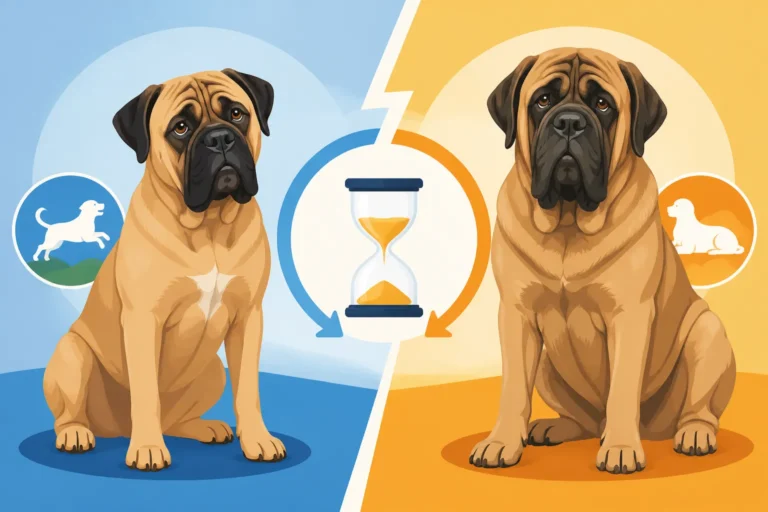
Height and body weight follow different timelines
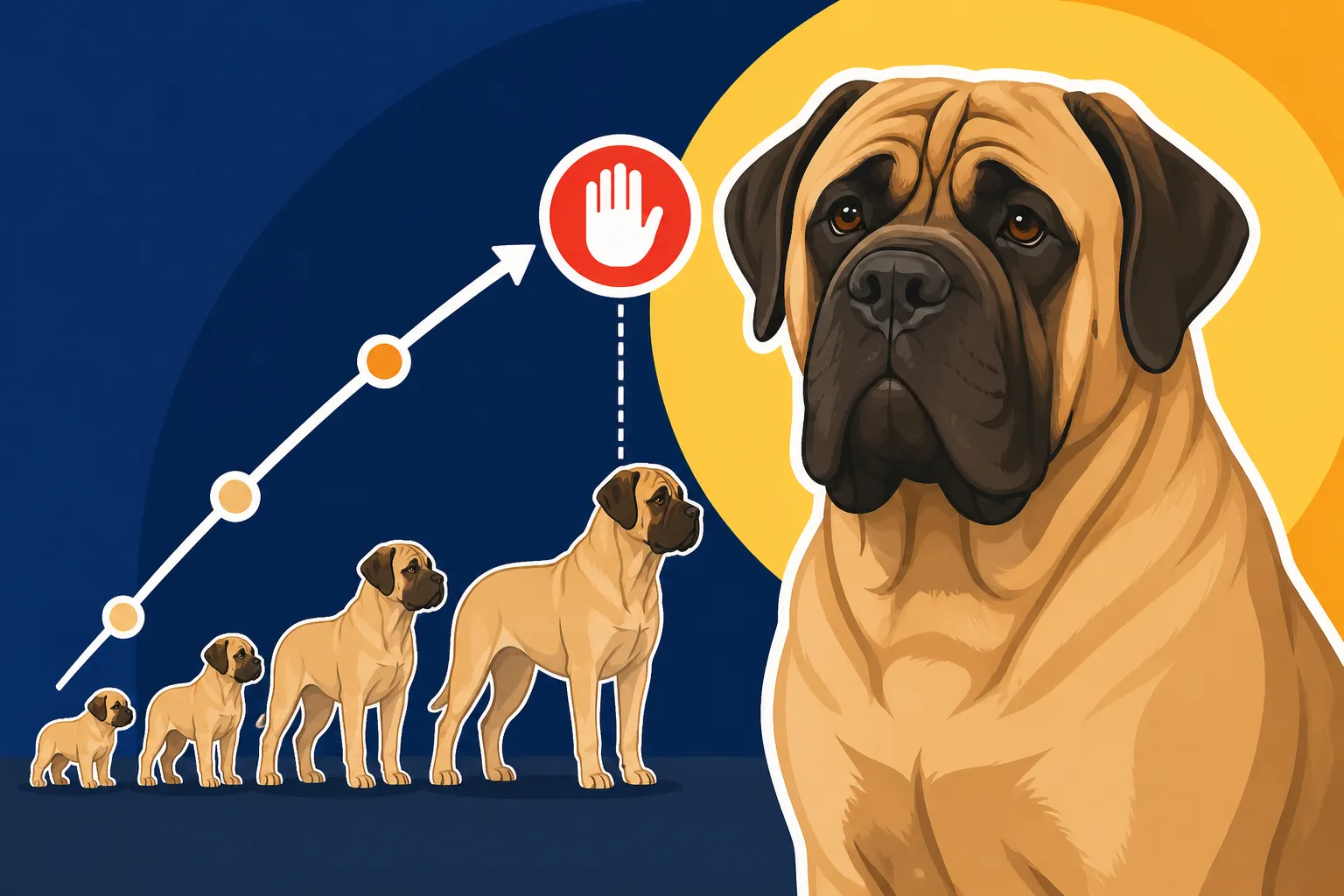
A Mastiff usually gains most of its height during the first 18 to 24 months. That does not mean every dog reaches its final height on the same birthday: genetics, sex, nutrition, and individual development all play a part. Some Mastiffs finish growing upward earlier, while others add a little height later.
Weight and body shape often take longer to settle. After a Mastiff has nearly reached its adult height, it may still develop a broader chest, stronger muscles, and a more substantial frame. That filling-out phase can continue until around age two or three. A dog that looks lanky at 18 months may gradually become more solid without becoming overweight.
It helps to think of growth as two overlapping stages: first, the puppy grows taller and longer; then, the young adult develops more of its mature build. The second stage is gradual, so a Mastiff may seem to be “still growing” even when its legs are no longer getting much longer. For more context on adult size, see The Age a Mastiff Stops Growing and How Much a Male Mastiff Weighs.
Why there is no exact age for every Mastiff
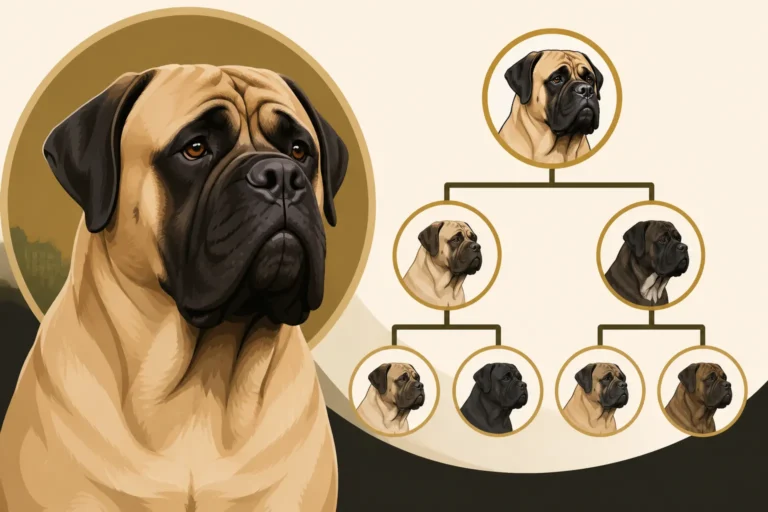
Breed averages are useful for setting expectations, but they cannot predict an individual dog’s exact finish line. A Mastiff from larger parents may mature into a larger adult, while another from the same litter may have a lighter frame. Even two dogs of the same sex and age can develop at different rates.
A veterinarian can assess your dog’s growth over time, rather than judging it by one number on the scale. At regular checkups, the vet can review weight, body condition, mobility, and overall development. If you are worried because your puppy has stopped gaining weight, is growing much faster than expected, or seems uncomfortable, bring that concern up rather than relying on a breed chart alone.
| Development stage | What you may notice | What to keep in mind |
|---|---|---|
| Puppyhood through the first year | Rapid changes in height, length, and weight | Use regular meals and controlled activity; avoid pushing for maximum size |
| Around 12 to 18 months | Growth may continue, but the pace often becomes less dramatic | Track body condition as well as scale weight |
| Around 18 to 24 months | Many Mastiffs are close to adult height | The dog may still look lean or unfinished |
| Around age two to three | Chest, muscle, and overall body condition may continue maturing | Continued development does not automatically mean the dog needs more food |
These are broad guideposts, not strict deadlines. The Age a Mastiff Stops Growing topic covers the timeline in more detail, while What a Mastiff Actually Weighs can help put adult size expectations into perspective.
What Growth Looks Like in a Healthy Mastiff
The scale is only one part of the picture
It is tempting to treat a growing Mastiff’s weight as a scorecard: if the number rises, the puppy must be thriving. But a larger number is not necessarily better. Extra weight puts added strain on developing joints, and a puppy can become too heavy even while still gaining height.
Body condition gives you useful context. Your veterinarian can show you how to assess your dog’s ribs, waist, and overall outline beneath its coat and skin. A Mastiff should not be made round simply because the breed is large. If you cannot easily tell whether your puppy is lean, appropriately covered, or carrying excess weight, ask your vet to demonstrate what to look and feel for.
Measurements are most useful when they reveal a pattern. Weighing a puppy at routine intervals and noting changes in a notebook or phone can help you notice a sudden slowdown or an unusually sharp increase. Chewy may be one place to look for a pet scale or a suitable feeding product, but your vet should help interpret the measurements and advise on your dog’s diet.
A lean, steady pace is better than rapid growth
Some owners worry that a lanky Mastiff puppy is not getting enough food, especially when the dog’s paws and legs seem oversized. But a young Mastiff can look awkward or lightly built during normal development. Adding extra food to make a puppy look bigger is not a safe way to speed up maturity; it may simply encourage excess weight.
A well-managed growth plan focuses on steady development, not maximum size. Feed a complete, balanced diet intended for large-breed growth, and follow your veterinarian’s advice on portions. If you are comparing foods, Chewy can be a convenient place to review product options, but check the food’s suitability with your vet instead of choosing based on packaging claims or a promise of rapid growth.
Avoid free-feeding unless your veterinarian specifically recommends it. Measured meals make it easier to notice changes in appetite and adjust portions thoughtfully. The guidance in The Age a Mastiff Finishes Filling Out and Why a Mastiff Puppy Must Grow Slowly is also relevant when you are trying to distinguish normal development from overfeeding.
Normal growth does not mean every change is harmless
A puppy’s appetite, energy, and weight can vary, but persistent changes deserve attention. Contact your veterinarian if your Mastiff is losing weight, refusing food, gaining weight very quickly, or showing ongoing digestive problems. Seek advice sooner if growth concerns occur alongside lameness, reluctance to move, or pain.
It is also worth mentioning noticeable differences between the two sides of the body, a new limp, or an unusual change in posture. Large, rapidly growing dogs can be vulnerable to joint and bone problems, and early professional guidance is more useful than waiting for a puppy to “grow out of it.” The cause could be minor or serious; an examination is how to find out.
For a broader look at skeletal development and risk factors, read How a Mastiff's Weight Compares With a Saint Bernard's and Why a Mastiff's Hips Fail Under Its Own Weight. Those topics do not replace an individual veterinary assessment, but they can help explain why careful growth management matters.
How to Support a Mastiff While It Is Growing
Choose food for development, not for size alone
A growing Mastiff needs appropriate nutrition, but more calories do not automatically mean better development. Ask your veterinarian what food, meal amount, and adjustment schedule suit your puppy’s age, current condition, and expected adult size. Follow the feeding directions as a starting point, then adjust with professional guidance as your dog grows.
Try to keep treats and table scraps from quietly adding a large amount of extra food to the day. Treats can be useful during training, but they still count toward overall intake. If you change foods, do so gradually unless your vet advises otherwise, and keep an eye on your puppy’s appetite, stool, and body condition afterward.
Chewy may help you compare available large-breed puppy foods or restock a diet your veterinarian has recommended. The important decision is not where you purchase it; it is choosing a complete diet that fits your dog’s needs and avoiding supplements or growth-promoting products unless your vet recommends them.
Keep activity controlled while bones and joints mature
Growing Mastiffs need appropriate movement, socialization, and play, but they should not be pushed into repetitive, high-impact exercise. Long forced runs, repeated jumping, and intense workouts are different from ordinary age-appropriate activity. Let your puppy move at a comfortable pace, take breaks, and avoid turning exercise into a contest to build stamina.
Pay attention to the surfaces your puppy uses, too. Slippery floors can make it harder for a young dog to get traction, especially when turning or standing up. Runners or mats in busy areas can help reduce sliding. If your puppy is struggling with stairs or getting into a vehicle, ask your vet for safe ways to manage those everyday challenges rather than repeatedly lifting or urging the dog through them.
A Mastiff’s body may look powerful before it is ready for adult-level exertion. The advice in The Walk Length That Damages a Mastiff Puppy and Why Stairs Are Worse for a Mastiff Than Any Breed can help you think through common activity questions. Your veterinarian can tailor recommendations to your dog’s health and development.
Plan checkups around the individual dog
Routine veterinary visits provide a chance to check more than weight. Your vet can assess body condition, teeth, gait, joints, and general development, then help you decide whether the current food and exercise routine still make sense. These conversations are especially useful when your puppy enters adolescence and its needs change.
Bring a short record of your dog’s weight, food portions, and any concerns. For example, if your Mastiff has started leaving meals unfinished or seems stiff after a walk, those details may help the vet identify a pattern. Photos taken from the side and above can also make gradual changes in body shape easier to compare, as long as they are used to support—not replace—an examination.
If a breeder gave you a growth estimate, treat it as an expectation rather than a guarantee. A dog’s adult size cannot be calculated precisely from puppy age or current weight alone. The Whether Parent Size Predicts a Mastiff's Adult Weight topic offers more perspective on how family size relates to an individual dog.
Signs Your Mastiff May Be Finished Growing
A stable height is a stronger clue than a single weigh-in
If your Mastiff has been close to the same height for several months, it may be nearing the end of its upward growth. That is more informative than one measurement, because posture, measuring technique, and the dog’s willingness to stand still can all affect a height check.
Even then, a stable height does not mean the body has stopped changing. Your dog may continue to gain muscle and mature in shape. A young adult that looks narrow through the chest may gradually become broader, while its legs and overall height remain much the same. This is one reason owners often describe a Mastiff as continuing to “fill out” after the obvious puppy growth has slowed.
Mature appearance does not mean growth management is over
A Mastiff that looks like a large adult still benefits from a sensible diet, appropriate exercise, and routine veterinary care. Avoid increasing food simply because the dog seems to have reached adult height. Instead, adjust meals based on body condition and your veterinarian’s advice.
Likewise, do not assume that every change in weight is normal maturation. A gradual shift in muscle and body shape can be part of adulthood, but sudden weight gain or loss should be discussed with a vet. Keeping a record of weight and body condition can make those changes easier to catch.
The practical answer is that many Mastiffs are close to their final height by roughly two years old, while their mature build may take until around age two or three. There is no exact finish date that applies to every dog. Focus on steady development, keep your Mastiff lean, and ask your veterinarian about changes that seem unusual for your individual puppy.
Disclaimer
This article is for general informational purposes only and does not constitute professional advice. Laws, prices and regulations vary by location and change over time. Consult a qualified professional for guidance on your specific situation.