How Much a Male Mastiff Weighs
An adult male Mastiff commonly weighs about 160 to 230 pounds, but that range is a guide—not a target every dog should reach. Age, height, build, and body condition all matter. If your Mastiff seems unusually small or heavy, the useful question is not just what the scale says, but whether his weight suits his frame and health.
Typical male Mastiff weight
What adult males commonly weigh
Many mature male Mastiffs fall somewhere around 160 to 230 pounds. Some healthy dogs are lighter or heavier, because there is considerable variation in height, bone, muscle, and overall build. Two males can both be in good condition while weighing noticeably different amounts.
The breed standard emphasizes a large, powerful dog and sets a minimum height for males, but it does not prescribe one ideal weight for every adult. That distinction matters: a number you see online or hear from another owner is not automatically the right target for your dog. A taller, broader Mastiff may weigh more than a smaller-framed male without being overweight.
If you are comparing your dog with a range you found online, treat it as a rough reference. A veterinarian can assess his body condition and growth history together, rather than judging him against a single number. For a broader picture of the breed’s size, see What a Mastiff Actually Weighs.
Why two healthy males can weigh very different amounts
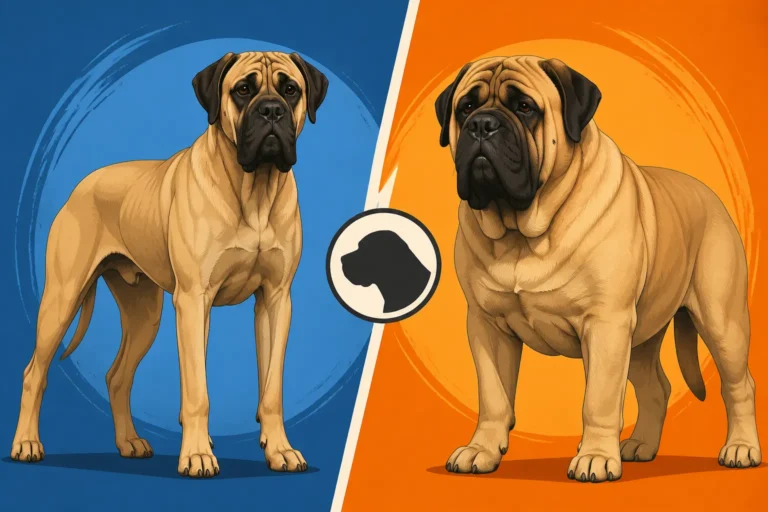
Height is only part of the picture. Frame, chest width, muscle, and body condition affect weight too. A male with a substantial bone structure may naturally weigh more than a narrower dog of similar height. Meanwhile, a dog carrying excess fat may weigh more without having the sturdy, athletic condition people often mistake for “typical Mastiff size.”
Line and individual development also contribute to differences. Show-bred and pet Mastiffs can vary in type and proportions, and even littermates may not grow into identical adults. A large puppy is not guaranteed to become the largest adult in the litter, either. For that reason, How Show Mastiffs Differ in Size From Pet Mastiffs can help explain why photos or show-ring examples do not always represent every family Mastiff.
| What you are looking at | What it can tell you | What it cannot tell you alone |
|---|---|---|
| Scale weight | Whether your dog is gaining or losing over time | Whether the weight is healthy for his frame |
| Height and body length | How large his overall frame is | Whether he is carrying excess fat |
| Rib feel and waist shape | Clues about body condition | A complete diagnosis of health or growth |
| Parent size | A rough clue about possible adult size | A guarantee of your dog’s final weight |
| Age and growth trend | Whether development is continuing steadily | A reason to force faster growth |
How age changes a male Mastiff’s weight
Puppies and adolescents are still growing
Mastiff puppies gain weight quickly, so a number that looks surprisingly high may be entirely normal for a growing dog. But rapid growth is not the same as healthy growth. Trying to make a puppy bigger by feeding extra can put unnecessary strain on developing joints and bones.
Instead of comparing your puppy’s weekly weight with a neighbor’s dog or an internet chart, keep a record and review the trend with your veterinarian. The vet can consider his age, frame, diet, activity, and body condition. If you are wondering how quickly a puppy should be gaining, How Fast a Mastiff Puppy Puts On Weight offers a closer look at growth patterns.
During adolescence, a male may look awkward or unevenly developed: long-legged one month, suddenly broader through the chest later, or lean while his frame catches up. That does not automatically mean he is underfed. Ask your veterinarian before changing portions, especially if he is energetic, eating normally, and maintaining an appropriate body condition.
Adult size can take time to settle
A male Mastiff may continue developing after he has reached much of his adult height. He can gradually gain muscle and substance as he matures, so a young adult may not yet have the same settled appearance as an older dog. That process is different from simply adding fat, and it should happen without pushing extra food.
There is no exact birthday when every Mastiff is “finished.” Individual dogs mature at different rates, and a veterinarian can help distinguish normal development from unwanted weight gain. For more on that timeline, read The Age a Mastiff Stops Growing.
A puppy’s parents can provide useful context, but their size does not determine the puppy’s final weight with certainty. The puppy inherits a mix of traits, and growth, health, and nutrition all play a part. Whether Parent Size Predicts a Mastiff's Adult Weight explains why parent weight is a clue rather than a promise.
How to tell whether your male Mastiff is at a healthy weight
Use body condition, not weight alone
A Mastiff’s size can make it hard to judge his shape by sight. A thick coat, loose skin, broad chest, and heavy bone can all make him appear bulky. Gently feeling his ribs is often more useful than trying to decide from a quick glance.
In a dog at an appropriate body condition, you should generally be able to feel the ribs without pressing hard. They should not be buried under a thick layer of fat, but they also should not be sharply prominent. Viewed from above, there is usually some waist behind the ribs; from the side, the abdomen typically rises somewhat toward the hindquarters. Your veterinarian can show you what these signs look and feel like on your dog.
For a practical guide, see Feeling for a Mastiff's Ribs Under Its Bulk. The related guide How to Tell a Heavy Mastiff From a Fat One can also help separate a naturally substantial build from excess body fat. These checks are useful at home, but they do not replace an exam—particularly if your dog’s weight changes suddenly.
Watch the trend and adjust with professional guidance
A single weigh-in is only a snapshot. Weighing your dog periodically under similar conditions can help you notice a gradual change that might otherwise be hidden by his size. Write down the date and weight, and mention any change in appetite, activity, mobility, or medication to your vet.
If the scale is moving upward and his waist is disappearing, avoid abruptly cutting his food or starting a demanding exercise routine. Large dogs can be hard on their joints, and a sensible weight plan should account for his health and daily activity. Your veterinarian can help set a suitable goal and recommend how to adjust meals safely. Keeping a Mastiff Lean on Purpose covers the everyday habits that support a healthy body condition.
If you buy food or equipment online, including through Chewy, use your veterinarian’s feeding guidance rather than assuming that a package recommendation is a personalized target. Food labels and retailer listings can help you identify a product, but your dog’s portions should reflect his age, activity, health, and body condition. Similarly, a harness or bed should be chosen for his actual measurements and comfort—not just his weight category.
When a male Mastiff’s weight needs attention
Signs worth discussing with your veterinarian
A gradual change can be easy to miss in a dog this large. Make an appointment if you notice unexplained weight loss or gain, a persistent change in appetite, reduced stamina, or difficulty rising and walking. These signs can have many causes, and a weight number by itself cannot identify the reason.
A puppy who seems to be growing much faster or more slowly than expected also deserves an individualized check-in. Bring any weight records you have, tell the vet what and how much he eats, and describe his usual activity. That gives the vet more useful information than a comparison with a different puppy of the same age.
Seek prompt veterinary advice for sudden changes, weakness, repeated vomiting, or other signs that your dog is unwell. Do not delay care because his current weight falls within a commonly quoted range. A dog can weigh what seems like a typical amount and still have a health problem.
Make weight checks practical at home
If weighing your Mastiff is difficult, ask the veterinary clinic how it handles large dogs and whether staff can help with a routine weigh-in. For home tracking, use a reliable method and repeat it consistently. If you cannot safely lift or manage your dog around a household scale, do not risk hurting yourself or him just to obtain a number.
Record more than weight. Note how his ribs feel, whether his waist is visible, how easily he gets up, and whether his daily walk seems comfortable. Those observations give you a fuller picture to share with the vet. If you use Chewy or another retailer for food and supplies, keep the products and feeding amounts consistent when possible, so you can better recognize whether a change in routine coincides with a change in weight.
In short, an adult male Mastiff often weighs around 160 to 230 pounds, but the right weight depends on the individual dog. Use the scale as one piece of information, judge body condition with your veterinarian’s help, and let steady development—not a race toward a bigger number—guide decisions about a growing Mastiff.
Disclaimer
This article is for general informational purposes only and does not constitute professional advice. Laws, prices and regulations vary by location and change over time. Consult a qualified professional for guidance on your specific situation.