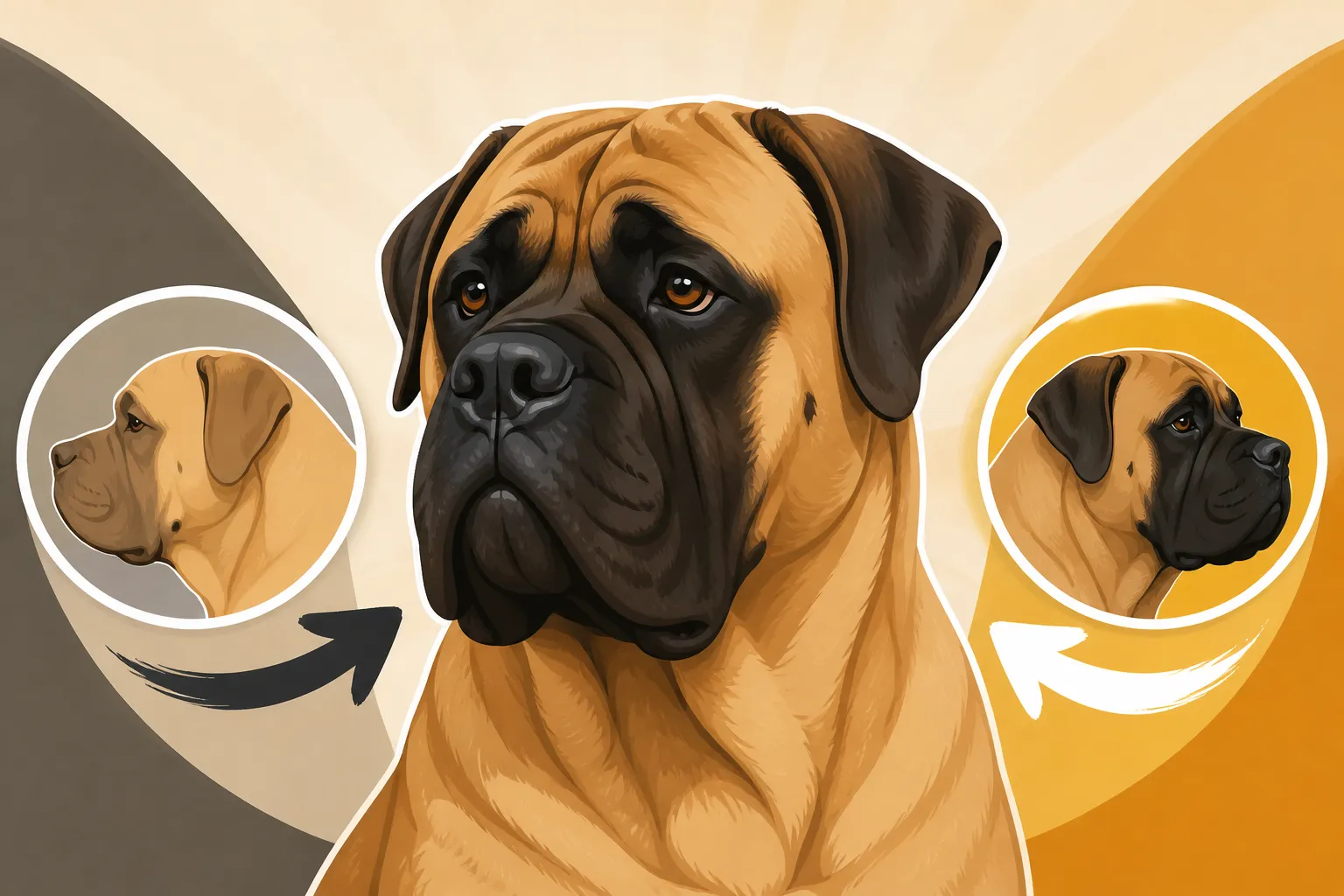
Why a Mastiff Must Have a Black Mask
Many people fall head over heels for the majestic Mastiff, drawn in by their impressive size, calm demeanor, and those wonderfully expressive eyes. But if you’re new to the breed, you might not realize that one of their most distinctive features – the black mask on their face – isn't just a pretty aesthetic; it’s a non-negotiable part of their identity. This guide will walk you through why that deep black mask is so crucial, from breed standards to historical roots, helping you appreciate this iconic trait even more.
The Imperative of the Black Mask in the Breed Standard
When you look at a purebred Mastiff, you expect to see that dark, noble face. This isn't by chance or random selection; it's a deeply ingrained requirement of the breed standard, the rulebook that defines what a Mastiff truly is. For anyone invested in the breed, from casual admirers to dedicated breeders, the black mask is fundamental.
A Hallmark of the True Mastiff Identity
The breed standard is more than just a set of preferences; it's the very foundation upon which the Mastiff breed is built and recognized globally. When we envision a truly majestic Mastiff, that image almost always includes a powerful head framed by that distinctive black mask. This mask is explicitly stated as a required characteristic by major kennel clubs, like the American Kennel Club (AKC) and other international breed organizations. It's not just an optional accessory; it's a fundamental part of their historical purity and desired appearance. A Mastiff, regardless of its other commendable qualities, would simply not meet the criteria for exhibition or recognized breeding as a purebred Mastiff if it lacked this feature.
This strong emphasis on the mask serves a vital purpose: to maintain the breed's uniformity and easily recognizable traits that set the Mastiff apart from other giant breeds. It contributes significantly to their iconic look, much like their immense size and often surprisingly gentle temperament. For potential owners who are specifically seeking a purebred Mastiff, understanding this standard is crucial. Puppies born without a black mask are typically considered to have serious faults or even disqualifications in the conformation ring, irrespective of how wonderful they might be as companions. It’s a core component of what makes a Mastiff, a Mastiff.
Disqualifications and Serious Faults
Breed standards are meticulously detailed, classifying traits as acceptable, faults, or disqualifications. For the Mastiff, the black mask falls into the realm of absolute necessity. A dog that displays a "lack of mask" is usually categorized as having a serious fault, which means it would be heavily penalized in the show ring, or, in more extreme cases, an outright disqualification, rendering it ineligible to compete. This clarifies that a Mastiff without a distinct black mask simply cannot be considered representative of the ideal breed type for showing purposes.
This strict adherence to the mask standard might strike some as overly rigid, but it underscores the immense importance placed on this feature within the global Mastiff breeding community. Responsible breeders invest significant time and effort into selecting breeding pairs specifically to produce puppies that will develop a clear, well-defined black mask. This dedication explains why, when you encounter a Mastiff, you instinctively expect to see that striking dark muzzle, typically complemented by equally dark eye rims and sometimes even shaded ears. It’s a key aesthetic marker that deeply informs the breed's overall powerful, noble, and instantly recognizable expression.
Decoding the Black Mask: What Does It Actually Mean?
So, what exactly does the breed standard mean when it talks about a "black mask"? It's more nuanced than just a dark muzzle. It involves specific areas of pigmentation and certain expectations for its appearance and extent.
Defining "Black Mask" and Its Extent
When we discuss the "black mask" on a Mastiff, we're referring to the distinct dark pigmentation that covers the muzzle. This dark coloring often extends further, encircling the eyes like a pair of natural spectacles and sometimes even casting a subtle shadow or shading across the forehead. It's much more than just a black nose; it encompasses a broader facial area with intense dark pigment. The vibrancy and spread of this mask can naturally vary from one Mastiff to another, but the defining characteristic is its undeniable presence and clear distinction. It's meant to stand in sharp, pleasing contrast to the dog's base coat color, creating a kind of naturally dramatic overlay on their face.
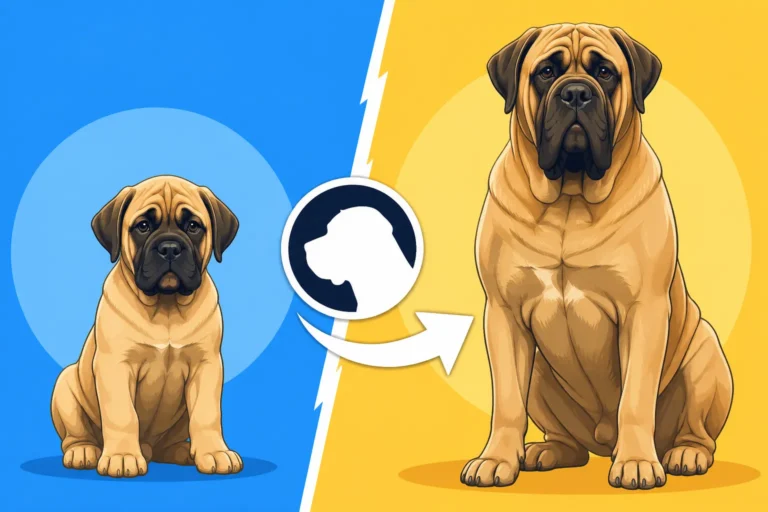
Crucially, the mask typically includes intensely black lips and dark eye rims, which collectively give the Mastiff an incredibly expressive, often solemn, and intelligent appearance. The breed standard generally mandates that this mask be well-defined – meaning it should be clear and consistent, not faded, patchy, or indistinct. Some Mastiffs might exhibit a more expansive mask that covers a larger portion of their face, lending them an even more dramatic look, while others might have a more minimal mask, primarily confined to the muzzle and around the eyes. Regardless of its exact spread, the consistent presence of this dark pigment is uniformly required. It’s this feature that helps give them that characteristic thoughtful, ancient gaze, making them truly unique. How a Mastiff Puppy's Mask Changes might interest you as you watch your pup grow into its adult features.
Acceptable Variations and Unacceptable Deviations
While the "black mask" is a steadfast requirement, there is a certain degree of natural variation in its presentation that falls within acceptable limits. A Mastiff's mask might extend notably further up its face, perhaps giving it a somewhat "smudged" or larger appearance, or it might be more precisely confined, primarily covering the muzzle and the area immediately surrounding the eyes. Both of these presentations can be perfectly acceptable, provided the mask is unequivocally black and clearly present. The crucial factors are the clarity and consistency of the pigmentation. The overarching goal is a uniform appearance that unmistakably signifies the breed's distinctive facial characteristics.
However, certain deviations are definitively not acceptable. A complete absence of black pigmentation in the mask area is a serious fault. This could manifest as a "self-colored" mask, where the muzzle takes on the same hue as the body – for example, a fawn Mastiff with a fawn muzzle, sometimes colloquially referred to as a "red mask" or, if the nose is also unpigmented, a "liver mask." Similarly, a patchy, incomplete, or faded mask would also be considered incorrect. Furthermore, any "dilute" mask coloration, such as blue, gray, or even pale brown, would represent a severe deviation from the standard. The breed standard explicitly calls for black pigmentation, meaning any other color in the mask area would be deemed incorrect. This stringent requirement is why diligent breeding practices are so focused on preserving and reinforcing that intense, unblemished black mask.
| Feature | Correct Black Mask | Incorrect Mask (Fault/Disqualification) |
|---|---|---|
| Color | Deep, intense black | Faded black, gray, blue, liver/red, or self-colored |
| Extent | Muzzle, often around eyes, sometimes forehead | Patchy, incomplete, or entirely absent |
| Contrast | Sharp contrast with body color with clean edges | Blends into body color, indistinct, uneven |
| Nose Pigmentation | Black, solid | Dudley (pink), butterfly, or flesh-colored |
| Eye Rims | Black | Pink, unpigmented, or patchy |
| Breed Standard | Required for all Mastiffs | Serious fault or disqualification |
Color Genetics and Pigmentation
The science behind that striking black mask is all in the genes! It’s a fascinating interplay of inherited traits that ensures this distinctive feature is passed down through Mastiff generations.
How Genes Dictate the Mask's Presence
The presence of the black mask in Mastiffs is a testament to the wonders of canine genetics, specifically controlled by a gene locus often referred to as the E locus, or "extension" gene. This particular gene plays a pivotal role in dictating where and how black pigment will be expressed on a dog's body. In the vast majority of Mastiffs, they inherently carry the specific alleles at this locus that ensure the consistent development of a black mask. It's a deeply ingrained part of their genetic blueprint, carefully selected and reinforced through generations of breeding specifically for the desired breed standard. This is precisely why the black mask is an almost universal and expected trait within the breed.
Without delving into overly complex genetic terminology, certain specific genetic combinations enable the robust expression of a black mask. Conversely, other genetic configurations, commonly observed in various different dog breeds, can result in alternative pigment patterns such as a "domino" mask, a self-colored muzzle, or even a complete absence of a mask altogether. Reputable breeders possess a strong understanding of these intricate genetic underpinnings. They meticulously plan their breeding programs to produce puppies that will reliably develop that characteristic, deep black mask. This consistent expression of the mask is a powerful testament to the enduring influence of selective breeding practices spanning many centuries. It’s quite different from discussing a genetic health concern like How Dominant Inheritance Works in Mastiff PRA, but it shows the power of genetic understanding in breeding.
Mask Color Across Different Coat Types
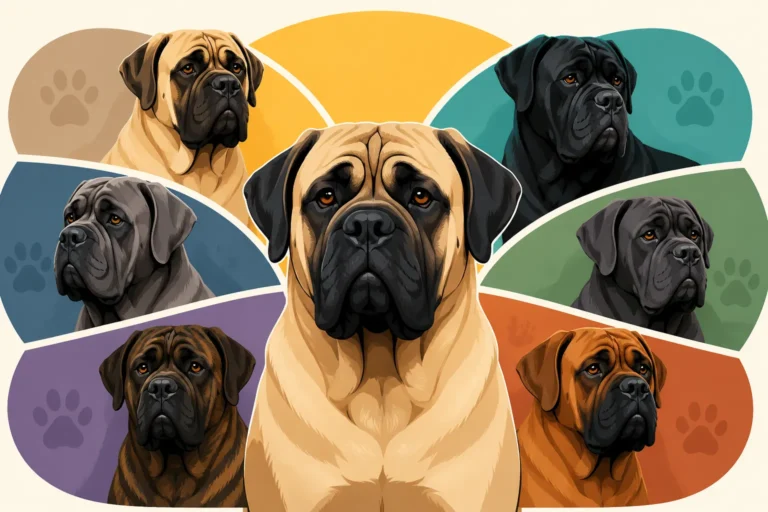
One of the most remarkable aspects of the Mastiff's black mask is its unwavering color consistency, regardless of the dog's underlying coat color. Whether a Mastiff sports a fawn, apricot, or brindle base coat, the mask itself remains distinctly black. For instance, a fawn Mastiff will display a beautifully striking black mask that offers a bold contrast to its golden-tan coat. An apricot Mastiff, with its richer, often redder hue, will also feature a pronounced and clear black mask. Even a brindle Mastiff, with its captivating striped pattern, will consistently present that same strong black mask. The mask isn't simply a darker extension of the body's coat color; it acts as an independent, consistent, and unifying facial feature.
This universal black pigmentation in the mask area serves a crucial purpose: it helps to unify the breed's overall appearance across its permitted color spectrum, creating a cohesive visual identity. It acts as a consistent identifier, immediately communicating that this is indeed a Mastiff. Furthermore, it beautifully frames the face, drawing attention to the eyes and significantly contributing to that quintessential Mastiff expression of nobility and gentle watchfulness. Just consider how a What Fawn Looks Like on a Mastiff coat contrasts so magnificently with the dark mask, creating an undeniably regal and powerful presence.
Historical Context and Evolutionary Roots
The black mask isn't a modern fad; it's a feature deeply embedded in the Mastiff's ancient lineage. Understanding its history helps us appreciate why it remains so important today.
Ancient Origins of the Masked Guardian
To truly grasp the profound significance of the black mask in the Mastiff breed, we must journey back through time and explore the breed's incredibly long and storied history. These magnificent dogs trace their ancestry back to the ancient Molossian hounds, formidable animals revered as powerful war dogs and vigilant guardians by numerous ancient civilizations. Throughout countless pieces of ancient art, sculptures, and historical descriptions, these imposing dogs are frequently depicted with strikingly dark muzzles. This consistent portrayal strongly suggests that the black mask is not a recent aesthetic preference but rather a deeply rooted characteristic that has been an integral part of the breed for millennia.
It's plausible that this distinctive mask may have served more than just an aesthetic purpose in their historical working roles. It could have offered a practical advantage, perhaps aiding in reducing glare, similar to how eye black helps athletes, or more likely, presenting an even more intimidating visage to potential threats. While it's difficult to definitively pinpoint its primary function in ancient times, whether it was for camouflage in certain environments or purely for visual deterrence, its continuous presence across historical depictions unequivocally indicates that it was always considered a significant and highly desirable trait. It is an enduring part of the ancient blueprint that has shaped the Mastiff into the majestic and respected animal we know today, connecting them directly to a lineage that goes back to when How Roman Troops Brought Mastiffs to England.
Preservation Through Selective Breeding
Over the many centuries of the Mastiff's existence, the black mask has been meticulously preserved and championed through diligent selective breeding. Early breeders, whether acting on conscious intent or an instinctive understanding of desirable traits, consistently favored dogs that exhibited the characteristics they valued most – immense size, unwavering temperament, and, without a doubt, a distinctive appearance that included the black mask. As the Mastiff gradually transitioned from primarily a working dog, guarding estates and accompanying soldiers, to a revered companion animal and a fixture in the nascent world of dog shows, the emphasis on a consistent breed standard firmly solidified the mask's critical importance. This meant breeders actively worked to avoid dogs with "red" or "liver" masks, ensuring the black mask continued to define the breed's face.
The very survival of the Mastiff breed itself, particularly after facing near-extinction events such as the devastating periods following the World Wars, relied heavily on the tireless dedication of committed breeders. These individuals were unwavering in their resolve to maintain and restore the breed's defining characteristics. The fact that Fewer Than Twenty Mastiffs Survived the Second World War starkly illustrates how perilously close the breed came to vanishing entirely. In this painstaking process of rebuilding, the black mask was one of those essential features that was carefully and lovingly brought back from the brink, a testament to the profound efforts of those who truly understood and cherished the essence of the Mastiff.
The Mask's Role in Expression and Perception
Beyond historical precedent and genetic blueprints, the black mask profoundly impacts how we interact with and understand a Mastiff's face. It shapes their visual identity in a powerful way.
Enhancing the Noble and Thoughtful Demeanor
Beyond its place in the breed standard, the black mask plays an enormous, almost incalculable, role in how we perceive and interpret a Mastiff's unique expression. That dark, contrasting frame around their eyes and muzzle seems to magically deepen their gaze, imbuing them with an incredibly thoughtful, often strikingly solemn, and sometimes even melancholic appearance. It masterfully accentuates the natural creases and wrinkles that are such an intrinsic part of the breed's facial structure, collectively contributing to an overall look of profound wisdom, immense gravitas, and an almost ancient dignity. Indeed, it becomes genuinely challenging to picture that noble head, with its deep-set eyes, without its utterly distinct and defining black mask.
This powerful visual element significantly contributes to their well-deserved reputation as "gentle giants." The sharp contrast provided by the mask makes their eyes stand out prominently, facilitating clearer communication of their inherently calm, watchful, and deeply loyal nature. Without the presence of this mask, the Mastiff's face might appear softer, perhaps less defined, and would arguably lose a substantial portion of that inherent powerful dignity that makes the breed so captivating and awe-inspiring. It is an integral piece of the visual language that seems to tell us we are looking into the soul of a profound and ancient companion.
Practicalities and Grooming Notes
While the black mask is primarily an aesthetic and genetically determined trait, it’s important for Mastiff owners to remember that the skin within and around this area, much like other facial folds, demands consistent attention. The folds and wrinkles around the muzzle and eyes, which are often encompassed by or adjacent to the mask, can unfortunately be prone to collecting moisture, food debris, or environmental irritants. If these areas are not kept meticulously clean and dry, they can become hotbeds for irritation, bacterial growth, or even yeast infections. So, while the mask itself isn't a grooming challenge, the surrounding skin requires diligent routine care. Our article, The Wrinkles and Folds a Mastiff Owner Cleans Every Week, dives deeper into this essential aspect of Mastiff care.
Owners should make it a regular habit to gently check these facial folds for any signs of redness, persistent dampness, or any unusual, yeasty odor. A quick, gentle wipe with a soft, damp cloth, followed by thorough drying with a clean, soft towel, is usually all it takes to keep these areas healthy. Many pet supply stores, including reputable online retailers like Chewy, offer a variety of gentle, pet-safe wipes and cleansers specifically formulated for sensitive skin folds. These products can make this routine grooming task much easier and more effective. Maintaining cleanliness in this area not only helps prevent potential skin issues but also ensures that your Mastiff's beautiful black mask truly stands out and shines as it should.
Beyond Aesthetics: Is There Any Health Significance?
While the black mask is predominantly a characteristic of appearance, it's natural to wonder if it has any deeper health implications. Does a strong mask mean a healthier dog? Let's explore.
Pigmentation and Eye Health
The black mask, with its dark and rich pigmentation around the eyes, is generally a strong indicator of good overall pigmentation throughout the dog. In the canine world, robust pigmentation is widely considered a desirable trait, as it can, in many instances, correlate with better overall eye and skin health. For example, intensely dark eye rims can offer a degree of natural protection from the sun's harsh glare and harmful UV rays, much like natural sunglasses. They are also typically less susceptible to sunburn or irritation compared to unpigmented or lightly pigmented areas. Thus, while the mask itself doesn't directly cause good health, it's often part of a broader, healthy pattern of strong, deep pigmentation.
However, it is critically important to understand that the mere presence of a prominent black mask does not automatically guarantee perfect eye health or an absolute immunity from genetic eye conditions. Mastiffs, like virtually all purebred dogs, can unfortunately be predisposed to a range of specific eye conditions and diseases. For instance, our comprehensive article on Eye and Eyelid Disease in a Mastiff details various issues that are entirely unrelated to the presence or color of a Mastiff's mask. Ultimately, the black mask remains primarily an aesthetic and breed-identifying trait, rather than a direct indicator or predictor of health outcomes in and of itself.
The Mask and Overall Pigmentation
A Mastiff sporting a well-pigmented black mask typically also exhibits other strong pigment markers throughout its body. This often includes a deep, solid black nose, intensely dark eye rims, and frequently, dark toenails. This kind of consistent, uniform pigmentation across various points of the dog is widely regarded as a sign of a healthy, genetically robust, and well-bred animal. Conversely, a faded mask, or a "dudley nose" – a pink or flesh-colored nose – would indicate a significant lack of proper pigmentation that deviates markedly from the established breed standard. While not necessarily a direct health defect, such lack of pigmentation can sometimes be associated with other genetic quirks or tendencies.
Breeders, therefore, pay incredibly close attention to the entire pigmentation profile of their dogs when making crucial breeding decisions. Their objective is to produce Mastiffs that not only possess the correct, striking black mask but also display strong, consistent black points throughout their physical form. This meticulous attention to detail ensures the continued integrity of the breed's characteristic appearance and plays a vital role in maintaining its distinctive and noble look for generations to come. This comprehensive and thoughtful approach to breeding helps to reinforce all the desirable Mastiff traits, encompassing everything from their renowned temperament to crucial physical markers like the iconic black mask.
Disclaimer
This article is for general informational purposes only and does not constitute professional advice. Laws, prices and regulations vary by location and change over time. Consult a qualified professional for guidance on your specific situation.