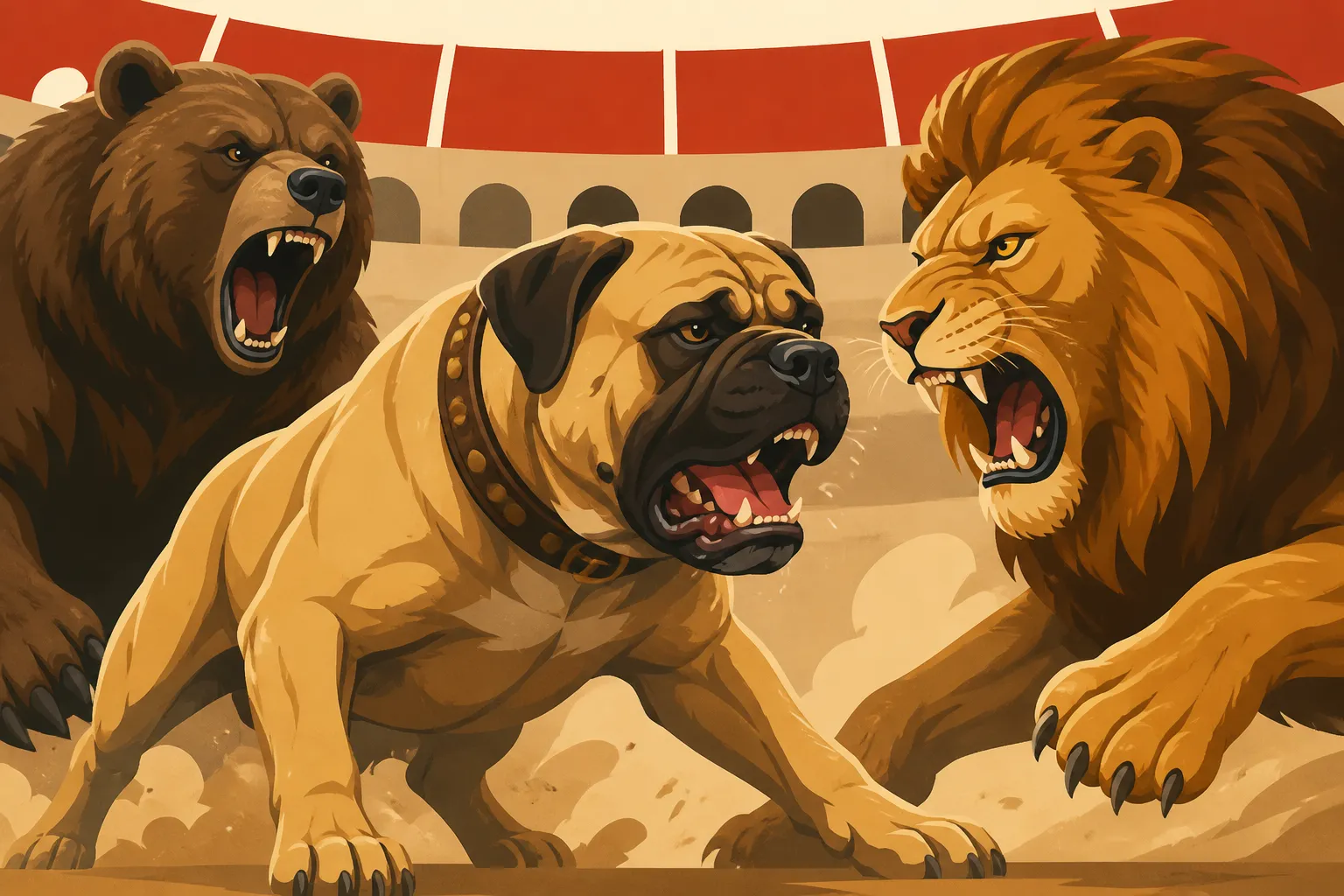
Rome Put Mastiffs in the Arena Against Bears and Lions
It’s hard to imagine, given the gentle, sometimes goofy giants we share our homes with today, but the ancestors of our beloved Mastiffs once faced down formidable beasts like bears and lions in the brutal arenas of ancient Rome. This historical lineage often comes as a shock to new owners, or even those who've loved the breed for years, because the sweet, couch-potato nature of modern Mastiffs feels so far removed from such a violent past. Yet, understanding this powerful history helps us appreciate the incredible journey this breed has undertaken and the deep-seated instincts that still echo in their loyal, protective spirits. This guide will take you through the fascinating, and sometimes harrowing, history of the Mastiff-type dogs in the Roman Empire, exploring their origins, their role in spectacles, and how these ancient guardians evolved into the loving companions we know today.
The Molossian Ancestors: Roots of the Roman Arena Dogs
To truly understand the "Mastiffs" of the Roman arena, we must first look back to their ancient ancestors: the Molossian hounds. These formidable dogs originated in the region of Molossia, located in ancient Epirus (modern-day Greece and Albania). They were not a single, standardized breed as we understand it today, but rather a type of large, powerful dog known for its guarding and protective abilities.
Tracing the Lineage of Large Dogs
Historical accounts and archaeological evidence suggest that these Molossian dogs were incredibly imposing, with strong jaws, robust builds, and a fearless demeanor. They were highly prized for their strength and courage, often described as being large and heavy-boned. Their reputation spread far and wide, making them a valuable commodity and a symbol of power. The very word "Mastiff" itself is believed to derive from the Old French "mastin," meaning "tame animal," which in turn comes from the Latin "mansuetus" (tame or accustomed to hand). This linguistic journey hints at their domestication, even as their raw power was undeniable. You might be interested to read more about The Molossus in the Mastiff's Ancestry to understand their ancient roots.
Their Role in Ancient Warfare and Guarding
Before they ever stepped into an arena, Molossian dogs were vital to ancient societies as guardians and war dogs. They protected flocks from predators, guarded homes and estates, and were even deployed on battlefields. Imagine a Roman legionnaire marching with one of these immense dogs at his side – a truly intimidating sight. These dogs were bred for functionality: strength, courage, and an unwavering loyalty to their masters. They had to be robust enough to deter human attackers and ferocious enough to take down large wild animals, a testament to their inherent power and defensive instincts. This was a far cry from the life of a modern Mastiff, whose greatest challenge might be deciding which spot on the sofa offers the best nap.
Rome's Fascination with Canes Pugnaces
The Romans, a people fascinated by displays of power, order, and spectacle, were naturally drawn to these impressive Molossian dogs. They quickly recognized their potential not just for practical purposes, but for entertainment and as symbols of Roman might.
The Roman Appreciation for Formidable Dogs
The Roman Empire was vast, and its reach brought it into contact with many cultures and their indigenous dog breeds. Among these, the large, robust dogs of the Molossian type stood out. The Romans referred to these formidable canines as canes pugnaces, or "fighting dogs," highlighting their inherent capabilities. They were seen as embodiments of strength and ferocity, qualities highly valued in Roman society, particularly in the context of their military prowess and the gladiatorial games. These dogs weren't just pets; they were living weapons, revered for their physical attributes and unwavering spirit.
How These Dogs Arrived in Rome
The journey of these Mastiff-type dogs to Rome was multifaceted, largely driven by conquest, trade, and diplomatic gifts. As the Roman legions expanded their empire, they encountered these powerful dogs in various conquered lands, particularly from Greece and Britain. Legends, like the one surrounding Sir Piers Legh and his Mastiff at Agincourt (though much later), speak to the enduring image of these dogs in battle. Roman generals and governors would often bring these impressive specimens back to Rome, not only as spoils of war but also to incorporate them into their own military and civic life. Wealthy Romans also sought them out for guarding their villas and as status symbols. This influx of different large dog types contributed to a diverse genetic pool that would eventually be utilized for various purposes, including the arena. You can learn more about How Roman Troops Brought Mastiffs to England and their subsequent journey back to Rome.
The Spectacle of the Arena: Venationes and Mastiff-Type Dogs
The most striking, and perhaps most disturbing, chapter in the history of these ancient Mastiffs is their role in the Roman venationes – the public animal hunts and fights held in amphitheatres like the Colosseum. These spectacles were a central part of Roman entertainment, offering brutal displays of power and exoticism.
Description of Venationes
Venationes were elaborate and often gruesome shows that could last for days. They involved hunts, fights between wild animals, and confrontations between animals and human gladiators (or bestiarii). Imagine the thunderous roar of the crowd, the dust rising from the arena floor, and the raw, untamed power of animals pitted against each other. For the Roman populace, these events were not just entertainment; they were a vivid demonstration of Roman dominion over nature and conquered lands. The animals were brought from all corners of the empire – lions from Africa, bears from Germania, and, of course, powerful dogs from various regions. The sheer scale and brutality of these events are almost unimaginable today, standing in stark contrast to our modern views on animal welfare. It's truly a dark facet of their history, but an important one to acknowledge.
The Types of Animals Mastiffs Fought
In these brutal arenas, the Mastiff-type dogs were pitted against a shocking array of wild animals. Accounts speak of them fighting lions, bears, bulls, and even other formidable dogs. These were not mere skirmishes; they were fights to the death, designed to thrill and horrify the spectators. The dogs were often used in groups, their combined ferocity necessary to tackle such dangerous opponents. The Mastiffs That Fought in the Arena were selected for their size, strength, and aggressive temperament, trained to engage with lethal intent. It's a sobering thought to consider the courage these animals must have possessed, driven by instinct and training, to face such overwhelming odds.
The Brutal Reality of These Spectacles
The lives of these arena dogs were short and incredibly violent. They were tools for entertainment, their existence defined by combat. While we value our Mastiffs today for their gentle companionship and protective instincts, their ancient counterparts were valued for their ability to inflict damage and die gloriously in the service of Roman spectacle. The Roman crowds demanded blood and excitement, and these dogs, alongside gladiators and other wild beasts, provided it. This context is crucial when we reflect on the breed's journey; it highlights how far modern breeding practices and societal values have moved, thankfully, from such barbarity. The purpose of these dogs was singular: to be formidable, to fight, and to entertain a bloodthirsty audience, which meant a life devoid of comfort or companionship.
From War Dog to Arena Star: Training and Purpose
The transition of Mastiff-type dogs from guardians and war companions to arena combatants wasn't accidental. It involved careful selection and rigorous, if brutal, training to enhance their natural ferocity and make them suitable for the spectacles.
How These Dogs Were Selected and Bred for Strength
The Romans understood selective breeding, even if their methods were rudimentary by modern scientific standards. They would have chosen the largest, most aggressive, and most resilient dogs from their Molossian and British imports to breed further for arena purposes. Pups showing exceptional size, courage, and a willingness to fight would have been earmarked for training. This focus on physical prowess and combative spirit meant that any trait enhancing strength, bite force, and tenacity was favored. It's easy to imagine a breeder, not so different from those today selecting for show traits, but instead choosing for sheer brute force and fearlessness. The goal was to produce the ultimate fighting machine, capable of tackling wild animals without hesitation.
Their Utility Beyond Mere Spectacle
While the arena is where these dogs gained their notorious reputation, their utility extended beyond mere spectacle. These powerful Mastiff-type dogs were also used for guarding military encampments, protecting valuable supplies, and even as executioners for criminals. Their imposing presence alone was a deterrent. They served as formidable assets to Roman legions, their intimidating appearance striking fear into enemies. This dual role, both as war dogs and entertainers, speaks to the immense power and versatility that the Romans saw in these magnificent animals. Even after a dog's arena career ended, if they survived, they might find a new purpose as a formidable guard for a wealthy estate or an integral part of the city watch.
Life and Death in the Roman Colosseum
The Colosseum, a marvel of Roman engineering, stands as a testament to their architectural prowess and their appetite for brutal entertainment. For the Mastiff-type dogs, it was often the final stage of their violent lives.
The Short, Violent Lives of These Dogs
The dogs used in venationes faced incredibly short and violent lives. They were expendable tools in a grand, bloody theatrical production. Unlike modern working dogs who receive extensive care and training, and whose welfare is paramount, these ancient fighting dogs were likely seen as valuable but ultimately replaceable assets. Their existence was a stark contrast to the pampered life our Mastiffs enjoy today, sleeping on luxurious What a Bed That Holds a Mastiff Costs and enjoying gourmet food from places like Chewy. For the Roman arena dog, every encounter could be their last, and few would have reached old age. Their diet and care would have focused solely on maintaining peak physical condition for combat, not on longevity or comfort.
The Cultural Context of Roman Entertainment
To truly grasp why these spectacles existed, we must consider the broader cultural context of ancient Rome. Public games, including venationes, served multiple purposes: to entertain the masses, to demonstrate the emperor's generosity and power, and to reaffirm Roman values of courage, strength, and dominance. These events were a form of social control, a way to keep the populace engaged and loyal. The bloodshed and exotic animals were thrilling, a distraction from daily hardships, and a source of civic pride. The sight of a Mastiff-type dog bravely engaging a lion was not just a fight; it was a metaphor for Roman strength against the wild, untamed world. It's a chilling reminder of how different our moral compass has become, thankfully, regarding animal use.
The Legacy: How These Dogs Shaped Later Breeds
Despite their brutal past, the Mastiff-type dogs of Rome left an indelible legacy, influencing the development of many European breeds and laying the groundwork for the modern Mastiff we cherish today.
Their Influence on Modern Mastiff Breeds
The powerful genetics of these Molossian and Roman fighting dogs spread throughout Europe with the Roman legions and subsequent trade routes. They interbred with local dogs, contributing their size, strength, and guarding instincts to the development of many regional varieties. These ancient lines are the foundation of what we now recognize as the "Mastiff" type, encompassing not just the English Mastiff, but also breeds like the Bullmastiff, Cane Corso, and even the Saint Bernard. The physical traits – the large head, muscular body, and powerful jaws – are direct echoes of their formidable ancestors. While modern breeding has softened their temperaments considerably, the raw power is still evident in their magnificent physique. Consider how much How the Bullmastiff Came From the Mastiff and other related breeds.
The Stark Contrast with the Modern Mastiff's Role
The most striking aspect of the Mastiff's legacy is the profound transformation in their role. From arena combatants and war dogs, they have evolved into devoted family companions. Today, a Mastiff’s primary job is to be a loving, loyal member of the household, a gentle giant that guards its family with its presence rather than its teeth. The fierce aggression once prized has been carefully bred out, replaced by a calm, patient, and affectionate nature. Their protective instincts remain, but they manifest as a watchful eye over their loved ones, not a propensity for violence. It’s a testament to responsible breeding that such powerful dogs can be so wonderfully placid in a domestic setting.
Modern Mastiffs: Gentle Giants, Not Gladiators
After learning about their powerful and often violent history, it's a relief to turn to the modern Mastiff, a breed known for its calm temperament and affectionate nature, far removed from the brutal arenas of ancient Rome.
Dispelling Myths About Aggression
One of the common misconceptions people sometimes have about Mastiffs, particularly given their imposing size and historical background, is that they are inherently aggressive. This couldn't be further from the truth for well-bred, well-socialized modern Mastiffs. While their historical ancestors were indeed formidable fighters, centuries of selective breeding have transformed them into gentle giants. They are typically calm, patient, and remarkably tolerant, especially with children and other pets. Any aggression in a modern Mastiff is almost always a result of poor breeding, lack of socialization, or improper training, rather than an inherent trait of the breed itself. Their massive presence alone often serves as enough of a deterrent, negating the need for any true aggression.
The Loving Nature of Today's Mastiffs
Today's Mastiffs are renowned for their loving, devoted nature. They bond deeply with their families and thrive on companionship. They are often described as "nanny dogs" because of their gentle patience with children, though supervision is always essential due to their sheer size. They are surprisingly sensitive and respond best to positive reinforcement training methods. A Mastiff’s idea of a good time often involves lounging on a comfy bed, perhaps with a chew toy from Chewy, or leaning against their favorite human for a good cuddle. This strong bond is why many Mastiff owners are quick to say Whether Mastiff Owners Would Choose One Again, despite the challenges of owning such a large breed. They truly are magnificent companions, full of affection and loyalty.
Care Considerations for a Modern Mastiff
Caring for a modern Mastiff means understanding their specific needs, which are vastly different from their ancient counterparts. For instance, their joints are a major consideration due to their immense size and rapid growth as puppies. Owners must be mindful of Why a Mastiff Puppy Must Not Be Exercised Hard and feed them a diet appropriate for giant breeds to prevent issues like hip and elbow dysplasia. Regular vet check-ups are essential, and owners often find great value in shopping for specialized large-breed supplies at retailers like Chewy. Their short lifespan, typically Six to Ten Years Is What a Mastiff Gets, means owners need to be particularly vigilant about their health as they age. From specialized food to orthopedic beds, every aspect of their care needs to be tailored to their impressive stature.
Table: Ancient Arena Dogs vs. Modern Mastiffs
| Feature | Ancient Mastiff-Type Dog (Roman Arena) | Modern English Mastiff |
|---|---|---|
| Primary Role | Arena fighter, war dog, guardian, executioner | Family companion, guardian, therapy dog |
| Temperament | Highly aggressive, ferocious, fearless in combat | Gentle, calm, affectionate, loyal, protective, patient |
| Lifespan | Very short, often died in combat | 6-10 years on average |
| Training | Brutal, focused on aggression and fighting instincts | Positive reinforcement, early socialization, obedience focused |
| Diet | Likely raw meat, scraps, whatever sustained combat readiness | Balanced giant breed kibble, fresh food, specific dietary needs |
| Housing | Kennels, military camps, arenas | Family home, comfortable indoor living |
| Exercise | Intense physical activity for combat, often forced | Moderate, gentle exercise, short walks, mental stimulation |
| Socialization | Limited, focused on dominance and aggression | Extensive, critical from puppyhood with people and animals |
Choosing a Mastiff: A Commitment to Gentle Giants
Bringing a Mastiff into your home is a monumental decision, a commitment to a life filled with love, slobber, and the unique challenges that come with owning a truly giant breed. It's a far cry from the utilitarian existence of their Roman ancestors, and understanding that history only deepens our appreciation for these incredible dogs.
Responsible Breeding and Puppy Selection
When considering a Mastiff, finding a responsible breeder is paramount. Look for breeders who prioritize health testing for common Mastiff ailments such as hip and elbow dysplasia, eye conditions, and cardiac issues. A good breeder will be transparent about the health of their lines and provide proper documentation, such as OFA or CHIC clearances. They will also ensure puppies are well-socialized from an early age, introducing them to various sights, sounds, and gentle human interaction. Avoid breeders who seem more interested in selling a puppy quickly than in finding the right home, or who offer a Mastiff under suspiciously low prices without health testing, as this often indicates corners cut on essential care and screening, impacting the puppy's long-term health and temperament. You should inquire about The Four CHIC Tests a Mastiff Breeder Must Clear for both parents.
Integrating a Mastiff into Your Family Life
A Mastiff truly thrives when integrated fully into family life. They are not dogs that do well isolated in a backyard; their sensitive nature means they crave companionship and being part of the pack. Their sheer size means careful consideration for your living space, vehicle, and even everyday items around the house. They will need a substantial, durable dog bed, potentially more than one, to protect their joints, as A Mastiff Lying Two Hundred Pounds on One Elbow All Day can cause issues like elbow calluses or hygromas. Early and consistent training is crucial, not because they are difficult, but because managing a two-hundred-pound dog requires good manners and reliable obedience. They need guidance and positive reinforcement, as Why Harsh Correction Ruins a Mastiff is very true for this sensitive breed. Think of it as a partnership where mutual respect is key.
The Rewards of Life With a Mastiff
Despite the challenges of their size and their shorter lifespans, the rewards of owning a Mastiff are immeasurable. They offer unparalleled loyalty, deep affection, and a calming presence that transforms a house into a home. They are magnificent to behold, inspiring awe and often a good laugh with their gentle antics. Their silent, watchful presence provides a sense of security, and their unconditional love fills a space no other breed quite can. From their ancient, formidable past to their gentle, loving present, the Mastiff's journey is a powerful reminder of how deeply dogs have shaped human history, and how profoundly they continue to enrich our lives. The Mastiff is not just a pet; they are a member of the family, a true gentle giant.
Disclaimer
This article is for general informational purposes only and does not constitute professional advice. Laws, prices and regulations vary by location and change over time. Consult a qualified professional for guidance on your specific situation.