Whether a Mastiff Gets Mange
It's a sinking feeling when you spot something off with your Mastiff's skin – maybe a new patch of hair loss, relentless scratching, or angry-looking red spots. You instantly wonder what it could be, and for many, the dreaded thought of mange crosses their mind. The sheer size of a Mastiff means any health issue feels magnified, and skin problems can quickly become extensive and incredibly uncomfortable for your gentle giant. This guide is here to shed light on whether Mastiffs are prone to mange, what it looks like, and how to tackle it head-on, so you can bring comfort back to your beloved companion.
Understanding What Mange Actually Is
When we talk about "mange," we're not actually talking about a single condition, but rather a group of skin diseases caused by tiny mites. These microscopic critters burrow into the skin or live in hair follicles, leading to a host of unpleasant symptoms. It's often misunderstood, with many people thinking of it as one nasty, highly contagious disease. While some forms are indeed highly contagious, others are less so and can even be a normal part of a dog's microfauna that only causes problems when the immune system is compromised.
The Two Main Types of Mange in Dogs
In the canine world, there are two primary culprits behind mange: Sarcoptes scabiei mites and Demodex canis mites. They behave differently, present differently, and have different implications for treatment and contagion. Knowing the difference is the first step in understanding what might be affecting your Mastiff.
Sarcoptic mange, often called scabies, is the more notorious of the two. These mites are incredibly itchy, causing intense, relentless scratching that can drive a dog (and its owner!) absolutely mad. They burrow just under the surface of the skin, leading to a severe allergic reaction. The itch is disproportionate to the visible lesions, meaning a dog can be scratching furiously with very little to see initially. It's also highly contagious to other dogs and can even temporarily affect humans, causing an itchy rash (though the mites can't complete their life cycle on people).
Demodectic mange, on the other hand, is caused by mites that live naturally in the hair follicles of most dogs, including your Mastiff. In healthy dogs with robust immune systems, these mites cause no problems at all. It's when a dog's immune system is weakened – perhaps due to stress, illness, genetics, or being a young puppy – that the Demodex mites multiply out of control. This type of mange isn't generally considered contagious because most dogs already have these mites; it's the compromised immune system that's the issue. There are a few forms: localized (small, patchy hair loss), generalized (more widespread hair loss and skin inflammation), and demodectic pododermatitis (affecting primarily the paws, which can be incredibly stubborn to treat).
The Role of Mites in Skin Health
Think of mites as tiny, uninvited guests that usually just hang out without causing trouble. For Demodex, a few mites are perfectly normal. It's only when they throw a massive party and invite all their friends that your dog's skin starts to suffer. This overpopulation leads to inflammation, hair loss, and often secondary bacterial or yeast infections, which then compound the problem and make your Mastiff even more miserable.
The presence of mites, especially Demodex, often signals an underlying issue with a dog's immune system. This means that while treating the mites is essential, a vet will also look for other health concerns that might be contributing to the immune suppression. This could be anything from poor nutrition to internal parasites, or even deeper, systemic health problems. For a breed like the Mastiff, which can have various health predispositions, this holistic view is crucial.
Why Mastiffs Can Be Susceptible to Skin Issues, Including Mange
Mastiffs are magnificent dogs, but their sheer size, impressive folds, and sometimes more sensitive immune systems can make them uniquely prone to certain dermatological challenges. While no breed is truly "immune" to mange, certain factors can make a Mastiff's skin a more inviting environment for mites or predispose them to developing a full-blown infestation.
Genetic Predispositions and Immune Function
One of the biggest factors for demodectic mange is genetics. Puppies often inherit a predisposition to generalized demodectic mange if their parents carried genes for a weaker immune response to these mites. While not all dogs with this genetic susceptibility will develop the disease, it definitely increases the risk, especially during periods of stress or when their immune system is still maturing. Breeders should be transparent about any history of demodectic mange in their lines, as it’s something responsible breeding practices aim to minimize.
Beyond genetics, a Mastiff's overall immune health plays a critical role. Any chronic stress, poor nutrition, or concurrent illness can suppress the immune system, making it harder for the dog to keep its natural mite population in check. For instance, a Mastiff struggling with Hypothyroidism in a Mastiff might also experience a compromised immune system, making them more vulnerable to mite proliferation. Ensuring a high-quality diet, perhaps from a brand like Ollie that provides fresh, balanced meals, can support overall immune health, though it's not a direct cure for mange.
Skin Folds and Moist Environments
Ah, the glorious wrinkles and folds of a Mastiff's face and body! While undeniably charming, these folds can be a double-edged sword when it comes to skin health. The warm, moist environment created within deep skin folds is a perfect breeding ground for bacteria and yeast, which can lead to secondary infections that complicate mange. If a Mastiff is already scratching incessantly from sarcoptic mange, these folds can quickly become inflamed, excoriated, and infected.
Regular cleaning of these areas is absolutely non-negotiable for Mastiff owners. Neglecting to clean them can lead to problems like Whether a Mastiff Gets Skin Fold Infections or Signs a Mastiff's Fold Has Become Infected. While cleaning won't prevent the mites themselves, it helps manage the secondary issues that make mange so much worse. Owners use specific wipes or gentle cleansers, often found on Chewy or Amazon, to keep these areas dry and free from irritation, even when their dog resists. The Wrinkles and Folds a Mastiff Owner Cleans Every Week are a constant care challenge, and any break in that routine can open the door to trouble.
Other Contributing Factors
Mastiffs, like all large breeds, can also be susceptible to other skin conditions that might look similar to mange or exacerbate it. Whether a Mastiff Gets Hot Spots is a common concern, as are general Whether a Mastiff Gets Skin Allergies. These conditions can cause intense itching, leading to self-trauma that then opens the skin to further infection, which can be mistaken for mange or occur alongside it.
The sheer size of a Mastiff means that topical treatments for widespread skin issues can be challenging to apply thoroughly, and medications might need to be adjusted for their unique physiology. Why a Mastiff Is Dosed by Lean Weight and Not Scale Weight is a critical consideration for any medication, including those for mange, ensuring proper and safe treatment. Their size also means that any discomfort from skin conditions can significantly impact their quality of life, affecting their mobility and general demeanor.
Recognizing the Signs of Mange in Your Giant
Identifying mange early in a Mastiff can be tricky, partly because their dense coats and large bodies can hide subtle changes, and partly because many skin conditions present with similar symptoms. However, knowing what to look for can help you get your Mastiff to the vet sooner rather than later, which is always the best course of action.
Common Symptoms to Watch For
The most universal sign of any mange infestation is intense itching, particularly with sarcoptic mange. Your Mastiff might be scratching, biting, or licking themselves constantly, sometimes to the point of self-mutilation. This isn't just a casual scratch; it's an urgent, relentless need to relieve irritation. You might see them rubbing against furniture or even the floor, desperately trying to get some relief.
Beyond the itch, look for changes in their skin and coat. These include:
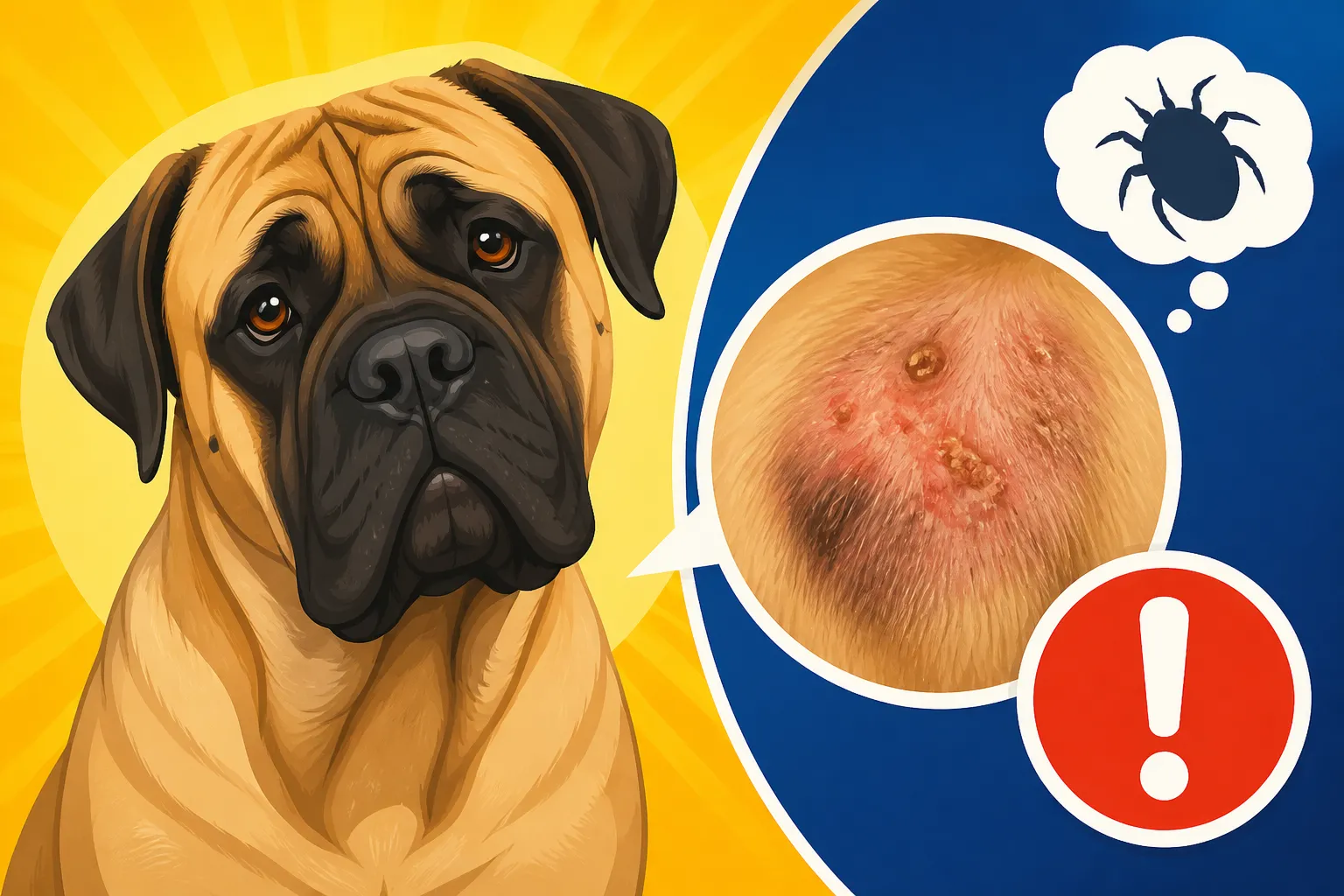
- Hair Loss (Alopecia): This can appear as patchy areas, thinning fur, or widespread balding. With demodectic mange, it often starts around the face, especially the eyes ("spectacles"), muzzle, and front legs, before potentially spreading. Sarcoptic mange often starts on less hairy areas like elbows, hocks, ears, and belly.
- Redness and Inflammation: The skin might look red, irritated, and inflamed, particularly in areas where they've been scratching or biting.
- Crusts, Scabs, and Scales: Small bumps, crusty lesions, or scabs can develop, especially with sarcoptic mange as the mites burrow. Demodectic mange can lead to greasy, scaly skin.
- Thickened Skin: Chronic inflammation and scratching can cause the skin to thicken, darken (hyperpigmentation), and develop a leathery texture, especially in older, untreated cases.
- Secondary Infections: Due to constant scratching and compromised skin barriers, bacterial or yeast infections are common. You might notice a foul odor, pus-filled pustules, or oozing lesions. These can make the itching even worse.
Remember that these signs can overlap with other conditions like allergies, flea infestations, or bacterial skin infections. That's why a definitive diagnosis from a veterinarian is so important.
Differentiating Mange from Other Skin Issues
It's easy to jump to conclusions when you see your Mastiff scratching, but not all itching is mange. Fleas, for example, are a common culprit and can cause intense irritation, especially if your Mastiff has flea allergy dermatitis. Check your Mastiff thoroughly for any signs of fleas or flea dirt, particularly around the tail base and belly. Regularly using effective flea and tick preventatives is part of What a Mastiff Needs Every Day.
Allergies, both environmental and food-related, are also very common in dogs and can cause similar symptoms to mange, including widespread itching, redness, and secondary infections. If your Mastiff experiences Whether a Mastiff Gets Skin Allergies, you might see them scratching their ears, paws, and belly, which can sometimes be confused with mange patterns. The key difference is often the lack of mites on skin scrapings or the response to allergy medication versus mange treatment.
Even with the best care, sometimes you might notice little lumps on your Mastiff's skin. While Which Lumps on a Mastiff Need Aspirating are typically harmless fatty tumors or cysts, persistent skin issues that don't respond to general care warrant immediate veterinary attention. Don't try to self-diagnose based on symptoms alone; a vet can perform the necessary tests.
Diagnosing and Treating Mange in Mastiffs
The moment you suspect mange, or any persistent skin issue, it's time for a trip to the veterinarian. Given the Mastiff's size and potential for complications, early and accurate diagnosis is key to a successful recovery and minimizing discomfort for your dog.
The Veterinary Examination and Diagnostic Tests
When you bring your Mastiff in, your vet will perform a thorough physical examination, looking closely at their skin and coat. They'll ask you a lot of questions about when the symptoms started, how severe the itching is, what you've tried so far, and if there are any other pets in the house. Be prepared to discuss your Mastiff's diet, living environment, and any recent stressors.
The definitive diagnosis for mange usually involves one or more of these tests:
- Skin Scraping: This is the most common and effective test. The vet will use a scalpel blade (typically dulled for safety) to gently scrape a small area of affected skin, collecting superficial cells, debris, and mites. The sample is then placed on a slide with mineral oil and examined under a microscope. Sarcoptic mites are often harder to find because they burrow deep and might be few in number, sometimes requiring multiple scrapings or a presumptive diagnosis based on response to treatment. Demodectic mites, however, are usually plentiful and easier to spot.
- Hair Plucks: For demodectic mange, the vet might pluck several hairs from affected areas and examine their roots under the microscope, as mites often reside in the hair follicles.
- Biopsy: In some stubborn or atypical cases, especially with demodectic mange that doesn't resolve or when other conditions are suspected, a skin biopsy might be recommended. This involves taking a small tissue sample for histopathological examination.
- Fecal Flotation: While less common for direct mange diagnosis, if your Mastiff is intensely itching, mites can sometimes be found in fecal samples due to ingestion during grooming. This isn't a primary diagnostic tool but can occasionally provide clues.
Because a Mastiff can be nervous at the vet, especially when experiencing discomfort, some clinics might recommend mild sedation for these procedures to ensure both the dog's comfort and the accuracy of the samples. How Much Anesthetic a Two Hundred Pound Mastiff Takes is a consideration, but usually, a light sedative is well-managed.
Treatment Options for Mange
Once a diagnosis is confirmed, your vet will prescribe a treatment plan tailored to the type of mange and its severity. It's crucial to follow these instructions precisely, even if your Mastiff starts to look better quickly.
For Sarcoptic Mange:
Treatment typically involves medications to kill the mites. This can include:
- Oral Medications: There are highly effective oral medications, often from the isoxazoline class (like Bravecto, NexGard, Simparica), that can rapidly kill sarcoptic mites. These are often given as a single dose or repeated doses over several weeks. They're generally very safe and effective.
- Topical Spot-Ons: Certain topical parasiticides applied to the skin can also be effective.
- Medicated Shampoos and Dips: While less common as a sole treatment nowadays due to the efficacy of newer oral medications, medicated baths can help alleviate itching and clean the skin. Your vet might recommend specific shampoos, which you can often find at pet supply stores or on Chewy, designed to soothe irritated skin.
Since sarcoptic mange is so intensely itchy, your vet might also prescribe anti-inflammatory medications (like steroids) for a short period to provide your Mastiff with immediate relief, making them much more comfortable while the mite-killing medications do their work. Antibiotics may also be needed for secondary bacterial infections.
For Demodectic Mange:
Treatment for demodectic mange focuses on reducing the mite population and addressing any underlying immune issues.
- Oral Medications: Again, isoxazoline oral medications are often the first-line treatment and are highly effective for generalized demodectic mange, often requiring several months of continuous treatment.
- Topical Treatments: In localized cases, or as an adjunct, specific topical medications can be applied to smaller affected areas. Medicated shampoos can help cleanse the skin and address secondary infections.
- Addressing Underlying Causes: This is paramount. If your Mastiff is very young, their immune system might simply be immature. In older Mastiffs, the vet will investigate potential immune-suppressing conditions like hormonal imbalances or cancer.
Regular follow-up skin scrapings are essential for demodectic mange to ensure the mites are clearing up. Treatment continues until at least two consecutive monthly scrapings are negative for mites. Stopping too soon can lead to a relapse, and nobody wants that.
Prevention and Long-Term Management
Once your Mastiff is on the road to recovery from mange, or if you're looking to proactively protect them, there are several steps you can take to maintain their skin health and minimize the risk of future infestations.
Routine Hygiene and Grooming
Consistent hygiene is critical, especially for a large breed with skin folds. The Wrinkles and Folds a Mastiff Owner Cleans Every Week need diligent attention to prevent moisture and debris from accumulating, which can create a haven for secondary infections that complicate any skin condition. Use gentle, vet-approved wipes or a damp cloth to clean these areas daily, ensuring they are completely dry afterward. You can find these types of wipes easily on Amazon or Chewy.
Regular bathing with a mild, moisturizing shampoo (or medicated shampoo if recommended by your vet) can help keep the skin clean and free of irritants. While Mastiffs don't need frequent bathing, a schedule that keeps their skin healthy without stripping natural oils is important. How Rarely a Mastiff Needs a Bath is a balance that depends on their individual needs and lifestyle. Pay attention to their paws too; keeping them clean and dry can prevent issues, especially if your Mastiff is prone to demodectic pododermatitis.
Environmental Control and Stress Reduction
While you can't completely sterilize your home, keeping your Mastiff's living environment clean can help reduce overall allergen and irritant load on their skin, which supports general skin health. Regularly wash their bedding – and for a Mastiff, that means substantial bedding! Consider durable, washable orthopedic beds that can withstand frequent cleaning. What an Orthopedic Bed for a Mastiff Costs is an investment, but worth it for their comfort and health.
Stress can play a significant role in suppressing the immune system, potentially exacerbating demodectic mange. Try to maintain a consistent routine for your Mastiff, ensuring they feel secure and have plenty of quiet, restful periods. A Mastiff's personality thrives on stability and companionship. While they don't need intense exercise, regular, gentle walks provide mental stimulation and help reduce stress. Why One Hour a Day Is Enough for a Mastiff is important to remember, as over-exertion isn't good for their joints or overall health.
Nutritional Support and Parasite Prevention
A high-quality, balanced diet is fundamental for a strong immune system and healthy skin. Ensure your Mastiff is getting appropriate nutrition tailored to their life stage and activity level. If you're concerned about your dog's diet, discuss options with your vet. Some owners opt for fresh food delivery services like Ollie, believing the high-quality ingredients support overall health, including skin and coat condition. Regardless of the brand, ensure the food is complete and balanced for giant breeds.
Finally, consistent parasite prevention is non-negotiable. While the oral medications used for mange often cover fleas and ticks, maintaining year-round prevention is crucial. Discuss with your vet the best broad-spectrum parasite control for your Mastiff that protects against fleas, ticks, heartworm, and intestinal parasites. Preventing these other common irritants means less scratching, less skin trauma, and a generally healthier environment for your Mastiff's skin to thrive. Many of these preventatives are readily available through your vet or reputable online pharmacies like Chewy.
| Type of Mange | Cause | Key Symptoms | Contagiousness | Common Treatment | Prognosis |
|---|---|---|---|---|---|
| Sarcoptic Mange (Scabies) | Sarcoptes scabiei mites | Extreme, relentless itching; red bumps; crusts, especially on ear edges, elbows, hocks, belly | Highly contagious to other dogs, can cause temporary rash in humans | Oral isoxazolines, topical spot-ons, medicated baths; anti-inflammatories for itch | Excellent with proper treatment |
| Demodectic Mange (Demodex) | Demodex canis mites (overpopulation due to weakened immune system) | Patchy hair loss, often around eyes, muzzle, legs; redness; thickened/darkened skin; less itchy unless secondary infection present | Not contagious (mites are naturally present on most dogs) | Oral isoxazolines, topical treatments for localized cases; address underlying immune issues | Good for localized; generalized requires persistent treatment and identifying underlying cause |
Remember, your Mastiff depends on you to notice when something is wrong. Don't hesitate to seek veterinary advice for any persistent skin issues. Their comfort and well-being are worth every effort.
Disclaimer
This article is for general informational purposes only and does not constitute professional advice. Laws, prices and regulations vary by location and change over time. Consult a qualified professional for guidance on your specific situation.