What a Mastiff Can Reach on a Counter and Should Not Eat
That massive, magnificent head of your Mastiff is usually a source of endless affection, but it can also be a surprisingly effective counter-surfing tool. The sheer size and reach of these gentle giants mean that what's 'out of reach' for a smaller dog is often prime picking for them, leading to potentially dangerous situations with unattended food and household items. This guide will walk you through understanding your Mastiff's counter-surfing capabilities, identifying common household hazards, and implementing robust prevention strategies to keep your gentle giant safe from kitchen mishaps.
The Mastiff's Surprising Reach: More Than Just Tall
Many Mastiff owners underestimate just how much territory their big dog can cover, not just horizontally across the floor, but vertically up a counter. It’s not just about their standing height; it’s a combination of their physical prowess and their incredible sense of smell that turns your kitchen into a treasure hunt for them.
Understanding Their Vertical and Horizontal Game
When you picture your Mastiff, you probably see a dignified, calm presence. But when a tantalizing smell hits their nostrils, they transform into a surprisingly agile, determined scavenger. A full-grown male Mastiff can easily stand over 30 inches at the shoulder, meaning their head is already level with or above many kitchen counters without even trying. But that’s just the beginning.
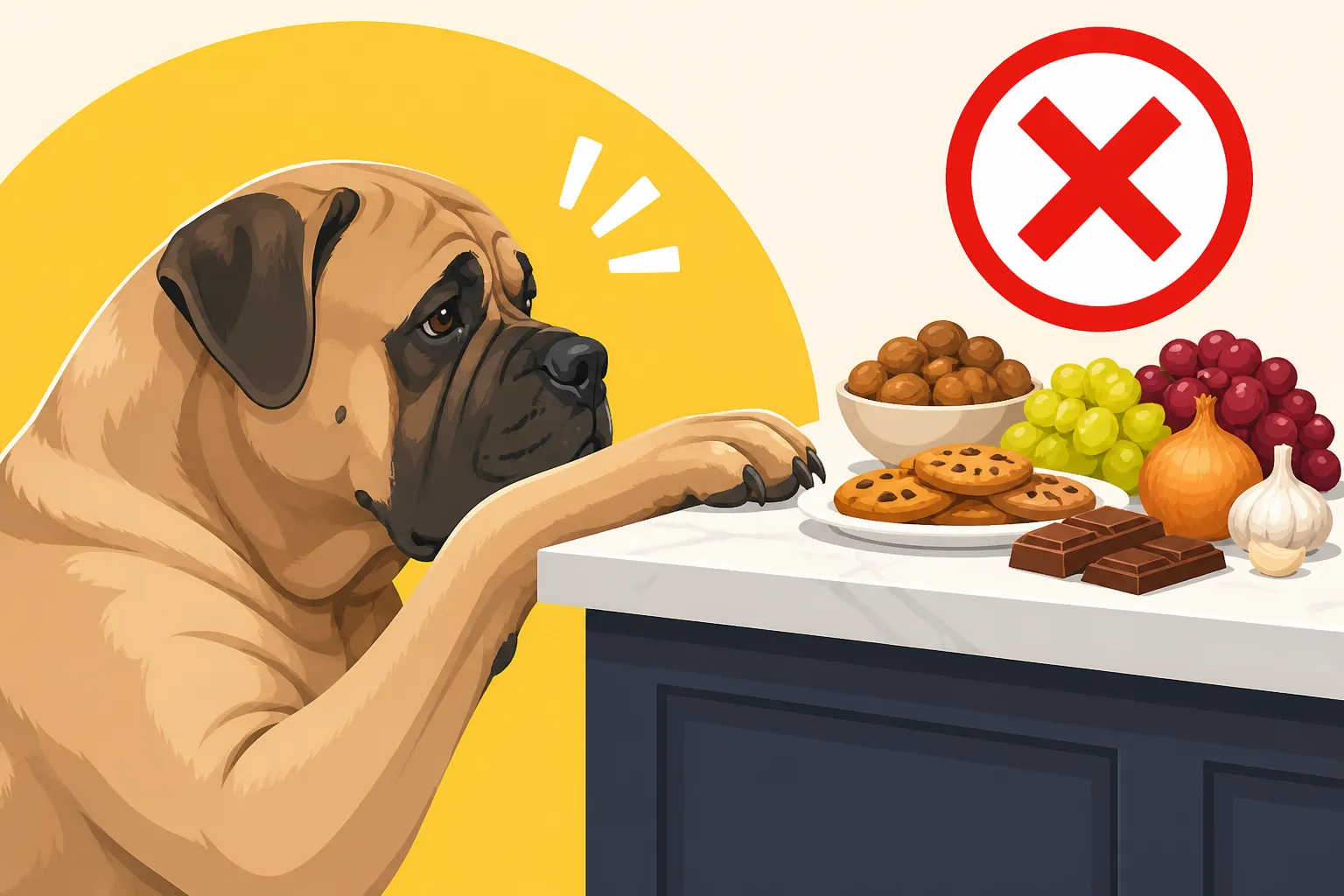
They don't just stand there politely. With a little encouragement from a delicious scent, a Mastiff can easily brace their front paws on the counter, extending their reach significantly. This means that a plate of cookies pushed back from the edge by six inches might still be within pawing distance, and anything within the first foot or so from the edge is fair game for their long snouts. Some particularly athletic Mastiffs, especially younger ones, might even manage to launch themselves higher, though this is less common and often indicates a lack of proper boundaries. Don't forget their long, powerful necks; they can stretch and crane their heads in ways that would surprise you, sweeping items off a considerable surface area. The weight of A Mastiff Does Not Pull You Over, It Simply Stops hints at their sheer physical presence, and this mass translates into formidable counter-surfing power.
Their Incredible Sense of Smell
While a Mastiff's size gives them the physical advantage, their nose is the true mastermind behind their counter-surfing escapades. Dogs have an olfactory sense that is orders of magnitude more powerful than ours, and a Mastiff is no exception. That leftover roast chicken scent you barely notice from across the room? To your Mastiff, it's a beacon, a siren song leading them directly to the source. They can detect residual food odors even after a surface has been wiped, making them persistent investigators.
This keen sense of smell means that even items that seem securely put away can still tempt them. A closed pantry door isn't enough if the smell of freshly baked bread is wafting through the cracks. They are incredibly driven by scent, and once they lock onto a desirable aroma, they will often use all their physical attributes – their height, their reach, their strength – to get to it. This is why vigilance is so critical; they aren't just looking with their eyes, they are smelling with their entire being.
The Temptation Factor
Let's be honest, Mastiffs are often motivated by food. They are big dogs with big appetites, and if there's an opportunity for an illicit snack, many will take it. What makes it particularly tempting for them is that counter-surfing often provides a high-value reward – human food, which is usually far more palatable and exciting than their regular kibble. This creates a powerful reinforcement cycle: they sniff, they reach, they get a reward, and they learn that counter-surfing can be very fruitful.
The problem escalates when they learn that their owners might inadvertently leave things within reach. A moment of distraction, a quick dash to answer the door, and suddenly that plate of cooling pizza is gone. This behavior can quickly become ingrained, as it's self-rewarding. It's a testament to their intelligence, really – they figure out how to get what they want. Therefore, it's not just about managing access, but also about managing the rewards and ensuring they never get to "win" the counter-surfing game. Understanding What Actually Motivates a Mastiff can help you redirect this drive towards appropriate behaviors.
Hidden Dangers: Foods and Items to Guard
It's not just the nuisance of lost snacks or a messy kitchen; many common human foods and household items are genuinely toxic or dangerous for Mastiffs. Because of their size, they can ingest a significant quantity quickly, which can escalate a minor incident into a life-threatening emergency in mere moments.
The Obvious Culprits You Already Know About
We often hear about certain foods being bad for dogs, but with a Mastiff, the sheer volume they can consume makes these warnings even more urgent. A small amount of chocolate might cause mild upset in a Chihuahua, but a counter-surfed pan of brownies could be lethal for a Mastiff.
Here are some of the well-known toxic foods that frequently end up on counters:
- Chocolate: Especially dark chocolate and baking chocolate, which contain high levels of theobromine. Even milk chocolate, in large enough quantities, can be dangerous for a Mastiff. Symptoms range from vomiting and diarrhea to tremors, seizures, and heart problems.
- Xylitol: This artificial sweetener is found in many sugar-free products like gum, candies, certain peanut butters, and baked goods. It causes a rapid and severe drop in blood sugar (hypoglycemia) and can lead to liver failure. A tiny amount can be deadly for a big dog. Always check peanut butter labels before giving it to your Mastiff!
- Grapes and Raisins: The exact toxic compound isn't fully understood, but even a small number can cause acute kidney failure in some dogs. There's no safe amount. This includes foods containing them, like fruitcake or raisin bread.
- Onions, Garlic, Chives, and Leeks: These alliums, whether raw, cooked, or powdered, can damage a dog's red blood cells, leading to anemia. Garlic is often more potent than onion. Keep them out of reach, especially when preparing meals.
- Avocado: The persin in avocado can be toxic to some animals, though dogs tend to be more resistant. However, the high fat content can still cause gastrointestinal upset, and the large pit is a serious choking hazard or can cause an obstruction.
- Alcohol: Any product containing alcohol can cause severe intoxication, respiratory depression, coma, and even death. This includes alcoholic beverages, but also things like raw bread dough which ferments in the stomach.
Everyday Foods That Become Risky in Quantity
Beyond the well-known toxins, many seemingly harmless human foods can pose a significant threat to a Mastiff, primarily due to the quantity they can ingest or their specific ingredients.
- Cooked Bones: While raw bones can be part of a carefully managed diet, cooked bones are brittle and can splinter easily. These sharp fragments can cause serious internal damage, including choking, cuts in the digestive tract, or obstructions that require emergency surgery. A Mastiff can swallow a surprisingly large bone whole.
- Fatty Foods: Bacon grease, drippings, fatty meat trimmings, rich gravies, and fried foods can all lead to severe gastrointestinal upset, pancreatitis (inflammation of the pancreas), or obesity. Pancreatitis is excruciatingly painful and can be life-threatening.
- Yeast Dough: Raw yeast dough can be incredibly dangerous. In the warm, moist environment of a Mastiff's stomach, the yeast ferments, producing alcohol (which is toxic) and expanding gas. This expansion can cause severe bloating, stomach torsion, and alcohol poisoning. The threat of Bloat in the Deepest Chest of Any Breed: the Mastiff is already high, and raw dough exacerbates it.
- Corn Cobs: These might seem innocuous after the corn is eaten, but they are a perfect size and shape to cause an intestinal obstruction in a large dog. They don't digest and can get stuck, requiring surgery.
- Fruit Pits and Seeds: Apple seeds contain cyanide (though a dog would need to eat a lot for it to be toxic), but larger pits from peaches, plums, and cherries contain cyanide and are significant choking hazards or can cause intestinal blockages.
- Dairy Products: Many Mastiffs are lactose intolerant. While a small lick of ice cream might just cause gas, a whole carton of yogurt or a block of cheese can lead to severe diarrhea and stomach upset.
Non-Food Items That Are Still Appetizing
It's not just about food. Many non-food items left on counters can smell interesting to a Mastiff or simply be within reach for curious exploration, leading to ingestion of hazardous materials.
- Medications (Human and Pet): Any medication, whether prescription or over-the-counter, can be incredibly dangerous if ingested in the wrong dose or by the wrong species. A Mastiff might chew through a pill bottle in seconds. Keep all medications in secure, high-up cabinets. Even pet medications need to be carefully stored.
- Cleaning Supplies: Detergents, disinfectants, and other household cleaners often have interesting scents or appealing textures. If a bottle is knocked off a counter and spills, a Mastiff might lick it up. Store all chemicals in locked cabinets.
- Small Objects/Choking Hazards: Things like children's toys, batteries, dental floss, twist ties, rubber bands, or even discarded food wrappers can be ingested. Batteries can cause severe burns internally, and string-like objects can cause linear foreign bodies in the intestines, leading to life-threatening damage.
- Pest Control Products: Mouse and rat poisons, ant baits, and slug pellets are often formulated to be palatable to pests, making them dangerously appealing to dogs. Even a tiny amount can be lethal. Store these absolutely out of reach or avoid using them where pets can access them.
| Food/Item | Primary Danger for Mastiffs | Common Symptoms |
|---|---|---|
| Chocolate | Theobromine toxicity, cardiac issues | Vomiting, diarrhea, hyperactivity, tremors, seizures, heart arrhythmias |
| Xylitol | Severe hypoglycemia (low blood sugar), liver failure | Vomiting, weakness, collapse, seizures, jaundice |
| Grapes & Raisins | Acute kidney failure | Vomiting, lethargy, diarrhea, decreased appetite, increased thirst/urination |
| Onions/Garlic/Leeks | Red blood cell damage (anemia) | Vomiting, diarrhea, lethargy, pale gums, rapid breathing |
| Cooked Bones | Choking, internal perforations, obstructions | Vomiting, straining to defecate, abdominal pain, lethargy |
| Fatty Foods | Pancreatitis, severe GI upset | Vomiting, diarrhea, abdominal pain, hunched posture, lethargy |
| Raw Yeast Dough | Bloat, alcohol poisoning | Distended abdomen, retching, weakness, disorientation, collapse |
| Medications | Drug overdose, organ damage specific to medication | Wide range depending on drug (sedation, hyperactivity, seizures, organ failure) |
| Cleaning Supplies | Chemical burns, internal irritation/poisoning | Vomiting, drooling, oral burns, difficulty breathing |
| Fruit Pits (Peach, Plum) | Choking, intestinal obstruction, cyanide poisoning (in seeds) | Choking sounds, vomiting, lethargy, abdominal pain |
Fortifying Your Kitchen: Proactive Prevention
Preventing your Mastiff from counter-surfing is much easier, and certainly safer, than dealing with the aftermath of an ingestion. It requires consistent effort and a household-wide commitment.
Implementing Strict 'No Counter-Surfing' Rules
Training your Mastiff to understand that counters are off-limits is fundamental. This isn't just about punishment; it's about clear communication and consistency.
- The "Off" Command: Start practicing the "off" command early and consistently. If your Mastiff even looks like they're eyeing the counter, give the command. When they back away, reward them immediately with a low-value treat (not human food!) or praise. The goal is to interrupt the behavior before they get a reward from the counter.
- "Leave It" Command: This is invaluable. Teach your Mastiff to ignore enticing objects on the floor or low surfaces, then generalize it to counters. When you place something tempting on the counter, ask them to "leave it." If they do, reward heavily away from the counter.
- Consistency is Key: Every family member must be on board. Even one instance of a Mastiff successfully getting food from a counter can reinforce the behavior powerfully, making it harder to break. This is similar to Teaching a Mastiff Before It Outweighs You, where early training prevents bigger problems down the line.
- Redirection: If your Mastiff is relentlessly focused on the counter, redirect their attention to an appropriate chew toy or a puzzle feeder in another room. Give them something constructive to do with their large jaws and keen mind. Chew toys or snuffle mats, often found on Amazon or Chewy, can be great distractions.
Smart Storage Solutions Beyond Reach
The most effective prevention is making it physically impossible for your Mastiff to access forbidden items. This means rethinking how and where you store food and other potential hazards.
- Clear the Counters: This is the golden rule. If it's not on the counter, they can't get it. Get into the habit of immediately putting away food, dirty dishes, and any other items after use. Don't leave groceries unattended on the counter while you unpack them.
- Utilize High Cabinets and Pantries: Store all food items, especially tempting ones, in cabinets that latch securely or are simply too high for even the most determined Mastiff to reach. Many owners invest in childproof latches for lower cabinets if their Mastiff is particularly clever.
- Secure Trash Cans: A Mastiff will absolutely raid an open or easily accessible trash can. Invest in a heavy, lidded trash can that locks or has a foot pedal that requires human strength to open. Even better, keep the trash can inside a pantry or cabinet.
- Dog-Proofing Other Areas: Think beyond the kitchen. Medications on nightstands, purses left on chairs (containing gum, medications, or snacks), cleaning supplies in bathrooms – these all need to be secured. A pet first-aid kit, well-stocked and easily accessible to you, but not your Mastiff, is a must-have.
Using Physical Barriers
Sometimes, training and storage aren't quite enough, especially with a young, enthusiastic Mastiff. Physical barriers can be a lifesaver.
- Baby Gates or Exercise Pens: During times when you can't actively supervise your Mastiff in the kitchen (e.g., while cooking a complicated meal, or when guests are over), use a sturdy baby gate or an exercise pen to block access to the kitchen entirely. Ensure the gate is tall and strong enough to withstand a Mastiff's leaning weight; standard gates won't cut it. This strategy can be helpful in the context of A Mastiff in a House With Small Children or if you have multiple pets.
- Crate Training: For periods when you are away from home or cannot supervise at all, a crate can be an invaluable tool. A Mastiff-sized crate is a significant investment, but it provides a safe, secure space where they cannot get into trouble. Make sure the crate is appropriately sized and introduced positively. If your Mastiff is prone to separation anxiety, a crate might not be the sole solution; understanding Separation Anxiety in a Mastiff is crucial.
- Supervision is Paramount: Ultimately, the best barrier is your watchful eye. Never leave your Mastiff unsupervised in a room with accessible counters, especially if food is present. Think of it like supervising a curious toddler – constant vigilance is required.
Emergency Protocols: When the Unthinkable Happens
Despite your best efforts, accidents can and do happen. Knowing what to do if your Mastiff manages to ingest something dangerous is critical. Time is often of the essence.
Act Fast, Stay Calm
Discovering your Mastiff has eaten something they shouldn't have is terrifying, but panicking won't help. Take a deep breath and act quickly and decisively.
- Remove Remaining Hazard: First, immediately remove any remaining toxic food or item from your Mastiff's reach and from the environment to prevent further ingestion.
- Assess the Situation: Try to determine exactly what they ate, how much, and when. This information is vital for your veterinarian. Look for packaging (e.g., chocolate bar wrappers, pill bottles) to provide exact ingredients and quantities. If it was a plant, try to identify the plant.
- Call Your Veterinarian Immediately: Do not wait for symptoms to appear. Many toxins cause internal damage before outward signs are visible. Have your vet's number, or the number of an emergency veterinary clinic, readily available. Do not try to solve it yourself by searching online for remedies.
Know Your Vet's Emergency Protocol
Every veterinary clinic has a protocol for poisonings and emergencies. Familiarize yourself with theirs before an incident occurs.
- Emergency Contact Information: Keep your regular vet's number and the number of your nearest 24/7 emergency veterinary hospital in an easily accessible place (on your fridge, in your phone).
- Veterinary Poison Control Hotlines: Services like the ASPCA Animal Poison Control Center or the Pet Poison Helpline can provide immediate, expert advice, often consulting directly with your vet. Be aware that these services usually have a fee, but they are invaluable.
- What Information to Provide: When you call, be prepared to give:
- Your Mastiff's breed, age, and approximate weight (Why a Mastiff Is Dosed by Lean Weight and Not Scale Weight is important here for accurate medication calculations).
- The exact name of the substance ingested (ingredients list from packaging is best).
- The quantity ingested (your best estimate).
- The time of ingestion.
- Any symptoms you've observed.
- Any pre-existing health conditions your Mastiff has.
Inducing Vomiting: When and How (With Extreme Caution)
This is perhaps the most critical warning: NEVER induce vomiting in your Mastiff without direct instruction from a veterinarian or poison control center. Doing so improperly can cause more harm than good, especially with certain substances or if too much time has passed.
- Why Not to Induce Vomiting Yourself:
- Caustic Substances: If your Mastiff ingested a corrosive substance (like bleach or certain cleaning chemicals), vomiting can cause severe damage to the esophagus and mouth on the way back up.
- Sharp Objects: If they ate something sharp (like bone fragments or glass), vomiting can cause internal perforations.
- Time Elapsed: If too much time has passed (generally more than 1-2 hours, depending on the substance), the toxin may have already been absorbed, and inducing vomiting will be ineffective and stressful.
- Risk of Aspiration: Large breeds like Mastiffs are prone to aspirating (inhaling) vomit into their lungs, which can lead to life-threatening pneumonia.
- Specific Toxins: Some toxins (like petroleum products) pose a greater aspiration risk if vomited.
- When a Vet Might Advise It: If a veterinarian does recommend inducing vomiting, they will give you specific instructions on how to do it safely, often using a small amount of hydrogen peroxide. However, they typically prefer to do this under controlled conditions in their clinic where they can administer anti-emetics or protective agents if needed, and monitor your Mastiff closely.
The bottom line is: call for professional help immediately. Your Mastiff's health and safety depend on it. Keep your home safe, be vigilant, and you can enjoy many happy years with your gentle giant, free from counter-surfing catastrophes.
Disclaimer
This article is for general informational purposes only and does not constitute professional advice. Laws, prices and regulations vary by location and change over time. Consult a qualified professional for guidance on your specific situation.