Whether a Mastiff Splays Its Legs on Tile
It's truly heartbreaking to watch your majestic Mastiff struggle on what should be a comfortable home surface, slipping and sliding like they're on ice. Many Mastiff owners face the frustrating and often frightening reality of their big dogs splaying out on tile, hardwood, or laminate floors. This guide will walk you through why this happens, the risks involved, and, most importantly, provide actionable solutions to create a safer, more confident home environment for your beloved giant.
The Reality of a Mastiff's Gait on Slippery Surfaces
Anyone who lives with a Mastiff knows they are not built for agility. They are ponderous, powerful, and deliberate, and their sheer size, while impressive, works against them on anything but high-traction surfaces. When faced with slick floors, their natural gait can become a liability, leading to awkward movements and sometimes terrifying slips.
Why Mastiffs Are Prone to Slipping and Splaying
Imagine carrying an extra hundred pounds or more on a frame that's already managing immense weight. That's essentially what a Mastiff's body is doing every day. Their immense bulk is supported by powerful but relatively heavy bones and muscles. While they are incredibly strong, this strength doesn't translate to nimble footwork on low-friction surfaces. When a Mastiff walks on tile, for example, their weight distribution, coupled with their often wide stance and sometimes slightly splayed toes, makes it difficult for their paw pads to get sufficient grip.
The physics are simple but unforgiving: less friction means less traction. A smaller, lighter dog might skitter and recover, but a Mastiff's momentum and mass mean a slip can quickly turn into a full-body sprawl. Their low center of gravity might seem like an advantage, but it actually means they have less ability to quickly shift their weight and regain balance once a paw starts to slide. This isn't a sign of weakness; it's a fundamental challenge of their breed's impressive scale interacting with modern flooring materials.
Recognizing the Signs of Discomfort or Instability
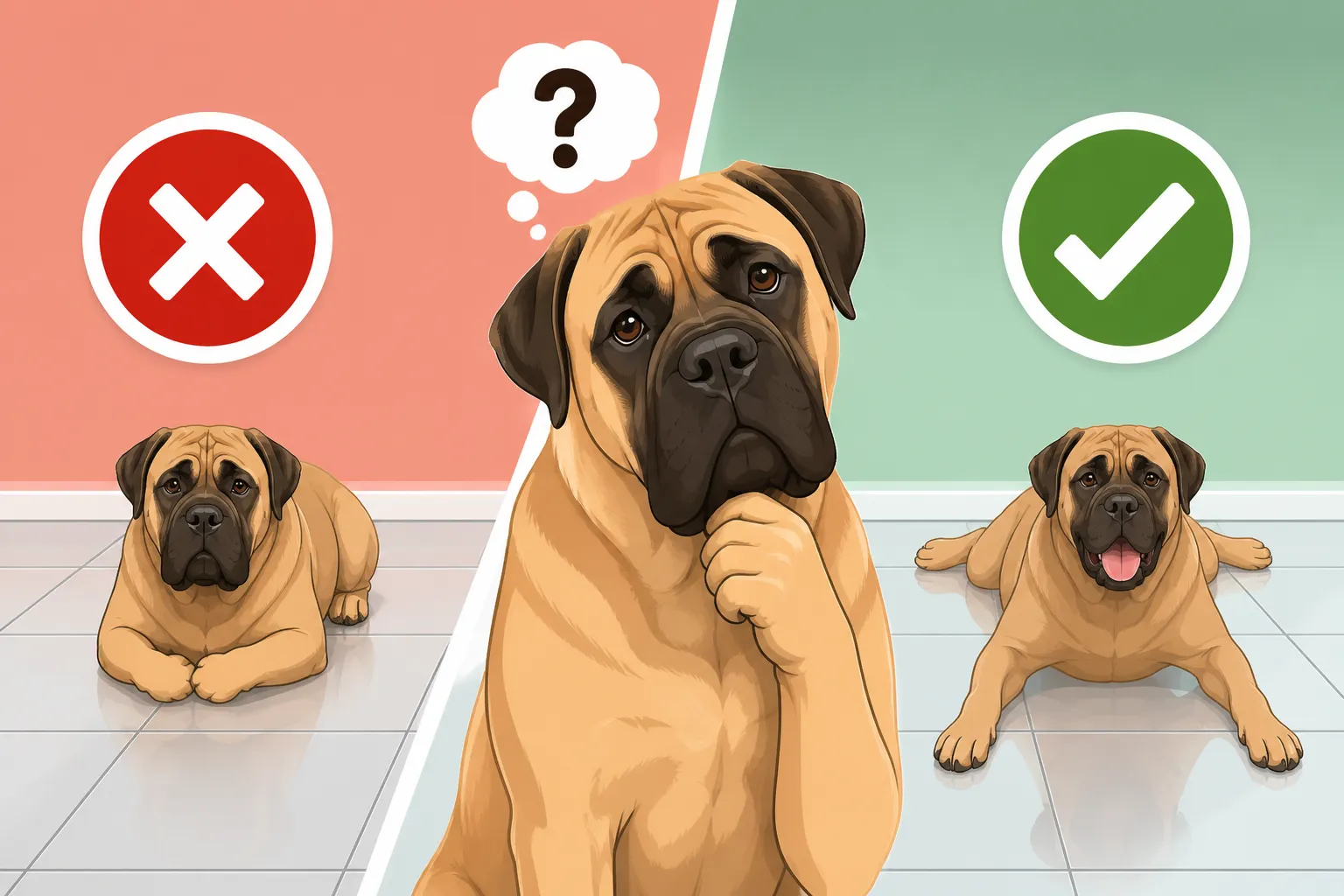
You'll quickly notice if your Mastiff is struggling. The most obvious sign of splaying is when their legs spread out from under them, often humorously (but concerningly) resembling Bambi on ice. They might even do a full "split." But there are other, more subtle indicators that your Mastiff is finding your floors challenging.
Watch how they move. Do they hesitate before stepping onto a tiled area? Do they walk with an unnaturally stiff gait, trying to minimize paw contact or slide their feet rather than lift them cleanly? You might see them 'tiptoeing' or moving very slowly, almost as if they're testing the ground. Some Mastiffs will actively avoid slippery rooms altogether, choosing to stay only on carpeted areas or rugs. This avoidance can be heartbreaking, as it limits their access to parts of their own home. Pay close attention if you notice any changes in their willingness to move or if they start to show a The Shifting Lameness of a Growing Mastiff. A lack of confidence on smooth floors can also lead to accidents, as they may become more reluctant to get up quickly to go outside, for instance, leading to issues with house training.
The Dangers of Slipping for a Giant Breed
While a clumsy slip might seem harmless for a smaller dog, for a Mastiff, it carries significant risks. Their size amplifies the potential for injury, making every fall a serious concern for both immediate and long-term health.
Immediate and Long-Term Health Concerns
A sudden slip or fall can result in acute injuries that are both painful and incredibly expensive to treat in a giant breed. Think about the strain on their joints, muscles, and ligaments as two hundred pounds of dog suddenly loses traction. Common acute injuries include sprains, strains, and even torn ligaments, most notably cruciate ligament tears in the knee. Whether a Mastiff Tears a Cruciate Ligament is a major concern, and surgery for such an injury in a Mastiff is a monumental undertaking, both physically for the dog and financially for you. Dislocations of the patella (kneecap) or even hip subluxation can occur.
Beyond immediate injuries, consistent slipping takes a toll over time. It can exacerbate underlying orthopedic conditions like hip and elbow dysplasia, which Mastiffs are already predisposed to. Repetitive micro-traumas from slips can accelerate the onset or worsening of Arthritis in a Mastiff at Four. For growing Mastiff puppies, who are particularly vulnerable, constant slipping can contribute to improper bone and joint development, leading to lifelong issues. Remember, a Why a Mastiff Puppy Must Not Be Exercised Hard guideline exists for a reason – their developing joints need protection, and slippery floors counteract that protection significantly. The stress on their massive joints from trying to stabilize themselves on slick surfaces is constant, even without a full-blown fall. This constant stress can contribute to the issues like Why a Mastiff's Hips Fail Under Its Own Weight over their lifetime.
The Mental and Behavioral Impact
The physical dangers are clear, but the mental and emotional toll on your Mastiff is just as important. Imagine feeling insecure with every step you take in your own home. Dogs, especially intelligent and sensitive breeds like Mastiffs, are highly attuned to their environment. Repeated slips and the associated loss of control can lead to a significant loss of confidence.
A Mastiff that constantly worries about slipping might become hesitant, anxious, or even fearful about walking on certain surfaces. They may refuse to enter rooms with tile or wood floors, limiting their interaction with the family. This can manifest as an unwillingness to explore, reluctance to play, or even a general sense of unease within their own home. It’s not just an inconvenience; it can truly diminish their quality of life. This fear can also lead to behavioral changes, such as trying to "stick" to rug edges, or even becoming clingy due to a feeling of insecurity. It’s crucial to address this not just for their physical well-being, but for their mental peace and happiness.
Practical Solutions for a Slip-Proof Home
The good news is that you don't have to rip out all your tile or hardwood. There are many practical and effective ways to make your home safer and more comfortable for your Mastiff. A combination of strategies usually works best, targeting both the flooring and your dog's ability to grip.
Addressing Flooring Directly
The most straightforward way to combat slippery floors is to cover them up. Rugs and runners are your best friends here. Look for options with non-slip backings, or invest in rug pads that provide extra grip underneath. You'll want to place these strategically in high-traffic areas where your Mastiff walks most frequently, such as hallways, entryways, and paths to the most used rooms. Don't forget areas around their food and water bowls, as these spots can get extra wet and slick.
Consider larger area rugs for rooms where your Mastiff spends a lot of time. The goal is to create a continuous, safe path for them. If your Mastiff loves to lounge in a particular sunny spot on the tile, put a comfortable rug or bed there. For really problematic areas, you might even consider temporary, interlocking foam mats often used in home gyms or workshops. These offer excellent traction and cushion. Brands like Chewy offer a wide range of rug and runner options suitable for high-traffic areas and large breeds, often with non-slip features built-in. Before you buy, consider What Floor Runners for a Mastiff Cost and budget accordingly, as you may need quite a few.
Enhancing Your Mastiff's Traction
Beyond altering your floors, you can also enhance your Mastiff's own grip. This often starts with basic grooming. Keeping your Mastiff's nails trimmed short is absolutely crucial. Long nails can act like cleats, pushing the paw pad up and away from the floor, preventing them from getting good traction. If you can hear your Mastiff's nails clicking loudly on the floor, they are too long. Keeping a Mastiff's Nails Short Enough for Traction is paramount for stability.
Another area to check is the hair between their paw pads. If this hair gets too long, it can create a slippery layer between their pads and the floor, much like wearing socks on a polished surface. Regularly trimming this hair flush with the paw pads can make a big difference.
For extra grip, consider specialized paw waxes or traction pads. Paw waxes, available from retailers like Amazon, are applied directly to the paw pads and provide a tacky, non-slip surface. These are great for temporary use or specific challenging spots. There are also adhesive paw pads or "toe grips" that can be applied to your dog's nails to improve grip. While these can be effective, they require proper application and may need frequent replacement. Always monitor your Mastiff to ensure they are comfortable with these aids and that they aren't causing any irritation.
Considering Environmental and Training Adjustments
Sometimes, simply changing how your Mastiff moves through the house can help. Encourage slow, deliberate movements on transition areas. Avoid games that involve sudden stops, starts, or quick turns on slippery floors. You might use verbal cues like "slow" or "easy" when they approach a non-carpeted area.
For puppies or senior Mastiffs who are particularly vulnerable, using baby gates to restrict access to certain overly slick rooms during unsupervised times can prevent accidents. If you have an elderly Mastiff who struggles, remember that Lifting an Old Mastiff That Cannot Get Up can be a real challenge, so proactive measures are vital. Teaching them to wait for you to lay down a temporary mat before walking across a large expanse of tile can also be a helpful strategy, building their confidence in waiting for a safe path. It's all about making their environment predictable and safe, reducing opportunities for slips.
Long-Term Management and Preventative Measures
Preventing slips isn't just about quick fixes; it's about a holistic approach to your Mastiff's health and living environment, especially as they grow and age. Proactive care can save you and your Mastiff a lot of heartache in the long run.
Regular Veterinary Check-ups and Joint Support
Maintaining your Mastiff's overall health is crucial for their mobility and stability. Regular veterinary check-ups are non-negotiable, allowing your vet to monitor joint health and detect any signs of orthopedic issues early. Early intervention for conditions like arthritis or dysplasia can make a significant difference in managing discomfort and preserving mobility.
Many Mastiff owners opt to start their dogs on joint supplements proactively, sometimes as early as a year of age. Supplements containing ingredients like glucosamine, chondroitin, and MSM can help support cartilage health and reduce inflammation. Fish oil, rich in Omega-3 fatty acids, is another excellent addition, known for its anti-inflammatory properties that benefit joint health and overall well-being. Joint Supplements for a Mastiff are a common consideration, and What Fish Oil Costs a Mastiff Owner is a worthwhile investment for their comfort.
Beyond supplements, proper nutrition is key, especially during their growth phases. A diet formulated for large or giant breed puppies helps ensure slow, steady growth, which is critical for healthy joint development. Why a Mastiff Puppy Must Grow Slowly is a common breeder mantra. Maintaining a lean body weight throughout your Mastiff's life is paramount. Every extra pound puts additional strain on their joints, making them more susceptible to injury and discomfort. Keeping a Mastiff Lean on Purpose can significantly extend their comfortable years.
Creating a Safe and Confident Living Space
Think of your home as a constantly evolving landscape for your Mastiff. As they age, their needs will change. What worked for a young adult Mastiff might not be enough for a senior dog. Continue to assess your flooring and make adjustments as needed. This might mean adding more runners, larger area rugs, or even considering more permanent anti-slip treatments for certain floors.
Reinforce positive associations with safe movement. Praise your Mastiff when they navigate tricky spots confidently. If they've had a bad experience, you might need to use treats to re-build their trust in a particular area. Providing comfortable, orthopedic beds in multiple locations will encourage them to rest in positions that don't stress their joints, especially on hard floors. Look for beds with sturdy, non-slip bottoms so they don't slide around when your Mastiff tries to get up.
Ultimately, your goal is to create an environment where your Mastiff feels secure, comfortable, and confident in every step they take. This attentiveness to their physical environment will contribute greatly to their overall happiness and mobility, particularly as you begin Caring for a Mastiff Past Five.
| Flooring Type | Traction Level | Pros | Cons | Mastiff Suitability |
|---|---|---|---|---|
| Carpet | High | Excellent grip, comfortable, good insulation | Can stain easily, retains odors, harder to clean | Ideal, especially plush, dense varieties. |
| Area Rugs & Runners | Medium to High | Versatile, add grip to specific areas, stylish | Can bunch up if not secured, some backs may scratch floors | Essential for covering slick spots, must have non-slip backing. |
| Cork Flooring | Medium to High | Softer, naturally slip-resistant, eco-friendly | Can be susceptible to scratches and dents, may be more costly | Good choice for renovations, offers comfort and grip. |
| Vinyl/Linoleum | Medium (textured) | Durable, water-resistant, easy to clean | Smooth varieties are very slippery, can be thin/hard | Textured options are better; smooth vinyl is a definite no-go. |
| Hardwood/Laminate | Low | Aesthetically pleasing, easy to clean | Extremely slippery, no natural grip for dog paws | Very poor unless completely covered with rugs/runners. |
| Tile (Ceramic/Stone) | Low | Durable, cool in summer, water-resistant | Extremely slippery, very hard surface, poor insulation | Very poor, requires extensive rug coverage or alternate solutions. |
Disclaimer
This article is for general informational purposes only and does not constitute professional advice. Laws, prices and regulations vary by location and change over time. Consult a qualified professional for guidance on your specific situation.