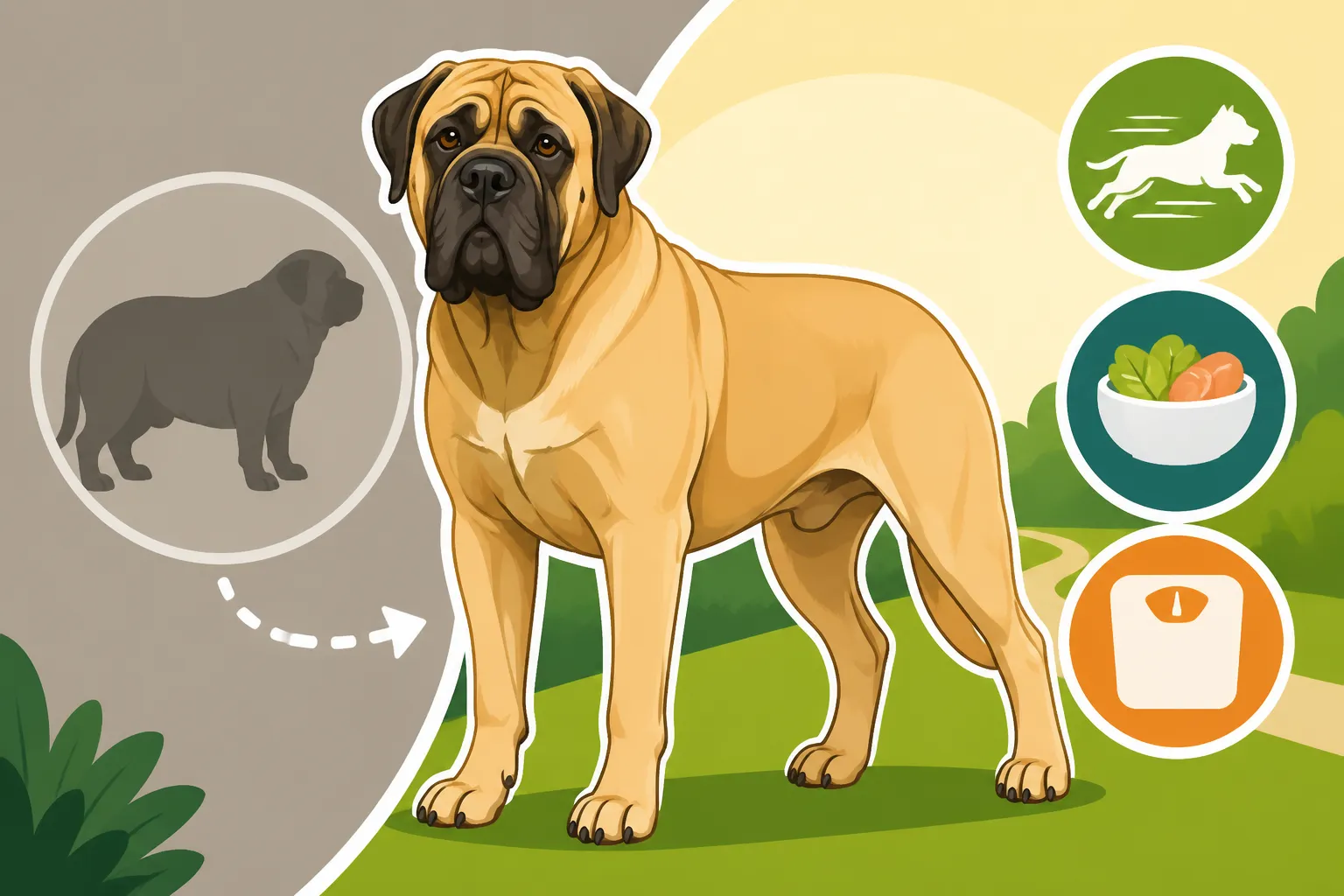
Keeping a Mastiff Lean on Purpose
One of the biggest heartbreaks for a Mastiff owner is watching their beloved giant struggle with their mobility too young, or face health issues that could have been mitigated. This guide dives deep into why keeping your Mastiff lean isn't just a suggestion, but a crucial act of love that will profoundly impact their quality of life and longevity.
Why Leanness Matters for a Mastiff's Health
When you look at a Mastiff, you see sheer mass, right? They're magnificent, huge dogs, and it's easy to think "big dog, big weight." But there's a world of difference between a heavy Mastiff and a lean Mastiff. That extra weight, even just a few pounds that might seem insignificant on such a giant frame, can silently chip away at their well-being, leading to a host of preventable problems. We’re talking about giving them the best chance at a comfortable, active life.
The Strain on Joints: Every Extra Pound Counts
Imagine carrying a backpack filled with bricks all day, every day. That’s essentially what an overweight Mastiff is doing to their already massive skeletal structure. Their joints – hips, elbows, shoulders – are designed to carry an immense amount of weight, but they have their limits. The cartilage, ligaments, and bones are under constant pressure, and any additional stress from excess fat accelerates wear and tear. This isn't theoretical; it's a brutal reality. A Mastiff naturally carries anywhere from 120 to over 200 pounds, and their joints are already working overtime to support that bulk. Adding even ten or twenty "fluffy" pounds means their body is constantly fighting an uphill battle against gravity and friction. This strain can exacerbate conditions like Arthritis in a Mastiff at Four or hasten the onset of new ones, leading to chronic pain and reduced mobility far too early in their lives. We want them bounding (or at least majestically trotting!) through their prime years, not hobbling.
Impact on Lifespan and Quality of Life
The Mastiff is a giant breed, and unfortunately, their lifespan is already on the shorter side compared to many smaller dogs. Why a Mastiff Only Gets Six to Ten Years is a somber but important read. Anything we can do to extend those precious years and make them as comfortable as possible is paramount. Studies consistently show that maintaining a lean body condition can add years to a dog's life, and those years aren't just more years, they're better years. A lean Mastiff is typically more energetic, more playful, and less prone to discomfort. They can enjoy walks, interact with their family more easily, and get up and down without a struggle. Conversely, an overweight Mastiff often moves slower, may become withdrawn due to pain, and spends more time lying down. Their joy for life can diminish, and ours, watching them, does too. It's about maximizing every single moment with our gentle giants.
Increased Risk of Chronic Diseases
Beyond joint issues, extra weight on a Mastiff can open the door to a whole host of other health problems. We’re talking about serious conditions that can dramatically affect their health and rack up significant vet bills. Diabetes, for instance, becomes a much higher risk, requiring constant monitoring and insulin injections. Heart disease can be worsened by the added strain on their cardiovascular system. Even breathing difficulties can emerge or intensify, especially in hot weather, as their body struggles to cool itself with an insulating layer of fat. Certain types of cancer have also been linked to obesity. Furthermore, an overweight Mastiff might have a harder time with anesthesia for routine procedures, as Why Anesthesia Is Riskier in a Mastiff explains, increasing surgical risks. Keeping them lean is a proactive measure against these heavy health burdens, giving them a fighting chance for a healthier existence.
Understanding the Mastiff's Unique Metabolism and Growth
Mastiffs aren't built like other dogs, and their growth and metabolism reflect that. They are slow-growers, massive dogs, and their sheer size means their nutritional needs are distinct. Understanding these nuances is key to preventing overfeeding and fostering a healthy, lean physique from puppyhood through their senior years.
The Slow Growth Advantage in Puppies
When you bring home a Mastiff puppy, it's easy to be tempted to "feed them up" to help them reach their impressive adult size quickly. But this is one of the most detrimental things you can do. Mastiff puppies are designed for slow, steady growth. Their bones and joints need ample time to develop and harden without the undue stress of rapid weight gain. Rapid growth, often fueled by excessive calories and improper calcium levels, can lead to severe skeletal problems like hip and elbow dysplasia, even if their genetics are otherwise sound. Why a Mastiff Puppy Must Grow Slowly is a foundational read for any new Mastiff owner. We aim for a "lanky" or "gangly" look in a growing Mastiff puppy; you should be able to easily feel their ribs, almost see the last two, and see a distinct tuck in their waist. This isn't about deprivation; it's about safeguarding their future mobility.
Genetic Predisposition to Weight Gain
While not all Mastiffs are created equal, many giant breeds, including the Mastiff, can have a predisposition to putting on weight if not carefully managed. Their natural inclination to be somewhat couch potatoes, combined with their sheer size, means they don't burn calories with the same intensity as a hyperactive Border Collie. As a breed, they are generally calm and deliberate. This means that a seemingly "normal" amount of food for a dog of their weight might actually be too much for a Mastiff whose metabolism is geared towards conserving energy. It's not uncommon for them to pack on pounds almost imperceptibly if their diet isn't precisely matched to their activity level and individual metabolic rate. This predisposition requires a vigilant eye from us, their caregivers, to ensure we are always thinking about leanness, not just maintenance.
The Myth of the "Naturally Big" Mastiff
There's a common misconception that Mastiffs are supposed to be massive, thick-boned, and perhaps a bit on the heavy side. While they are indeed substantial dogs, this often leads owners to believe that a little extra padding is just "their build." This couldn't be further from the truth. A healthy Mastiff, even a very large one, should always have a discernible waist and easily palpable ribs without being bony. They are powerful, muscular dogs, but that muscle should be clearly defined, not hidden under a layer of fat. The ideal The Weight Range a Male Mastiff Should Hold or The Weight Range a Female Mastiff Should Hold is often leaner than what many casually observe or even what some show rings might inadvertently promote. We must resist the urge to equate size with health when it comes to weight. True health in a Mastiff lies in a powerful, athletic (even if slow-moving) lean body, not a bulky, overweight one.
Practical Strategies for Achieving and Maintaining a Lean Physique
Keeping a Mastiff lean requires a consistent, mindful approach. It's not a quick fix but a lifestyle commitment. The good news is that these strategies are straightforward and, once integrated into your routine, become second nature, ensuring your Mastiff thrives.
Calorie Control and Appropriate Food Choices
The foundation of a lean Mastiff begins with what's in their bowl. Choosing the right food and carefully controlling calories are paramount. For puppies, look for large breed puppy formulas that are specifically designed for slow growth, with controlled protein and calcium levels. The Protein and Calcium Ceiling for a Mastiff Puppy is a critical reference here, as too much of either can cause developmental orthopedic diseases. For adults, a high-quality adult large breed formula is generally appropriate. Many Mastiff owners find that a food with moderate protein and fat content works best to keep their giants at an ideal weight. Always check the calorie content of the food you choose, as this can vary widely between brands. Some owners also explore fresh food options, which can be easier to portion control and often have higher quality ingredients. Services like Ollie offer pre-portioned, human-grade food that can be customized to your dog's specific caloric needs, which can be a game-changer for precise weight management, though it comes with a higher price tag. Remember, it's not just what they eat, but how much.
The Role of Portion Control and Meal Frequency
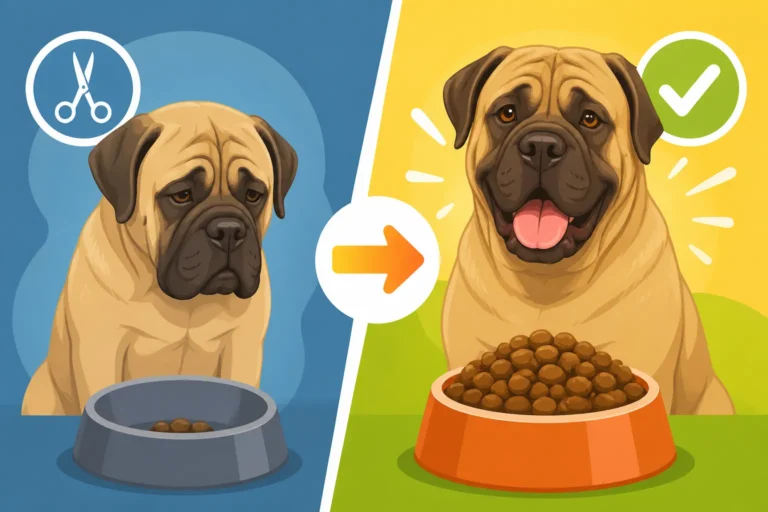
This might sound obvious, but it's where many of us accidentally go wrong. Free-feeding a Mastiff is a recipe for disaster. They often graze more than they need, especially if they're bored. Measured meals are essential. Consult your vet and the feeding guidelines on your chosen food, but always adjust based on your dog's individual metabolism and activity level. As a rule of thumb, How Little an Adult Mastiff Eats for Its Size might surprise you; it's often less than you'd imagine for a dog their bulk. Most adult Mastiffs do well on two meals a day, which can also help reduce the risk of bloat. For puppies, three meals a day is usually recommended to ensure steady growth and prevent overeating at any single sitting. Consistency is key. If you're switching foods or trying a new approach, measure everything precisely. Kitchen scales are invaluable for this, as scoop sizes can be deceiving.
Incorporating Gentle, Joint-Friendly Exercise
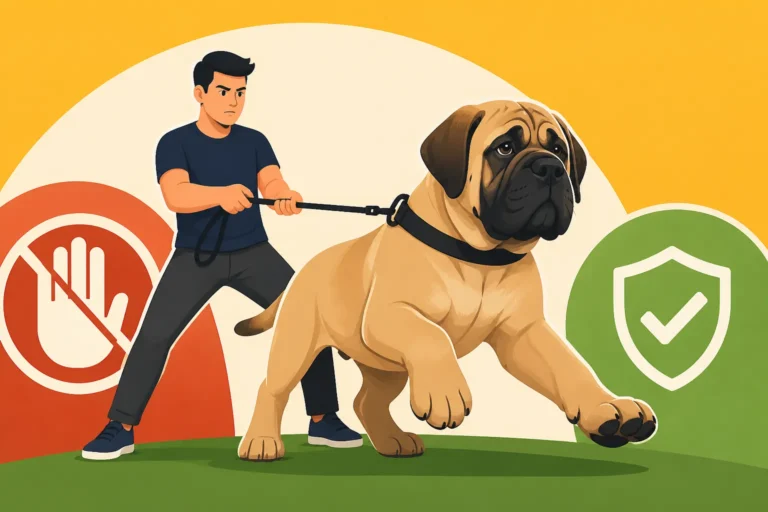
Exercise is vital, but for a Mastiff, it's about quality over quantity, and gentle over strenuous. High-impact activities like intense running, jumping, or long, forced hikes are detrimental to their joints, especially during their growth phases. For puppies, short, supervised play sessions and gentle strolls in the yard are sufficient. The Walk Length That Damages a Mastiff Puppy highlights how careful we must be. For adults, consistent, moderate exercise is ideal. Think of it as controlled bursts of activity. Daily leash walks of 20-30 minutes, perhaps twice a day, are excellent. Swimming, if accessible and your Mastiff enjoys it, is fantastic for joint health as it's low impact. Playing fetch in a soft, grassy area can also be good, but avoid excessive turning or jumping. The goal is to build and maintain muscle mass without stressing their frame. Even mental stimulation through puzzle toys or Scent Work as a Mastiff's Low Impact Sport can contribute to their overall well-being and calorie expenditure without putting strain on their body.
Regular Weight Monitoring and Body Condition Scoring
You can't manage what you don't measure. Regular weight checks at home or at the vet's office are important, but even more crucial is learning how to body condition score your Mastiff. This involves both visual assessment and hands-on palpation.
Body Condition Scoring for Your Mastiff
| Score | Visual Cues | Palpation Cues | Interpretation |
|---|---|---|---|
| 1 | Ribs, spine, pelvic bones prominent from distance | No fat over bones; severe muscle loss | Emaciated |
| 2 | Ribs, spine, pelvic bones easily visible | Minimal fat over bones; obvious waist/tuck | Very Underweight |
| 3 | Ribs easily palpable, last 2-3 ribs might be visible | Minimal fat over ribs; clear waist and abdominal tuck | Ideal (Lean) |
| 4 | Ribs palpable with slight fat covering | Waist and abdominal tuck present but less pronounced | Slightly Overweight |
| 5 | Ribs difficult to feel under moderate fat | Waist barely discernible, no abdominal tuck | Overweight |
| 6 | Ribs very difficult to feel under thick fat | No waist, broad back, bulging abdomen | Obese |
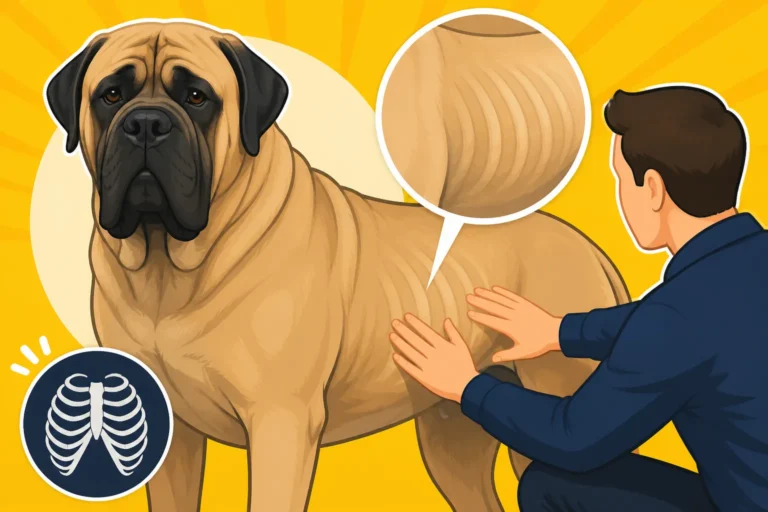
Aim for a 3 on this scale. You should be able to run your hands along their sides and easily feel their ribs without pressing hard, like feeling the knuckles on your hand. From above, you should see a discernible waistline behind their ribs, and from the side, a clear abdominal tuck. Don't be fooled by their loose skin or deep chest; always get your hands on them. If you can't feel their ribs or see a waist, it's time to adjust their diet and activity. Platforms like Chewy or Amazon sell inexpensive bathroom scales that can handle your Mastiff's weight for home monitoring, or you can always use the scale at your vet's office.
Recognizing and Addressing Weight Creep
Weight gain in a Mastiff can be sneaky. It often happens slowly, a pound here, a few pounds there, until suddenly you realize your dog is much heavier than they should be. Being proactive and recognizing the subtle signs is essential to nipping weight creep in the bud before it becomes a significant problem.
Subtle Signs Your Mastiff is Gaining Weight
It's easy to overlook a few extra pounds on a two-hundred-pound dog, but there are tell-tale signs if you know what to look for. Beyond simply weighing them, observe their behavior and physical appearance closely. Are they moving a little slower on walks? Do they seem less enthusiastic about playtime? Are they struggling more to get up from a lying position, or hesitating before going up or down stairs? You might notice they are panting more easily, even during mild exercise. Visually, a tell-tale sign is when their waistline starts to disappear. That gentle tuck up behind the rib cage becomes flatter, and their back might appear broader. Their ribs, which should be easily felt, might become harder to locate under a layer of fat. Their collar might feel a bit snugger. Sometimes, even the way their harness fits changes, creating rubs or pressure points that weren't there before. Don't dismiss these as simply "getting older"; they are often early indicators of creeping weight.
Adjusting Diet as Your Mastiff Ages or Activity Changes
A Mastiff's caloric needs are not static. They change throughout their life, primarily influenced by age, activity level, and whether they've been spayed or neutered. A young, active adult Mastiff will generally need more calories than a senior who spends most of their day napping. If your Mastiff has had a decrease in activity due to a health issue (like recovering from an injury or developing Arthritis in a Mastiff at Four), their food intake needs to be adjusted downwards accordingly. Similarly, intact males and females generally have higher metabolic rates than those who are spayed or neutered. How a Mastiff's Appetite Changes After Neutering is a crucial piece of information here, as their metabolism often slows, making them prone to weight gain if food isn't reduced. It’s not a "set it and forget it" situation with your Mastiff's food bowl; it requires ongoing assessment and tweaking. Sometimes, even a slight reduction of a quarter-cup of kibble a day can make a significant difference over weeks and months.
Seeking Veterinary Guidance for Stubborn Weight
If you've been diligently trying to reduce your Mastiff's weight with portion control and appropriate exercise, but the pounds aren't coming off, it's definitely time to involve your veterinarian. There could be underlying medical reasons for stubborn weight gain that need to be addressed. Conditions like hypothyroidism, where the thyroid gland doesn't produce enough hormones, can significantly slow a dog's metabolism and make weight loss incredibly difficult. Cushing's disease is another less common but possible culprit. Your vet can perform blood tests to rule out these medical conditions. They can also offer tailored nutritional advice, recommend specific prescription weight-loss diets, or refer you to a veterinary nutritionist who specializes in large and giant breeds. Don't feel like a failure if you need professional help; it's a responsible step towards ensuring your Mastiff's health and ruling out any hidden issues that might be contributing to their weight struggles.
Common Mistakes and Misconceptions
When it comes to Mastiffs and their weight, there are several common pitfalls and misunderstandings that well-meaning owners often fall into. Dispelling these myths is crucial for adopting the right approach to their care.
Overfeeding for Perceived "Bulk"
This is perhaps the most prevalent and damaging misconception: the idea that a Mastiff needs to be "bulked up" to look impressive or healthy. As discussed earlier, a Mastiff should be powerful and muscular, not fat. Some owners, particularly those new to giant breeds, misinterpret the breed standard's call for "substance" or "massive" as a green light for excessive weight. They might also confuse puppy chub with desirable bulk, leading to overfeeding during critical growth periods. What happens then is their skeletal system, still developing, is forced to carry far too much weight, increasing the risk for severe and often irreversible orthopedic problems. We need to remember that true strength and health come from lean muscle mass and well-developed bones, not from layers of adipose tissue. Resist the urge to show off a "heavy" dog; instead, aim for a well-conditioned, athletic physique.
Misinterpreting Hunger Cues
Mastiffs are masters of manipulation when it comes to food. They have those big, soulful eyes and a knack for acting absolutely starved, even minutes after a meal. It's incredibly hard to resist, especially when they lay their heavy head on your lap and gaze up at you. Many owners misinterpret these pleas as genuine hunger when, in reality, they are often learned behaviors or simply a dog's natural inclination to eat whenever food is available. Sniffing around the kitchen, nudging your hand, or sighing dramatically when you're eating are not necessarily signs of true caloric need. They are intelligent dogs, and they quickly learn what works to get an extra treat or a piece of your dinner. This also applies to the notion that a clean bowl means they didn't get enough. Understand that a Mastiff will almost always clear their bowl, no matter how full they are. Stick to your measured portions and scheduled meal times, and offer healthy, low-calorie alternatives like carrot sticks or green beans for those persistent pleas.
Believing Weight Gain is Inevitable with Age
While it's true that a dog's metabolism can slow down as they age, and activity levels naturally decrease, weight gain is not an inevitable part of aging for a Mastiff. It's a preventable outcome of continued feeding levels that no longer match their reduced caloric needs. Many owners assume that a senior Mastiff should naturally fill out or get a bit chunky, but this is precisely when leanness becomes even more critical. An older Mastiff often has some degree of arthritis or other age-related joint issues, and every extra pound compounds their discomfort and reduces their mobility. Caring for a Mastiff Past Five often involves proactive weight management. It means adjusting their diet proactively, sometimes reducing portions by 10-20% as they enter their senior years, even if it feels counterintuitive. Think of it as a gift you give them: the ability to move comfortably and enjoy their golden years with less pain and more freedom.
The Long-Term Benefits of a Lean Mastiff
Making the commitment to keep your Mastiff lean is an investment, not just in their health, but in your shared life together. The benefits ripple through every aspect of their existence, translating into a happier dog and fewer worries for you.
Enhanced Mobility and Comfort
Perhaps the most immediately noticeable benefit of a lean Mastiff is their improved mobility. Imagine a dog that can rise from their bed with ease, navigate stairs without struggle, and enjoy longer, more comfortable walks. That's the gift of leanness. When their joints aren't burdened by excess weight, they experience less pain and inflammation, allowing them to move more freely and engage in daily activities with greater joy. This means more energetic greetings at the door, more confident explorations in the yard, and a greater overall sense of well-being. A lean Mastiff is less likely to suffer from The Shifting Lameness of a Growing Mastiff or other subtle signs of discomfort that can worsen with additional pounds. They will spend more of their life being an active, engaged family member rather than a sedentary observer.
Reduced Medical Expenses
Let's be realistic: Mastiffs are expensive dogs to own, and vet bills can be substantial. Why a Mastiff Costs More Per Year Than a Dog That Lives Twice as Long is a reality check. Preventing common weight-related issues can significantly reduce your veterinary expenses over their lifetime. Fewer joint problems mean fewer costly medications, fewer rounds of physical therapy, and potentially fewer expensive surgeries like those for cruciate ligament tears or hip and elbow interventions. A lower risk of diabetes means no ongoing insulin costs or dietary management. Better overall health also makes them less prone to other illnesses, reducing the frequency of vet visits and emergency trips. While you can't prevent every health issue, proactively managing their weight is one of the most powerful tools you have to control healthcare costs and avoid financial strain down the road. It's a practical, financially smart choice that benefits both you and your Mastiff.
A Happier, More Active Companion
Ultimately, a lean Mastiff is a happier Mastiff. When they are not encumbered by excess weight, they are more comfortable in their own skin, more energetic, and more engaged with the world around them. They can participate in family activities with gusto, whether it's a gentle walk in the park, a game of hide-and-seek with the kids, or simply moving from room to room to be near you. This enhanced physical comfort often translates to better mood and temperament. They're less irritable from chronic pain, more responsive to training, and generally more joyful. You'll find yourself enjoying their company even more, knowing you've provided them with the best possible foundation for a fulfilling life. The bond you share will deepen as you watch them thrive, knowing that your commitment to their leanness has given them the best chance at a long, comfortable, and active life right by your side.
Disclaimer
This article is for general informational purposes only and does not constitute professional advice. Laws, prices and regulations vary by location and change over time. Consult a qualified professional for guidance on your specific situation.