Why a Great Dane Stands Taller Than a Mastiff
A Great Dane usually stands taller than a Mastiff because its long legs and upright frame add height, while a Mastiff is built wider and heavier through the body. Comparing the breeds can be confusing when a massive Mastiff looks enormous beside a lean Dane. This guide explains how height is measured, what breed standards say, and why “taller” doesn’t mean “bigger in every way.”
How Great Dane and Mastiff height is measured
Height means floor to withers
Dog height is measured vertically from the floor to the withers—the highest point of the shoulder blades, where the neck meets the back. It is not measured to the top of the head or to the ears. That distinction matters: a dog holding its head high may look taller, but its height at the withers has not changed.
For a reasonably accurate home measurement, stand your dog on a firm, level surface with all four feet positioned naturally. Use a measuring stick or a level held horizontally at the top of the shoulders, then measure straight down to the floor. A dog that is sitting, leaning, standing on a slope, or stretching its neck can make the result misleading. If you’re checking a young dog’s growth, try to use the same method and surface each time.
Height also doesn’t tell the whole story of a giant breed’s size. Body length, chest depth, bone, muscle, and weight all affect how large a dog appears. A Dane can have a strikingly tall outline while a Mastiff occupies more space through its broad chest and substantial body. For more context on the breed’s overall proportions, see How Tall a Mastiff Stands and What a Mastiff Actually Weighs.
What the breed standards say
Breed standards set minimum heights rather than promising that every dog will be exactly a certain size. For Great Danes, the familiar standard heights are at least 30 inches for males and 28 inches for females, with greater height preferred when the dog remains well-proportioned. For Mastiffs, the stated minimums are 30 inches for males and 27 inches for females.
That means the comparison depends partly on sex. A male Great Dane and a male Mastiff share the same minimum height, while the Great Dane standard sets a higher minimum for females. Individual dogs can fall above those minimums, so a particular Mastiff may be taller than a particular Dane. The usual breed-level impression—that Great Danes tend to stand taller—doesn’t make it a rule for every pair of dogs.
| Breed | Minimum height for males | Minimum height for females | Typical visual impression |
|---|---|---|---|
| Great Dane | 30 inches | 28 inches | Tall, long-legged, upright |
| Mastiff | 30 inches | 27 inches | Broad, deep-bodied, substantial |
These figures help frame a comparison; they aren’t a prediction for an individual dog. A dog’s sex, family lines, and overall build all influence its final proportions. When assessing an individual, look at the dog in front of you rather than treating a breed-standard minimum as a height guarantee.
Why Great Danes usually look taller
Long legs and a more vertical outline
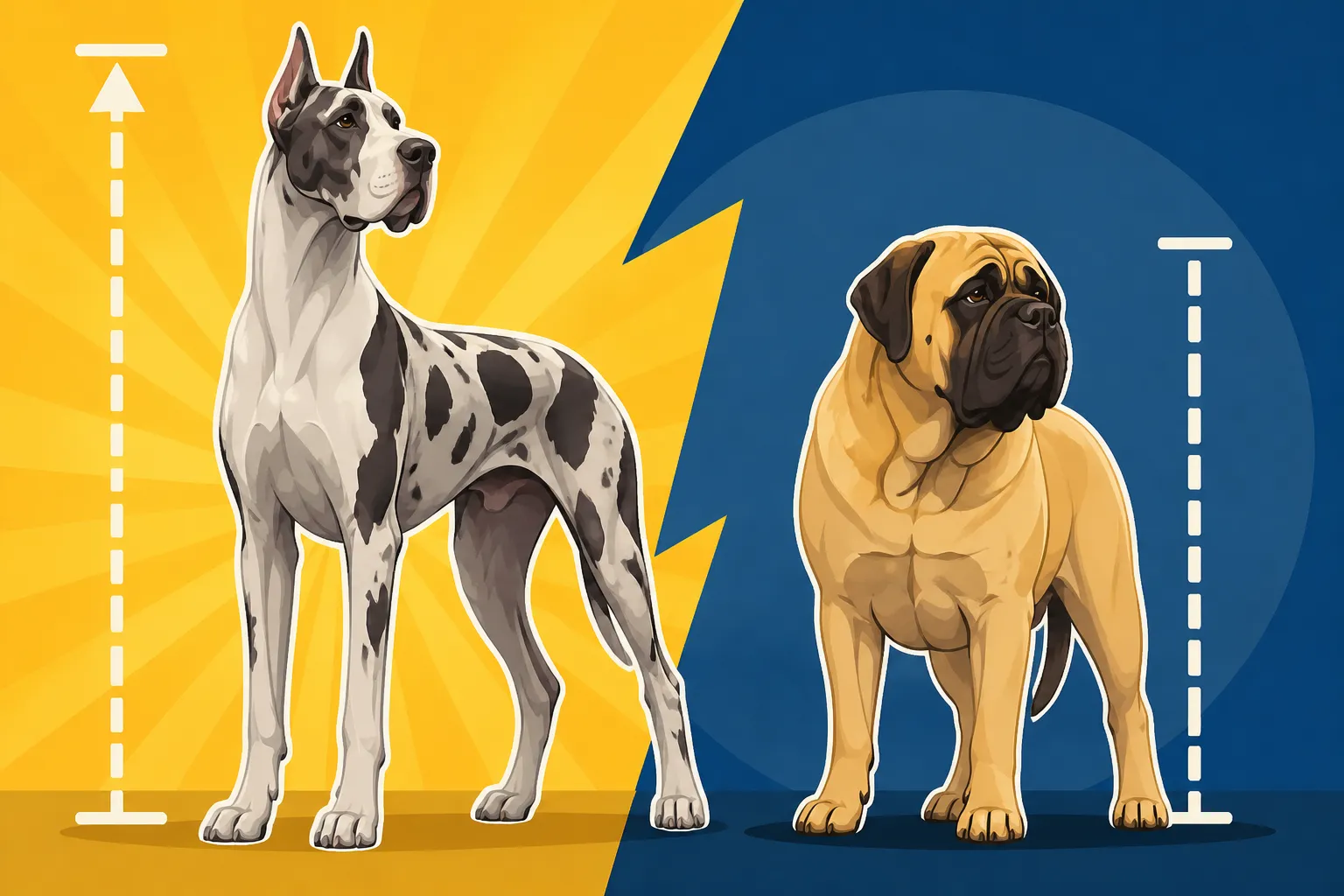
The most obvious reason is leg length. A Great Dane’s long limbs lift its body higher above the ground, and its outline often appears more vertical and open. Its head and neck are carried high, too, which can add to the impression of height even though the official measurement stops at the shoulders.
That silhouette is particularly noticeable when the two breeds stand beside each other. The Dane may look like it is reaching upward, while the Mastiff looks wide and solid. The difference can be dramatic in a photograph, especially if one dog is closer to the camera or standing on a slightly higher surface. Photos can distort proportions, so a side-by-side view on level ground is more useful than comparing pictures taken separately.
The Mastiff’s frame emphasizes width and mass
Mastiffs are also tall dogs, but their proportions draw the eye toward their broad heads, deep chests, and heavy frames. Their size often reads as bulk rather than height. A person seeing a Mastiff for the first time may describe it as “bigger” than a Great Dane, even when the Dane’s shoulder is higher.
This is why height and overall size shouldn’t be used interchangeably. A taller dog may have a lighter, narrower outline; a shorter dog may be heavier and occupy more room. If you’re comparing the breeds as potential companions, it helps to consider weight, handling, and household space alongside the tape-measure result. How Much a Male Mastiff Weighs offers useful context for how much substance can sit beneath a Mastiff’s height.
What affects an individual dog’s height
Sex, genetics, and normal variation
Sex can influence average size, but it doesn’t decide every comparison. A tall female Dane may stand above a male Mastiff, while a large male Mastiff may match or exceed a shorter Dane. Within each breed, parents and wider family lines contribute to the range of adult sizes. Two dogs of the same sex and breed can still have noticeably different builds.
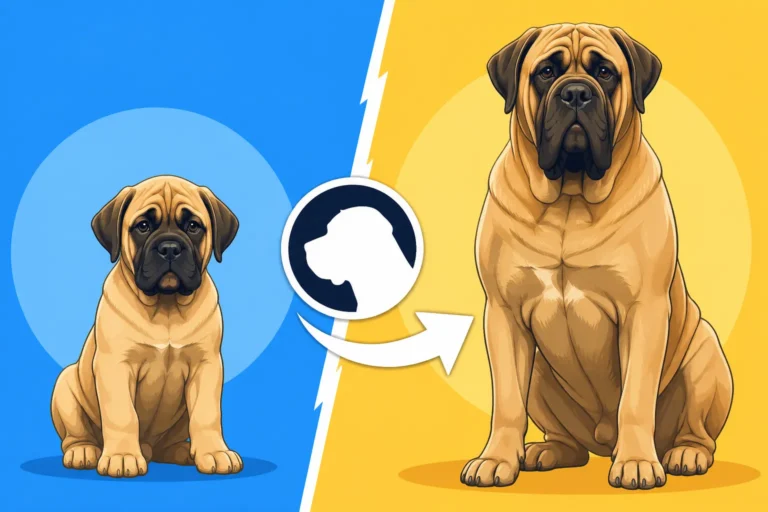
Growth also takes time, particularly in giant breeds. Puppies can go through phases where their legs seem to grow ahead of the rest of their bodies, leaving them looking lanky or uneven for a while. That appearance isn’t a reason to try to speed up or slow down growth through guesswork. Feeding an appropriate diet and following veterinary guidance supports healthy development; pushing a puppy to gain weight quickly does not create a taller, better-built adult.
People sometimes hope that extra food will make a puppy grow larger. It won’t reliably change the dog’s inherited adult height, and overfeeding can put unnecessary strain on growing joints. For Mastiff puppies, gradual growth and appropriate body condition matter more than chasing a particular height or weight. The comparison The Mastiff Against a Bullmastiff also shows how different proportions can make two related-looking dogs seem to differ in size.
Posture, condition, and measurement errors
A dog’s posture can change how tall it appears without changing its actual height. A relaxed dog may stand with its back slightly lowered, while an alert dog may lift its head and straighten its frame. Slippery flooring can make a dog spread its feet or shift its weight, and a puppy may simply refuse to stand still long enough for a clean measurement.
Body condition affects appearance as well. A lean dog’s legs and outline may look more prominent; a heavier dog may appear lower-set or wider. Neither impression tells you whether the dog is at a healthy weight. If you’re concerned about growth, weight, or joint development, ask a veterinarian to assess the dog’s body condition and overall structure rather than relying on a single measurement.
Choosing between the breeds in everyday life
Think beyond which dog is taller
Height is an easy comparison to picture, but it rarely answers the practical questions that matter at home. Consider whether you can safely manage a powerful dog on leash, whether there is enough room for a large bed, and whether your vehicle can accommodate the dog comfortably. A calm temperament doesn’t make a giant dog physically small, and even a friendly greeting can knock someone off balance if the dog is excited.
Mastiffs and Great Danes have different outlines, but both need owners to plan for their size. Walkways, doorways, stairs, and slippery floors can all become more important when a dog is large. If you’re planning supplies, measure the dog and the space rather than choosing based only on breed labels. For instance, when comparing harnesses on Chewy, use the manufacturer’s measurement guidance for the dog’s chest and neck; a label such as “giant breed” isn’t a substitute for checking fit.
Match the dog to your household, not a number
A Great Dane may suit someone who loves a tall, athletic-looking dog, while a Mastiff may appeal to someone drawn to a heavier, more imposing build. But the right choice depends on the individual dog’s temperament, health, energy, training, and the owner’s ability to manage a giant breed. Before deciding, think through the everyday realities: where the dog will rest, how it will get into a vehicle, and who can handle it if it becomes ill or injured.
It’s also worth considering how the dog moves through your home. A bed needs to support the dog’s full body, and the dog should be able to reach its resting place without unsafe jumping. Chewy’s sizing information can help you compare bed dimensions, but measure the available floor space and the dog while it is stretched out before ordering. If the home has slick flooring, adding rugs or runners may help with traction; see Whether a Mastiff Needs a Yard and Whether a Mastiff Suits an Apartment for related space considerations.
Finally, don’t choose a breed based on the hope of getting the tallest puppy in the litter. Responsible decisions focus on health, stable temperament, suitable structure, and a good match with your routine—not a record-breaking measurement. Talk with a reputable breeder or rescue about the individual dog’s needs and history. If you’re weighing the broader commitment, What Mastiff Owners Wish They Had Known and Whether a Mastiff Is Too Much Dog for Most People can help you think through the practical side of living with a giant breed. For everyday items, including appropriately sized bowls or cleaning supplies, Chewy can be one place to compare dimensions and product details before buying.
Disclaimer
This article is for general informational purposes only and does not constitute professional advice. Laws, prices and regulations vary by location and change over time. Consult a qualified professional for guidance on your specific situation.