Whether Large Breed Puppy Food Is Enough for a Mastiff
One of the biggest anxieties for new Mastiff puppy parents is making sure their gentle giant-to-be gets the right start in life. You've heard whispers, maybe read conflicting advice, and now you're wondering: can a standard large breed puppy food truly meet the monumental needs of your growing Mastiff, or are you inadvertently setting them up for future health struggles? This guide will cut through the confusion and help you understand precisely what your Mastiff puppy needs from their diet, and how to tell if the food in their bowl is really up to the task.
The Unique Nutritional Demands of a Growing Mastiff
When you look at a Mastiff puppy, it's easy to be captivated by their adorable wrinkles and clumsy paws. But beneath that charming exterior is a rapid-growth engine that needs very specific fuel. Unlike smaller breeds, or even many other large breeds, a Mastiff doesn't just get big; they get massive, and they do it at a pace that can put immense strain on their developing bones and joints if not managed correctly.
Why "Large Breed" Isn't Always "Giant Breed"
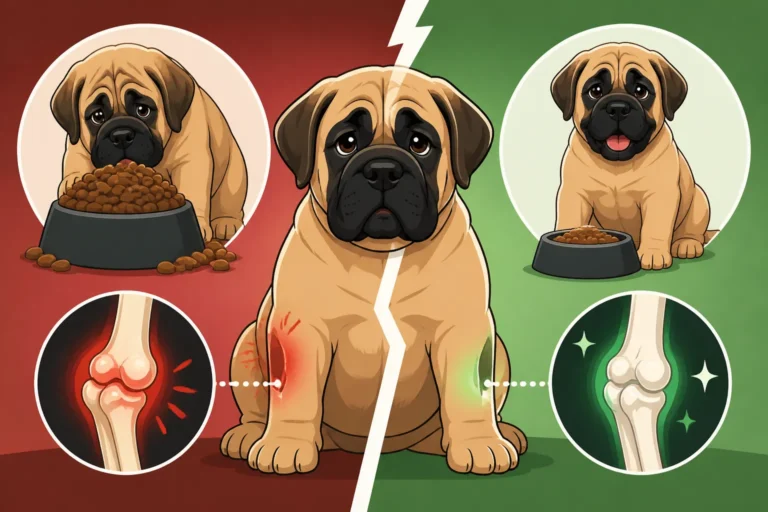
This is where the nuances begin. Many dog food manufacturers label their formulas "large breed puppy food," and while that might be perfectly adequate for a Golden Retriever or a German Shepherd, it might not be quite right for a Mastiff. The critical distinction lies in the sheer scale and duration of a Mastiff's growth. A Golden Retriever might reach its adult height by 12-18 months, but a Mastiff will often continue to grow in height and fill out in weight well into their second, sometimes even third, year. This extended growth period demands a controlled nutritional profile that supports slow, steady development rather than rapid weight gain, which can exacerbate skeletal issues.
Think of it this way: building a skyscraper requires different materials and a slower construction pace than building a two-story house. The same principle applies to your Mastiff. Their skeletal structure needs ample time to calcify and strengthen without being overloaded by excessive growth in a short period. This focus on controlled growth is paramount to minimizing the risk of developmental orthopedic diseases like hip and elbow dysplasia, common scourges in our big dogs. In fact, many experienced Mastiff owners and breeders will tell you that the mantra for these puppies is always "slow and steady wins the race" when it comes to growth. This concept is so vital that entire strategies are built around Restraining the Growth of a Mastiff Puppy from day one.
The Critical Balance of Calcium and Phosphorus
For a growing Mastiff, calcium and phosphorus are the dynamic duo of bone development, and getting their ratio and overall quantities wrong can spell disaster. It's not just about having enough calcium; it's about having the right amount and the correct balance with phosphorus. Too much calcium, surprisingly, is often more detrimental than too little. Excessive calcium can interfere with proper bone mineralization, leading to a host of skeletal deformities and joint problems. This is because high calcium levels can disrupt the body's ability to regulate bone growth, causing cartilage to mature too quickly or irregularly.
Conversely, too little calcium can also cause issues, though it's less common in commercial diets. The ideal range for calcium in a giant breed puppy food is generally narrower than for smaller breeds, typically around 1.0-1.5% on a dry matter basis, with phosphorus usually falling between 0.8-1.2%. The calcium-to-phosphorus ratio should ideally be between 1.1:1 and 1.4:1. These seemingly small percentages are incredibly important for these growing giants. If you're pondering Why Calcium Is Capped for a Growing Mastiff, this precise balancing act is exactly why. It’s all about supporting strong bones without overwhelming their delicate growth plates during this crucial period.
Protein Levels and Their Role in Controlled Growth
There's a persistent myth that high protein causes rapid growth and, therefore, orthopedic problems in large breed puppies. This isn't entirely accurate. Protein itself is essential for building muscle and tissue, and a healthy Mastiff puppy needs a good amount of it. The real culprit behind accelerated growth and subsequent joint issues is usually excessive calorie intake, not protein, provided the protein source is high quality and digestible.
However, a moderate protein level, typically around 23-26% on a dry matter basis for giant breed puppies, is generally recommended. This allows for healthy muscle development without encouraging excessive growth spurts. What we want to avoid is a food so rich in calories that the puppy grows too quickly in overall size and weight, putting undue stress on their immature joints. The focus should be on nutrient density that supports gradual, sustained growth, not bulk. It's a fine line to walk, and understanding The Protein and Calcium Ceiling for a Mastiff Puppy helps illuminate why getting these levels right is so critical for their long-term health.
Analyzing Commercial Large Breed Puppy Foods for Your Mastiff
So, how do you navigate the crowded pet food aisle (or the even more crowded online store) to find a food that truly meets your Mastiff puppy's specific needs? It comes down to becoming a label detective, understanding what makes a food truly "giant breed appropriate," and knowing when to seek out specialized options.
What to Look For on the Label: Key Ingredients and Guaranteed Analysis
Turning over that bag of kibble is your first step to nutritional literacy. The "Guaranteed Analysis" is your best friend here. Don't just glance at the front of the bag; dive into the details.
Here’s a quick breakdown of what you need to scrutinize for your Mastiff puppy:
- Protein: Aim for a crude protein level between 23-26% (dry matter basis). While protein doesn't directly cause rapid growth, an overly high level can sometimes come hand-in-hand with higher calorie density.
- Fat: Look for crude fat around 12-16% (dry matter basis). This provides energy but shouldn't be excessively high, again to manage calorie intake.
- Calcium: This is perhaps the most critical. You want calcium to be between 1.0% and 1.5% (dry matter basis). Values much higher than this can be problematic.
- Phosphorus: Should be between 0.8% and 1.2% (dry matter basis).
- Calcium to Phosphorus Ratio: This ratio is crucial. Ideally, it should fall between 1.1:1 and 1.4:1. This precise balance is vital for proper bone development.
Beyond these numbers, consider the actual ingredients list. High-quality meat sources (like chicken, lamb, beef, or fish) should be among the first few ingredients, followed by digestible carbohydrates like rice, barley, or oats. Avoid foods with a lot of fillers, artificial colors, or vague "meat by-products" as primary protein sources. Look for added omega fatty acids (like DHA from fish oil) which support brain and eye development, and often joint health. Brands that focus on giant breed specific formulas, rather than just generic large breed ones, often pay closer attention to these critical ranges.
When a Standard Large Breed Formula Falls Short
Many standard large breed puppy formulas are designed with breeds like Labradors, German Shepherds, or Boxers in mind – dogs that are certainly large, but don't typically reach the sheer mass and extended growth period of a Mastiff. These foods might have calcium levels that are slightly too high, or a calorie density that, while fine for other large breeds, encourages too-rapid growth in a Mastiff.
For example, a kibble might proudly state "Large Breed Puppy Formula" but have a calcium content of 1.8% or higher, or a calorie count that pushes too much energy into your Mastiff's diet, prompting them to put on weight faster than their skeleton can comfortably support. This is where a generic "large breed" label can be misleading for owners of truly giant breeds. You might find yourself scouring sites like Chewy for very specific "giant breed puppy" options, or brands known for careful nutritional formulation for these immense dogs.
The risk of Whether Overfeeding a Mastiff Puppy Ruins Its Elbows is very real, and it’s not just about giving too much food, but feeding the wrong type of food that inadvertently accelerates growth. A food that's too rich in calories or has an imbalanced calcium-to-phosphorus ratio can contribute to conditions like osteochondritis dissecans (OCD) or exacerbate hip and elbow dysplasia, leading to pain and costly surgeries down the line. It's a common, heartbreaking scenario that can often be mitigated with careful nutritional choices early on.
The Importance of a Low Calorie Density
This might sound counterintuitive, but for a Mastiff puppy, lower calorie density in their food is actually a good thing. We're not talking about calorie restriction to make them thin, but rather a moderate caloric intake that promotes slow, controlled growth. The goal is for your Mastiff puppy to grow steadily, allowing their bones, joints, and ligaments to develop and strengthen at a natural pace without being put under undue stress by carrying too much weight too soon.
When a puppy grows too quickly, their bones can outgrow their soft tissues, leading to misalignment and increased risk of injury. A lower calorie density means they can eat a satisfying amount of food without consuming excess energy that fuels rapid growth spurts. This careful management of growth is a cornerstone of Mastiff puppy care, and it's a huge factor in preventing many of the orthopedic issues that can plague these magnificent dogs. This is why following a dedicated The Feeding Chart a Mastiff Puppy Should Follow is often stressed by breeders and veterinarians, because it ensures these precise calorie and nutrient goals are met.
Here’s a comparison table to help visualize the ideal vs. what you might find in a general "large breed" food:
| Nutrient (Dry Matter Basis) | General "Large Breed" Puppy Food (Typical Range) | Ideal "Giant Breed" Puppy Food (Target Range) | Why it Matters for a Mastiff |
|---|---|---|---|
| Crude Protein | 25-30% | 23-26% | Supports muscle development without encouraging rapid, excessive growth. |
| Crude Fat | 14-18% | 12-16% | Provides necessary energy but helps control overall calorie intake for slow growth. |
| Calcium | 1.2-2.0% | 1.0-1.5% | Crucial for bone development; too high can lead to skeletal deformities. What Excess Calcium Does to a Mastiff's Elbows is a serious concern. |
| Phosphorus | 0.9-1.5% | 0.8-1.2% | Works with calcium; imbalance or excess can be detrimental. |
| Ca:P Ratio | Varies widely | 1.1:1 to 1.4:1 | Essential for proper bone mineralization and preventing developmental orthopedic disease. |
| Calorie Density | Higher, for active large breeds | Moderate to lower | Prevents rapid weight gain, which stresses developing joints and can lead to problems like The Shifting Lameness of a Growing Mastiff. |
Practical Feeding Strategies for Mastiff Puppies
Beyond choosing the right kibble, how you feed your Mastiff puppy is just as important. It’s not simply about filling a bowl; it’s about establishing routines, monitoring their development, and understanding when to seek expert advice.
Transitioning from Breeder's Food and Establishing a Schedule
When you bring your Mastiff puppy home, they'll likely be on a specific food chosen by the breeder. It's crucial to continue with this food for at least a week or two to avoid digestive upset in an already stressful new environment. If you plan to switch foods, do so gradually over 7-10 days, mixing increasing amounts of the new food with decreasing amounts of the old. This gentle transition helps their digestive system adapt.
Once settled, establishing a consistent feeding schedule is paramount. Free-feeding, where food is left out all day, is a definite no-no for a Mastiff puppy. It’s nearly impossible to monitor intake, which means you can’t control their growth rate effectively. Instead, feed 3-4 meals a day for very young puppies, gradually reducing to 2 meals a day as they mature. This helps regulate their digestion, allows you to monitor their appetite, and helps prevent overeating. For more details on why this is so important, read up on Why a Mastiff Puppy Is Never Free Fed.
Monitoring Your Mastiff Puppy's Growth and Body Condition
This is an ongoing process that empowers you to make adjustments as your Mastiff grows. Your puppy shouldn't look chubby or overly plump. Instead, they should have a lean, athletic appearance. You should be able to easily feel their ribs when you run your hand along their side, but not see them prominently. Their waist should be evident when viewed from above, and their belly should tuck up slightly when viewed from the side.
Regularly check their body condition score, and don't be afraid to ask your vet or breeder for guidance. If you're concerned about them being too thin, check out How Ribby a Mastiff Puppy Should Look for a visual guide. Remember, a slightly lean Mastiff puppy is a healthier Mastiff puppy in the long run. Rapid weight gain is a red flag that can lead to orthopedic problems. Keeping track of How Much a Mastiff Puppy Gains in a Week can help you spot trends early and adjust their food intake as needed. The goal is steady, controlled growth, not a sprint to maximum size.
Supplementation: When it's Needed (and When it's Not)
It's tempting to think that if a little calcium is good, more must be better, or that adding joint supplements will prevent problems. For a Mastiff puppy, this mindset can actually be detrimental. If you're feeding a high-quality, appropriately formulated giant breed puppy food, it should contain all the necessary vitamins, minerals, and nutrients in the correct balance. Adding extra calcium or other mineral supplements can throw off this delicate balance, leading to the very skeletal problems you're trying to avoid.
Joint supplements are a common question, and while some adult Mastiffs may benefit from them later in life, their use in puppies should always be discussed with your veterinarian. Excessive supplementation, especially with products not specifically designed for growing giant breeds, can do more harm than good. Focus on the right food first. If your vet recommends a specific joint supplement, you might find options available on platforms like Amazon or even specialized formulas from pet food manufacturers found on Ollie or similar curated services. Always, always run any supplementation plans past your vet first.
Consulting Your Veterinarian: Your Best Resource
Ultimately, your veterinarian is your most invaluable partner in ensuring your Mastiff puppy receives optimal nutrition and care. They see countless dogs, understand breed-specific needs, and can provide tailored advice that accounts for your dog's individual circumstances.
Tailoring Nutrition to Individual Needs
Every Mastiff puppy is an individual. While general guidelines exist, factors like genetics, activity level, metabolism, and even climate can influence their nutritional requirements. Your vet can perform regular health checks, assess your puppy's growth rate, and help you fine-tune their diet. They can also screen for early signs of orthopedic issues or other health concerns that might impact their nutritional needs. Don't hesitate to ask them if How Much a Mastiff Puppy Should Eat seems right for your specific pup, or if you notice any changes in their gait or energy levels.
Sometimes, despite best efforts, a puppy might show signs of rapid growth or discomfort. Your vet can help identify if these are normal growing pains or indicators of a deeper issue. They can offer insights into the subtle cues that only an experienced eye might catch.
Recognizing Signs of Nutritional Imbalance or Overgrowth
Knowing what to look for can help you intervene early. Signs that your Mastiff puppy might be growing too quickly or suffering from a nutritional imbalance include:
- Lameness or Stiffness: Any limping, reluctance to play, or difficulty getting up or lying down. This is particularly concerning in a growing giant breed and warrants immediate veterinary attention.
- Joint Swelling: Visible swelling around joints, especially elbows or hocks.
- Abnormal Gait: A change in how they walk, perhaps a "paddling" motion or awkwardness.
- Lethargy: Unexplained tiredness or reduced playfulness.
- Excessive Weight Gain: If your puppy looks visibly plump, or you can't easily feel their ribs, they're likely carrying too much weight.
These are not things to "wait and see" about. Early detection and intervention are key to managing and potentially mitigating the long-term impact of developmental orthopedic diseases. Your vet can perform physical examinations, and if necessary, recommend diagnostics like X-rays to assess bone and joint health. A proper diet is the foundation for a healthy Mastiff, and with your vet's guidance, you can ensure your gentle giant gets the best start possible.
Disclaimer
This article is for general informational purposes only and does not constitute professional advice. Laws, prices and regulations vary by location and change over time. Consult a qualified professional for guidance on your specific situation.