How Common Hip Dysplasia Is in Mastiffs
Orthopedic Foundation for Animals statistics show twenty to twenty-five percent of evaluated Mastiffs have hip dysplasia.
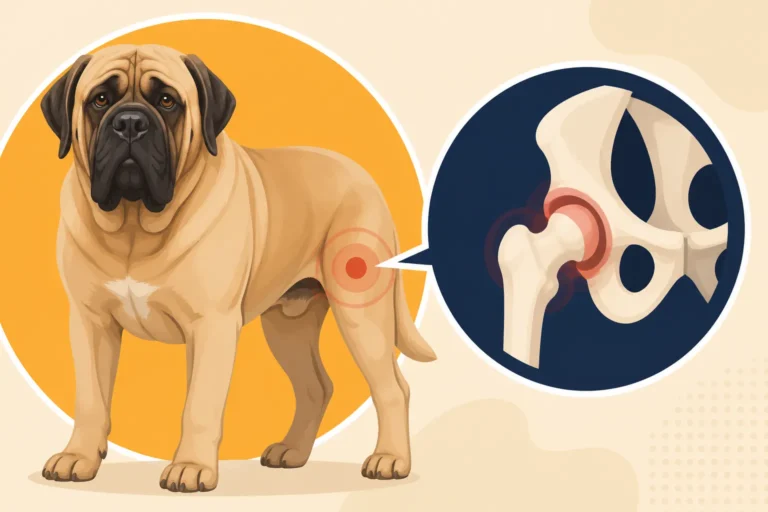
Orthopedic Foundation for Animals statistics show twenty to twenty-five percent of evaluated Mastiffs have hip dysplasia.

The Cystinuria marker test for Mastiffs detects genetic mutations linked to Type III disease, identifying carriers before symptoms start.
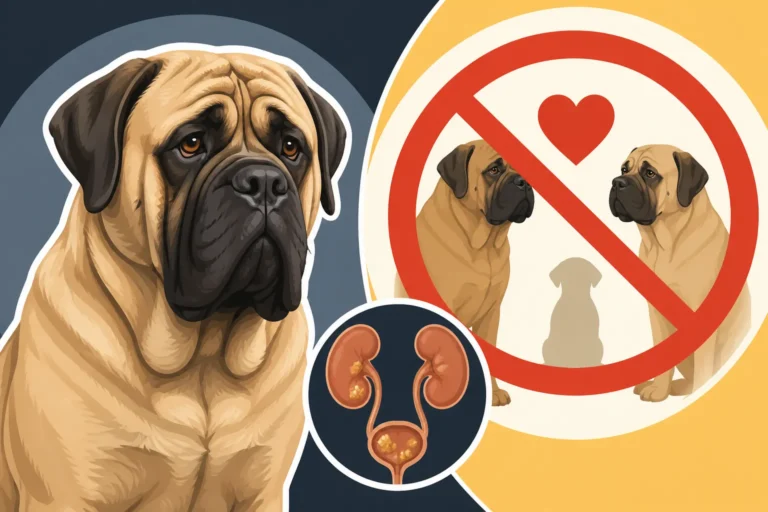
Cystinuria in Mastiffs is an inherited metabolic disorder requiring the responsible removal of affected dogs from breeding programs.

Cystinuric Mastiff daily water intake targets of one ounce per pound help dilute urine and prevent dangerous bladder stones.

Dietary management for Mastiff cystinuria explains why food alone rarely prevents painful urinary tract stones and metabolic disorders.
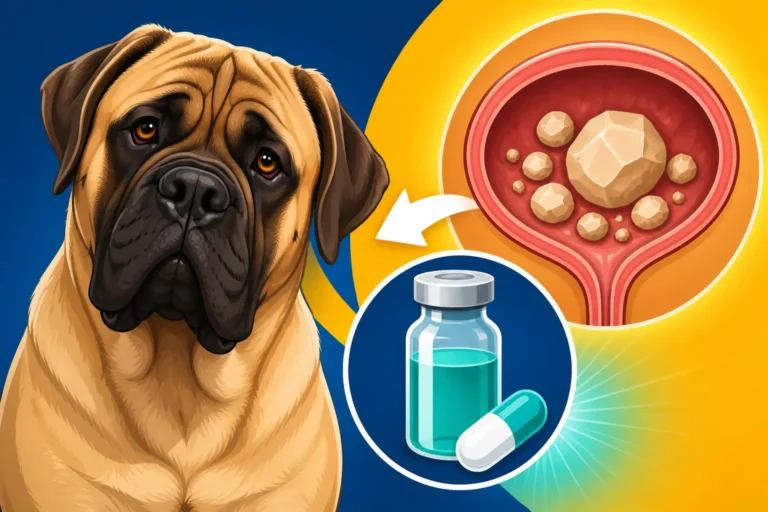
Thiola, containing the active ingredient tiopronin, is the specific medication veterinarians use to dissolve cystine stones in dogs.

Neutering a male Mastiff stops cystine stone formation by reducing androgens that impair kidney amino acid reabsorption.

Mastiff urinary stone surgery costs and expenses, including diagnostic imaging, cystine types, and emergency blockage care.
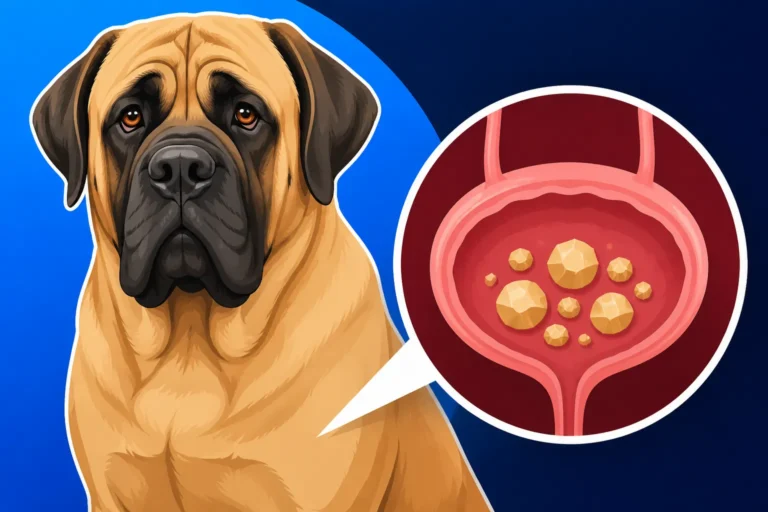
Veterinary diagnostic tools and subtle behavioral signs uncover painful cystine stones that cause urinary blockages in intact male Mastiffs.

Intact male Mastiff urine checks prevent life-threatening blockages caused by cystine stone formation linked to male androgens.