Whether a Mastiff Suits a Family With a Baby
Bringing a new baby home is an exciting, terrifying, and utterly exhausting time. If you share your life with a magnificent Mastiff, you're likely wondering how this gentle giant will adapt to the tiniest, loudest, and most demanding new family member. It's a valid concern, as their sheer size, while often accompanied by an incredibly sweet nature, also presents unique challenges. This guide will walk you through preparing your Mastiff for a baby's arrival, managing their interactions, and ensuring a safe, happy household for everyone.
Understanding the Mastiff Temperament with Children
Many people fall in love with Mastiffs because of their reputation as "gentle giants." And for good reason – they are often incredibly devoted, calm, and tolerant. However, when you introduce a small, unpredictable, and fragile human into the mix, it's crucial to understand both their innate qualities and potential pitfalls. It's not about doubting your dog's character, but about being a responsible owner who anticipates every possible scenario.
Their Gentle Giant Nature
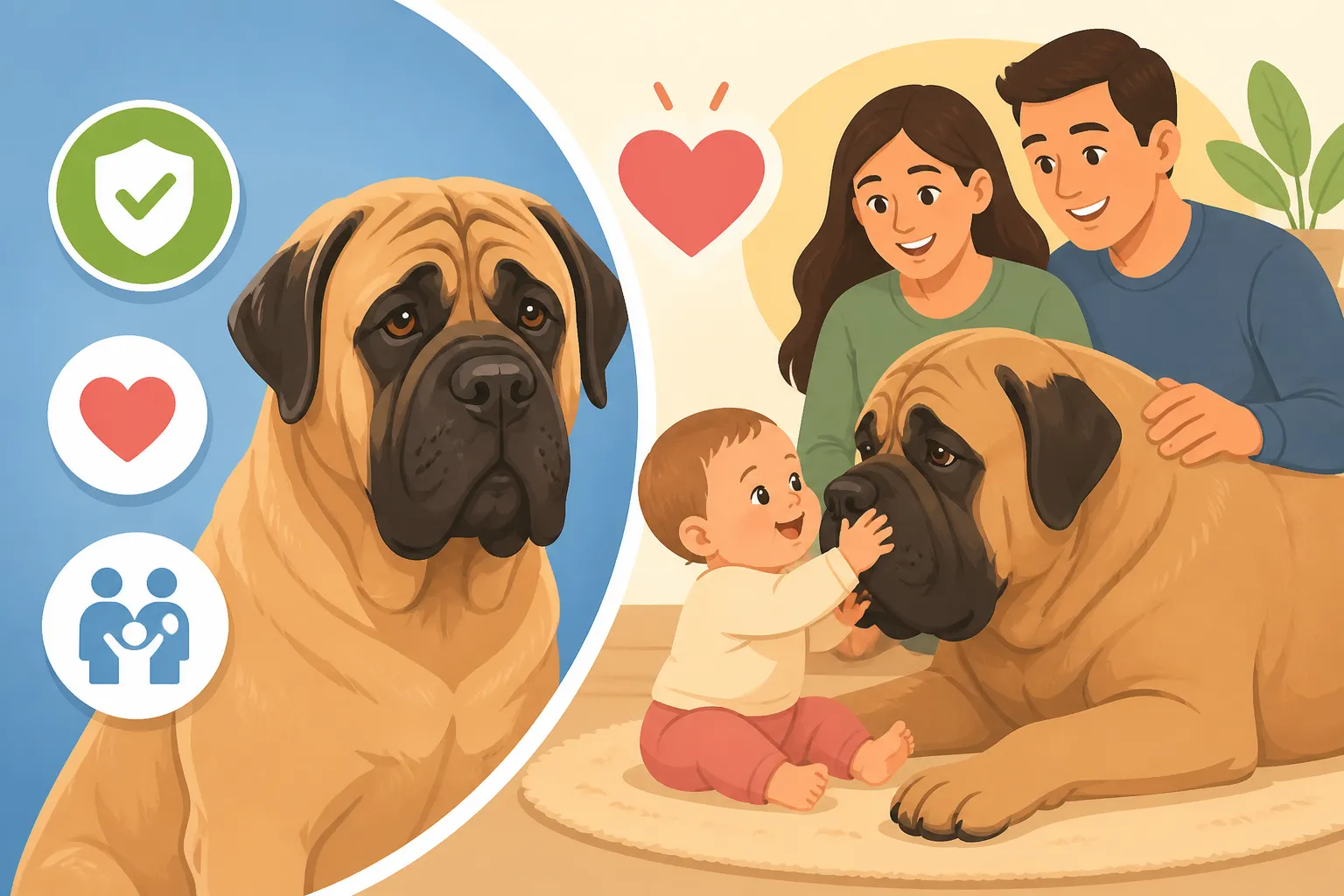
Mastiffs, by and large, possess a remarkably mellow and even-tempered disposition. They are known for being patient with children they've been raised with, often acting as furry guardians. This inherent calmness is one of their most appealing traits, and it’s why many families consider them despite their formidable size. They tend to observe rather than react impulsively, which can be a huge asset when dealing with the sudden cries or erratic movements of a baby.
They are often very tolerant of gentle handling and can form incredibly strong bonds with their human family members. This loyalty means they are likely to accept a new baby as part of their pack, though the transition still requires careful management. It's a rare Mastiff that shows aggression towards an infant without a significant underlying issue or a prior negative experience. Their primary instinct is usually to protect, not to harm, and their general lack of high energy means they're less likely to be prone to frantic, unpredictable bursts of activity indoors.
However, even the most gentle dog has limits and boundaries, and it’s up to us, as their owners, to ensure those limits are respected, especially by tiny, grabby hands. Their sheer bulk means even an accidental nudge can be serious for a small child, which highlights why careful management is paramount. You might find it helpful to review The Sensitivity Nobody Expects in a Two Hundred Pound Mastiff to better understand their emotional landscape.
Potential for Accidental Harm
Here’s where the "giant" part of "gentle giant" really comes into play. A Mastiff’s immense size means that even entirely unintentional actions can pose a risk to an infant or small child. A happy tail wag, for instance, could easily knock over a crawling baby or send a teetering toddler sprawling. Imagine a full-grown Mastiff, perhaps 150-200 pounds or more, enthusiastically thumping its tail against a child's head – it's a genuine safety concern, not just a minor annoyance.
Then there's the issue of simply moving around. A Mastiff might not even realize a baby or small child is in its path when it decides to shift positions, stand up, or walk to another room. A paw can accidentally step on a small hand or foot, or the dog's large body might brush past a child, causing them to lose balance. These aren't malicious acts; they are simply consequences of a very large animal coexisting with a very small, fragile human. This is why constant vigilance is absolutely essential. Consider reading The Damage a Mastiff Does by Accident for a deeper dive into these unintended consequences.
Furthermore, a Mastiff's broad chest and heavy head can easily push a child over if the dog leans on them for attention or affection. While leaning is a common and endearing Mastiff trait, it's not appropriate or safe for an infant. These are not aggressive behaviors, but their colossal build necessitates careful management and teaching both dog and child how to interact safely.
Instinctive Guarding Tendencies
Mastiffs were originally bred as guardians, and while modern breeding has softened some of their protective edge, those instincts remain. A Mastiff generally perceives its human family as its "pack" and its home as its territory. When a new baby arrives, the Mastiff will instinctively view this new, vulnerable family member as something to protect. While this sounds comforting, it can manifest in ways that require careful management.
Sometimes, this protective instinct can extend to guarding the baby from "threats," which might include well-meaning visitors, other pets, or even a spouse whose actions are misinterpreted by the dog. A Mastiff might place itself between the baby and a perceived threat, or even give a low growl to someone approaching the baby too quickly. It's crucial that your Mastiff understands that you, the parent, are the primary protector of the baby and that you set the rules for who approaches the crib or stroller. You want your Mastiff to be calm and observant, not hyper-vigilant or possessive.
This isn't to say your Mastiff will become aggressive, but rather that their guarding nature needs to be guided. Learning How a Mastiff Judges a Stranger at the Door can provide useful context. Socializing your Mastiff properly from a young age, and continuing that socialization throughout their life, helps them differentiate between a true threat and a friendly visitor. It teaches them that not everyone who approaches the baby is a danger.
Preparing Your Mastiff for a Baby's Arrival
The arrival of a baby is a huge change for everyone in the household, including your Mastiff. The best way to ensure a smooth transition and minimize stress for your dog (and for you!) is to start preparing well in advance. This isn’t a last-minute task; it requires weeks, if not months, of consistent effort.
Pre-Baby Training and Socialization
Before the baby arrives, your Mastiff should already be proficient in basic obedience commands such as "sit," "stay," "down," "leave it," and a solid "come." These commands are not just polite manners; they are critical safety tools. Imagine needing to quickly move your Mastiff away from the baby's playmat or stop them from snatching a dropped pacifier. A reliable "leave it" could literally prevent a choking hazard. If your Mastiff isn't rock-solid on these, now is the time to reinforce them, perhaps even enrolling in an online program like BAXTER & Bella, which offers flexible training solutions for busy families.
Beyond basic commands, focus on impulse control. Teach your Mastiff to wait patiently at doorways, not to jump on people, and to go to their designated "place" on command. This helps manage their formidable size. If your Mastiff tends to pull on the leash, addressing this before you're juggling a stroller is paramount. Mastering Teaching a Mastiff Before It Outweighs You is essential here. Socialization also needs to be ongoing. Introduce your Mastiff to a variety of people, including children (under strict supervision), and expose them to different sights and sounds. This helps them build confidence and tolerance, so they aren't overwhelmed by the novelty of a baby.
Practicing walking with an empty stroller is also a fantastic idea. Your Mastiff needs to get used to the strange new object, the sounds it makes, and the fact that it will now be part of your daily walks. The goal is to make the stroller a neutral or positive experience, not a source of anxiety or an object to pull towards.
Scent and Sound Introduction
Babies come with a whole new world of smells and sounds, and dogs rely heavily on their sense of smell. Before the baby comes home, bring an item of baby clothing or a receiving blanket that the baby has worn at the hospital home for your Mastiff to sniff. Let them investigate it calmly, rewarding them for gentle curiosity. This allows them to become familiar with the baby's unique scent in a controlled, low-stress environment.
Introduce baby sounds gradually. Play recordings of baby cries, cooing, and gurgling at a low volume, gradually increasing it over time. This desensitizes your Mastiff to these new noises, so they don't react with alarm or curiosity every time the baby makes a sound. You can find many such recordings online or through apps. The idea is to make these sounds part of the normal background noise, rather than something startling.
Remember, the goal is to make these new sensations unremarkable. Pair these introductions with positive experiences, like treats or praise, so your Mastiff associates the baby's presence with good things. This preemptive work helps your Mastiff view the baby as a natural, pleasant addition to the family, not a source of unsettling new stimuli.
Establishing Boundaries and Safe Spaces
Creating clear physical boundaries long before the baby arrives is vital. Use baby gates – and for a Mastiff, you'll want extra sturdy, possibly extra-tall options you can find on Amazon – to block off areas where the baby will spend a lot of time, like the nursery or play area. This teaches your Mastiff that these spaces are not always accessible to them. This also provides the baby with a safe zone where the Mastiff cannot accidentally intrude.
Equally important is establishing a "safe space" for your Mastiff. This should be a quiet, comfortable area where they can retreat when they need a break from the baby's noise and activity. This could be a large crate, a dedicated dog bed in a quiet room, or a corner of a less-trafficked area. Teach your Mastiff to go to their safe space on command and to remain there calmly. This gives them agency and a place to de-stress.
These boundaries help manage the inevitable chaos of a new baby while giving everyone, including your dog, their own space. It also ensures that the baby can have tummy time or sleep undisturbed without the looming presence of a very large dog. Consistently enforcing these rules before the baby's arrival will make enforcement much easier once you're sleep-deprived and busy.
Life with a Mastiff and a Newborn
Once the baby is home, the real work begins. It’s a marathon, not a sprint, and consistency is your best friend. Your routine will be turned upside down, but trying to maintain some semblance of normalcy for your Mastiff will greatly aid their adjustment.
Supervision is Key
This cannot be stressed enough: never leave your Mastiff unsupervised with a baby or young child, even for a second. Not ever. Accidents, as discussed, can happen in an instant, even with the most docile dog. This means if you need to leave the room, even just to grab something from the kitchen, the baby should be in a crib or bassinet that the dog cannot access, or the Mastiff should be securely behind a baby gate or in their crate.
Supervision doesn't just mean being in the same room; it means actively observing the interactions between your Mastiff and the baby. Look for subtle signs of stress in your dog, such as lip licking, yawning, stiff body language, whale eye (showing the whites of their eyes), or turning their head away. These are signals that your Mastiff is uncomfortable and needs a break. If you see these signs, calmly redirect your dog to their safe space.
As the baby grows and becomes more mobile, crawling towards your Mastiff or attempting to pull fur, supervision becomes even more critical. You'll need to teach your child gentle interaction while also managing your Mastiff's reactions. This active oversight is a commitment for years, not just months. For more on safe interactions, read A Mastiff in a House With Small Children.
Maintaining the Mastiff's Routine
While your own routine will be completely disrupted, try your best to maintain your Mastiff's feeding, walking, and play schedules as much as possible. Dogs thrive on predictability, and consistency reduces anxiety. If suddenly their walks are sporadic, or their meal times are inconsistent, it adds stress to an already major life change.
Enlist help from your partner, family, or a trusted dog walker if necessary. A well-exercised and mentally stimulated Mastiff is a calmer Mastiff, and a calmer Mastiff is a safer Mastiff around a baby. Even a short, consistent walk can make a big difference. If you can’t get out for a full walk, engage them with puzzle toys or short training sessions to keep their mind occupied.
Positive reinforcement and attention are also crucial. Make sure to set aside dedicated time each day for your Mastiff, even if it's just a few minutes of petting, a short training session, or a quiet cuddle. This reassures them that they are still a valued member of the family and helps prevent feelings of displacement or jealousy.
Managing Interactions as Baby Grows
As your baby grows into a crawler and then a toddler, their interactions with your Mastiff will change, and your management strategies will need to evolve. Crawling babies are often at eye level with your Mastiff and can be unpredictable, grabbing at fur, ears, or tails. This is where those solid "leave it" and "stay" commands become invaluable. Teach your Mastiff to move away from the baby when cued.
When the baby starts walking, they may be unsteady and prone to falling into or onto your Mastiff. Reinforce the "gentle" command for your Mastiff and continue to teach the baby how to interact respectfully, though this takes time. Always teach children not to approach the dog while it's eating, sleeping, or playing with a toy. Whether a Mastiff Is Safe With Toddlers offers more specific advice on this age group.
Always ensure positive associations. Whenever your Mastiff is calmly present near the baby, reward them with praise or a small treat. This reinforces that calm behavior around the baby is good. If your Mastiff is sleeping peacefully on their bed while the baby plays nearby, acknowledge and reward that serene presence.
| Baby/Child Stage | Mastiff Considerations | Management Strategies |
|---|---|---|
| Newborn (0-3 months) | New smells, sounds, less owner attention, possible jealousy. | Scent introduction, sound desensitization, maintain Mastiff routine. |
| Infant (4-12 months) | Crawling, grabbing, eye-level interaction, unpredictable movements. | Physical barriers (gates, playpen), strong "leave it" command, constant supervision. |
| Toddler (1-3 years) | Unsteady walking, pulling, poking, loud noises. | Teach "gentle" to both, separate sleeping/eating, reinforce "place" command. |
| Preschool (3-5 years) | More understanding, but still impulsive and testing boundaries. | Continue teaching respectful interaction, never allow riding or roughhousing. |
Addressing Common Challenges
Even with the best preparation, living with a Mastiff and a baby will present its unique set of challenges. It’s normal, and knowing how to address them effectively can make all the difference.
Preventing Jealousy and Resource Guarding
Dogs, like people, can get jealous when a new addition takes up a significant amount of their owner's time and attention. Your Mastiff might try to insert themselves between you and the baby, or act out to get your focus. The best way to prevent this is through proactive management and positive association. Ensure your Mastiff still receives dedicated attention and positive reinforcement for calm behavior when the baby is present.
Resource guarding, while less common with family members, can occasionally arise. This is when a dog becomes protective over food, toys, sleeping spots, or even human attention. A Mastiff might start guarding a certain spot near the baby, seeing it as their "possession." To prevent this, never allow your Mastiff to "guard" the baby's items or space. Ensure they have their own high-value items (toys, chews) and that these are enjoyed in their designated safe space, away from the baby.
When feeding your Mastiff, especially if you have an infant, make sure they are in a separate room or behind a sturdy gate. This prevents any accidental interaction or potential guarding behavior around food. The goal is for your Mastiff to feel secure in their place in the family without feeling the need to compete with the baby for resources. Consistency in routine and attention helps immensely.
Dealing with Accidental Knock-Overs
No matter how well you train, a Mastiff is a large, powerful animal, and accidental bumps can happen. A Mastiff might turn suddenly, or step backward, not realizing a baby or toddler is right behind them. This is why vigilance is paramount and why physical barriers are so important. But if an accidental knock-over does occur, respond calmly and assess the situation immediately.
If your child is hurt, attend to them first. Once the child is safe and calm, address your Mastiff. Avoid yelling or harsh punishment, as this can make the dog fearful of the child, creating more problems. Instead, use a calm "off" or "place" command to redirect your dog. Re-evaluate your management strategies: are the gates strong enough? Do you need more supervision? Are boundaries clear?
Investing in sturdy baby gates, like those you can find on Amazon, that can withstand a Mastiff leaning against them is crucial. Also, consider floor runners or mats to improve traction in areas where your Mastiff walks, minimizing slips and slides that could inadvertently cause a collision. Why Stairs Are Worse for a Mastiff Than Any Breed also highlights how their size and weight can make everyday movements potentially hazardous, reinforcing the need for careful home management.
When to Seek Professional Help
There are times when even the most dedicated owner needs to call in the experts. If you notice any signs of aggression, even subtle ones like a growl, a snarl, a stiff body, or snapping towards the baby, contact a certified professional dog trainer or a veterinary behaviorist immediately. Do not try to handle these situations yourself, as they can escalate quickly with a dog of a Mastiff's size.
Other red flags include persistent jealousy, anxiety (excessive panting, pacing, destructive behavior when the baby is present), resource guarding that isn't easily managed, or any instance where your Mastiff seems genuinely uncomfortable or stressed by the baby's presence despite your best efforts. Early intervention is key, as these issues are much easier to address before they become deeply ingrained habits.
A professional can observe your specific family dynamics, assess your Mastiff's behavior, and provide tailored strategies and training plans. They can help you understand the nuances of canine body language and guide you through complex behavioral modification techniques safely and effectively. Sometimes, simply having an objective, experienced eye can make all the difference in ensuring a harmonious household.
Disclaimer
This article is for general informational purposes only and does not constitute professional advice. Laws, prices and regulations vary by location and change over time. Consult a qualified professional for guidance on your specific situation.