Whether a Mastiff Tolerates a Small Dog
The idea of a massive, two-hundred-pound Mastiff living harmoniously with a tiny chihuahua or a delicate toy poodle can conjure up images ranging from heartwarming friendships to absolute chaos. Many Mastiff owners, or those considering bringing a smaller canine into their lives, worry endlessly about the sheer size disparity and the potential for accidental injury, or worse. This guide is here to realistically explore whether a Mastiff can truly tolerate a small dog, offering insights into their natural temperament, and providing actionable steps to foster a safe, peaceful multi-dog household.
Understanding the Mastiff Temperament with Smaller Dogs
It’s easy to look at a Mastiff’s immense size and assume a certain level of danger, especially when contrasted with a dog that barely reaches its knee. However, the Mastiff breed is known more for its gentle, placid nature than for aggressive tendencies. That said, "gentle" doesn't automatically mean "foolproof," especially when a creature’s natural instincts and sheer bulk are at play.
The Gentle Giant Stereotype vs. Reality
Mastiffs have earned their "gentle giant" reputation for a reason. They are typically calm, good-natured, and remarkably patient dogs, especially with their human families. This innate gentleness often extends to other animals within their established household. They aren't usually looking for a fight, and often show a surprising amount of delicacy when interacting with smaller creatures they consider part of their pack. I've seen Mastiffs tiptoe around a sleeping kitten!
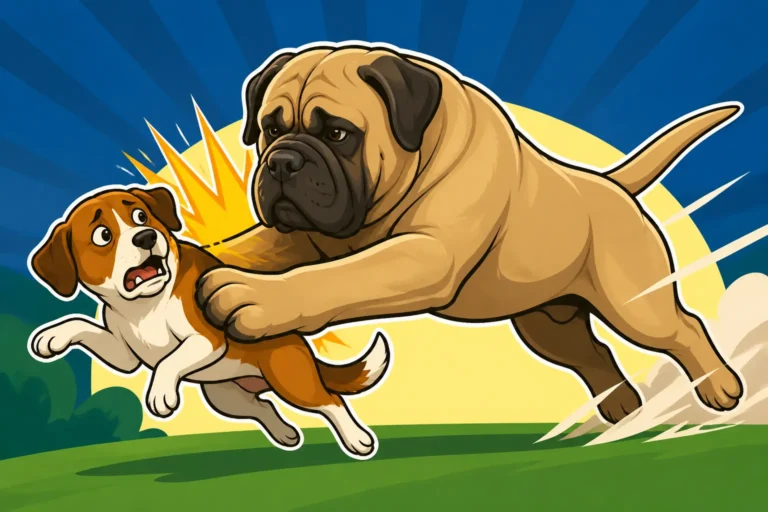
However, it's crucial to understand that a stereotype is just that – a generalisation. Every dog is an individual, and a Mastiff's gentle nature doesn't negate the fact that they are immense animals with powerful bodies. An accidental bump, a playful swat of a paw, or a sudden change in direction during zoomies could easily injure a much smaller dog without any malicious intent. The challenge often isn't aggression, but rather the sheer physical presence and lack of awareness of their own strength. It's not uncommon for a Mastiff to lean its weight on people, and that same habit could accidentally pin a tiny dog. You'll find that The Sensitivity Nobody Expects in a Two Hundred Pound Mastiff can make them surprisingly careful, but caution is always warranted.
Prey Drive Considerations
While Mastiffs are not typically known for a high prey drive like some sighthounds or terriers, it would be irresponsible to ignore this instinct entirely. A small, yappy dog darting around can, for some Mastiffs, trigger a chase response. This isn't necessarily about hunting to kill, but rather an instinctual reaction to a fast-moving, high-pitched object. It can be especially prevalent in younger Mastiffs who are still exploring boundaries and developing their adult temperament.
The key here is awareness. If your Mastiff has shown any tendency to chase squirrels, rabbits, or even quick-moving toys with a certain intensity, you need to be extra vigilant. This instinct is often more pronounced outdoors in an open space but can certainly manifest indoors if a small dog is running excitedly. It’s not about judging your Mastiff's character, but acknowledging that even the most well-behaved dog is still an animal with deeply ingrained instincts.
Socialization is Key, Not a Guarantee
Early and consistent socialization is paramount for any dog, and doubly so for a Mastiff, given their potential size and strength. A well-socialized Mastiff puppy, exposed positively and safely to a variety of people, environments, and other animals – including small dogs – is far more likely to develop into a tolerant adult. This doesn't mean throwing them into a dog park free-for-all, especially with delicate smaller breeds. Instead, it means controlled, positive introductions.
However, even the most diligent socialization can't guarantee perfect harmony with every single dog, especially when a Mastiff's unique personality and genetic predispositions come into play. Some Mastiffs, despite their gentle nature, might simply prefer the company of dogs closer to their own size, or even prefer being the only canine companion. It’s vital to distinguish between a Mastiff merely tolerating a small dog and genuinely enjoying their company. True tolerance often comes from early, careful exposure. Learning about Socializing a Mastiff Puppy Before It Gets Heavy is a critical step in setting them up for success.
Introducing a Mastiff to a Small Dog: Best Practices
Bringing two dogs together, particularly when there’s a significant size difference, requires careful planning and a slow, methodical approach. Rushing introductions is a recipe for disaster and can create fear or aggression that's incredibly difficult to undo.
Initial Controlled Encounters
The first few meetings should always happen on neutral territory, if possible. This means a place where neither dog feels possessive or territorial. A quiet park, a friend's large, fenced yard (that neither dog frequents), or even a rented sniff spot can work wonders. Both dogs should be on leashes, handled by calm, confident people. Avoid retractable leashes, as they offer less control.
The goal isn't immediate nose-to-nose contact. Start with parallel walks at a distance where both dogs are aware of each other but not stressed. Watch for relaxed body language: loose tails, soft eyes, sniffing the ground. If either dog shows signs of tension – stiff body, hard stare, growling, lunging – increase the distance immediately. Keep these initial sessions short and positive, ending before either dog becomes overwhelmed. High-value treats should be given frequently whenever the dogs are calm in each other's presence. I always recommend having a sturdy harness for your Mastiff for better control, especially when introducing them to new situations or smaller, more unpredictable dogs. You might find a good selection of durable harnesses on Amazon.
Managing Interactions in the Home
Once you've had a few successful outdoor introductions, you can move to home introductions, but again, proceed with extreme caution. The home is where resource guarding is most likely to occur, and a Mastiff can be quite possessive of its space, toys, and even its people.
- Leashed and Supervised: For the first several days, or even weeks, your Mastiff and small dog should only be together indoors when both are on leash and under direct supervision.
- Rotate Resources: Pick up all toys, food bowls, and high-value chew items before bringing the dogs together. These are common triggers for conflict.
- Separate Feeding: Always feed the dogs in separate rooms or crates to prevent any food-related tension. This is non-negotiable, given the size difference and potential for a small dog to get caught in the middle of a Mastiff's meal.
- Establish Safe Zones: Ensure the smaller dog has a place it can retreat to where the Mastiff cannot follow, such as a tall crate, a baby-gated room, or an elevated dog bed. This gives the small dog a sense of security and control.
Remember, this isn't a race. The slower and more carefully you manage these initial indoor interactions, the better the chances of long-term harmony.
Recognizing and Redirecting Problematic Behavior
Learning to read dog body language is crucial. Mastiffs can be subtle in their discomfort or intentions, so look for:
- Stiffening: A rigid body, tail held stiffly up or tucked tightly.
- Hard Stare: Direct, unblinking eye contact, often accompanied by a lowered head.
- Lip Licking/Yawning: These can be appeasement signals, indicating stress.
- Growling/Snarling: Obvious warnings that should never be ignored or punished.
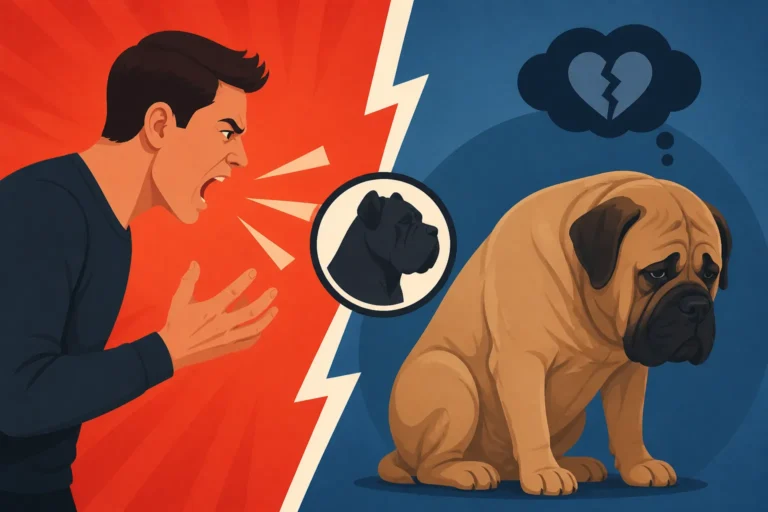
If you see any signs of stress, discomfort, or aggressive intent from either dog, calmly and quickly separate them. Do not yell or physically intervene in a way that could escalate the situation or put you at risk. Use a verbal cue to interrupt, then guide them to separate spaces.
Early intervention is key. If your Mastiff is fixating on the small dog, gently redirect its attention with a treat or a toy. If the small dog is being overly bold or nippy towards the Mastiff, separate them before the Mastiff's patience wears thin. Consistent training through platforms like BAXTER & Bella can provide structured ways to reinforce good behavior and manage challenging dynamics. It's about teaching both dogs appropriate ways to interact and respecting each other's boundaries.
Living Together: Ongoing Management and Safety
Successfully introducing a Mastiff to a small dog is a fantastic first step, but the work doesn't stop there. Ongoing management, vigilance, and understanding are vital to ensure a safe and happy household for both canines.
Creating Separate Safe Spaces
Even if your Mastiff and small dog become the best of friends, maintaining individual safe spaces is incredibly important. Think of it like a human needing their own bedroom. These spaces allow each dog to decompress, eat without competition, and feel secure.
For your smaller dog, this might be a crate or a bed in a room with a baby gate that the Mastiff cannot jump over. For the Mastiff, it could be a large, comfortable bed in a quiet corner of the living room, or its own large crate. These areas should be places where they can retreat without being bothered by the other. This significantly reduces the likelihood of resource guarding or accidental injuries simply due to a lack of personal space. Using a crate for either dog, especially during times you cannot supervise, is a good habit. You can find durable crates for your Mastiff and a cozy one for your smaller dog on Amazon. Remember, The Mastiff Puppy You Are Not Allowed to Exercise needs dedicated rest spaces too.
Supervision and Resource Guarding
Constant, vigilant supervision is non-negotiable, especially in the early stages and whenever high-value resources are present. This means:
- Never leave them unsupervised: Even for "just a minute" to grab something from another room. Accidents happen in a blink of an eye, and the consequences of a Mastiff accidentally stepping on or falling on a small dog can be devastating.
- Separate during feeding times: As mentioned earlier, this is crucial. Food is a primary trigger for resource guarding.
- Manage toys and chews: Provide separate toys and chews in their individual safe spaces, or only give them when the dogs are separated. Avoid toys that both dogs might want to possess simultaneously when together.
- Monitor interactions with you: Some dogs can guard their human's attention. Ensure both dogs receive equal, separate attention to prevent jealousy. If your Mastiff starts to nudge the smaller dog away from you, calmly interrupt and redirect, then give attention to both. This is particularly important because A Mastiff in a House With Small Children needs careful guidance on appropriate interactions with vulnerable family members, and the same applies to smaller pets.
A quick table outlining common resource guarding triggers and management strategies:
| Resource Type | Potential Issue | Management Strategy |
|---|---|---|
| Food Bowls | Competition, aggression over food | Feed in separate rooms/crates. Remove bowls immediately. |
| High-Value Chews | Possession battles, accidental ingestion | Give only when dogs are fully separated. |
| Favorite Toys | Jealousy, guarding, accidental damage | Rotate toys, or give specific toys to specific dogs. |
| Sleeping Spots | Territorial disputes over beds/furniture | Provide multiple, designated safe spots for each dog. |
| Owner's Attention | Nudging, blocking, snarling towards other dog | Ensure equal, separate attention. Don't reward guarding. |
Training and Continuing Education for Owners
Ongoing training is not just for puppies; it's a lifelong commitment, especially with a giant breed like a Mastiff. Reinforce basic obedience commands like "leave it," "stay," "come," and "off." These commands are invaluable for managing interactions and preventing potential conflicts. For example, a solid "leave it" can stop your Mastiff from investigating a dropped toy too enthusiastically near your smaller dog.
It's also important for you, as the owner, to continue educating yourself on canine body language, behavior, and positive reinforcement techniques. Understanding why your dogs are behaving a certain way allows you to address the root cause rather than just reacting to symptoms. Reputable online training resources like BAXTER & Bella often have modules on multi-dog households and managing different personalities, which can be immensely helpful. A Mastiff's intelligence is often understated, and they benefit greatly from clear, consistent guidance. Whether a Mastiff Ignores a Cue It Knows is usually less about stubbornness and more about a lack of motivation or clarity in the training, and this applies doubly when managing multiple pets.
Ultimately, while a Mastiff's inherent gentle nature often lends itself to tolerating smaller dogs, success hinges on diligent management, careful introductions, and a proactive approach to preventing issues. It’s about creating an environment where both your gentle giant and your tiny companion can feel safe, respected, and loved.
Disclaimer
This article is for general informational purposes only and does not constitute professional advice. Laws, prices and regulations vary by location and change over time. Consult a qualified professional for guidance on your specific situation.