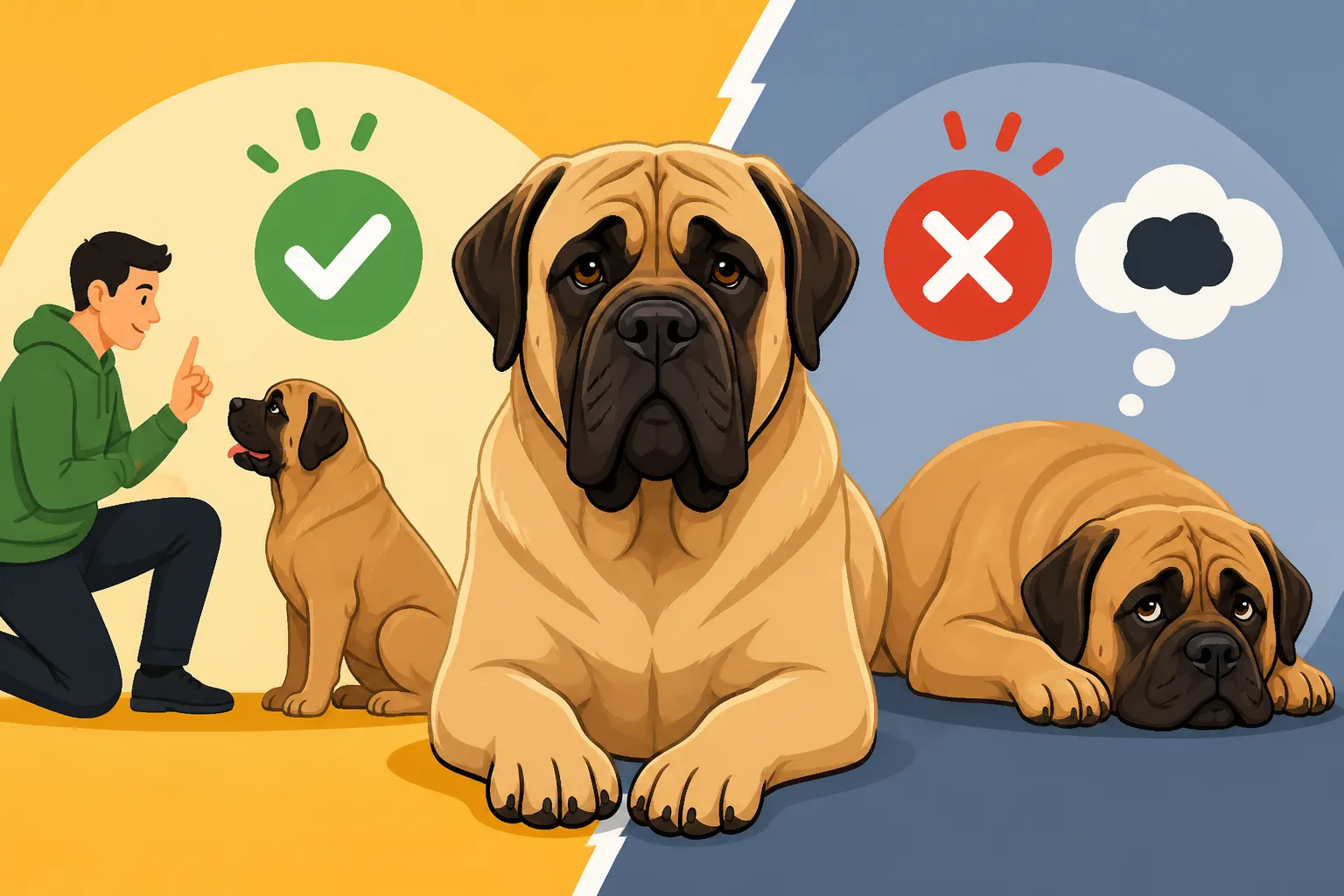
Whether a Mastiff Ranks Low for Obedience Intelligence
It’s a common misconception, often whispered among dog enthusiasts, that our beloved Mastiffs might not be the sharpest tools in the shed when it comes to obedience. You might find yourself in a training class, watching smaller, zippier dogs performing complex routines, while your magnificent Mastiff seems to be contemplating the existential nature of the squeaky toy or simply observing the world with a serene, almost detached air. It’s easy to feel a pang of frustration, wondering if your gentle giant simply isn't wired for quick learning or eager compliance. But let's be realistic: judging a Mastiff by the same metrics as a Border Collie is like asking a sumo wrestler to compete in a ballet. This guide is here to unravel the truth about Mastiff intelligence, explaining why they might appear to rank low in traditional obedience contexts and how their unique form of intelligence can be celebrated and effectively channeled.
The Myth of "Low Obedience Intelligence" in Mastiffs
When you hear talk of "dog intelligence rankings," often it's Stanley Coren's work that comes to mind, placing breeds on a spectrum based on how quickly they learn new commands and obey them. While these rankings are fascinating, they can paint a misleading picture when applied to a breed like the Mastiff, leading owners to believe their dogs are less intelligent than they truly are. It’s not that Mastiffs can't learn; it's that their learning process and motivations are profoundly different from those high-drive, eager-to-please breeds that excel in competitive obedience.
What Traditional Intelligence Rankings Miss
Traditional obedience intelligence tests often prioritize speed of learning and immediate, unwavering compliance. Breeds like Border Collies or Poodles typically top these lists because they are bred for intense focus, high energy, and a strong desire to work in close partnership with a human, often for long periods. They thrive on rapid-fire commands and complicated sequences. A Mastiff, however, was bred for a very different purpose: guarding, watching, and making independent decisions. Their role wasn't to fetch a stick eighty times or perform intricate weaves; it was to assess a situation, decide if a threat was present, and act accordingly, often with minimal human direction. This historical role has shaped their inherent temperament, making them thoughtful, observant, and often quite self-possessed. They don't typically exhibit the frantic urgency to please that makes other breeds quick learners in a competition setting.
Think of it this way: a highly reactive dog might learn a new trick in three repetitions because it's desperate for approval or a reward. A Mastiff might learn it in three repetitions too, but their compliance might not be immediate because they are processing why they should do it, or if it's truly worth their effort at that precise moment. They are not necessarily "slow" but rather "deliberate." This distinction is crucial for understanding why they might not rank high on lists designed for a different kind of canine mind. It’s not a lack of capacity, but a difference in wiring and motivation.
The Mastiff's Deliberate Nature
If you've ever owned a Mastiff, you've witnessed what many might mistake for slowness or stubbornness. Perhaps you've given a command, and your Mastiff looks at you, then slowly blinks, perhaps shifts their weight, and eventually, maybe, complies. This isn't usually an act of defiance, nor is it a sign of low intelligence. Instead, it’s a hallmark of The Stubbornness That Is Actually a Mastiff Thinking. Mastiffs are natural thinkers and observers. They weigh their options. They consider the request, the context, and the potential reward. This deliberate approach means they aren't going to jump into action without a moment of contemplation.
Their size also plays a role in this perception. A small dog can spring into action instantly. A two-hundred-pound Mastiff needs to coordinate a much larger, heavier body, which naturally takes more time. This physical reality can translate into an appearance of being slow to react, which can be misconstrued as being slow-witted. They are processing a vast amount of sensory information and making a considered decision, rather than simply reacting on instinct. This thoughtfulness can be a tremendous asset in certain situations, but it doesn't always lend itself to high marks in timed obedience trials.
Understanding the Mastiff Learning Style
To effectively train a Mastiff, you need to understand how they learn, rather than expecting them to conform to a universal standard. Their learning style is less about rote memorization and immediate gratification, and more about building trust, understanding value, and responding to fair, consistent leadership. It’s a marathon, not a sprint, and it requires a deeper connection than merely issuing commands.
Motivation is Key
For many breeds, a simple "good boy!" or a run in the yard is enough motivation. For a Mastiff, while they appreciate praise, you often need to find their high-value currency. This usually means food. And not just any food – we're talking about the good stuff: small pieces of cheese, cooked chicken, or specialty soft treats. They are connoisseurs! If your Mastiff isn't responding, it's often not because they don't understand, but because they've decided the perceived effort isn't worth the reward being offered. You can find a vast array of high-value training treats and engaging puzzle toys on platforms like Amazon, which can be instrumental in keeping your Mastiff interested and engaged during training sessions.
Understanding What Actually Motivates a Mastiff is paramount. They respond incredibly well to positive reinforcement when the reward genuinely excites them. If you’re trying to teach a new command, having a handful of their absolute favorite treat can dramatically increase their willingness to participate and learn. They might still take a moment to "think" about it, but the lure of that irresistible snack can often tip the scales in your favor. This doesn't mean they're entirely food-driven; a strong bond and positive interaction are equally important, but food often acts as the initial bridge to engagement.
Consistency and Repetition, Without Drilling
Mastiffs do need consistency and repetition to learn new cues, just like any dog. However, their attention span for repetitive, drill-like training sessions can be quite short. They get bored. Fast. Instead of long, grueling sessions, aim for multiple short, engaging sessions throughout the day. Five to ten minutes, two or three times a day, is far more effective than one exhausting thirty-minute session. This way, you keep their interest high and prevent them from switching off. You want to end each session on a positive note, with them successfully completing a command and earning a great reward.
When we talk about How Many Repetitions a Mastiff Needs, it's not a number that dictates their intelligence, but rather their engagement threshold. They will learn if the training is fun, fair, and rewarding. Avoid harsh corrections or endless drilling, as this can quickly sour their attitude towards training and make them even less willing to participate. Instead, keep it light, positive, and varied. Incorporate play, mental stimulation, and affection into your training routine. This helps build a strong foundation of trust and makes them more likely to respond even when the high-value treats aren't front and center.
The Importance of Early Socialization and Training
Given their sheer size and potential strength, starting early with a Mastiff puppy is non-negotiable. While their physical growth must be carefully managed to protect their developing joints (Why a Mastiff Puppy Must Not Be Exercised Hard), their mental and social development should be actively fostered. Socializing a Mastiff Puppy Before It Gets Heavy is critical. Exposing them to a wide variety of sights, sounds, people, and appropriate dogs in a positive way helps them develop into confident, well-adjusted adults who are less likely to be reactive or fearful. A well-socialized Mastiff is a joy; an undersocialized one can be a significant challenge due to their immense size.
Beyond socialization, basic obedience training should start the moment your puppy comes home. Simple cues like "sit," "stay," "come," and "down" are essential for safety and control. Think about Teaching a Mastiff Before It Outweighs You. It’s far easier to teach a 40-pound puppy to walk politely on a leash than it is a 180-pound adult. Enrolling in puppy classes or using online resources like BAXTER & Bella can provide structure and guidance, helping you lay the groundwork for a lifetime of good manners. These early experiences shape their understanding of the world and their place within it, making them more receptive to learning as they grow.
Practical Training Strategies for Your Mastiff
Training a Mastiff effectively requires a blend of specific techniques, immense patience, and an understanding of their unique physical and psychological makeup. You can't train a Mastiff like you would a working breed, and trying to do so will only lead to frustration for both of you.
Positive Reinforcement and Patience
Mastiffs are incredibly sensitive dogs, despite their imposing appearance. They thrive on praise, affection, and consistency, and they wither under harsh correction. Why Harsh Correction Ruins a Mastiff cannot be overstated. Yelling, physical punishment, or even overly stern tones can shut a Mastiff down completely. They remember negative experiences keenly and it can erode their trust in you, making them less willing to engage in future training. Instead, focus entirely on positive reinforcement. Reward the behaviors you want to see, and ignore or redirect the ones you don't.
Patience is your most valuable tool. A Mastiff might take longer to grasp a new concept or might need more repetitions spread out over time. Don't rush them. Celebrate every small success, even if it feels incremental. If they're not getting it, break the task down into smaller, easier steps. For example, if you're working on leash manners and they keep pulling, consider starting with short walks in a low-distraction environment, rewarding them heavily for every moment of loose-leash walking. Investing in a good front-clip harness, easily found on Amazon, can also provide better leverage without causing discomfort, making walks more pleasant for both of you.
Managing Physical Presence and Leash Skills
One of the most immediate challenges for any Mastiff owner is managing their dog’s sheer physical presence. Whether a Mastiff Pulls on a Leash is a critical concern because a full-grown Mastiff can easily outweigh an adult human. Training for polite leash walking needs to be prioritized from day one. This means teaching them to walk by your side without pulling, to stop when you stop, and to wait patiently at curbs or doorways. A simple flat collar might work for some, but many Mastiff owners find great success with tools like a well-fitted head halter or a sturdy front-clip harness that discourages pulling by redirecting their momentum.
Beyond the mechanics of walking, it's about clear communication and building a relationship where your Mastiff respects your lead. This isn't about dominance, but about clear, consistent guidance. Practice walking in various environments, gradually increasing distractions. If your Mastiff decides to "plant" themselves and refuses to move, a common Mastiff trait, patience and gentle encouragement, perhaps with a high-value treat, will be far more effective than trying to drag them. They will eventually learn that moving with you is more rewarding than becoming an immovable object.
Seeking Professional Guidance
Even with the best intentions and strategies, there might come a time when you feel you need extra help. This is absolutely nothing to be ashamed of; training a giant breed is a unique endeavor. If you're struggling with a particular behavior, or simply want to ensure you're on the right track, don't hesitate to seek professional guidance. Whether a Mastiff Needs a Professional Trainer is a question many owners ponder, and often the answer is yes, at least for some targeted sessions. A good trainer familiar with giant breeds can offer invaluable insights into your Mastiff's specific temperament and learning style.
Many excellent trainers offer online courses or virtual consultations, which can be a fantastic resource, especially for those living in areas with limited in-person giant breed trainers. Platforms like BAXTER & Bella provide comprehensive online puppy and dog training programs that can be tailored to your Mastiff's needs. These resources can help you understand the nuances of their behavior, offer new techniques, and provide the encouragement you need to continue building a strong, positive relationship with your gentle giant. Remember, training is an ongoing journey, and getting support when you need it is a sign of a responsible owner.
Redefining Mastiff "Intelligence"
Perhaps the biggest shift in perspective needed for Mastiff owners is to redefine what "intelligence" means for this magnificent breed. Moving beyond the narrow scope of obedience rankings allows us to appreciate their profound abilities and unique contributions to our lives. Their intelligence manifests not in lightning-fast tricks, but in their wisdom, empathy, and steadfast nature.
Beyond Obedience: Problem Solving and Emotional IQ
While a Mastiff might not be the quickest to learn "roll over" on command, they demonstrate incredible problem-solving skills and a high emotional IQ in everyday life. They are remarkably adept at reading human emotions, often responding with comforting nudges or a quiet presence when you're feeling down. This is part of The Sensitivity Nobody Expects in a Two Hundred Pound Mastiff. They're not just big bodies; they're big hearts with keen observational skills. They can figure out how to open gates, navigate complex spaces, or even "herd" family members without ever having been explicitly taught.
Consider their intuitive guardianship. A Mastiff will often instinctively place themselves between their family and a perceived threat, not because they've been trained to attack, but because they have an innate understanding of protection. This profound sense of loyalty and their ability to assess situations speaks volumes about their cognitive abilities, even if it doesn't translate into rapid obedience responses. They are intelligent in a way that matters deeply for companionship and security, offering a steadfast presence that is more about wisdom than tricks.
Adaptability and Environmental Awareness
Mastiffs possess a keen awareness of their surroundings and remarkable adaptability. How a Mastiff Judges a Stranger at the Door is a prime example of their intelligence in action. They don't react impulsively; they observe. They take in body language, tone of voice, and the overall energy of a person before deciding how to respond. This thoughtful assessment is a form of intelligence that is often overlooked in traditional tests. They quickly learn the routines of the household, anticipate events, and can adapt to new environments or changes in schedule with surprising grace, provided they have confident leadership and feel secure.
Their quiet, observant nature allows them to absorb information about their environment constantly. They notice subtleties that other, more boisterous breeds might miss. This environmental intelligence makes them excellent, discerning guardians who understand the rhythm of their home and the true nature of their visitors. They are often calm in new situations, preferring to take everything in before deciding on a course of action. This calm demeanor is a testament to their cognitive processing, not a lack thereof.
The Job a Mastiff Actually Wants
Ultimately, a Mastiff isn't looking for a job that involves high-speed drills or complex obstacle courses. Their true calling, ingrained over centuries, is to be a loyal, protective companion and a serene presence in your home. They want to be with their people, to offer a comforting weight by your feet, and to silently assure your safety. Understanding this inherent desire is key to truly appreciating their form of intelligence. They excel at being gentle giants, devoted family members, and watchful guardians.
If you try to force a Mastiff into a role that goes against their natural inclination, you will both end up frustrated. Instead, lean into their strengths. Engage them in activities that suit their temperament: gentle walks, thoughtful interactions, and plenty of opportunities to be near their family. Scent work, for example, is a wonderful, low-impact activity that stimulates their minds without taxing their joints. Their intelligence lies in their profound connection to their family, their protective instincts, and their thoughtful, deliberate approach to life. When you honor that, you’ll find your Mastiff to be one of the most intelligent, and certainly the most devoted, companions you could ever wish for.
| Trait/Attribute | Traditionally "High Intelligence" Breeds (e.g., Border Collie) | Mastiff |
|---|---|---|
| Learning Speed | Rapid, often fewer than 5 repetitions | Deliberate, requires consistent, positive reinforcement |
| Motivation | High desire to please, intense work ethic, praise, play | Food-driven (high-value treats), trust, calm affection |
| Attention Span | Long, thrives on repetitive tasks and extended sessions | Shorter, prefers multiple short, engaging sessions |
| Problem Solving | Solves complex tasks quickly, often independently | Observational, intuitive, considers context, emotionally intelligent |
| Temperament | Energetic, highly reactive, eager to work | Calm, thoughtful, sometimes perceived as stubborn or slow |
| Primary Role | Herding, sport, active companionship, intricate tasks | Guardian, devoted companion, watchful protector |
| Response Time | Almost instantaneous reaction to commands | Considered, measured response after processing request |
Disclaimer
This article is for general informational purposes only and does not constitute professional advice. Laws, prices and regulations vary by location and change over time. Consult a qualified professional for guidance on your specific situation.