Whether a Mastiff Growls Before It Acts
It's a common and completely understandable concern for Mastiff owners: when your dog is the size of a small pony, any vocalization that sounds remotely aggressive can send a shiver down your spine. You want to believe that your gentle giant will always give a clear "heads up" before escalating, but the reality of dog communication is often far more nuanced than a simple growl. This guide aims to thoroughly explore how Mastiffs communicate distress, discomfort, or potential aggression, helping you understand the subtle signals your colossal companion might be sending, even before that deep rumble starts.
Understanding Mastiff Communication: More Than Just a Growl
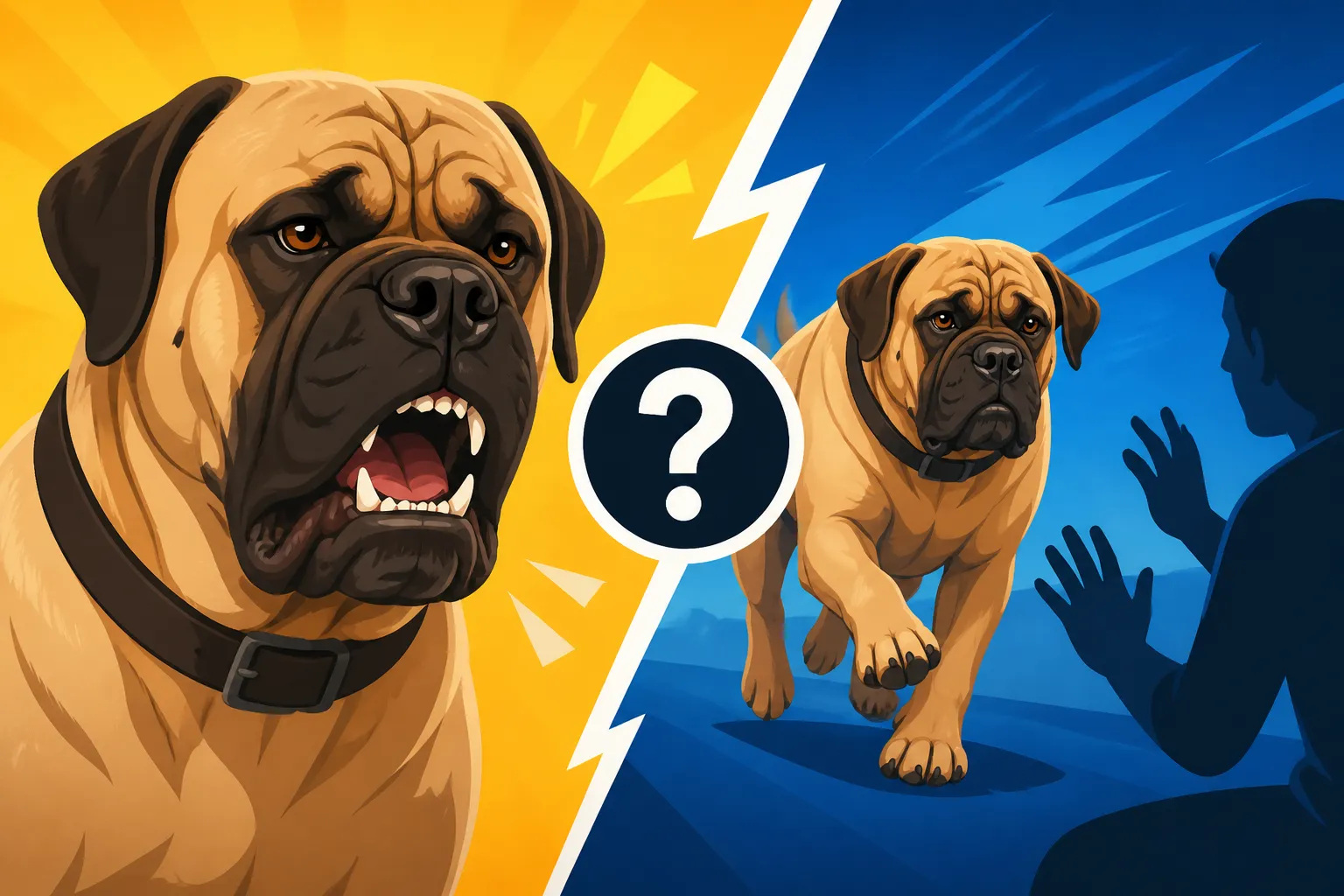
Let's face it, with a Mastiff, every sound and movement carries significant weight, literally. When people ask, "Will my Mastiff growl before it acts?" what they're often really asking is, "Will I have fair warning if my Mastiff is truly upset?" It's a valid question, rooted in the responsibility of owning such a powerful dog. The good news is that most dogs, Mastiffs included, do offer a spectrum of signals before resorting to a bite. The challenge lies in learning to read those signals, which can be incredibly subtle.
The Mastiff's Subtle Cues Before a Growl
Before a growl even begins, your Mastiff is likely giving you a whole series of cues, a silent conversation if you only know how to listen. These are often signs of discomfort, uncertainty, or a desire for something to stop. Think about your Mastiff in a new situation, perhaps a crowded park, or when a stranger approaches them unexpectedly. They might not immediately launch into a growl. Instead, you might see:
- Stiffness in the body: Their muscles might tense, their posture becoming rigid rather than relaxed and flowing.
- "Whale eye": This is when you can see the whites of their eyes, often when they're looking sideways at something that makes them uncomfortable, without turning their head fully. It's a clear indicator of stress.
- Lip licking or yawning (when not tired): These are displacement behaviors, attempts to self-soothe when feeling stressed or anxious.
- Turning their head away or avoiding eye contact: This can be a polite way of saying, "I don't like this, please stop," or "I'm trying to avoid confrontation."
- Freezing: Becoming absolutely still, sometimes mid-movement, is a significant sign. It's often the calm before the storm, a moment of intense internal conflict or decision.
- Lowering their head or tucking their tail: Classic signs of fear or anxiety.
- Flattened ears: Ears pinned back against the head, especially with a tense face, signals apprehension or fear.
These are critical, early warning signs. If you can catch them and intervene by creating distance, removing the trigger, or redirecting your dog, you can often prevent the situation from escalating to a growl, let alone something more serious. Ignoring these early cues forces your Mastiff to escalate its communication, and the growl is often the next step up the ladder. It's about recognizing that your Mastiff is a sensitive creature, despite their impressive size, and they're communicating their internal state long before any overt vocalization. The Sensitivity Nobody Expects in a Two Hundred Pound Mastiff truly applies here, as their immense presence often overshadows their nuanced emotional world.
The Spectrum of Growls: Not All Are Aggressive
Just like human communication, a growl isn't a one-size-fits-all signal. The context, intensity, and accompanying body language all play a huge role in what your Mastiff is trying to tell you. Mistaking a playful growl for an aggressive one can lead to unnecessary fear, just as dismissing a serious warning growl can be dangerous.
Consider these different types of growls:
- Play Growl: This is often loose, bouncy, and accompanied by play bows, a wagging tail (often a loose, full-body wag), and an open, relaxed mouth. It's the sound of happy wrestling or tug-of-war. The whole body language screams "fun!"
- Warning Growl: This is the one that gets your attention. It's usually deeper, more guttural, and accompanied by stiff body language, a low head, hard stare, often a raised hackle (the hair along the spine), and possibly bared teeth. This growl means "back off," "stop," or "I'm very uncomfortable."
- Frustration Growl: This might happen if your Mastiff is tied up and can't reach a person or dog they want to greet, or if they're separated from a beloved family member. It can sound a bit like a whine mixed with a growl. It's less about aggression and more about intense desire or impatience.
- Attention-Seeking Growl: Some clever Mastiffs learn that a soft growl can get your attention, especially if it means you'll stop what you're doing and look at them. This growl usually has a lighter, almost questioning tone, and the body language is often relaxed, perhaps nudging you with their nose.
Understanding the why behind the growl is paramount. Is it directed at a specific person or object? What happened just before the growl started? What is your Mastiff's overall demeanor? These questions are your roadmap to deciphering their message.
Here's a quick comparison to help you distinguish:
| Growl Type | Body Language | Mouth/Facial Expression | Tail Position/Movement | Context |
|---|---|---|---|---|
| Playful Growl | Loose, bouncy, play bows, relaxed posture | Open, soft, sometimes "smiling" | High, loose, fast wagging | During games, wrestling, chasing, inviting interaction |
| Warning Growl | Stiff, frozen, low posture, hackles raised | Tense, lips pulled back, baring teeth | Stiff, low, tucked, or slow wag | Stranger approaching, resource guarding, feeling threatened |
| Frustration Growl | Restless, pacing, pulling on leash, pushing | Tense, sometimes panting | Mid-height, stiff wag, or tucked | Unable to reach desired object/person, blocked access, impatience |
| Attention-Seeking Growl | Relaxed, nudging, looking at owner, pawing | Relaxed, sometimes closed or soft | Relaxed, gentle wag | Seeking pets, food, playtime from owner |
Why a Mastiff Might Skip the Growl
While most dogs will offer clear warning signs, including growls, some individual dogs might not. This can be incredibly unsettling for owners, as it removes that crucial layer of communication and warning. With a Mastiff's power, understanding why this might happen is vital for safety.
Learned Helplessness or Suppressed Warnings
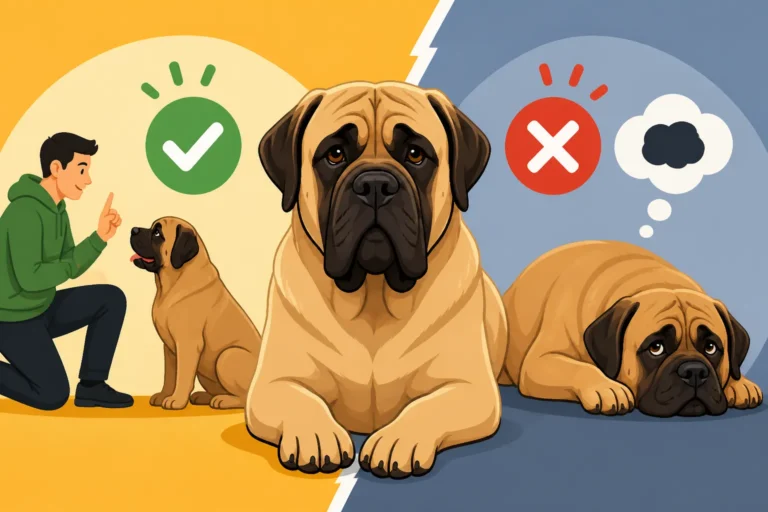
One of the most dangerous things an owner can do is punish a growl. Think about it: a growl is your dog saying, "I'm uncomfortable, please stop." If you scold, hit, or otherwise punish your Mastiff for growling, you're essentially punishing their attempt to communicate. What happens then? They learn that growling isn't safe. They learn to suppress that warning signal.
This doesn't mean the underlying discomfort or fear goes away. It just means the Mastiff learns not to express it vocally. The dog still feels threatened or anxious, but now they are robbed of their primary verbal warning system. So, instead of a growl, the dog might go straight to a bite. This is a terrifying scenario, especially with a dog as powerful as a Mastiff, and it leaves owners completely blindsided. Why Harsh Correction Ruins a Mastiff cannot be stressed enough in this context. It undermines trust and can lead to a dog that feels it has no other option than to escalate directly to physical action.
This suppression of warnings can also manifest as what's sometimes called "learned helplessness." If a dog is repeatedly put in situations where it feels threatened and its attempts to communicate that threat (like growling or retreating) are ignored or punished, it can become resigned. It may seem calm, but inside, it's a powder keg, potentially leading to an unpredicted aggressive outburst when pushed past its tolerance threshold. Building trust and allowing your Mastiff to communicate freely, even if it's a growl, is crucial for preventing this.
Overwhelm and Fear-Based Reactions
Sometimes, a Mastiff might not growl simply because they are utterly overwhelmed or frozen in fear. Imagine a Mastiff, inherently sensitive and often reserved with strangers, suddenly cornered by an unfamiliar child who is being loud and physically invasive. Even the most tolerant Mastiff might reach a point where their fear response kicks in so intensely that they bypass warning signals. They might perceive themselves as having no escape, and in that moment of extreme panic, their instinct for self-preservation takes over.
This isn't necessarily a sign of an inherently aggressive dog, but rather a dog pushed past its limits. Their size can sometimes work against them here; people, especially children, might not respect their personal space in the way they would with a smaller dog, assuming the big dog is automatically gentle. A Mastiff might feel trapped, and rather than vocalizing, they might simply react.
Another scenario could involve pain. If a Mastiff is unexpectedly touched in a very painful area, or if a child steps on their paw, the immediate, reflexive reaction might be a snap or a bite without a preceding growl, purely due to the sudden, acute pain. This is why always supervising interactions, especially between Mastiffs and young children, is non-negotiable. Even accidental injuries can provoke an immediate, non-growling reaction. Remember, even though they're huge, they are not impervious to pain or fear.
Interpreting the Growl: What Does Your Mastiff Need?
Okay, so your Mastiff has growled. Deep breath. The very act of growling, while startling, is actually a good sign that your Mastiff is still communicating with you and hasn't given up on verbal warnings. Now, your job is to become a detective and figure out what they're trying to convey and how to help them.
Situational Context: Who, What, Where?
When your Mastiff growls, the immediate next step is to analyze the situation. Every detail matters:
- Who is involved? Is it a family member, a stranger, another dog, or a child? A Mastiff's interactions with various individuals can differ greatly. A Mastiff in a House With Small Children highlights the specific considerations for kids. Is your Mastiff generally wary of strangers, as many are, or is this behavior unusual? How a Mastiff Judges a Stranger at the Door can provide more insight into their natural guarding tendencies.
- What is the specific trigger? Is someone reaching over them? Are they trying to take away a favorite toy or bone (resource guarding)? Is it a noise? A sudden movement? Identifying the precise trigger is crucial for addressing the root cause. For example, if it's about guarding a prized possession, you might need to adjust your approach to managing high-value items.
- Where is this happening? Is it in your home, which is their perceived territory? Or is it in a public park, where they might feel more exposed? The environment significantly impacts a dog's comfort level. A Mastiff might be perfectly fine with a stranger in a park but deeply uncomfortable with the same stranger entering their house. Whether a Mastiff Guards Without Being Taught is often a relevant consideration here.
- What time of day is it? Are they tired? Hungry? Have they had enough rest?
- What is your Mastiff's general health like? Pain or discomfort can make even the most placid Mastiff irritable and more prone to growling. A visit to the vet can rule out underlying medical issues if growling is a new behavior.
For instance, if your Mastiff growls when a new dog enters the house, it clearly indicates a territorial or social boundary issue. This requires careful, managed introductions and potentially professional intervention, rather than just scolding the growl. Whether a Mastiff Accepts Another Dog is a key resource for understanding this dynamic.
Responding Appropriately to a Growl
How you respond to a growl makes all the difference. Your goal should be de-escalation, understanding, and prevention, not punishment.
- Create Distance Immediately: The first and most important step is to increase the space between your Mastiff and whatever is causing the growl. Gently guide your dog away, or ask the person/object to move away. This signals to your Mastiff that you hear them and are taking steps to address their discomfort.
- Identify the Trigger: As discussed above, pinpoint what caused the reaction. Was it a child pulling on an ear? A person leaning over them? Another dog getting too close to their food bowl?
- Do NOT Punish the Growl: This is critical. Punishing a growl teaches your Mastiff to skip this vital warning signal. Instead of telling you they're unhappy, they'll learn to suppress the growl and potentially go straight to a bite. Never use physical corrections, harsh words, or shock collars.
- Observe Body Language: Look for those earlier, subtle cues. If you missed them, learn from this experience for next time.
- Redirect and Reassure (Carefully): Once distance is established and the immediate tension is diffused, you can offer a calm, positive redirection. "Good boy/girl, let's go over here," and move them to a quieter space. Reassurance should be calm and confident, not coddling, which can inadvertently reinforce fearful behavior.
- Seek Professional Help: If growling is frequent, intense, or if you're ever unsure about your Mastiff's behavior, do not hesitate to consult a certified professional dog trainer or a veterinary behaviorist. They can provide tailored advice and hands-on guidance. Sometimes, simple management strategies are enough, but other times, a comprehensive behavior modification plan is needed.
Remember, a growl is data. It's a gift of information from your Mastiff. Your appropriate response will strengthen your bond and teach them that they can communicate their feelings safely, without resorting to more extreme measures.
Proactive Training and Socialization for a Well-Adjusted Mastiff
The best offense is a good defense, and with Mastiffs, proactive training and socialization are your strongest tools against unwanted behaviors, including problematic growling. Building a solid foundation early on can mitigate many issues before they even arise.
Early Socialization and Exposure
Socialization isn't just about letting your Mastiff puppy meet other dogs; it's about exposing them to a wide variety of sights, sounds, smells, people, and environments in a positive and controlled way. This should happen during their critical socialization window, generally from 3 to 16 weeks of age, though it continues throughout their first year.
For a Mastiff, whose sheer size can be intimidating to others, early positive experiences are absolutely paramount. Introduce them to different types of people – children, adults, people in hats, people with glasses, people on skateboards – all while ensuring these interactions are gentle and rewarding. Take them to different places: quiet parks, busy (but not overwhelming) street corners (from a safe distance), veterinary clinics for happy visits, and friend's houses. Always make these experiences positive with high-value treats and praise.
The goal isn't to make your Mastiff love everyone, but to teach them that novel stimuli aren't inherently threatening. A well-socialized Mastiff is more likely to assess new situations calmly, rather than reacting out of fear or uncertainty. Socializing a Mastiff Puppy Before It Gets Heavy is crucial advice, as their weight makes things exponentially harder later on. You want to instill confidence and resilience before they become too large to easily manage in new environments.
Building Trust and Positive Reinforcement
Mastiffs respond beautifully to positive reinforcement training. This means rewarding desired behaviors with treats, praise, or toys, rather than punishing unwanted ones. Building a strong, trusting relationship with your Mastiff through consistent, fair, and fun training makes them more likely to look to you for guidance and to communicate their discomfort rather than acting out.
Teaching basic obedience commands like "sit," "stay," "come," and "leave it" is fundamental. These aren't just tricks; they're vital communication tools that give you control and give your Mastiff structure. Imagine a situation where your Mastiff is starting to get uncomfortable with an approaching stranger. A solid "come" or "leave it" command can redirect their attention and safely remove them from the situation. Programs like BAXTER & Bella offer comprehensive online training resources that focus on positive methods, which are ideal for the sensitive Mastiff temperament. Teaching a Mastiff Before It Outweighs You truly emphasizes the importance of starting early and making training a regular part of your routine. These dogs are intelligent, even if sometimes they appear to be deep in thought. The Stubbornness That Is Actually a Mastiff Thinking is often mistaken for a lack of intelligence; they simply process things on their own time. Positive reinforcement taps into their desire to please and their love of a good snack! What Actually Motivates a Mastiff is often food and your approval.
Tools and Resources for Safe Management
Beyond training, having the right physical tools can aid in managing your Mastiff safely and preventing situations that might provoke a growl.
- Proper Harness and Leash: Given their immense size and strength, a sturdy, well-fitting harness is often preferable to a collar for walks, as it distributes pressure more evenly and gives you better control without straining their neck. Look for harnesses with front-clip options, which can help discourage pulling. You can find a wide variety of robust, large-breed harnesses and leashes on platforms like Amazon. Ensure the hardware is heavy-duty enough for a dog that can easily weigh over 150 pounds. Whether a Mastiff Should Wear a Harness or a Collar is an important consideration for control and comfort.
- Secure Crates or Management Spaces: A large, sturdy crate can be an invaluable tool for creating a safe, quiet space for your Mastiff when you have guests over, during times of stress, or simply for their own den. Ensure the crate is appropriately sized for their adult weight and height.
- Safe Chew Toys and Enrichment: A bored Mastiff can be a stressed Mastiff. Providing appropriate, durable chew toys and puzzle feeders can keep their minds engaged and prevent frustration that might lead to unwanted behaviors.
- Professional Guidance: As mentioned earlier, don't hesitate to engage with a certified professional trainer or veterinary behaviorist. They can offer tailored strategies for managing specific triggers and building confidence in your Mastiff. The Mastiff Club of America also offers resources and connections to experienced owners and breeders who can provide valuable insights.
By combining early, positive socialization with consistent, trust-based training and appropriate management tools, you can help your Mastiff navigate the world confidently and continue to communicate their needs effectively, making that growl a rare, understandable, and manageable signal rather than a terrifying surprise.
Disclaimer
This article is for general informational purposes only and does not constitute professional advice. Laws, prices and regulations vary by location and change over time. Consult a qualified professional for guidance on your specific situation.