How Many Repetitions a Mastiff Needs
One of the biggest head-scratchers for new Mastiff owners is figuring out how many times you need to repeat a command before it actually sticks. It can feel like you're speaking a different language sometimes, especially when you've patiently shown your gentle giant how to "sit" a dozen times, only for them to look at you blankly the next day. This guide is all about demystifying the training process for Mastiffs, exploring their unique learning style, and giving you realistic expectations for repetition counts.
Understanding the Mastiff Learning Style
Let's be honest, Mastiffs aren't your typical high-drive, eager-to-please working breed that learns a new trick in three repetitions. Their intelligence is undeniable, but it's often paired with a deep-seated thoughtfulness and a desire to conserve energy, which can manifest as a delightful, albeit sometimes frustrating, deliberation. Understanding this inherent nature is key to successful training.
Their Deliberate Nature
A Mastiff isn't necessarily being stubborn when they hesitate; often, they're simply processing. Picture this: you've just asked your massive companion to "down" in a new environment, perhaps a bustling park. While a Border Collie might drop instantly, a Mastiff is taking in all the sights, sounds, and smells, assessing the situation, and then deciding if "down" is the most sensible course of action right now. It's less about not understanding the command and more about weighing its immediate relevance and comfort. They are thinking, "Is this truly necessary, human? What's in it for me?" This deliberate approach means that each repetition isn't just about muscle memory; it's about solidifying the value of the command in varying contexts. You might find that The Stubbornness That Is Actually a Mastiff Thinking is less about defiance and more about their unique cognitive process.
This isn't to say they can't be fast learners, but their scale and inherent cautiousness mean they tend to be more thoughtful in their responses. They need to understand the why and the benefit of performing an action, rather than simply responding robotically. This can mean more repetitions initially, not because they are less intelligent, but because they are considering more variables before committing to an action. Building trust and a strong bond becomes paramount because they are more likely to comply with someone they respect and understand.
Emotional Sensitivity and Its Impact
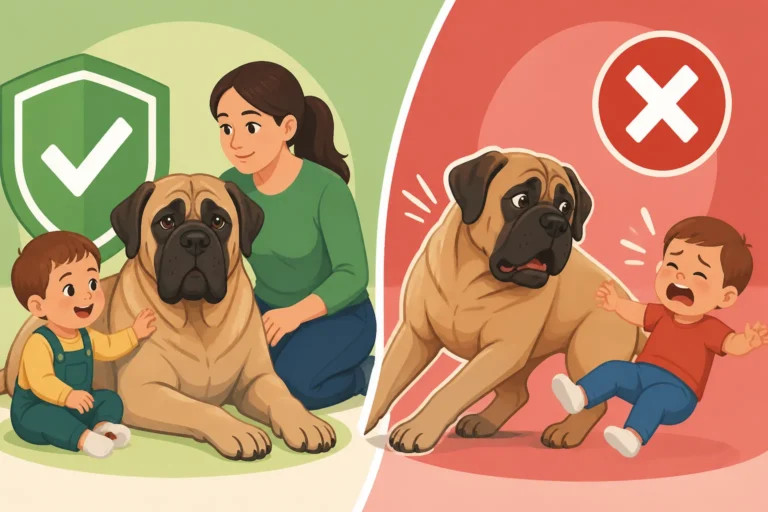
Beneath that imposing exterior, Mastiffs are incredibly sensitive souls. They don't respond well to harsh corrections, yelling, or heavy-handed training methods. In fact, such approaches can be deeply counterproductive, leading to a Mastiff that shuts down, becomes fearful, or simply decides you're not worth listening to. Think about it: a creature that large, when intimidated, might choose to avoid interaction altogether rather than engage in a conflict it perceives as negative.
This sensitivity means that every repetition needs to be a positive experience. If a session turns sour, that negative emotion can override any learning that happened. This isn't just about their feelings; it directly impacts their willingness to learn and retain commands. Why Harsh Correction Ruins a Mastiff isn't an exaggeration; it truly can damage the training relationship and make future repetitions feel like pulling teeth. They remember negative experiences keenly, and it can take many, many positive repetitions to undo the damage of one bad one. This is why tools and methods that promote positive reinforcement are so critical for this breed.
The Myth of the "Slow" Mastiff
Many people mistakenly believe Mastiffs are "slow" learners. While they might not be the fastest to pick up new cues in a single session, this often has more to do with their inherent personality and how we define "learning" than with their actual cognitive abilities. Let's unpack this common misconception.
Intelligence vs. Compliance
A Mastiff's intelligence is often demonstrated in their problem-solving skills, their discerning nature, and their ability to read human emotions, rather than in rapid-fire obedience. They might be slow to comply with a "sit" command during a walk because they are actively deciding whether the distraction of a squirrel is more interesting or if the treat in your hand is truly worth it. This isn't a lack of intelligence; it's a demonstration of independent thought and decision-making.
For a Mastiff, learning a command isn't just about associating a word with an action; it's about associating that action with a positive outcome that they deem valuable. If the motivation isn't strong enough, or if they see no immediate benefit, their compliance will be minimal. They might know what "sit" means, but they're weighing the pros and cons of actually doing it at that moment. This means your repetitions need to be highly reinforcing and consistent, especially in the early stages, to build a strong positive association.
The Role of Motivation
When training any dog, motivation is the fuel. For Mastiffs, this fuel often needs to be high-octane. While some breeds will work for a simple "good dog," a Mastiff often requires more compelling incentives. Think delicious, high-value treats (small pieces of cooked chicken, cheese, or specialized training treats) rather than dry kibble. Toys can also be a powerful motivator, especially for a puppy, but often food holds the highest sway.
Understanding What Actually Motivates a Mastiff is paramount. For some, it might be a specific squeaky toy. For others, it's a piece of hot dog. Whatever it is, you need to use it consistently during repetitions to make the desired behavior incredibly rewarding. If you're using weak motivators, you'll feel like you need endless repetitions, because your Mastiff isn't getting enough "pay" for their effort. It's not about bribery; it's about making learning a positive and worthwhile endeavor from their perspective.
Setting Up for Success: Optimal Training Sessions
You can't just drill a Mastiff endlessly and expect results. Their attention spans, sensitivity, and sheer size mean you need a strategic approach to training sessions. It’s all about quality over quantity when it comes to repetitions.
Keeping Sessions Short and Sweet
Long, drawn-out training sessions are a recipe for disaster with a Mastiff. They get bored easily, and once they're bored, they're likely to disengage completely. Imagine trying to force a two-hundred-pound dog to do something it doesn't want to do – it's a losing battle. Instead, aim for multiple short sessions throughout the day, perhaps 5-10 minutes each. This keeps things fresh, maintains their interest, and prevents fatigue for both of you.
These short bursts allow for focused attention and positive reinforcement before your Mastiff loses interest. It’s better to have five successful repetitions in a five-minute session than to have twenty sloppy, unenthusiastic repetitions in a twenty-minute session where frustration builds. Remember, Whether Short Sessions Suit a Mastiff isn't just a suggestion, it's often a necessity for this breed. Ending on a high note, even if it's just one perfect "sit," is far more effective than pushing them past their mental limit.
The Power of Consistency
This is perhaps the most crucial element in training a Mastiff, even more so than the sheer number of repetitions. Consistency means everyone in the household uses the same commands, the same hand signals, and the same expectations every single time. If one person lets "sit" slide, and another insists on it, your Mastiff will quickly learn that the command is optional.
Think of it like building a mental pathway: each consistent repetition reinforces that pathway. If the path is constantly shifting, your Mastiff will be confused and less likely to use it. This consistency also applies to your schedule and environment. Trying to train amidst chaos will yield fewer results than dedicated, calm training times. This isn't just about how many times you repeat a command, but how consistently and correctly you do it.
Positive Reinforcement as the Cornerstone
For a sensitive and thoughtful breed like the Mastiff, positive reinforcement isn't just a training method; it's the only effective path forward. This means rewarding desired behaviors with something your Mastiff values – treats, praise, gentle petting, or a favorite toy. The goal is to make every interaction associated with training a joyful and rewarding one.
If you find yourself having to use more and more physical manipulation or getting frustrated, you're likely missing the mark on motivation or clarity. With positive reinforcement, your Mastiff wants to offer the behavior because it leads to good things. This builds a willing partner rather than a grudging subordinate. For more on this, you might find insight in Whether Positive Training Alone Works on a Mastiff. Repetitions coupled with genuine enthusiasm and high-value rewards will engrain commands much faster and more reliably than any amount of nagging or force.
Progressive Learning: From Novice to Reliable
The journey from a puppy learning its first "sit" to a reliable adult Mastiff who understands and responds to complex cues is a marathon, not a sprint. The number of repetitions needed isn't static; it changes as your dog progresses and as the environment becomes more challenging.
Introducing New Cues
When introducing a brand new command, expect to put in a significant number of repetitions in low-distraction environments. For a Mastiff, this might mean 20-30 solid repetitions over several short sessions, just for the initial understanding. This phase is all about making the association crystal clear: "When I hear 'sit' and see this hand signal, I put my butt on the ground, and good things happen!"
For instance, when first teaching "stay," you'll start with very short durations and no distractions. Each successful "stay," followed by a release word and a reward, is a repetition. You might do 5-10 repetitions in a 5-minute session, three times a day. You're building that foundation, brick by positive brick. Many owners find structured online courses, like those from BAXTER & Bella, incredibly helpful for breaking down complex behaviors into manageable steps, guiding you on initial repetition counts.
Generalization and Proofing Behaviors
This is where many owners get frustrated, thinking their Mastiff has "forgotten" a command. They'll perform a perfect "sit" in the living room, but completely ignore it at the dog park. This isn't forgetting; it's a lack of generalization. Your Mastiff has learned "sit" in the living room, but not "sit" at the park, or "sit" with other dogs, or "sit" when the doorbell rings.
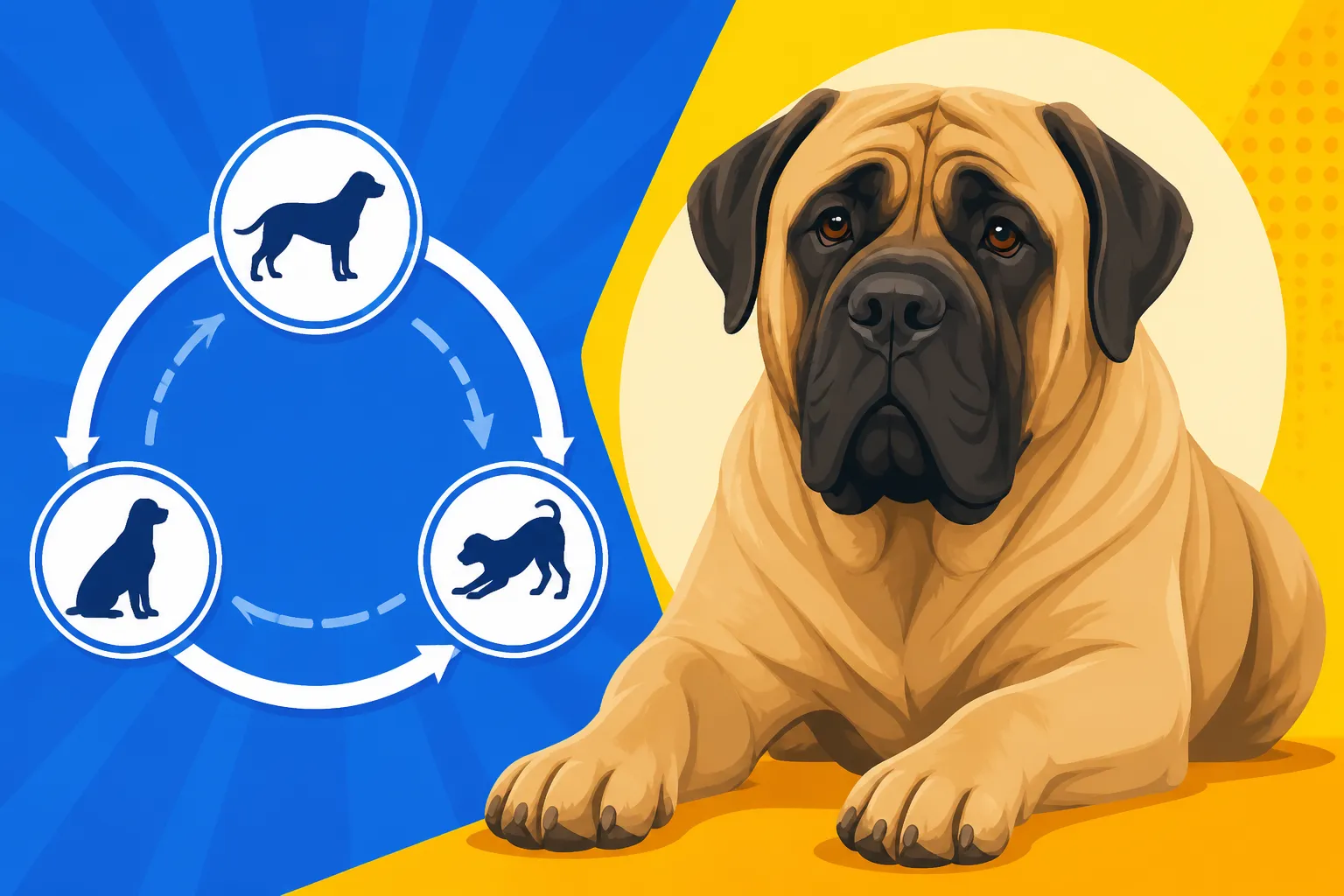
To "proof" a behavior, you need to systematically introduce distractions, new environments, and different people, gradually increasing the challenge. Each time your Mastiff successfully performs the command in a new context, it counts as a valuable repetition. This phase will require hundreds, if not thousands, of repetitions over time. You're not teaching a new command; you're reinforcing and broadening the understanding of an existing one. A helpful table for thinking about this might look something like this:
| Training Phase | Goal | Typical Repetitions (Initial) | Environment/Distraction Level | Reward Value |
|---|---|---|---|---|
| Introduction | Dog understands cue-action link | 20-30+ | Quiet, no distractions | Very High |
| Acquisition | Dog performs action reliably | 50-100+ | Low-moderate distractions | High |
| Generalization | Dog performs action in varied contexts | Hundreds | Varied, increasing | Moderate-High |
| Maintenance/Proofing | Dog performs action reliably under duress | Ongoing | High distractions, real-world | Moderate |
Moving Beyond Basic Obedience
Once your Mastiff has a solid grasp of basic obedience, you might want to explore more advanced skills or even therapy work. This naturally requires more repetitions, breaking down complex behaviors into smaller, achievable steps. For example, Getting a Mastiff Through the Canine Good Citizen Test will involve proofing all basic commands in a simulated test environment, demanding many repetitions in those specific scenarios.
The key here is not just endless repetition, but smart repetition. Are you getting clear, correct responses? If not, reduce distractions, increase your reward value, or break the behavior down further. For Mastiffs, especially given The Sensitivity Nobody Expects in a Two Hundred Pound Mastiff, pushing them too hard or too fast can backfire. Patience and a willingness to go back to basics are your best friends.
Troubleshooting and Adapting Your Approach
Even with the best intentions, training a Mastiff can hit snags. Understanding why your current number of repetitions might not be yielding results, and knowing when to ask for help, are crucial skills for any Mastiff owner.
When Repetitions Aren't Working
If you feel like you're doing countless repetitions and a command just isn't sticking, it's time to pause and evaluate. Simply doing more of the same thing that isn't working won't help your Mastiff. Here are some common reasons for a lack of progress:
- Lack of Motivation: Are your rewards truly high-value for your Mastiff? If they're not excited by what you're offering, they won't put in the effort.
- Too Many Distractions: Is the environment too stimulating? Go back to a quieter space and gradually reintroduce distractions.
- Inconsistent Cues: Is everyone using the same word and hand signal? Is the timing of your reward precise? A delayed reward loses its impact.
- Physical Discomfort: Is your Mastiff in pain or uncomfortable? Joint issues, even subtle ones, can make commands like "down" or "sit" painful. Always rule out a medical issue if behavior suddenly changes.
- Boredom or Fatigue: Long sessions or repetitive drills without variation can lead to your Mastiff simply tuning you out. Vary your rewards, play a quick game, or end the session. Remember Whether a Mastiff Ignores a Cue It Knows often points to one of these underlying issues.
Consider using different ways to count or track repetitions, especially for a specific skill. A simple clicker from Amazon can help mark the exact moment of desired behavior, making each repetition clearer.
Seeking Professional Guidance
There's absolutely no shame in admitting you need a little help, especially with a massive and intelligent breed like a Mastiff. Sometimes, an outside perspective from a certified professional dog trainer can pinpoint issues you're missing. They can observe your interactions, suggest new techniques, or help you break down complex behaviors into more manageable steps.
Look for trainers who specialize in positive reinforcement and have experience with giant breeds. A good trainer won't ask you to use force or intimidation. They will help you understand your Mastiff's unique learning curve and tailor a plan that works for both of you. Don't wait until problems escalate; early intervention is always best. Exploring Whether a Mastiff Needs a Professional Trainer early in your ownership journey can save a lot of frustration down the line. A professional can also guide you on the specific number of repetitions needed for certain skills based on your individual dog's temperament and learning speed.
Disclaimer
This article is for general informational purposes only and does not constitute professional advice. Laws, prices and regulations vary by location and change over time. Consult a qualified professional for guidance on your specific situation.