Whether a Mastiff Would Actually Bite
The sheer size of a Mastiff can be intimidating, leading many people to wonder if such a powerful dog could truly be trusted, especially when it comes to the ultimate fear: biting. It's a natural concern, seeing a dog that can easily outweigh an adult human, and it often leads to misconceptions about their inherent nature. This comprehensive guide will delve deep into the Mastiff temperament, the factors that influence a dog's behavior, and provide realistic insights into whether a Mastiff is prone to biting, helping you understand these magnificent creatures better.
Understanding the Mastiff Temperament
Mastiffs are often lauded as "gentle giants," a nickname that speaks volumes about their generally calm and affectionate disposition. However, beneath that gentle exterior lies a powerful, protective instinct shaped by centuries of history. Understanding this duality is key to appreciating why they behave the way they do and to dispelling common myths.
The Gentle Giant Stereotype
It's easy to look at a Mastiff and see only their immense size, but most owners will tell you that their hearts are as big as their bodies. They are known for being incredibly sweet, patient, and loving with their families. This isn't just a marketing slogan; it's a fundamental aspect of the breed's character. They tend to be very devoted and form strong bonds, often seeking to be close to their people, whether that means leaning their two hundred pounds against your leg or trying to squeeze onto the sofa next to you.
This gentle nature makes them surprisingly tolerant in many situations, often shrugging off minor bumps and jostles, especially from children they know. They are typically not hyperactive or prone to frantic displays of energy, preferring instead to observe their surroundings with a quiet dignity. However, like any dog, their patience has limits, and assuming their gentle nature means they are impervious to stress or fear is a dangerous oversight.
Historical Roles and Modern Realities
Historically, Mastiffs served a variety of roles, from war dogs in ancient times to estate guardians in medieval England. Their imposing presence was always a key part of their job description. They were bred to deter intruders simply by existing, their sheer size being a significant deterrent. This background means they possess a natural wariness of strangers and a strong protective instinct, which is distinct from aggression.
In modern homes, this translates to a dog that is typically reserved with new people and acutely aware of its territory. They are not dogs that will greet every stranger with effusive wags and licks. Instead, they will observe, assess, and often place themselves between their family and perceived threats. This ancient protective wiring still runs deep, even in a well-socialized pet. It's crucial for owners to understand that while they are generally gentle, their history means they are innately programmed to be guardians, not indiscriminate social butterflies. Their sheer power means their protective instincts, if misdirected or unmanaged, can have serious consequences.
The Mastiff's "Watchdog" vs. "Guard Dog" Role
It's vital to differentiate between a watchdog and a guard dog when discussing Mastiffs. A watchdog barks to alert you to an anomaly – a stranger, a strange noise, a car pulling up. A guard dog, on the other hand, is trained to act when a perceived threat moves beyond mere presence. Mastiffs typically fall into the watchdog category naturally. They possess an impressively deep bark that can rattle windows and certainly get your attention, and they often use it to signal an approaching person or unusual event. How Rarely a Mastiff Barks is a common question, but when they do, you'll know about it.
However, their natural protective instincts often lead them to become "passive" guard dogs. They might not be overtly aggressive, but their mere presence and watchful demeanor can be incredibly effective. They tend to stand their ground, use their size to create a barrier, or place themselves between their family and a stranger. While they might appear calm, they are constantly assessing. Very rarely do they need formal "guard dog" training because their instinct for protection is so inherent. They will make it clear to a stranger that they are aware of their presence and are not to be trifled with. This natural inclination to guard, coupled with their tremendous physical capability, is why proper socialization and management are absolutely non-negotiable for responsible Mastiff ownership.
Factors Influencing Biting Behavior
While Mastiffs are known for their gentle nature, any dog, regardless of breed, has the potential to bite under certain circumstances. It's rarely a random act, but rather a culmination of factors. Understanding these influences is paramount to preventing unwanted behavior.
Socialization and Early Experiences
The formative weeks and months of a Mastiff puppy's life are incredibly influential. A puppy exposed to a wide variety of sights, sounds, people, and other friendly dogs in a positive and controlled manner is far more likely to develop into a well-adjusted, confident adult. Conversely, a puppy that is isolated, experiences negative interactions, or is simply not exposed to enough novel situations can develop fear or anxiety, which are common precursors to biting. Socializing a Mastiff Puppy Before It Gets Heavy is a critical period that shapes their entire adult life.
Imagine a Mastiff puppy, already predisposed to wariness of strangers, growing up in a secluded environment with limited human contact outside its immediate family. When suddenly faced with a bustling park or a friendly, but boisterous, new person, that fear can quickly escalate. Their first instinct might be to retreat, but if they feel trapped or threatened, that fear can manifest as a defensive snap or bite. Early, positive socialization helps them learn that most new experiences aren't scary and that most people mean them no harm. It teaches them to filter environmental stimuli and react appropriately rather than defensively.
Training Methods and Leadership
The way a Mastiff is trained and the leadership provided by its owner significantly impact its behavior. Positive reinforcement methods, focusing on rewarding desired behaviors, build trust and a strong bond. Harsh, punitive training, on the other hand, can instill fear, confusion, and resentment, which can paradoxically increase the likelihood of biting. A dog that is constantly corrected with force may learn to lash out when feeling cornered or afraid. Why Harsh Correction Ruins a Mastiff is particularly true for sensitive breeds like the Mastiff.
Consistent, fair leadership establishes clear boundaries and expectations, giving the Mastiff a sense of security and understanding its place within the family structure. This isn't about dominance in an aggressive sense, but about being a reliable guide. A Mastiff that feels secure in its owner's leadership is less likely to feel the need to take matters into its own paws when faced with an uncertain situation. Conversely, an inconsistent or overly permissive owner can inadvertently create a dog that feels it needs to make its own decisions, including when to defend itself or its resources. This can be especially problematic for a dog of the Mastiff's size, where even a "warning" can have serious consequences. Online training platforms like BAXTER & Bella can be incredibly helpful for new Mastiff owners, offering structured, positive reinforcement programs right from puppyhood, teaching proper handling and building confidence in both dog and owner.
Fear, Pain, and Resource Guarding
These three factors are among the most common triggers for biting in any dog. A dog that is in pain, whether from an acute injury or a chronic condition like arthritis, might snap if touched in a sensitive area. This isn't aggression; it's a desperate plea for the pain to stop. It's why regular veterinary check-ups and being attuned to subtle changes in your Mastiff's movement or demeanor are so important. Arthritis in a Mastiff at Four can be a real concern, and even minor discomfort can impact behavior.
Fear is another powerful motivator. A Mastiff that feels cornered, startled, or overwhelmed might bite defensively. This is often seen when a stranger approaches too quickly, tries to hug the dog, or invades its personal space without permission. The bite is a last resort to make the perceived threat retreat. Resource guarding, where a dog becomes possessive over food, toys, or even sleeping spots, is also a common issue. A Mastiff might growl or snap if someone tries to take away a high-value item, or even if a family member approaches while they are eating. This isn't inherently bad, but it needs to be managed through training and respect for the dog's boundaries to prevent escalation. Understanding these nuances helps owners prevent situations that might lead to a bite.
Genetics and Breeding Practices
While environment and training play huge roles, genetics also contribute to a dog's predisposition for certain temperaments. Responsible breeders prioritize good temperament, health, and conformation equally. They select breeding dogs that are calm, confident, and well-adjusted, rather than those showing signs of fear or aggression. They also ensure their puppies are raised in an enriching environment from birth, providing early socialization opportunities. The CHIC Four Plus the DNA Stack Behind a Mastiff's Price highlights how much goes into responsible breeding.
Conversely, irresponsible breeding practices can lead to dogs with unstable temperaments. Breeders who prioritize extreme size, specific colors, or simply breed without regard for the parents' psychological health can inadvertently perpetuate genetic predispositions to anxiety, shyness, or aggression. When looking for a Mastiff puppy, researching the breeder thoroughly, asking to meet the parents, and observing the kennel environment are crucial steps. A reputable breeder will be transparent about their dogs' temperaments and provide a clear history of their lines. They understand that a stable temperament is as vital as physical health.
Identifying Warning Signs and Body Language
Dogs communicate constantly through their body language, and Mastiffs are no exception. They often provide a cascade of signals before escalating to a bite, but these signals can be subtle and easily missed if you don't know what to look for. Learning to read these cues is essential for preventing bites and understanding your dog's emotional state.
Subtle Signals Before a Growl
Many people assume a growl is the first warning sign, but dogs often communicate discomfort much earlier. These can be very subtle indicators:
- Lip licking or yawning (when not tired): These are often stress signals.
- Turning head away or averting gaze: An attempt to disengage or avoid confrontation.
- Body stiffening: The dog becomes rigid, often pausing in its movements.
- Whale eye: The whites of the eyes are visible, often when the dog is looking sideways but keeping its head relatively still.
- Tail tucked low or held stiffly: Indicates fear or tension, rather than a relaxed wag.
- Ears flattened back: A clear sign of fear or appeasement.
- Panting (when not hot or exercised): Can indicate stress or anxiety.
- "Freezing" in place: The dog becomes completely still, often right before reacting.
If you observe these signals, especially in combination, it's a red flag. Your Mastiff is telling you it's uncomfortable and needs space. Ignoring these early warnings forces the dog to escalate its communication, often leading to a growl, snap, or even a bite. It's a dog's way of saying, "I've tried telling you, but you're not listening."
The Importance of Personal Space
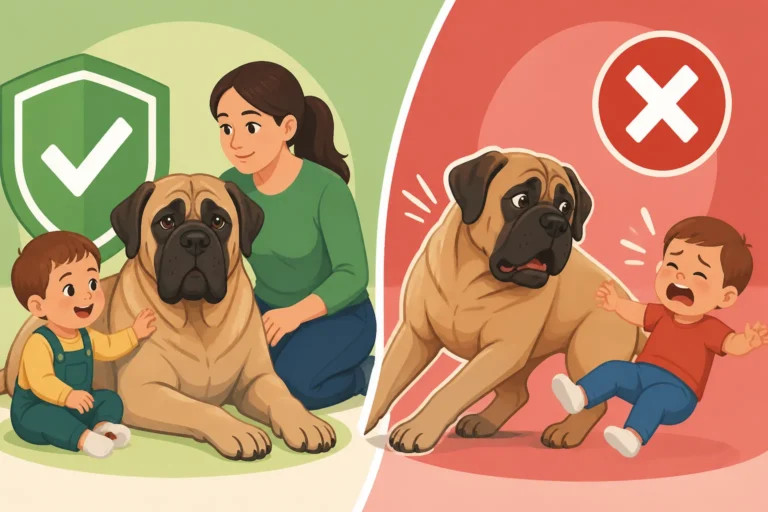
For a Mastiff, personal space is often non-negotiable, especially with strangers or in unfamiliar situations. Their size alone means they require more room, and respecting that space is crucial. Children, in particular, need to be taught not to invade a dog's space, particularly when the dog is sleeping, eating, or chewing a toy. A Mastiff in a House With Small Children means constant supervision and education for both dog and child.
Even with family members, forcing interactions can be counterproductive. A Mastiff might tolerate a hug from a loved one, but with a stranger, it could be perceived as a threat. Teach people, especially children, to approach gently, allow the dog to initiate contact, and respect signs of disinterest. This is especially true for delivery drivers or repair people entering your home. Your Mastiff will likely be How a Mastiff Judges a Stranger at the Door very carefully. It's better to manage these interactions by having your Mastiff on a leash or in another room if you're unsure how they will react to someone new crossing their threshold. An online resource like BAXTER & Bella can also provide excellent guidance on teaching children and guests how to appropriately interact with dogs.
When to Seek Professional Help
If your Mastiff regularly exhibits concerning behaviors such as growling, snapping, persistent fear, or resource guarding, it's not something to ignore or try to "fix" on your own. Given their size and power, even seemingly minor aggression issues in a Mastiff can quickly become serious. It's time to seek professional help from a certified professional dog trainer or a veterinary behaviorist.
These professionals can assess the root cause of the behavior, whether it's fear, pain, a lack of confidence, or something else entirely. They can then develop a tailored behavior modification plan that uses positive, humane methods to address the issue. Attempting to punish aggression can often exacerbate the problem, making the dog more fearful and potentially more dangerous. Early intervention is key. A veterinary behaviorist can also rule out underlying medical conditions that might be contributing to behavioral changes, ensuring a holistic approach to your Mastiff's well-being.
Preventative Measures and Responsible Ownership
Responsible Mastiff ownership means proactively working to prevent biting incidents. It's about understanding the breed's nature, providing the right environment, and consistent training from day one. These measures protect your dog, your family, and the community.
Early Socialization and Exposure
The window for critical socialization in puppies is generally considered to be up to 16 weeks of age. For a Mastiff, who will grow to be a massive adult, making the most of this period is absolutely crucial. This means exposing your Mastiff puppy to as many different positive experiences as possible:
- People: Introduce them to men, women, children, people in hats, people with glasses, people with different gaits. Always ensure these interactions are positive and supervised.
- Sounds: Expose them to common household noises (vacuum, doorbell), outdoor sounds (traffic, sirens), and even music.
- Environments: Take them to different safe, clean places like quiet parks, pet-friendly stores (if appropriate and safe for puppies), and friends' houses.
- Other Animals: Supervised, positive interactions with calm, vaccinated dogs and cats.
Remember, exposure isn't enough; it must be positive. Pair new experiences with high-value treats and praise. Never force an interaction. If your puppy seems overwhelmed, create distance and try again later. Proper socialization helps your Mastiff learn that the world isn't a scary place and reduces the likelihood of fear-based aggression later on. A puppy class, particularly one that focuses on positive reinforcement and safe interactions, is an excellent investment. For those who can't get to in-person classes, programs like BAXTER & Bella offer comprehensive online puppy training that emphasizes these critical socialization elements.
Consistent Training and Boundaries
A well-trained Mastiff is a joy to live with and is far less likely to exhibit unwanted behaviors. Given their size, basic obedience commands like "sit," "stay," "come," and "leave it" are not just polite manners; they are safety commands. Imagine trying to pull a fully grown Mastiff away from something dangerous if they haven't learned "leave it"! Teaching a Mastiff Before It Outweighs You is a mantra every Mastiff owner should live by.
Training should be consistent and ongoing throughout their lives, not just during puppyhood. Use positive reinforcement, keeping sessions short, fun, and rewarding. Establish clear boundaries for your Mastiff – where they are allowed to go, what they can chew, and how they should interact with people. This clarity gives them confidence and reduces anxiety. A Mastiff who understands what's expected of them is a secure and happy Mastiff. For specific training tools, a durable, well-fitting harness from Amazon can provide better control on walks than a collar alone, reducing pulling and allowing for safer handling.
Health Management and Regular Vet Checks
A healthy dog is generally a happy dog, and pain can dramatically alter a dog's temperament. Regular veterinary check-ups are essential for catching any health issues early. Mastiffs are prone to certain orthopedic conditions like hip and elbow dysplasia, which can cause chronic pain. They can also suffer from other conditions that might make them irritable or sensitive. Whether a Mastiff Needs a Cardiac Exam and other routine health screens are important for a reason.
If your Mastiff suddenly starts acting differently – showing signs of aggression, lethargy, or reluctance to be touched – your first call should always be to the vet. A thorough examination can rule out pain or illness as the cause. Addressing physical discomfort can often resolve behavioral issues without any further intervention. Never assume a behavioral change is "just temperament" without a vet visit.
Managing Interactions with Strangers and Children
Even the most well-socialized Mastiff has natural protective instincts. When new people, especially children, enter your home, it's your responsibility to manage these interactions.
- Supervision is key: Never leave a Mastiff unsupervised with children, regardless of how well you know both. Accidents can happen in an instant, and a Mastiff's size means even an accidental bump can be serious. Whether a Mastiff Tolerates Rough Handling From Children is a critical consideration.
- Teach respectful interactions: Educate children on how to approach and pet a dog gently. No pulling tails, ears, or riding the dog. Teach them to ask permission before petting and to respect a dog's space.
- Create safe spaces: Ensure your Mastiff has a quiet retreat, like a crate or a designated bed in another room, where they can go to escape overstimulation. This is especially important during gatherings or when children are around.
- Controlled introductions: When introducing your Mastiff to new people, especially those who might be nervous around large dogs, keep your dog on a leash. Allow them to approach calmly, give gentle praise, and if the stranger is comfortable, a treat from them can create a positive association. Don't force interactions.
By actively managing these situations, you create a safe environment for everyone and reinforce positive associations for your Mastiff.
| Body Language Signal | What it Might Mean | Action to Take |
|---|---|---|
| Lip Lick / Yawn | Stress, mild anxiety | Increase distance, remove trigger, check environment |
| Head Turn / Averted Gaze | Discomfort, avoidance | Stop approaching, give space, observe |
| Stiff Body / Freezing | Tension, preparing to react | STOP all interaction, give ample space |
| Whale Eye | Stress, feeling threatened | Back away slowly, avoid direct eye contact |
| Ears Pinned Back | Fear, submission, apprehension | Avoid reaching out, speak softly, provide escape |
| Growl | Warning, "Stop what you're doing!" | Immediately stop activity, create distance, assess |
| Snarl (Lip Curl) | Clear threat, "I mean it!" | Retreat immediately, do not punish, seek help |
What to Do if a Mastiff Shows Aggression
If, despite all preventative measures, your Mastiff exhibits aggressive behavior, it can be a terrifying experience. It's crucial to react calmly and strategically, prioritizing safety for everyone involved.
De-escalation Techniques
The immediate goal when a Mastiff shows aggression (growling, snapping, lunging) is to de-escalate the situation and prevent further harm.
- Stay Calm: Your own panic will only heighten your dog's anxiety. Speak in a low, calm voice, if at all.
- Create Distance: The safest immediate action is to create space between your dog and the trigger. If you can safely call your dog away with a familiar, positive command (like "come" to another room), do so. If not, calmly and slowly move yourself or the other person away.
- Avoid Punishment: Never hit, yell at, or physically punish a growling or snapping Mastiff. This will only teach them that their warnings are ignored or punished, leading them to bypass the warning signs and go straight to a bite in the future. It can also break their trust in you.
- Identify the Trigger: Once the immediate situation is safe, try to objectively identify what caused the reaction. Was it a specific person, a sound, a touch, a resource? Understanding the trigger is the first step toward addressing the underlying issue.
Remember, a Mastiff's size means even a warning can be dangerous. Your immediate response should be focused on safety and preventing the situation from worsening.
Professional Intervention
Any instance of aggression from a Mastiff, no matter how minor it seems, warrants professional intervention. This isn't a problem you should try to tackle alone.
- Consult Your Veterinarian First: As mentioned, pain or illness can be a significant factor in sudden aggression. Your vet can perform a thorough physical examination and recommend appropriate medical treatment or refer you to a veterinary behaviorist.
- Certified Professional Dog Trainer or Veterinary Behaviorist: Seek out a professional with experience in large breed aggression and a commitment to positive reinforcement methods. A veterinary behaviorist is a veterinarian who has specialized in animal behavior and can prescribe medication if necessary, alongside behavior modification. They can conduct a comprehensive assessment of your Mastiff's behavior, identify the root causes, and develop a safe, effective plan for management and modification. They might explore scenarios like Whether a Mastiff Forgives a Correction or past negative experiences that could be contributing.
These professionals can provide guidance on safe handling techniques, environmental management strategies, and specific training exercises to help your Mastiff learn more appropriate responses to triggers. They will emphasize managing the environment to prevent future incidents while working on changing the underlying emotional response.
Safety Protocols in the Home
Living with a Mastiff that has shown aggressive tendencies requires strict safety protocols to protect everyone.
- Controlled Access: Consider using gates, crates (ensure it's large enough and sturdy for a Mastiff, many available on Amazon), or leashes to manage your Mastiff's access to certain areas of the house or during specific times, especially when guests are present. Whether a Mastiff Should Be Crated When Guests Arrive is often a good plan.
- Supervision with Children and Strangers: Absolute, constant supervision is non-negotiable. If you cannot actively supervise, your Mastiff should be in a separate, secure area.
- Clear Communication: Ensure all household members and frequent visitors are aware of your Mastiff's triggers and the safety protocols in place. This includes teaching them what warning signs to look for and how to react.
- Basket Muzzle Training: While often misunderstood, muzzle training can be a life-saving tool. A comfortable, well-fitting basket muzzle allows your Mastiff to pant, drink, and take treats, but prevents bites. It can be invaluable for vet visits, grooming, or when introducing new people in a controlled manner, providing peace of mind while you work on behavior modification. Whether a Mastiff Needs a Custom Collar or specialized muzzle fitting might be needed due to their unique head shape.
Implementing these protocols isn't about punishing your Mastiff; it's about setting them up for success and ensuring a safe, harmonious home environment.
Disclaimer
This article is for general informational purposes only and does not constitute professional advice. Laws, prices and regulations vary by location and change over time. Consult a qualified professional for guidance on your specific situation.