Whether a Standard Harness Fits a Mastiff at All
One of the many surprising realities of owning a magnificent Mastiff is the constant struggle to find basic supplies that actually fit their monumental frame. You spend time, energy, and money trying to locate everything from beds to crates, only to discover that most "XL" products are designed for dogs half their size. When it comes to something as crucial as a harness, the frustration can be immense, as a poorly fitting one isn't just uncomfortable, it can be downright dangerous. This guide is here to shed light on why standard harnesses often fall short for a Mastiff and what you should really be looking for to keep your gentle giant safe and comfortable.
The Unique Challenges of Harness Shopping for a Mastiff
Let's be honest, a Mastiff isn't just a "big dog." They are a breed unto themselves when it comes to sheer mass, bone structure, and unique proportions. This isn't like finding a harness for a German Shepherd or a Labrador; a Mastiff operates in an entirely different league, and most off-the-shelf harnesses simply aren't engineered for their specific needs. It’s easy to feel defeated when every trip to the pet store ends in disappointment.
Size and Proportions Beyond the Ordinary
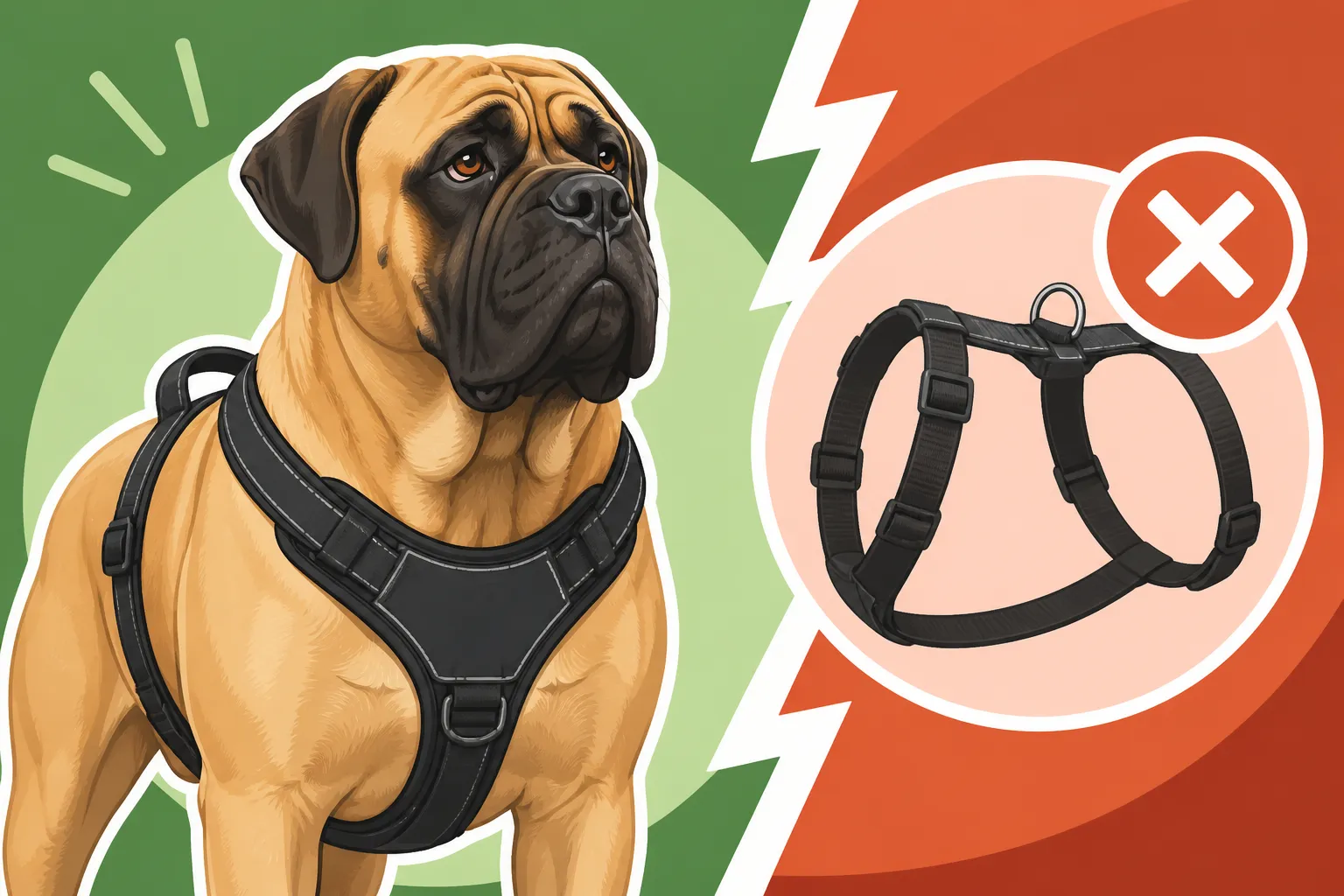
A Mastiff’s body is a marvel of canine architecture, but it doesn't always conform to the patterns used to design typical dog gear. Their chest is incredibly deep and broad, often described as a "barrel chest," which means the girth strap needs to be exceptionally long and positioned correctly to avoid chafing. Then there's their massive neck and powerful shoulders. Many standard harnesses have a fixed neck opening that either chokes a Mastiff or is so loose it allows them to slip out with surprising ease. The chest plate, if present, is frequently too narrow to properly distribute pressure across their expansive front.
Imagine trying to fit a custom-tailored suit that's only ever been made for people under six feet tall onto someone who's seven feet. That's often what it feels like trying to put a standard harness on a Mastiff. The proportions are just fundamentally different. You might find an "XL" harness that seems to have enough length in the straps, but then you realize the points where the straps connect are all wrong for your Mastiff's unique build, causing awkward pressure points or riding up into sensitive areas.
This isn't just about aesthetics; it's about functionality and preventing injury. A harness that rubs continuously behind the elbows can lead to painful sores or skin infections, especially in a breed prone to skin sensitivities. One that presses on the trachea can make walking uncomfortable or even dangerous, particularly for a dog that already has a deep chest and can have respiratory considerations. It's a dance between finding something big enough and something shaped appropriately.
Strength and Durability for a Two Hundred Pound Dog
Let’s talk about power. A Mastiff, even a well-behaved one, is an animal of immense strength. When they decide they want to investigate a smell, greet a friend, or simply stop and plant their feet (a classic Mastiff move!), the force they can exert on a harness is phenomenal. How Much Force a Mastiff Can Apply on a Leash is something you truly feel in your shoulders, and a harness must be built to withstand it.
Many standard harnesses are made with lighter-duty nylon webbing and plastic buckles that, while perfectly adequate for smaller or less powerful breeds, are simply not up to the task of containing a determined Mastiff. You'll find yourself constantly worrying about a buckle snapping, a seam ripping, or a D-ring bending out of shape. The feeling of vulnerability when you realize your dog's harness might fail is not one any owner wants. This isn't about pulling; it's about holding secure, even during a sudden lunge or a stubborn stand-off.
Durability also means standing up to the wear and tear of daily life with a giant dog. They roll, they lean, they rub against things. The materials need to be robust enough to handle all of this without quickly deteriorating. Investing in a truly durable harness is a preventative measure against unexpected vet bills for injuries caused by equipment failure, and let's be honest, The Mastiff's Short Life Buys the Biggest Bills as it is. You don't want to add preventable ones to the tally.
Why "Standard" Sizing Often Fails the Mastiff Owner
The term "standard sizing" in the pet industry can feel like a cruel joke to a Mastiff owner. What is standard for a Golden Retriever is minuscule for your giant. This disconnect leads to a lot of frustration and wasted purchases.
The Illusion of "XL" and "Giant" Labels
You walk into a pet store, relieved to see a section labeled "XL" or even "Giant Breed" harnesses. Hope springs eternal, right? Then you pick one up and immediately realize it's still far too small. That "Giant Breed" label is often geared towards breeds like Great Danes or Saint Bernards, which, while large, have different body types and often weigh significantly less than a fully grown male Mastiff. A Mastiff can easily exceed 200 pounds, sometimes significantly more, with a solid, dense build that requires serious hardware.
The reality is that many manufacturers design their "largest" sizes with the upper end of common large breeds in mind, not the true behemoths of the canine world. This often means the chest strap might barely meet, or the neck opening will be too tight, causing discomfort and potential chafing around the throat. You might manage to squeeze your Mastiff into something, but it won't be a comfortable or safe fit. This is where you really start to feel that unique Mastiff owner pain point – everything is an uphill battle to find.
Even online retailers like Chewy, which offer an impressive array of sizes and brands, require careful scrutiny of product dimensions. Just because a filter for "giant breed" exists doesn't mean every harness listed will genuinely accommodate a Mastiff's unique build. It's not just about the numbers on the size chart; it's about the geometry of the harness itself. Many owners have bought multiple harnesses only to return them, disheartened by the persistent lack of true giant-breed accommodation.
Common Fit Issues That Mastiffs Face
Beyond simply being too small, standard harnesses present a host of specific fit problems for Mastiffs:
- Chafing and Rubbing: This is perhaps the most common and painful issue. Straps that are too narrow or poorly positioned can rub raw spots behind the elbows, under the armpits, or across the chest. A Mastiff's skin, especially in their folds, can be quite sensitive, and prolonged rubbing can quickly lead to painful infections. The Wrinkles and Folds a Mastiff Owner Cleans Every Week are already a maintenance task, you don't want to add wound care to it.
- Restricting Movement: A harness that's too snug around the shoulders or chest can impede a Mastiff's natural gait. Their powerful, deliberate strides need full range of motion. A restrictive harness can alter their movement, putting undue stress on joints, which is particularly concerning for a breed already prone to issues like Elbow Dysplasia Affects One Mastiff in Seven and hip problems.
- Tracheal Pressure: Many harnesses, particularly those with a Y-shape front or straps that sit high on the chest, can put direct pressure on the trachea if the dog pulls. For a Mastiff, whose breathing can sometimes be labored due to their size and brachycephalic tendencies (though less so than true brachy breeds), this is a serious concern. A good harness should distribute pressure across the sternum, not the throat.
- Escape Risk: Conversely, a harness that's too loose or designed with shallow straps can allow a Mastiff to back out of it, especially if they get spooked or decide they're done with their walk. The thought of a two-hundred-pound dog loose in an unfamiliar area is enough to send shivers down any owner's spine.
Finding a Harness That Truly Fits: What to Look For
So, if standard options are often a no-go, what should a dedicated Mastiff owner seek out? It comes down to prioritizing measurements, material quality, and specific design features tailored to their unique build. This isn't just about buying; it's about investing in the right equipment that will serve your Mastiff safely and comfortably for years.
Prioritizing Key Measurements
Forget the vague "XL" label. When shopping for a Mastiff harness, you need to be armed with precise measurements. This means getting out the soft measuring tape and getting hands-on with your dog.
- Chest Girth: This is the most critical measurement. Measure the circumference of your Mastiff's chest at its widest point, usually just behind the front legs. You'll want a harness that offers significant adjustability here, often with a range much larger than typical harnesses. Many manufacturers provide a chart, but be prepared to push the upper limits of those ranges. Aim for a harness that offers several inches of wiggle room beyond your Mastiff's actual measurement to ensure comfort and prevent rubbing.
- Neck Circumference: Measure the base of the neck, where it meets the shoulders, and also where a collar would naturally sit. Some harnesses have fixed neck openings, others are adjustable. You need enough room so it doesn't choke but snug enough not to allow slippage.
- Chest Length/Sternum Strap: This measurement is often overlooked but crucial for a Mastiff. Measure from the top of the sternum (the breastbone) down between the front legs to where the girth strap will rest. This ensures the harness's chest plate or front strap extends far enough down to distribute pressure properly and prevent rubbing behind the front legs. A short sternum strap is a common culprit for chafing.
Always measure your dog carefully, and if in doubt, measure twice. Compare these measurements diligently against the specific product's sizing chart, not just its general size designation. Don't be afraid to look at reviews from other giant breed owners for specific models, as their experiences can often highlight whether a harness truly accommodates a large, deep-chested dog.
Material and Construction: Built for a Behemoth
A Mastiff harness isn't just clothing; it's safety equipment. The materials and construction must be top-notch to handle their sheer power.
- Heavy-Duty Webbing: Look for wide, robust nylon or polyester webbing. The wider the straps, the better they distribute pressure and the less likely they are to dig in. Think 1-inch or 1.5-inch width, at a minimum, for the main straps. Thicker webbing also signifies greater tensile strength, which is vital when a two-hundred-pound dog is attached.
- Metal Hardware: Plastic buckles are a no-go for a Mastiff. They simply cannot withstand the force. Insist on sturdy metal buckles, D-rings, and adjusters. Stainless steel or heavy-duty brass are excellent choices. Check that all D-rings are welded and securely attached. Even for a well-trained Mastiff, there might be a moment of surprise, a sudden dart, and you need to trust your equipment implicitly.
- Reinforced Stitching: Examine the stitching closely. It should be dense, even, and preferably reinforced at all stress points. Box stitching or multiple rows of stitching indicate a harness built for durability. Flimsy, single-line stitching is a red flag. This attention to detail is what separates a cheap, inadequate harness from one that can truly stand up to a Mastiff.
This investment in quality materials not only provides safety but also longevity. A well-made harness will last for years, saving you money in the long run compared to constantly replacing cheaper, failing alternatives. Think of it as purchasing a piece of safety gear, not just an accessory.
Design Features for Mastiff Comfort and Control
Beyond size and materials, certain design elements make a harness particularly well-suited for a Mastiff.
- Padded Chest Plates or Straps: Look for harnesses with ample padding, especially across the chest and under the belly. This provides extra comfort, reduces rubbing, and helps distribute pressure more effectively across their large surface area. Neoprene or soft fleece linings are excellent for this purpose. A comfortable dog is a happier, more compliant dog on walks.
- Multiple Adjustment Points: The more places you can adjust a harness (neck, girth, chest strap length), the better you can customize the fit to your Mastiff's unique body. This adaptability is crucial because Mastiffs, even adult ones, can continue to fill out and change shape slightly over time. Having flexibility in adjustment ensures a snug yet comfortable fit.
- Front-Clip or Dual-Clip Options: For many Mastiff owners, a front-clip harness can be a game-changer for leash manners. When the leash attaches to a ring on the dog's chest, it redirects their forward motion, turning them gently to the side when they pull, making it much harder for them to put their full weight into a tug. Some harnesses offer both front and back clips, giving you versatility depending on the situation. Whether a Front Clip Harness Stops a Mastiff Pulling is a common question, and for many, it offers valuable assistance in managing their strength.
- Wide, Ergonomic Straps: As mentioned with material, wider straps are better. They reduce pressure points. Additionally, look for straps designed to avoid sensitive areas, ensuring they don't dig into armpits or rub against the throat. Some designs feature Y-shaped fronts that keep pressure off the trachea more effectively than horizontal chest straps.
Specialized Harness Options and Where to Find Them
Given the challenges, many Mastiff owners find themselves turning to specialized brands or custom options. While these might come with a higher price tag, the peace of mind and the comfort of your dog are truly priceless.
Custom-Made and Heavy-Duty Brands
There are a handful of manufacturers who truly understand the needs of giant breeds and working dogs. These brands often produce harnesses that are:
- Built to Order: Some companies offer custom-sized harnesses based on your dog's specific measurements, ensuring a perfect fit. This removes much of the guesswork and frustration associated with off-the-rack options.
- Over-Engineered: They use materials and construction techniques far superior to typical pet store offerings. Think climbing-grade webbing, mountaineering-quality buckles, and industrial-strength stitching. These harnesses are designed not just to hold, but to secure.
- Designed for Function: These harnesses often incorporate features like extra handles for quick control (essential for a Mastiff that might need a guiding hand in a crowd or a boost into a car), reflective stitching for visibility, and attachment points for accessories.
While I can't name specific current products or pricing, seeking out brands renowned in the K9 police, service dog, or sport dog communities can often lead you to high-quality, heavy-duty harnesses suitable for a Mastiff. These brands often prioritize functionality, durability, and ergonomic fit above all else. Remember, you're not just buying a harness; you're investing in a tool to manage a powerful animal responsibly. Owners who prioritize quality in other aspects of their Mastiff's life, such as nutrition (perhaps exploring options like Ollie for their diet), often find that this philosophy extends to their gear choices too.
Online vs. In-Store Shopping: The Mastiff Dilemma
The decision of where to buy is a significant one for Mastiff owners, each path having its own pros and cons.
- Online Shopping:
- Pros: Vast selection. You'll find a much wider range of truly large and specialized harnesses online than in any brick-and-mortar store. Detailed product descriptions, customer reviews, and sizing charts are usually available. Sites like Chewy offer an extensive range, often including brands that cater specifically to giant breeds.
- Cons: You can't try it on. This is the biggest drawback. You're reliant on measurements and hope. Returns can be a hassle, especially with bulky items. Always double-check return policies before purchasing.
- In-Store Shopping:
- Pros: The ability to physically see and feel the harness, and potentially try it on your Mastiff if the store allows. This immediate feedback is invaluable for assessing fit and comfort.
- Cons: Extremely limited selection. Most local pet stores simply do not stock harnesses large enough or robust enough for a Mastiff. You might find a few "XL" options, but they will likely be inadequate. The specialized stores that cater to working dogs might have more options, but these are few and far between.
A common strategy is to do extensive research online, comparing brands and reading reviews, then if possible, try to find a local store that carries a similar style or brand to get a feel for the quality and general sizing. Sometimes, ordering a few different options from an online retailer with a generous return policy is the only way to truly find the perfect fit. Remember that What a Mastiff's Weight Does to Every Line on the Vet Invoice means every decision about durable, well-fitting gear is a smart one, potentially saving you from a visit to the emergency vet.
A Comparative Look at Harness Features
To help summarize what we've discussed, here's a table comparing what you typically find in a "standard" harness versus what an ideal Mastiff harness should offer:
| Feature | Standard "Large Dog" Harness (Often Inadequate for Mastiff) | Ideal Mastiff Harness (What to Look For) |
|---|---|---|
| Size Range | Up to ~100 lbs, limited girth/neck adjustment | 150-250+ lbs, extensive adjustability in all areas |
| Webbing Width | ~0.5 – 1 inch, can dig in | 1 – 1.5+ inches, broad to distribute pressure |
| Hardware | Plastic buckles, light D-rings | Heavy-duty metal (steel, brass) buckles, welded D-rings |
| Padding | Minimal or none, prone to chafing | Thick, soft padding on chest, belly, and shoulders |
| Stitching | Single or double stitch, weak at stress points | Reinforced, box, or multi-row stitching at all stress points |
| Chest Design | Often horizontal strap, can restrict shoulders or rub | Y-shape or padded plate, ergonomic, wide strap on sternum |
| Control Points | Usually back-clip only | Front-clip, back-clip, or both for versatile control |
| Durability | Designed for casual use, prone to stretching/breaking | Built for immense force, long-lasting materials and construction |
| Fit Issues | Chafing, tracheal pressure, escape risk | Minimizes rubbing, ensures free movement, secure and comfortable fit |
Finding the right harness for your Mastiff can feel like a quest, but by understanding their unique needs and knowing what specific features to look for, you can make an informed choice that ensures their comfort, safety, and your peace of mind on every walk. The Age a Mastiff Can Start Real Walks is an important milestone, and having the right gear from the beginning sets a positive tone for future adventures. Remember, a good harness is an investment in your Mastiff's well-being and a testament to your dedication as an owner.
Disclaimer
This article is for general informational purposes only and does not constitute professional advice. Laws, prices and regulations vary by location and change over time. Consult a qualified professional for guidance on your specific situation.