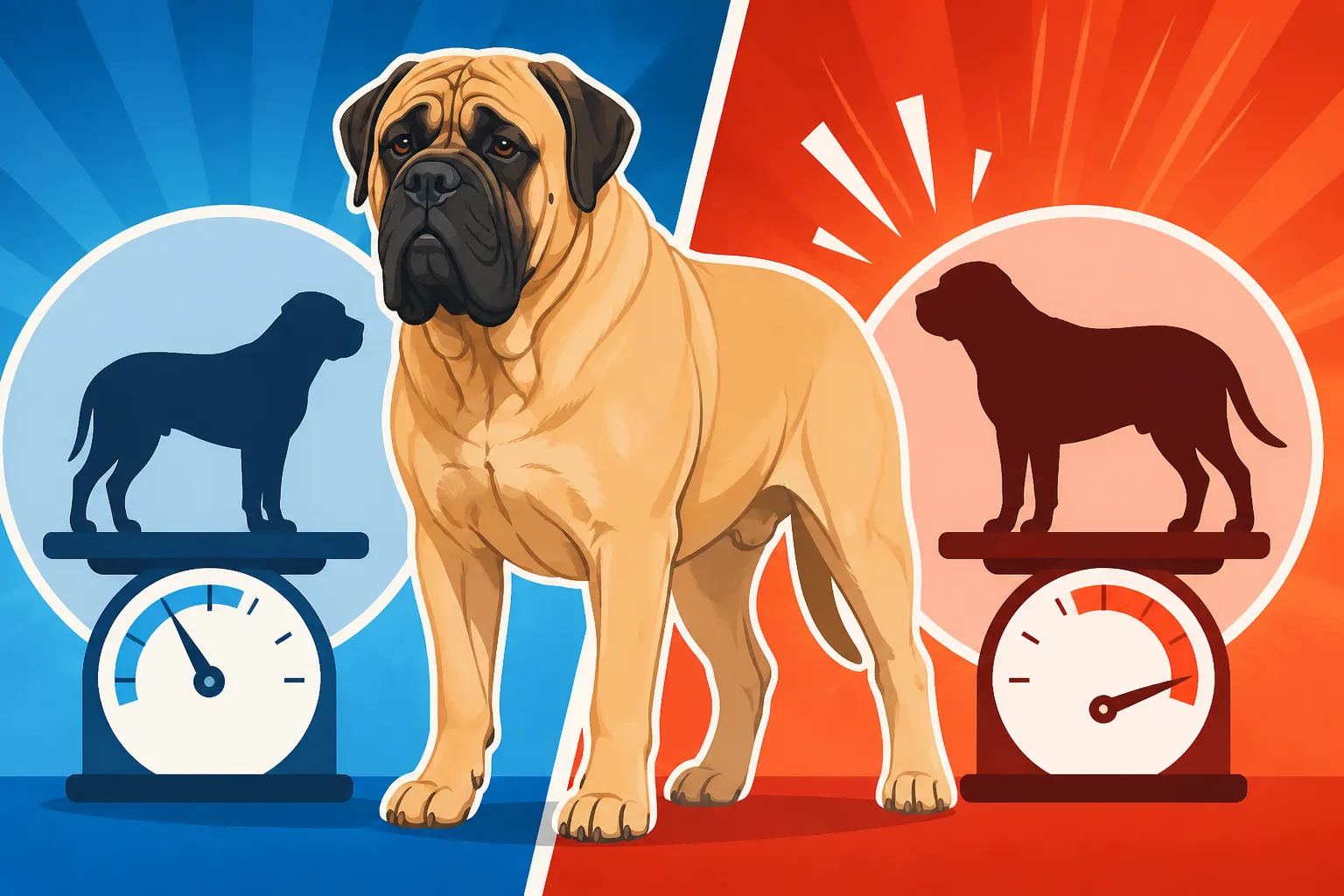
Whether a Mastiff Exceeds the Top Weight Band Entirely
One of the hidden frustrations of loving a truly giant dog like a Mastiff is the constant battle with the world of "standard" sizes and dosages. You bring home this magnificent creature, and soon discover that almost nothing is designed for a dog that can easily outweigh an adult human. This guide is here to walk you through the often-baffling reality of medication weight bands, and how your Mastiff often exceeds them entirely, leading to unique challenges and unexpected costs.
Understanding Weight Bands for Mastiff Medication
It's easy to assume that all veterinary medications come in a simple "small, medium, large" package, but once you delve into the specifics, you realize it's a much more complex, and often restrictive, system. For Mastiff owners, this system quickly reveals its limitations.
How Pharmaceutical Companies Determine Dosing
When pharmaceutical companies develop medications for animals, they conduct rigorous clinical trials to determine effective and safe dosages. They consider factors like a dog's metabolism, body composition, and potential side effects. The challenge is that these trials, by necessity, often focus on a broad spectrum of dog sizes, but rarely center on the extreme outliers. Most common domestic dog breeds fall into a certain weight range, and drug manufacturers design their products to cover the majority of that population. They aim for safe margins, ensuring that a dog at the lower end of a weight band isn't overdosed, and one at the higher end still receives an effective amount. This is a sensible approach for the vast majority of canines out there, but our Mastiffs, bless their enormous hearts, are simply not "the majority."
What this means for your Mastiff is that the dosages are rarely tailored with a two-hundred-pound dog in mind. The largest weight band might cover a Great Dane or a Saint Bernard, but even those magnificent breeds often fall short of a mature Mastiff's imposing mass. So, while the science behind drug development is sound, the practical application often leaves Mastiff owners scratching their heads and consulting their vets with very specific questions.
Common Preventives and Their Weight Categories
Think about the routine medications your Mastiff needs: monthly flea and tick preventives, heartworm medication, and periodic dewormers. These products almost universally come in pre-packaged doses corresponding to specific weight ranges. You'll see boxes for dogs 20-40 pounds, 40-80 pounds, and then perhaps a "large dog" category that goes up to 80-120 pounds, sometimes even 150 pounds if you're lucky. For many dog owners, this system works perfectly fine. Their Labrador or German Shepherd fits neatly into one of these tiers.
However, a healthy adult male Mastiff can easily weigh in at 180, 200, or even 230 pounds. Even a female Mastiff can tip the scales at 140-180 pounds. Immediately, you can see the problem: these standard weight categories simply don't accommodate the sheer bulk of our beloved giants. It's like trying to buy clothes for an elephant in a "large mammal" section designed for a pony. The standard options become inadequate, and you're left wondering how to administer the correct and safe amount of medication when your dog doesn't even fit on the chart.
Why Mastiffs Present a Unique Challenge
The issue isn't just that Mastiffs are big; it's that they are often significantly bigger than the upper limits of most standard medication weight bands. A "large breed" often maxes out around 100-120 pounds in a pharmaceutical context. This is where your Mastiff, who might be a full 80 to 100 pounds heavier than that top tier, becomes a unique dosing puzzle for you and your veterinarian.
This isn't a minor inconvenience; it's a genuine safety and efficacy concern. Giving too little medication could leave your Mastiff unprotected against parasites, while trying to guess a higher dose could risk an overdose. Furthermore, some medications are dosed by Why a Mastiff Is Dosed by Lean Weight and Not Scale Weight, which adds another layer of complexity when dealing with a breed prone to carrying a good deal of body mass. This is why having a strong, communicative relationship with your vet is absolutely paramount when owning a Mastiff. They are your primary resource for navigating these often uncharted waters of giant-breed care.
The Reality of Mastiff Size and Standard Dosing
Let's face it, living with a Mastiff means living outside the norm. This is never more apparent than when you're trying to figure out how to give them their monthly preventives or, heaven forbid, acute medication for an illness.
When a Mastiff Outgrows the Chart
Imagine standing at the veterinary counter, holding a box of heartworm medication for "dogs 100-150 lbs." Your beautiful, healthy male Mastiff just weighed in at 210 pounds. You look at the box, then back at the vet tech, and then probably back at the box with a sense of disbelief. This is a common scenario for Mastiff owners. Your dog hasn't just reached the top weight band; they've sprinted right past it and are still gaining speed.
Many oral medications, particularly those for flea, tick, and heartworm prevention, simply don't come in a single dose large enough for a mature Mastiff. You won't find a pill specifically formulated for a 200+ pound dog sitting on the shelf. This creates an immediate quandary: how do you ensure your Mastiff receives the full, effective dosage without overmedicating or compromising their safety? The standard charts, which work for most breeds, fall short when confronted with the magnificent scale of a Mastiff. This requires a different approach, one that often involves careful calculations and sometimes, a bit of creative problem-solving.
The "Two-Dose" Scenario
For many medications, when a Mastiff exceeds the largest available single dose, the solution often involves administering multiple doses from a lower weight band. For example, if the largest available single pill covers up to 100 pounds, and your Mastiff weighs 180 pounds, your vet might prescribe two of the 80-100 pound pills. This ensures your dog receives the appropriate active ingredient without having to guess or split pills, which can lead to inaccurate dosing. It's a pragmatic solution, but it's crucial that this strategy is always discussed and approved by your veterinarian, as not all medications are safe or effective when combined in this manner.
This "two-dose" approach becomes the norm for many routine preventives throughout your Mastiff's life. It's not ideal, as it adds a layer of complexity to administration and often means you're handling multiple pills. Some Mastiffs are incredibly cooperative when it comes to taking medication, while others require a bit more finesse, like hiding pills in a generous dollop of peanut butter or a specially prepared treat. Regardless of your dog's cooperation level, Whether a Mastiff Needs Two Doses of One Preventive is a very real possibility, and often a necessity, for our giants.
The Impact on Your Wallet
Here's where the reality of Mastiff ownership truly hits home. If your Mastiff consistently needs two doses of a particular medication because they've outgrown the weight charts, that effectively means you're paying for two doses every time. What might cost a Labrador owner one price for a month of flea and tick prevention could easily be double for you. This isn't a one-off expense; it's a recurring cost for the entire lifespan of your Mastiff.
Consider heartworm medication, which is a monthly necessity in many regions. If each dose costs a certain amount, and you need two, your monthly expense for that one preventive doubles. Over the course of a year, and then over your Mastiff's six to ten years, these doubled costs add up significantly. It's one of the many reasons why Why a Mastiff Costs More Per Year Than a Dog That Lives Twice as Long is a truism for this breed. These medication expenses are just one line item, but they illustrate a broader financial reality that potential Mastiff owners need to fully grasp before bringing one of these gentle giants home.
Navigating Dosage Challenges for Your Giant
Having a Mastiff means becoming an expert advocate for their unique needs, especially when it comes to their health and medication. It's not always straightforward, but with the right approach, you can ensure your big buddy gets the care they deserve.
Working Closely With Your Veterinarian
The absolute cornerstone of managing medication for a Mastiff that exceeds standard weight bands is an open and ongoing dialogue with your veterinarian. Your vet is the only one qualified to determine the appropriate and safe dosage for your specific dog. They understand the pharmacology of the drugs, your dog's health history, and can make informed decisions about combining doses or seeking alternatives. Never try to adjust dosages yourself based on internet research or assumptions. The consequences could be dire.
A good veterinarian will be accustomed to the challenges presented by giant breeds and will have strategies in place. They can explain exactly why a particular dose is chosen, discuss potential side effects, and help you troubleshoot administration issues. Don't be afraid to ask questions, voice concerns, and even ask for a written breakdown of the dosing schedule, especially if it involves multiple pills or unconventional approaches. Building a strong partnership with your vet is invaluable for navigating the health landscape of a Mastiff.
Sourcing and Administering Larger Doses
Once your vet has determined the correct dosage, the next step is actually acquiring and administering it. For medications that require two pills from a lower weight band, your vet clinic might be able to dispense them readily. Sometimes, for very large quantities or specific formulations, they might even order them in bulk or direct you to a reputable online pharmacy like Chewy where you can often find larger packs of preventives, though you'll still need a prescription.
Administering multiple pills to a massive dog can be a feat. Some Mastiffs are incredibly amenable to simply taking a pill with a treat. Others are master pill-avoiders. For these more discerning individuals, creative methods are key. Pill pockets, wrapping the pills in a piece of cheese or meat, or even mixing a crushed (if appropriate and vet-approved) tablet into a small amount of highly palatable wet food can work wonders. Be patient, be firm, and always ensure they've actually swallowed the medication before walking away.
Considering Alternatives and Custom Compounding
For some medications, if standard pills or combinations aren't feasible or available, your veterinarian might explore alternative formulations. This could include chewable tablets, topical applications (for flea/tick prevention, though less common for heartworm in very large dogs), or even injectable medications if they exist for the specific condition. These alternatives can sometimes simplify administration or be available in a wider range of dosages.
Another option for specific medications, especially those needed for ongoing conditions or precise dosing, is a compounding pharmacy. These pharmacies can custom-prepare medications in precise dosages and even different forms (liquids, flavored chews) tailored specifically for your Mastiff's weight and preferences. While custom compounding can be more expensive, it offers a level of precision that can be invaluable, particularly when dealing with medications that have a narrow therapeutic window. It's a conversation worth having with your vet if you encounter persistent dosing challenges.
Beyond Medication: Other Weight-Related Costs
While medication dosing is a critical area where a Mastiff's size impacts practical care and cost, it's certainly not the only one. Living with a truly giant breed permeates almost every aspect of ownership, leading to a cascade of considerations that often surprise first-time Mastiff parents.
The Scale of Everyday Supplies
It probably won't surprise you that everything else your Mastiff needs also scales up with their weight. Collars need to be extra wide and exceptionally strong, often requiring custom sizing or specialty brands. Harnesses aren't just for fashion; they're essential for managing a dog that can exert immense pulling power, and finding one that fits a Mastiff's deep chest and broad shoulders can be a quest. Beds aren't just soft cushions; they need to be orthopedic, durable, and large enough to comfortably support 150-200+ pounds of dog for years. Forget those flimsy pet store beds; a Mastiff will flatten them in a week.
Crates become less about containment and more about defining a personal space, and finding one that's truly spacious enough for a giant breed can be an adventure in itself. You might even find yourself asking Whether a Mastiff's Crate Fits Through a Doorway because standard models often don't. Even simple items like food and water bowls need to be heavy-duty, tip-resistant, and elevated to accommodate their height. Every single item for a Mastiff has to be bigger, stronger, and consequently, more expensive.
Insurance Implications for a Giant Breed
The sheer size and the associated health concerns of giant breeds often translate into higher pet insurance premiums. Insurers recognize that larger dogs tend to have shorter lifespans, are prone to certain orthopedic issues like hip and elbow dysplasia, and, as we've discussed, require larger doses of medication, all of which lead to higher veterinary bills. For a Mastiff, conditions like bloat, various cancers, and joint problems are unfortunately common, and treating them can be incredibly expensive.
When considering pet insurance, it's wise to look at plans that offer comprehensive coverage and have high annual payout limits. Providers like Healthy Paws are often recommended for their strong coverage options, which can be a lifesaver when facing the potentially astronomical costs of treating a Mastiff's health issues. While monthly premiums might seem steep, they can offer crucial financial protection against the sudden and often debilitating costs that can arise with a giant breed. Exploring options early, perhaps even before puppyhood, can help ensure you have coverage for unexpected events and conditions like those mentioned in Whether Pet Insurance Covers a Mastiff's Elbows.
Food Volume and Storage Considerations
A large dog needs a large amount of food, and a Mastiff is no exception. This isn't just about the cost of the food itself, but also the logistics of purchasing, transporting, and storing it. A Mastiff can easily go through a 30-40 pound bag of kibble in a couple of weeks, sometimes even faster depending on their activity level and specific nutritional needs. Buying food means frequent trips to the pet store or ordering online from retailers like Chewy in bulk to save money and ensure you never run out.
Then comes the challenge of storage. A month's supply for a Mastiff could be two large bags of kibble, which takes up a significant amount of pantry space. You'll need sturdy, airtight containers to keep it fresh and free from pests. If you're exploring fresh food options from services like Ollie, the volume and refrigeration requirements become even more substantial. It's not just How Much a Mastiff Eats in a Month; it's about the entire ecosystem of managing that much food for a discerning palate. Always consult with your vet about appropriate giant breed formulas to ensure your Mastiff gets the right balance of nutrients, especially during their critical growth phases, to avoid issues like overly rapid growth that can exacerbate joint problems.
Mastiff Medication Weight Band Comparison
To give you a clearer picture, here's a general idea of how typical medication weight bands stack up against the reality of a mature Mastiff. Keep in mind that exact ranges vary by specific medication and manufacturer.
| Medication Type / Weight Band | Small Dog (0-20 lbs) | Medium Dog (21-60 lbs) | Large Dog (61-100 lbs) | X-Large Dog (101-150 lbs) | Mastiff Reality (140-230+ lbs) |
|---|---|---|---|---|---|
| Flea/Tick Prevention | Single Tablet | Single Tablet | Single Tablet | Single Tablet (often max) | Exceeds Top Band; 1.5-2 Doses |
| Heartworm Prevention | Single Tablet | Single Tablet | Single Tablet | Single Tablet (often max) | Exceeds Top Band; 1.5-2 Doses |
| Dewormers | Single Tablet | Single Tablet | Single Tablet | Single Tablet (sometimes max) | Exceeds Top Band; 1.5-2 Doses |
| Pain/Anti-inflammatory | Single Tablet | Single Tablet | Single Tablet | Single Tablet | Often requires higher mg/kg doses, sometimes compounded or multiple pills |
| Antibiotics | Single Tablet | Single Tablet | Single Tablet | Single Tablet | Higher strength tablets or multiple pills per dose |
As you can see, for many essential medications, your Mastiff will routinely fall outside the "X-Large" category, necessitating creative solutions and often, multiple doses. This table visually reinforces the challenges discussed and highlights why owning a Mastiff means planning for the exceptional, not the ordinary.
Disclaimer
This article is for general informational purposes only and does not constitute professional advice. Laws, prices and regulations vary by location and change over time. Consult a qualified professional for guidance on your specific situation.