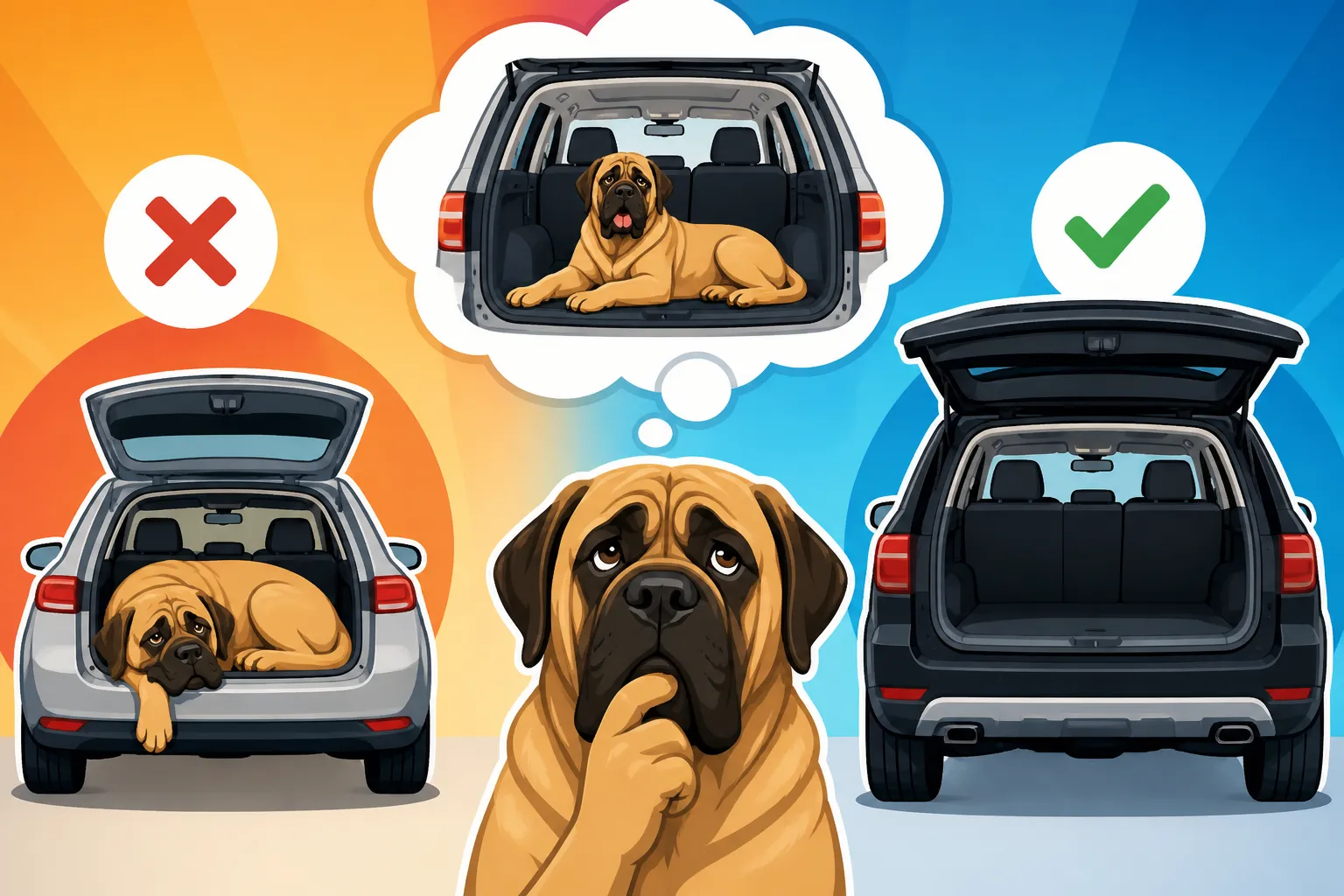
Whether a Mastiff Forces You to Buy a Bigger Vehicle
Bringing a magnificent Mastiff into your life is an absolute joy, but let's be realistic – these gentle giants come with their own unique set of considerations. One question that often sneaks up on new Mastiff owners, or those contemplating bringing one home, is whether their current vehicle is actually going to cut it for everyday life, let alone those longer trips. It's a valid concern, and this guide is here to help you navigate the realities of vehicle suitability when your furry family member could easily weigh as much as an adult human.
The Sheer Scale of a Mastiff
Let's start with the elephant in the room, or rather, the Mastiff in the living room. These dogs are truly colossal, and their size dictates much about their care, their living space, and yes, their transportation needs. Many people envision a large dog, but a Mastiff often exceeds those initial expectations, particularly when it comes to their sheer bulk and length.
Understanding a Mastiff's Adult Size
An adult male Mastiff can easily weigh between 160 to 230 pounds, and sometimes even more. Females are typically a bit smaller, ranging from 120 to 170 pounds, but they are still substantial animals. Picture yourself trying to comfortably fit two large Golden Retrievers into a space designed for one – that's often the scale we're talking about with a single Mastiff. Their height, standing over two feet at the shoulder, combined with their impressive length, means they can take up a surprising amount of floor space when lying down. They aren't just tall; they are long and wide, and that massive frame needs room to stretch out, especially on car rides, to avoid discomfort or even injury. Think about their head, which alone can be the size of a human head, and their paws, which are like small dinner plates. Every part of them is large, and this directly translates to the spatial requirements in a vehicle.
The Puppy Stage: They Don't Stay Small for Long
It's easy to be lulled into a false sense of security by an adorable Mastiff puppy. They start off small, just like any other breed, fitting perfectly into a passenger's lap or a small crate. However, this phase is incredibly short-lived. A Mastiff puppy can gain several pounds per week during its rapid growth phase. One moment you have a fluffy, manageable pup, and the next you have a quickly expanding adolescent who is already pushing the limits of your backseat. By six months, many Mastiffs already outweigh many adult medium-sized dogs. By a year, they are often the size of an adult Labrador, if not larger.
This rapid growth means that if you're planning for a Mastiff, you need to consider their adult size right from the start, rather than just what they'll fit into as a tiny puppy. Waiting until they are too big for your car before considering an upgrade can lead to stressful situations, especially for unexpected vet visits or essential socialization trips. It's not just about current convenience; it's about future necessity.
Why Weight and Bulk Matter More Than Height
While a Mastiff's height is certainly impressive, it's their combination of weight and bulk that truly challenges vehicle space. A tall, lanky dog might fit in a car, but a dense, heavy Mastiff requires both vertical and horizontal space. Their sheer mass means they don't just sit; they sprawl. They need ample floor space to lie down comfortably, which is often the most practical way for them to travel. A Mastiff crammed into a small space won't just be uncomfortable; it can become anxious, stressed, or even develop joint problems over time if forced into awkward positions during travel. Their large bone structure and heavy muscles need proper support. Consider the structural integrity of your vehicle's cargo area or even the stress placed on your suspension if you're frequently carrying a 200-pound animal and other passengers or gear. What a Mastiff's Weight Does to Every Line on the Vet Invoice is something you’ll quickly learn, and that includes the indirect costs of accommodating their size in daily life.
Evaluating Your Current Vehicle's Capacity
Before you rush out to the dealership, take a good, honest look at what you're currently driving. It might seem obvious to just measure the cargo area, but there are several often-overlooked aspects of your existing vehicle that play a crucial role in determining its Mastiff-friendliness.
Interior Space: Cargo Area vs. Backseat
Most people immediately think of the cargo area (the trunk or the very back of an SUV/hatchback) when considering dog transport. For a Mastiff, this area needs to be substantial. Ideally, your Mastiff should be able to lie down fully extended without their head or tail being jammed against a door or seat. This means not just length, but also width and enough height for them to sit up if they choose. A Mastiff crate, which is often recommended for safety, will take up an enormous amount of space, frequently requiring the removal of back seats entirely in smaller SUVs.
The backseat is another option, but it presents its own challenges. Even in full-size sedans, the backseat may not offer enough uninterrupted floor space for a Mastiff to lie down properly. Furthermore, a Mastiff on the backseat can become a projectile in an accident if not properly secured with a seatbelt harness or barrier. Consider whether the seats are flat enough for them to be comfortable, or if the deep contours of modern bucket seats will make it difficult for them to settle. Whether a Mastiff Crate Fits Through Your Doorway is a question that applies not just to your home, but often to your vehicle's cargo bay, too.
Door Openings and Headroom: The Unsung Challenges
This is where many owners get tripped up. It's not just about the overall interior volume; it's about how your Mastiff gets into that space. The width and height of your vehicle's door openings are critical. A Mastiff needs a wide enough opening to comfortably step in without scraping their hips or shoulders, and enough vertical clearance so they don't have to duck excessively. Sedans, even large ones, often have doorframes that are too restrictive for an adult Mastiff to enter gracefully, if at all.
Similarly, headroom inside the vehicle is important, especially if your Mastiff prefers to sit up for part of the journey. In some SUVs with sloped rear windows or lower rooflines, the cargo area might seem spacious at floor level but lack the necessary vertical clearance once your Mastiff is actually inside. You might find your Mastiff constantly bumping their head or having to crane their neck, which is neither safe nor comfortable.
Weight Limits and Suspension: More Than Just Passenger Count
While not as commonly discussed, the practical weight limits and suspension of your vehicle are worth considering, particularly for a Mastiff. A 150-200+ pound dog adds significant weight, equivalent to an adult passenger. If you frequently travel with your Mastiff, other family members, and luggage, you could be pushing your vehicle's gross vehicle weight rating (GVWR). Overloading can impact handling, braking, and tire wear, and in extreme cases, can even void your warranty or insurance.
Beyond safety, the added weight directly affects your vehicle's suspension. While a modern car can certainly handle the weight, continuously carrying a Mastiff in the cargo area can put extra strain on the rear suspension, potentially leading to premature wear on shocks, struts, and tires. This is less about immediate danger and more about long-term maintenance costs and ride comfort. A vehicle that sags noticeably in the back with your Mastiff aboard might be struggling.
Specific Vehicle Types and Mastiff Suitability
Now that we understand the demands a Mastiff places on a vehicle, let's look at how different vehicle types typically measure up. This isn't to say certain cars are impossible, but rather to give you a realistic expectation of what you might face.
Sedans and Smaller Cars: A Tight Squeeze or Impossible?
For most Mastiff owners, sedans and smaller compact cars are simply not practical. While a tiny Mastiff puppy might fit, an adult Mastiff will struggle immensely.
- Backseat: The backseat of a sedan rarely offers enough floor space for a Mastiff to lie down comfortably. The footwells are usually too deep, and the seat cushions too narrow and contoured. Furthermore, the limited headroom and restricted door openings make entry and exit awkward and potentially injurious for both dog and owner. Imagine trying to maneuver a large, heavy, and possibly reluctant Mastiff through a standard car door. It’s a recipe for scraped hips, torn upholstery, and frustrated sighs.
- Trunk Space: While a large sedan might have a spacious trunk, it's generally not a safe or acceptable place for any dog to travel due to lack of airflow, extreme temperatures, and collision risk. Even if it were modified for ventilation, the confined, dark space is unsuitable for a companion animal.
In most cases, if you own a sedan, especially a smaller one, and plan on regularly transporting your Mastiff, you'll find yourself needing to upgrade. It’s less about convenience and more about the dog's welfare and your own ability to safely manage them.
SUVs and Crossovers: The Go-To for Many Large Dog Owners
SUVs and larger crossovers are often the preferred choice for Mastiff owners, and for good reason. They offer a combination of space, accessibility, and often higher ground clearance which can be beneficial.
- Cargo Area: Larger SUVs, especially those with third-row seating that can fold flat or be removed, provide excellent cargo space. Models like the Chevrolet Suburban, Ford Expedition, or Toyota Sequoia typically offer enough room for even the largest Mastiff to stretch out comfortably. Even mid-size SUVs like the Honda Pilot or Subaru Ascent can work, though they might require the entire back row to be down for a large crate. Look for vehicles with a low lift-over height for the tailgate, which makes it easier for your Mastiff to hop in (or for you to assist them).
- Door Openings: SUVs generally have wider rear door openings and higher roofs, making it easier for a Mastiff to enter the passenger cabin if they're riding on a secured bench seat, or for access to the cargo area.
- Considerations: While SUVs are good, they aren't all equal. Crossovers, especially smaller ones, can still be tight. Always measure the cargo area, paying close attention to any wheel well intrusions or sloping rooflines that reduce usable space. Test the entry and exit points to ensure your Mastiff can manage them. Don't forget that if you secure your Mastiff in a crash-tested crate from a brand like Chewy might sell, you’ll need even more space than if they’re simply on a mat.
Minivans and Trucks: Unconventional but Highly Practical Options
While perhaps not as "glamorous" as some SUVs, minivans and pickup trucks offer incredibly practical solutions for Mastiff transportation.
- Minivans: Minivans are often unsung heroes for large dog owners. They boast enormous interior volume, often with configurable seating that can be folded flat or removed entirely, creating a vast, flat, and easily accessible cargo area. The low floor height and wide sliding doors make entry and exit exceptionally easy for Mastiffs, especially those who might struggle with jumping. Vehicles like the Honda Odyssey or Chrysler Pacifica offer unparalleled space for large crates or multiple Mastiffs. Plus, the climate control in minivans usually extends well into the rear, ensuring your Mastiff stays comfortable.
- Pickup Trucks: A pickup truck can be a fantastic option, but with significant caveats.
- Cab: A crew cab or quad cab truck can offer a surprisingly spacious backseat for a Mastiff, particularly if you remove the rear bench and install a custom platform. This allows the Mastiff to be inside the climate-controlled cabin, which is safer and more comfortable than the bed.
- Truck Bed: Transporting a Mastiff in an open truck bed is generally not recommended due to safety risks (e.g., jumping out, flying debris, extreme weather exposure). If absolutely necessary, they must be secured in a properly rated kennel that is bolted to the truck bed, and the weather must be mild. A truck cap or topper can provide a more enclosed and secure environment, but proper ventilation and temperature control are still paramount. Always use a ramp for entry and exit from the bed to protect your Mastiff's joints. Why Stairs Are Worse for a Mastiff Than Any Breed applies to truck beds just as much as household stairs.
| Vehicle Type | Pros for Mastiffs | Cons for Mastiffs | Overall Suitability |
|---|---|---|---|
| Sedans/Small Cars | Low initial cost (if you already own one) | Insufficient space, difficult entry/exit, unsafe | Poor |
| Crossovers | Better than sedans, more accessible cargo | Cargo space can still be tight for an adult Mastiff | Fair |
| Large SUVs | Ample cargo space, often good headroom, robust | Higher lift-over height, higher fuel consumption | Excellent |
| Minivans | Massive interior volume, easy entry/exit, climate control | Perceived image, less robust than large SUV | Excellent |
| Pickup Trucks | Spacious cab (crew/quad), versatile bed (with topper) | Open bed safety concerns, higher ground clearance for entry | Good (with caveats) |
Safety and Comfort Considerations
Getting your Mastiff into the car is one thing; ensuring they have a safe and comfortable ride is another. This is particularly important for a breed as large and sensitive as a Mastiff, where accidents or discomfort can have significant consequences.
Securing Your Mastiff for Travel
A Mastiff, unsecured in a vehicle, poses a severe safety risk to themselves and all occupants in the event of a sudden stop or collision. Their immense weight turns them into a projectile.
- Crash-Tested Crates: The safest option for any dog, especially a Mastiff, is a crash-tested travel crate. These crates are designed to withstand impact and protect your dog. However, finding one large enough for an adult Mastiff that also fits in your vehicle can be challenging. You might need one that is custom-made or designed for cargo vans. Ensure the crate is secured so it cannot shift or slide during travel.
- Seatbelt Harnesses: For Mastiffs traveling in the backseat, a crash-tested seatbelt harness can be a good alternative if a crate isn't feasible. This harness attaches to the vehicle's seatbelt system, keeping your dog restrained. Ensure it's properly fitted and rated for a dog of your Mastiff's size. Not all harnesses are created equal, so research reputable brands.
- Barriers: Cargo barriers can prevent your Mastiff from coming into the passenger cabin from the cargo area. While they prevent distraction and contain the dog, they do not protect the dog from impact forces. They are best used in conjunction with a crate or harness for maximum safety.
It's tempting to let them roam, or just sit beside you, but imagine your 200-pound Mastiff being thrown forward at 30 mph. The implications are severe.
Temperature Control and Airflow
Mastiffs, with their massive bodies and often short snouts, are susceptible to overheating. Ensuring proper temperature control and adequate airflow in the vehicle is paramount, especially on longer journeys or in warmer climates.
- Air Conditioning/Heating: Make sure your vehicle's climate control system is robust enough to cool or heat the entire space where your Mastiff is traveling. Some vehicles, particularly older models, have poor airflow to the rear cargo area.
- Ventilation: Even with AC, good ventilation is crucial. Consider window shades to prevent direct sunlight from heating up the cargo area. Never leave your Mastiff alone in a parked car, even for "just a minute," as internal temperatures can rise to dangerous levels incredibly quickly, leading to heatstroke. Heat and a Mastiff That Cannot Shed Its Own Bulk is a serious concern, even in a moving vehicle if not properly managed.
- Monitoring: On longer trips, periodically check your Mastiff for signs of overheating like excessive panting, drooling, or lethargy. Offer water breaks regularly.
Entry and Exit: Ramps and Lift Assistance
Given their size and propensity for joint issues like hip and elbow dysplasia, jumping in and out of a vehicle repeatedly can be detrimental to a Mastiff's health.
- Ramps: A sturdy dog ramp is an invaluable investment for any Mastiff owner. It allows your dog to walk into and out of the vehicle, reducing stress on their joints. Look for ramps that are wide, have good traction, and are rated to support the weight of an adult Mastiff (some are surprisingly flimsy for giants). Training your Mastiff to use a ramp calmly from a young age is highly recommended. Teaching a Mastiff to Use a Ramp can save you a lot of back pain and vet bills in the long run.
- Lift Assistance: For older Mastiffs or those with mobility issues, you might need to manually assist them. This often involves specialized harnesses with handles that allow you to support their weight as they get in or out. Remember, you cannot safely lift an entire adult Mastiff, so assistance is about leverage and support, not full bodily lifting. Lifting an Old Mastiff That Cannot Get Up is something you may face, and the same principles apply to getting them into a car.
Alternatives to a Full Vehicle Upgrade
Buying a new vehicle is a significant expense, and it's not always feasible. If you find your current car isn't quite Mastiff-ready, there are strategies you can employ before committing to a full upgrade.
Strategic Use of Existing Space
Sometimes, it's about making the most of what you have.
- Rear Seat Removal: In some SUVs or minivans, removing the back seats entirely (if they're designed to be removable) can create a surprisingly vast, flat space that's perfect for a Mastiff crate or a comfortable dog bed. This isn't practical for daily family use, but it can be an option for dedicated Mastiff transport.
- Cargo Area Modifications: Explore aftermarket cargo liners that cover the entire floor, including the back of the folded seats, to create a seamless, non-slip surface. Consider cargo nets or custom-built platforms to level out any uneven surfaces. You can also get durable, waterproof covers to protect your upholstery from drool, dirt, and shedding. Many pet supply stores and online retailers like Chewy offer a wide array of vehicle-specific accessories to help maximize and protect your space.
- One-Person Trips: If your Mastiff only travels with you, and you don't need the back seats for passengers, you can dedicate the entire rear of the vehicle to them, even if it means folding down all but the driver's seat.
Borrowing or Renting for Specific Trips
For infrequent long-distance travel, or for the occasional large vet visit where space is critical, consider borrowing or renting a suitable vehicle.
- Borrowing from Friends/Family: If a friend or family member owns a large SUV or minivan, they might be willing to lend it for specific Mastiff-related trips. Always ensure you return it clean and in good condition, perhaps even offering to fill the tank.
- Renting a Larger Vehicle: Car rental companies offer SUVs, minivans, and even cargo vans that could be perfect for a Mastiff. This allows you to have the right vehicle for a specific need without the commitment of ownership. Just be upfront with the rental company about transporting a large dog, and be prepared to thoroughly clean the vehicle to avoid extra charges. Many companies have specific pet policies.
Professional Pet Transport Services
For very long distances, or if you simply cannot manage to transport your Mastiff yourself, professional pet transport services are an option.
- Specialized Services: These companies specialize in safely moving animals, often over long distances. They use vehicles designed for pet comfort and safety, with climate control, secure crating, and experienced handlers. This can be particularly useful if you are moving cross-country or your Mastiff needs to travel without you.
- Veterinary Transport: Some veterinary clinics, especially specialty or emergency hospitals, offer transport services for large or critical patients. This might be an option for specific medical needs where your current vehicle simply isn't equipped to handle a very large, possibly incapacitated, dog. Remember that unforeseen medical expenses are a big part of Mastiff ownership; a good pet insurance plan from a provider like Healthy Paws can help with emergency transport costs if it's part of a covered event.
Long-Term Implications and Lifestyle Adjustments
Beyond the immediate question of "will my Mastiff fit?", consider how your vehicle choices will impact your daily life and your ability to enjoy activities with your dog over their lifetime. A Mastiff isn't just a pet; they become an integral part of your family, and their presence will shape many decisions, including how you get around.
Vet Visits and Emergencies
This is perhaps the most critical consideration. Mastiffs, unfortunately, are prone to various health issues throughout their lives, from joint problems to bloat. Regular vet visits are a given, but what about emergencies? Imagine your Mastiff suddenly showing signs of bloat and needing immediate transport to an emergency clinic. If they can't fit into your vehicle, or if the process of getting them in is slow and difficult, precious time can be lost.
- Planning Ahead: Ensure you have a plan for emergency transport. Know which local clinics have larger facilities or even specialized transport options for giant breeds. If your vehicle is truly inadequate, identify friends or family with suitable vehicles who could assist in a crisis.
- Comfort During Sickness: A sick or injured Mastiff needs a stable, comfortable, and accessible space in the car. Maneuvering them into a tight space will be difficult, painful for them, and potentially dangerous for you. This is where a spacious cargo area with a low entry point becomes invaluable.
Road Trips and Vacations
Many Mastiff owners love to include their dogs in family vacations and road trips. A suitable vehicle makes these adventures enjoyable, while an inadequate one can turn them into a stressful ordeal.
- Packing Space: A Mastiff takes up a lot of space. If they need their own crate or a dedicated sleeping area, this significantly reduces room for luggage, coolers, and other travel essentials. You'll need to consider how to pack for both humans and your colossal canine companion. Even something as simple as their food – if you feed a fresh diet like Ollie, you'll need to ensure you have space for their substantial portions and any necessary cooling.
- Breaks and Comfort: On long trips, your Mastiff will need regular breaks for potty, water, and stretching. A comfortable, secure space in the car helps them rest better between stops, arriving at your destination less stressed. An uncomfortable or cramped dog is a miserable travel companion.
Daily Errands and Social Outings
While your Mastiff might not join you for every grocery run, they will undoubtedly accompany you on trips to the dog park, training classes, playdates with other dog friends, or even just a short drive to a scenic trail.
- Convenience: Having a vehicle that your Mastiff can easily get in and out of makes these daily activities far more convenient and enjoyable for everyone. If every trip is a struggle, you might find yourself limiting outings, which isn't fair to a dog who thrives on companionship and moderate activity.
- Socialization: Especially for a Mastiff puppy, regular safe travel to new places is a crucial part of socialization. An accessible vehicle facilitates these experiences, helping them grow into well-adjusted adults. If your car isn't big enough, these opportunities become fewer, potentially leading to an undersocialized dog who struggles with new environments later in life. Socializing a Mastiff Puppy Before It Gets Heavy is important, and easy transport is key to that.
Ultimately, while a Mastiff might not force you to buy a bigger vehicle in every single scenario, the practicalities, safety, and comfort considerations for these magnificent dogs often lead owners to realize that a larger, more accommodating vehicle is not just a luxury, but a necessity for a harmonious and active life together.
Disclaimer
This article is for general informational purposes only and does not constitute professional advice. Laws, prices and regulations vary by location and change over time. Consult a qualified professional for guidance on your specific situation.