Whether the Standard Accepts a Brindle Mastiff
A brindle Mastiff can look dramatically different from a fawn or apricot dog, so it’s understandable to wonder whether the stripes count against the breed standard. They do not: brindle is an accepted Mastiff color, provided the dog’s pattern and other features fit the applicable standard. This guide explains what judges look for and what coat color can—and cannot—tell you.
Is brindle an accepted Mastiff color?
What the breed standard means by brindle
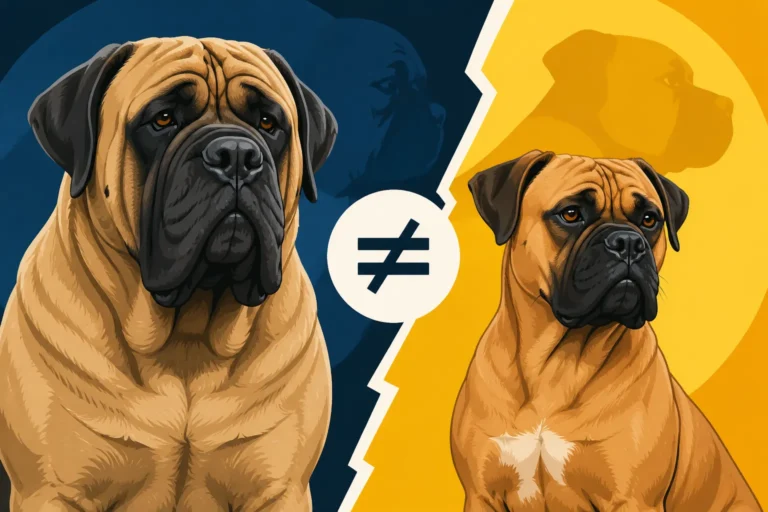
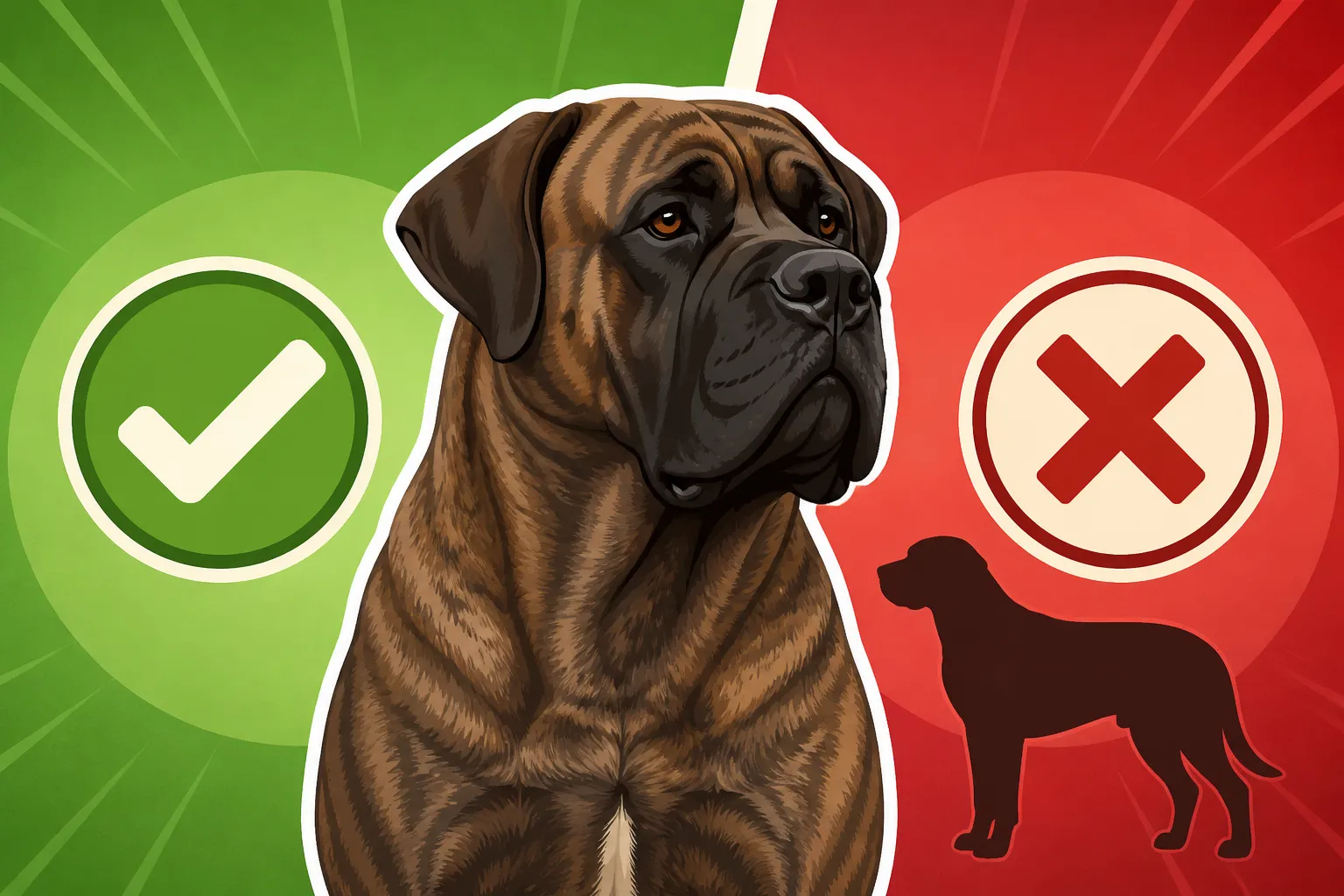
Yes. Brindle is an accepted color in the Mastiff standard used by the American Kennel Club. The pattern consists of dark stripes over a lighter ground color. That lighter base may be fawn or apricot-toned, and the stripes can vary in contrast: some brindle Mastiffs show a clear, bold pattern, while others look much darker overall.
The Mastiff is not accepted in only one shade. Fawn, apricot, and brindle are recognized colors, although terminology and wording can differ slightly between registries and countries. If you’re considering showing a dog, check the standard for the specific registry and event rather than relying on a general description. Which Colors the Mastiff Standard Allows explains the other recognized shades in more detail.
Brindle describes a coat pattern, not a separate type of Mastiff. A dog doesn’t become less of a Mastiff because its coat has stripes, and the pattern alone does not establish that a dog is purebred. It simply tells you how the coat looks. For more on the range of accepted shades, see The Colors a Mastiff Comes In.
How a judge assesses a brindle coat
A judge considers the dog as a whole, not just the stripe pattern. Coat color is one part of the breed standard, alongside structure, movement, head, temperament, and other features. A brindle dog can have an appealing, correct coat and still be less suited to conformation showing if other important traits don’t meet the standard.
The pattern itself needn’t be perfectly even or identical from one side of the dog to the other. Brindle markings can look more pronounced across the body and less obvious on the legs or face. The coat may also appear almost black in some light, especially when the dark striping is dense. Looking in natural daylight can help you see the underlying base color and pattern more clearly than a quick indoor snapshot.
A black mask is also an important part of the Mastiff’s appearance. The standard calls for dark coloring on the muzzle, ears, nose, and eye rims, creating the familiar masked expression. A brindle coat does not replace that requirement. Why a Mastiff Must Have a Black Mask covers this feature and how it relates to the breed’s overall look.
| Coat appearance | How to understand it | What to check |
|---|---|---|
| Dark stripes over a lighter coat | Brindle pattern, an accepted Mastiff color | Look for the lighter base color in good light |
| Mostly dark coat with subtle stripes | May be a very dark brindle | Check whether stripes are visible rather than assuming the coat is solid black |
| Fawn, apricot, or silver-fawn appearance | Other commonly described Mastiff shades | Compare the dog with the standard used by its registry |
| White markings | Their acceptability depends on the applicable standard and extent | Review the specific registry wording, especially for showing |
What to look for in a brindle Mastiff
Brindle can change how dark the dog appears
The contrast between stripes and base color varies. A dog with widely spaced dark stripes on a pale fawn base may read as obviously brindle at a glance. Another dog may have dense, heavy striping that makes its coat seem nearly black from across the room. That darker impression doesn’t necessarily mean the dog is a solid-black Mastiff.
If you’re trying to judge the pattern, part the coat gently or look at the dog in even daylight. Avoid using one photo as your only reference: shadows, camera exposure, and indoor lighting can make a brindle coat look much darker or flatter than it is. Ask for clear photographs from more than one angle, ideally including the shoulders, sides, and hindquarters.
Color can also shift in appearance as a puppy grows. The pattern may seem more or less distinct as the coat develops, and lighting can exaggerate those changes. A puppy’s mask can change in appearance too, which is why a single early photograph may not show exactly how the adult dog will look. For related details, read How a Mastiff Puppy's Mask Changes and How a Mastiff's Color Changes With Age.
Don’t confuse “not a standard color” with “not a purebred dog”
A coat that falls outside a particular show standard does not, by itself, prove a dog is mixed breed. Breed standards describe the traits preferred or accepted for conformation; they are not a genetic test. Likewise, an accepted brindle coat does not prove that a dog is purebred. If pedigree matters to you, review registration and parentage information rather than treating color as proof.
This distinction is useful when comparing puppies. A breeder may describe a puppy as pet quality because of a show-related trait, or simply because the puppy is being placed as a companion. Ask what the breeder means by that description and whether it refers to color, structure, temperament, or another factor. A coat description alone doesn’t tell you whether the dog is healthy, well bred, or a good match for your household.
It’s also easy to mistake a very dark brindle for a solid-black dog. The Mastiff standard recognizes brindle, but solid black is not listed among the standard colors in the same way. That difference matters when discussing conformation eligibility, but it should not be used as a shortcut for deciding ancestry. Whether a Black Mastiff Is Purebred explains why coat color alone cannot settle that question.
White markings and other details
People often focus on the stripes and overlook the rest of the coat. If a brindle Mastiff has white markings, check the exact standard that applies to the dog. Standards may describe the acceptability of white markings differently, and the amount and placement can matter in the show ring. When the goal is showing, ask an experienced breed mentor or the relevant registry for a precise interpretation.
For a family choosing a companion, a small difference in markings is usually less important than responsible breeding, sound temperament, and appropriate care. A puppy with a marking that isn’t preferred for showing can still be a much-loved pet. Ask the breeder to explain any show-related concern clearly, rather than accepting vague claims that a puppy is “wrong” or “rare.”
The coat itself is short and generally straightforward to maintain, but a Mastiff still sheds and benefits from regular brushing. Some owners keep a rubber curry brush and basic grooming supplies on hand, buying them from a local shop or a retailer such as Chewy. Grooming won’t change whether a coat is standard, but it can remove loose hair and make the dog’s natural pattern easier to see.
Choosing and caring for a brindle Mastiff
Questions to ask a breeder
If you’re speaking with a breeder about a brindle puppy, ask for the registered names or identification details of the parents and information about the litter. Request clear photographs in natural light and ask how the breeder describes each puppy’s color. A careful breeder should be able to explain the coat without presenting the pattern as a guarantee of health, temperament, or adult size.
It’s sensible to ask what the breeder means if they call a puppy unusually dark, unusually marked, or unsuitable for showing. They may be referring to coat color, a structural feature, or a personal placement preference. Ask for the explanation in plain language. If you’re interested in showing, you can also ask whether the breeder can connect you with someone familiar with Mastiff conformation.
Most importantly, don’t let an attractive coat distract you from the broader questions. Ask about health screening, how puppies are raised, the parents’ temperaments, and what support the breeder provides after placement. Coat color is easy to notice; long-term health and a good fit for your home deserve at least as much attention.
Routine coat care
Brindle does not require a special grooming routine. Brush regularly to lift loose hair and check the skin, especially around areas where folds or friction can make it harder to notice irritation. If a bath is needed, use a dog-safe shampoo and dry the coat and folds thoroughly. Owners who prefer to order grooming basics online may use Chewy or another retailer, but choose products for the dog’s skin and coat needs rather than because they promise to enhance color.
A simple grooming habit also gives you a chance to notice changes. Look for new patches of hair loss, persistent itching, redness, or a change in the skin’s smell. Those signs are not a coat-color issue; they may need veterinary attention. Don’t apply human hair dye or color-enhancing products to make the stripes stand out. They are unnecessary and may irritate a dog’s skin.
For comparison photos, take pictures in soft daylight against a neutral background. This is more useful than using a filter or bright artificial lighting, which can make the base shade look inaccurate. If you’re sharing pictures with a breeder, show judge, or veterinarian, include more than one view and avoid editing the coat.
What color cannot tell you
A brindle pattern cannot tell you how large a Mastiff will become, whether the dog will have a particular temperament, or whether it will be healthy. Those questions call for different information: growth history and parent size, careful observation of behavior, and relevant health records. Color is a visible trait, not a substitute for those checks. For one aspect of size expectations, see Whether Parent Size Predicts a Mastiff's Adult Weight.
When buying basic supplies for a new dog, coat color should not drive every choice. A brush that suits the coat, a comfortable collar, and practical cleaning supplies are more useful than products marketed around a particular shade. Chewy may be one place owners look for everyday pet supplies, but the priority is selecting items that fit the individual dog and are safe to use.
If the dog is being considered for conformation, distinguish between a standard describing an ideal and a verdict about the dog’s worth as a companion. A brindle Mastiff is an accepted color, but each dog is assessed as an individual. For a pet home, responsible breeding and a good match matter far more than whether every marking would be favored in a show ring.
Disclaimer
This article is for general informational purposes only and does not constitute professional advice. Laws, prices and regulations vary by location and change over time. Consult a qualified professional for guidance on your specific situation.