The Mastiff Against a Bullmastiff
Choosing between a Mastiff and a Bullmastiff can feel like a daunting task, especially when you're drawn to the undeniable majesty of giant breeds. Many prospective owners find themselves captivated by both, but struggle to understand the nuanced differences in their history, temperament, and daily needs. This guide aims to clear up that confusion, offering a comprehensive comparison to help you determine which of these magnificent guardians will best fit into your life and home.
The Ancestry That Shaped Two Giant Breeds
Understanding the lineage of the Mastiff and the Bullmastiff is key to appreciating their distinct characteristics today. While both share a common large-breed heritage, their specific breeding purposes diverged significantly, leading to the unique traits we recognize.
The Ancient Roots of the Mastiff
The Mastiff, often referred to as the Old English Mastiff, boasts a history that stretches back millennia. Imagine ancient warriors marching across vast lands, accompanied by colossal dogs bred for protection and, sometimes, warfare. These dogs were the progenitors of what we now know as the Mastiff. They were historically used in Britain as estate guardians, protecting against poachers and predators, and even saw use in the arena in Roman times. The Mastiff That Stood Over Sir Piers Legh at Agincourt is a classic example of the breed's historical role. Their formidable size and imposing presence were their primary tools, allowing them to deter threats simply by existing. They weren't necessarily expected to engage in swift, aggressive action, but rather to stand their ground, a living, breathing fortress. This long history of being a deterrent, a sentinel, has imbued the modern Mastiff with its characteristic calm, dignified, and somewhat aloof nature. They were designed to be large, quiet observers, only acting when absolutely necessary.
The Bullmastiff's Gamekeeper Origins
The Bullmastiff, in contrast, is a much newer breed, emerging in 19th-century England. Its creation was a direct response to a very specific need: gamekeepers required a dog that could track and apprehend poachers on vast estates. The old Mastiff was a deterrent, yes, but often too slow to catch a fleeing human. Bull Terriers or Bulldogs, while tenacious, lacked the intimidating size and strength to hold an adult man without causing severe injury. So, gamekeepers began carefully crossing the Mastiff with the Bulldog, seeking to combine the Mastiff's size and guarding instinct with the Bulldog's agility, fearlessness, and strong grip. The result was the "Gamekeeper's Night Dog"—a powerful, silent, and swift guardian capable of tracking, catching, and holding a poacher without mauling them. This specific job description deeply ingrained in the Bullmastiff its distinct temperament: watchful, courageous, and with a pronounced protective drive, but also agile and focused on action rather than just presence.
Comparing Physical Presence: Size, Build, and Features
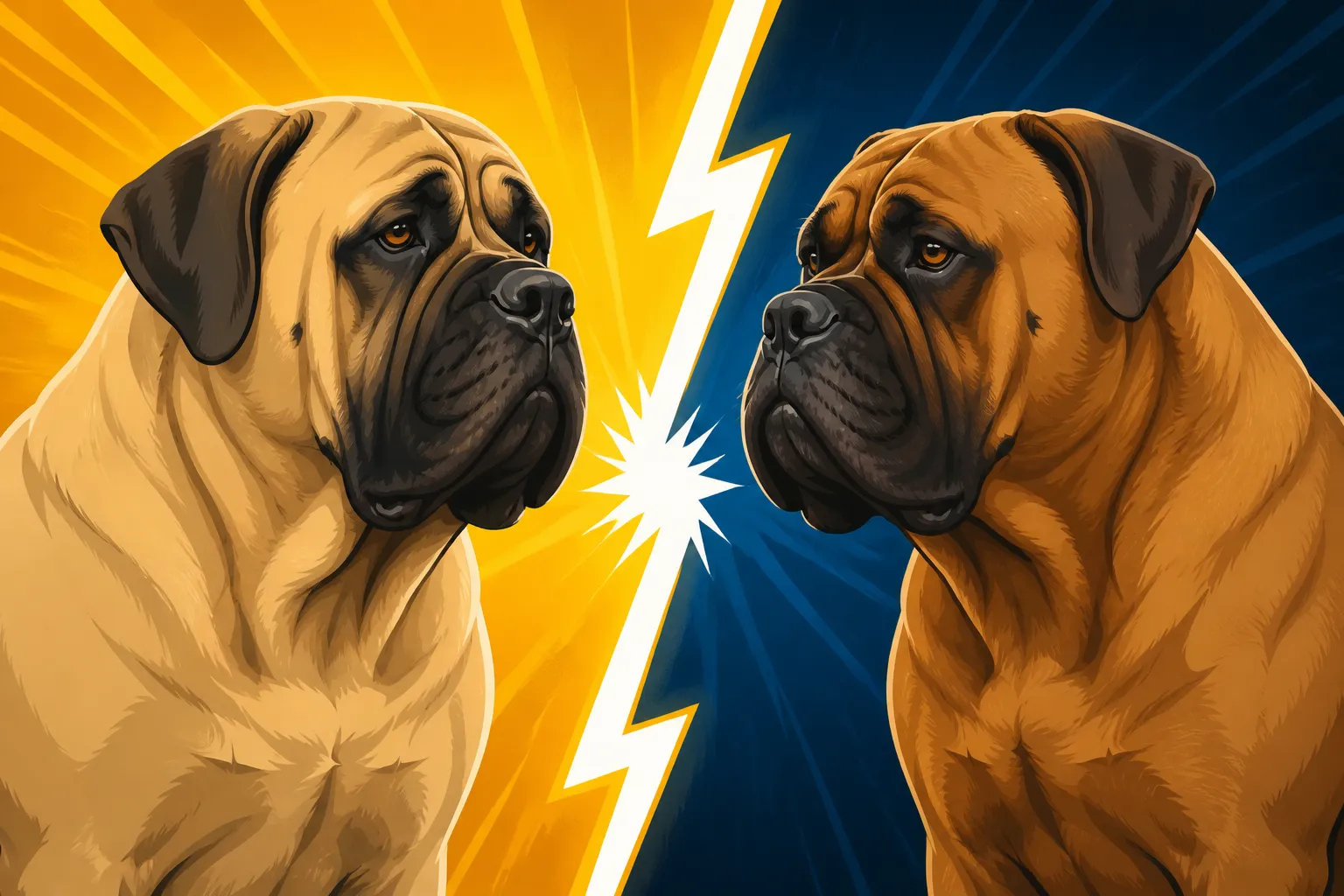
When you see a Mastiff next to a Bullmastiff, the differences are often immediately apparent, though both are undeniably large and powerful dogs. Each breed possesses a unique silhouette and set of physical traits that reflect its history and function.
Head, Muzzle, and Facial Features
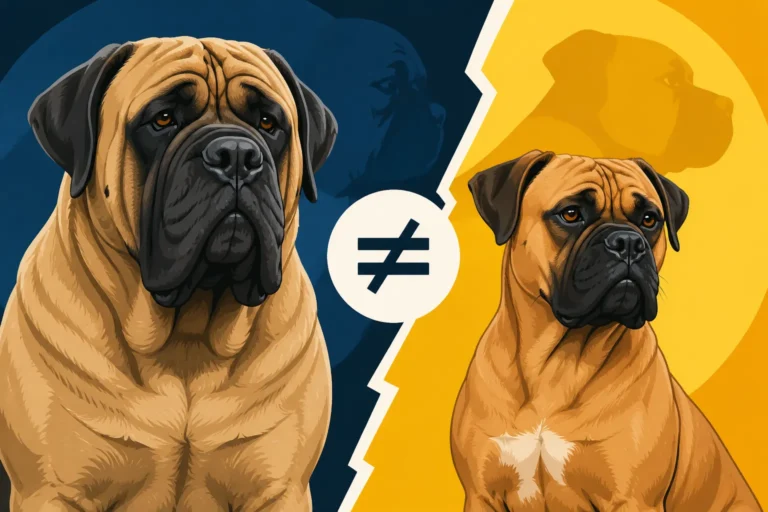
The Mastiff's head is truly massive, often described as square and blocky. It’s wide and deep, with a well-defined stop. The muzzle is broad and relatively short compared to the skull, usually dark, and adorned with characteristic wrinkles, especially around the forehead and eyes. These wrinkles, combined with pendulous jowls, contribute to their benevolent, somewhat melancholic expression, and, let's be honest, their legendary drool factor. Their eyes are medium-sized and hazel or darker, set wide apart, contributing to that gentle, watchful gaze.
The Bullmastiff also has a broad, powerful head, but it's generally less massive and more refined than the Mastiff's. Their muzzle is shorter, proportionally about one-third the length of the entire head, and typically wider than it is long, with strong, muscular jaws. While they also have a distinct stop and may have some wrinkles, especially when alert, they typically exhibit fewer pronounced folds than the Mastiff. Their jowls are less pendulous, leading to less drooling, which can be a significant factor for some owners! Their dark eyes are set medium apart, conveying an alert and intelligent expression, often appearing more serious and intense than their Mastiff cousins.
Overall Size and Weight Differences
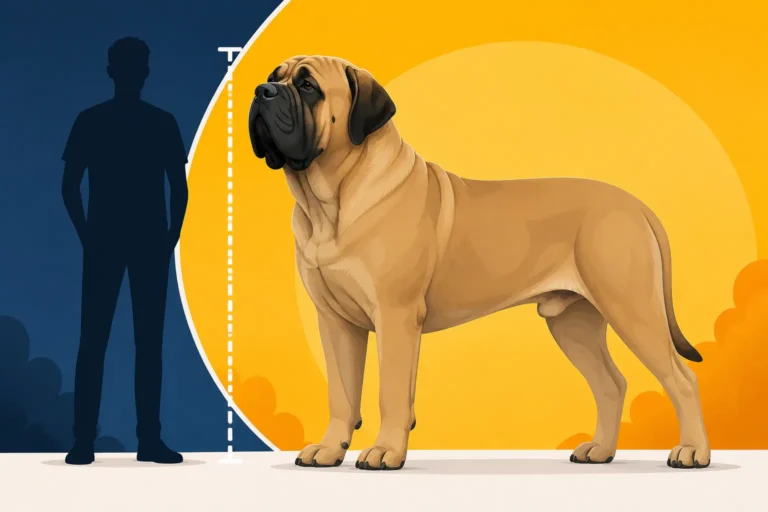
This is often where the most significant visual distinction lies. The Mastiff is, quite simply, one of the largest and heaviest dog breeds in the world. Adult male Mastiffs routinely tip the scales well over 160 pounds, often reaching upwards of 200 to 230 pounds, and sometimes even more. Females are substantial too, generally between 120 and 170 pounds. They possess immense bone structure and bulk, standing tall and deep-chested. When thinking about their size, consider What a Mastiff Actually Weighs – it's a colossal amount of dog. This sheer size and weight contributes to their slower, more deliberate movement and their presence as a living, breathing deterrent.
The Bullmastiff, while still a giant breed, is considerably smaller and more agile than the Mastiff. Males typically weigh between 110 and 130 pounds, with females ranging from 100 to 120 pounds. Their build is powerful and muscular, conveying strength and athleticism rather than just bulk. They stand a few inches shorter at the shoulder than a Mastiff, and their frame is designed for speed and power, aligning with their history of apprehending poachers. While they are large, they don't carry the same overwhelming mass as a Mastiff, making them somewhat more manageable in terms of sheer physical presence.
| Feature | Mastiff | Bullmastiff |
|---|---|---|
| Average Male Weight | 160-230+ lbs (72-104+ kg) | 110-130 lbs (50-59 kg) |
| Average Female Weight | 120-170 lbs (54-77 kg) | 100-120 lbs (45-54 kg) |
| Height (Shoulder) | 27-30+ inches (69-76+ cm) | 25-27 inches (64-69 cm) |
| Head | Massive, square, deep; pronounced wrinkles | Broad, powerful; fewer wrinkles |
| Muzzle | Broad, relatively short, dark; pendulous jowls | Short, wide, strong jaws; less pendulous jowls |
| Body Build | Immense bone, bulk; deep chest | Muscular, powerful; athletic |
| Movement | Slower, deliberate, stately | More agile, powerful, purposeful |
| Drooling | Significant | Moderate |
Coat, Color, and Grooming Needs
Both breeds share a similar short, dense, and close-lying coat that is relatively low maintenance in terms of brushing, but don't be fooled into thinking they don't shed. Oh, they shed! Expect a steady stream of hair, especially during seasonal changes. A good quality grooming brush and a handheld vacuum will become your best friends. Regular brushing helps to distribute natural oils and remove loose hair.
The Mastiff comes in several recognized colors: fawn, apricot, and brindle. All Mastiffs should have a black mask, extending up the muzzle, around the eyes, and often covering the ears. Their skin is looser, especially around the head and neck, which can contribute to more prominent wrinkles. These wrinkles, particularly around the face and jowls, require regular cleaning to prevent moisture and debris from accumulating, which can lead to skin infections. Using gentle, unscented wipes or a damp cloth followed by thorough drying is essential. Products like those found on Chewy for sensitive skin might be helpful here. The Wrinkles and Folds a Mastiff Owner Cleans Every Week is a crucial read for any potential Mastiff owner.
Bullmastiffs also come in fawn, red, and brindle, and like the Mastiff, they must have a black mask. Their coat tends to be a bit harsher to the touch, and their skin is generally tighter than a Mastiff's, meaning fewer deep wrinkles to contend with. While they still have facial folds, they are typically less pronounced, translating to less drool cleanup and less intensive wrinkle care compared to their larger relatives. Regular nail trims are paramount for both breeds, given their size and potential for joint issues if nails get too long.
Understanding Their Distinct Temperaments and Protective Natures
While both Mastiffs and Bullmastiffs are known for their protective instincts and deep loyalty to their families, the way these traits manifest can differ significantly due to their divergent historical roles.
Family Loyalty and Affection
Mastiffs are often described as "gentle giants" and are renowned for their profound affection and devotion to their families. They thrive on companionship and want to be involved in all household activities, often choosing to be in the same room as their people, even if just to snooze quietly. They are typically calm and patient, forming strong bonds with every member of the family, including children, though their sheer size necessitates careful supervision with very young ones. A Mastiff will lean into you, demanding full body contact, and their affection is boundless. They might not be overtly playful as adults, preferring quiet presence, but their love is undeniable. They are truly sensitive souls, and The Sensitivity Nobody Expects in a Two Hundred Pound Mastiff explores this aspect beautifully.
Bullmastiffs are equally loyal and devoted to their families, but their affection often comes with a more pronounced "watchdog" edge. They bond very strongly with their human family and are generally quite tolerant and protective of children within their own household. However, their instinct to guard is often more active than a Mastiff's. They enjoy being part of family life and can be quite playful, especially when young, but they retain a serious, alert demeanor, always observing their surroundings. Their affection is often expressed through watchful presence and a readiness to intervene if they perceive a threat, rather than just quiet companionship. They are truly "shadows" to their owners, following them from room to room, always aware.
Guarding Instincts and Stranger Sociability
The Mastiff's guarding style is primarily one of deterrence. Their colossal size and imposing presence are usually enough to make any intruder think twice. They are naturally watchful but not typically overtly aggressive. A well-socialized Mastiff will often observe strangers with a calm, discerning eye, typically remaining aloof rather than engaging. They tend to let their owners handle interactions, standing by as a silent, powerful presence. However, if a threat is perceived against their family, their protective instinct can kick in with formidable force. But their default is usually "wait and see." How a Mastiff Judges a Stranger at the Door offers more insight into this behavior.
The Bullmastiff, on the other hand, was bred specifically to apprehend intruders. Their guarding instinct is much more pronounced and active. They are naturally suspicious of strangers and will often position themselves between their family and any perceived threat. While they are not usually nuisance barkers, their bark is deep and authoritative when they do sound the alarm. If a threat persists, a Bullmastiff is much more likely to take physical action, using their strength and agility to corner or hold an intruder. Early and consistent socialization is absolutely critical for a Bullmastiff to ensure they distinguish between real threats and innocent visitors. Without it, their natural wariness can become problematic. They excel as guardians, but this intensity requires a confident, experienced owner who understands how to manage it.
Energy Levels and Playfulness
Mastiffs are notoriously low-energy dogs, especially once they are out of their rambunctious (but still relatively sedate) puppy phase. They are content with short, leisurely walks and prefer napping on the sofa to chasing balls for hours. Their exercise needs are minimal, largely due to their immense size and the strain prolonged activity can put on their joints. Think of them as large, furry rugs that occasionally wander into another room. While they do enjoy a good chew toy or a brief romp in the yard, sustained, high-intensity play is generally not their forte.
Bullmastiffs possess a moderate energy level. They are more active and playful than Mastiffs, particularly during their younger years. They enjoy longer walks, play sessions in the yard, and can excel in activities like obedience or scent work. While they aren't hyperactive, they do require consistent mental and physical stimulation to prevent boredom and potential destructive behaviors. They are powerful and agile, capable of bursts of speed, and enjoy engaging with their owners in more active ways. They need a good daily walk and structured playtime to be happy and well-adjusted.
Training and Exercise: What Each Breed Demands
Both breeds are intelligent, but their motivation and physical capabilities mean their training and exercise needs differ substantially. Understanding these differences is crucial for effective ownership.
Early Socialization and Puppy Training
For both Mastiffs and Bullmastiffs, early and extensive socialization is non-negotiable. Exposing them to a wide variety of sights, sounds, people, and other well-behaved dogs during their critical puppyhood window (up to about 16 weeks) is paramount. This helps them develop into confident, well-adjusted adults rather than fearful or overly reactive giants. Puppy classes are an excellent idea.
For the Mastiff, early training focuses on manners and confidence. Given their eventual size, teaching them not to jump, pull on the leash, or lean excessively starts from day one. Teaching a Mastiff Before It Outweighs You is not just a clever phrase; it's a literal necessity. Their sensitive nature means positive reinforcement methods work best, building trust and cooperation rather than forcing compliance. Harsh corrections can make them shut down or become stubborn.
Bullmastiffs also thrive on positive reinforcement, but their innate protective drive means socialization must be particularly thorough. They need to learn that not every stranger is a threat and that new situations are generally safe. Early training should focus on impulse control, clear boundaries, and polite greetings. Their strong will and intelligence mean they catch on quickly, but consistent, firm, and fair handling is key to guiding their protective instincts properly.
Daily Exercise Requirements and Activity
As mentioned, Mastiffs are not high-energy dogs. A couple of short, leisurely walks a day (20-30 minutes each) are usually sufficient for an adult. Over-exercising a Mastiff, especially as a puppy or young dog, can be detrimental to their developing joints. Structured, hard exercise is a recipe for orthopedic issues down the line. Why a Mastiff Puppy Must Not Be Exercised Hard explains this critical aspect. They are prone to overheating due to their bulk, so walks should be avoided during the hottest parts of the day. Mental stimulation through puzzle toys or brief training sessions can complement their minimal physical needs.
Bullmastiffs require more exercise than Mastiffs, but they are still not endurance athletes. About 45-60 minutes of moderate activity per day, spread across a couple of walks or vigorous play sessions, is usually adequate. They enjoy having a fenced yard to explore and patrol. Activities like fetching a ball (in moderation to protect joints), brisk walks, or even a bit of light jogging (once fully grown and cleared by a vet) can keep them physically and mentally stimulated. Like Mastiffs, care should be taken with intense exercise in hot weather, but their more athletic build allows for a wider range of activities.
Handling Strength and Leash Manners
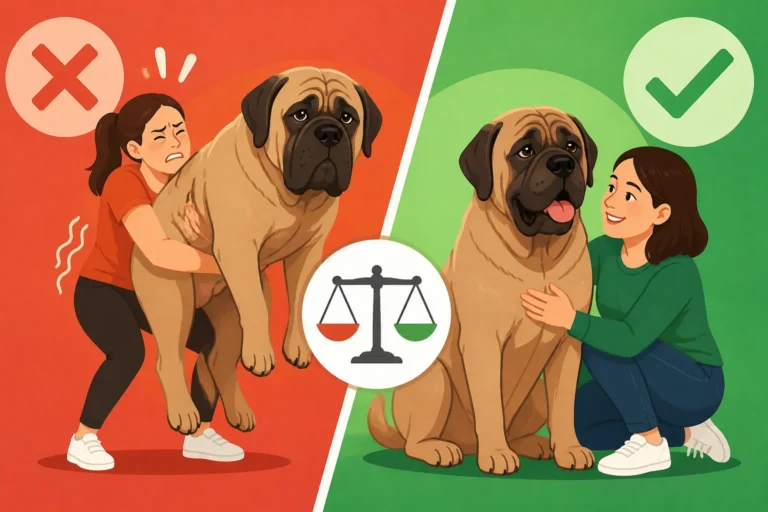
Regardless of which breed you choose, you will be handling a large, powerful dog. Whether a Mastiff Can Be Walked by One Person is a common question, and the answer, for both breeds, depends heavily on training and equipment. Even a well-behaved giant can exert immense force.
Mastiffs are less prone to pulling with sustained effort once trained, but their sheer weight means even a slight lean can be difficult to manage. Training them to walk politely on a leash from puppyhood is paramount. Tools like front-clip harnesses can be invaluable in managing their strength during walks. Their deliberate nature means they can also "plant" themselves and refuse to move if they decide something is not worth their effort, a behavior that can be challenging to overcome with sheer force.
Bullmastiffs, being more agile and driven, can be powerful pullers if not properly trained. Their strength and muscle mass mean they can easily overpower an unprepared owner. Leash training must be a priority, focusing on loose-leash walking and responding to cues. A sturdy harness and a strong leash are essential. Their gamekeeper heritage means they can have a strong prey drive, so recall training and secure leash walking are critical for their safety and the safety of others.
Health and Lifespan: Common Concerns for Each Breed
Both Mastiffs and Bullmastiffs, as giant breeds, share a propensity for certain health issues and unfortunately have shorter lifespans than many smaller dogs. Awareness of these issues is crucial for responsible ownership and proactive veterinary care.
Orthopedic Issues and Joint Health
Large and giant breeds are notoriously susceptible to orthopedic problems, and Mastiffs and Bullmastiffs are no exception. Hip and elbow dysplasia are significant concerns for both. These conditions involve malformation of the hip or elbow joints, leading to pain, arthritis, and mobility issues. Responsible breeders will screen their breeding stock for these conditions through certifications like those from the Orthopedic Foundation for Animals (OFA). For example, Elbow Dysplasia Affects One Mastiff in Seven highlights the prevalence in Mastiffs.
Owners must take great care in managing their giant puppy's growth. This includes feeding a high-quality large-breed puppy food designed to promote slow, steady growth, avoiding over-nutrition, and restricting strenuous exercise until their growth plates have closed, usually around 18-24 months of age. Maintaining a lean body condition throughout their lives is also critical to minimize stress on their joints. Supplements for joint health, such as glucosamine and chondroitin, might be recommended by your vet as they age.
Bloat and Digestive Sensitivities
Gastric Dilatation-Volvulus (GDV), commonly known as bloat, is a life-threatening condition that affects deep-chested breeds, including both Mastiffs and Bullmastiffs. In bloat, the stomach fills with gas and can twist, cutting off blood supply and leading to rapid deterioration. Symptoms include restlessness, unproductive retching, abdominal distension, and pain. It's a true emergency, and immediate veterinary intervention is required. Why the Mastiff Has the Deepest Chest of Any Breed makes them particularly vulnerable.
To reduce the risk of bloat, owners are often advised to feed multiple smaller meals rather than one large one, avoid vigorous exercise immediately before or after eating, and manage stress. Some owners opt for a prophylactic gastropexy, a surgical procedure that tacks the stomach to the abdominal wall, usually done during neutering/spaying, to prevent stomach torsion. While it doesn't prevent bloat (gas accumulation), it drastically reduces the chance of the stomach twisting, which is the most dangerous aspect. Both breeds can also have sensitive digestive systems, sometimes requiring careful diet management.
Average Lifespan Expectations
This is often a heartbreaking reality for giant breed owners: their beloved companions typically don't live as long as smaller dogs. Mastiffs generally have a shorter lifespan, often ranging from 6 to 10 years. Six to Ten Years Is What a Mastiff Gets is a realistic expectation. Their immense size and the associated health challenges, particularly orthopedic issues and certain cancers, contribute to this shorter life expectancy.
Bullmastiffs tend to live slightly longer than Mastiffs, with an average lifespan of 8 to 10 years, though some can live a bit longer. While still a short lifespan compared to many breeds, their slightly smaller size and more athletic build may contribute to their marginal longevity advantage. Both breeds are prone to various cancers, and diligent health monitoring, including regular vet check-ups, is vital as they age. Investing in quality pet insurance early can help manage the potentially high veterinary costs associated with these magnificent, but sometimes fragile, giants.
Choosing Your Companion: Which Giant Is Right for Your Home?
Deciding between a Mastiff and a Bullmastiff comes down to a realistic assessment of your lifestyle, living situation, and what you're truly looking for in a canine companion. Both breeds are wonderful, but they each demand a particular environment and type of owner.
Living Space and Lifestyle Considerations
The Mastiff is a giant dog that surprisingly doesn't require a sprawling estate to be happy. They are quite content as "couch potatoes," as long as they have ample indoor space to stretch out and move around without bumping into furniture. A large, securely fenced yard is a bonus, but not strictly necessary for their minimal exercise needs. However, the sheer volume they occupy means a small apartment might feel cramped for both dog and owner. Think about the space a 200-pound dog takes up when lying down, sitting, or simply turning around. More importantly, consider the impact of their size on your home: large, orthopedic beds (you can find excellent options on Chewy), heavy-duty crates if used, and the sheer amount of floor space they command are all factors. Their lower energy level makes them excellent companions for less active individuals or families who prefer a calm, stately presence.
The Bullmastiff, while smaller than the Mastiff, is a more active and agile dog. They still need a good amount of indoor space, but their moderate exercise requirements mean they benefit greatly from a securely fenced yard where they can run and play. They are adaptable to various living situations, from suburban homes to rural properties, as long as their physical and mental needs are met. An apartment could work if you are committed to daily walks and playtime, but it would be more challenging than with a Mastiff. Their more active nature means they might be a better fit for families who enjoy regular outdoor activities and can provide consistent engagement.
Compatibility with Children and Other Pets
Both breeds can be excellent family dogs, forming strong bonds with children. However, their size is always a factor, and supervision with small children is always recommended, simply due to their sheer bulk. A playful bump from a 100-200 pound dog, even if accidental, can easily knock over a toddler.
Mastiffs are generally known for their calm and patient demeanor with children. They tend to be gentle and tolerant, often acting as a protective but benign presence in a home with kids. For more detailed insights, see A Mastiff in a House With Small Children. With other pets, Mastiffs typically get along well, especially if socialized from a young age. Their lower prey drive means they are generally safe with cats and smaller animals, often just ignoring them.
Bullmastiffs are also typically good with children in their own family, but their more active and protective nature means their interactions need more guidance. They can be playful and robust, so teaching children how to interact respectfully with a large dog, and teaching the dog appropriate play behavior, is vital. With other dogs, Bullmastiffs can do well, but male-on-male aggression can sometimes be an issue, especially if both dogs are intact. Their protective instincts might also extend to guarding family members or resources from other pets if not managed carefully. Early socialization with a variety of other animals is key.
The Commitment of Owning a Giant Breed
Owning either a Mastiff or a Bullmastiff is a significant commitment, not just in terms of time and training, but also financially and emotionally. These are not "beginner" dogs, despite their often gentle demeanor. Their sheer size dictates higher costs for everything from food and medications to specialized equipment. What Feeding a Two Hundred Pound Mastiff Costs a Month is a stark reminder of the financial outlay.
Both breeds require an owner who is consistent, patient, and understanding of their unique temperaments. They need early and ongoing training and socialization to ensure they are well-adjusted members of society. They demand a clean bill of health from reputable breeders, and ongoing vet care to manage the health challenges common to giants. Above all, they need owners who can provide them with unwavering love, leadership, and a safe, stable environment for their entire (albeit sometimes too short) lives. They give so much in return, a loyalty and affection that is truly unparalleled.
Disclaimer
This article is for general informational purposes only and does not constitute professional advice. Laws, prices and regulations vary by location and change over time. Consult a qualified professional for guidance on your specific situation.