Which Slow Feeder Survives a Mastiff
It’s a sight many Mastiff owners know all too well: you put down a carefully portioned meal, blink, and suddenly the bowl is empty. Your gentle giant, despite their deliberate nature in other areas of life, can often inhale their food faster than you can say "slow down!" This rapid eating isn't just a messy habit; it can be genuinely dangerous for our big dogs, increasing the risk of serious health issues like bloat. Finding a slow feeder that can actually withstand the enthusiasm and sheer size of a Mastiff, let alone effectively slow them down, feels like a monumental task. This guide is here to help you navigate the world of slow feeders, focusing on durability, effectiveness, and what truly works for a Mastiff.
The Critical Need for Slow Feeding in Mastiffs
When you have a dog as magnificent and deeply-chested as a Mastiff, mealtime isn't just about nutrition; it's about health and safety. The way your Mastiff eats can directly impact their well-being, and fast eating poses several significant risks that we, as responsible owners, need to address head-on.
Reducing the Risk of Bloat (GDV)
The number one concern for any Mastiff owner when it comes to fast eating is bloat, or Gastric Dilatation-Volvulus (GDV). This terrifying condition occurs when the stomach fills with gas and twists, cutting off blood supply and trapping food and gas inside. It's a life-threatening emergency that can develop incredibly quickly. Mastiffs, with their famously deep chests, are genetically predisposed to bloat. When a Mastiff eats too quickly, they swallow excessive amounts of air along with their food, which contributes to the stomach distending with gas. Add to that the vigorous activity some dogs engage in immediately after eating, and you have a recipe for disaster. Slow feeders dramatically reduce the amount of air swallowed, giving the stomach a fighting chance to process food at a more natural pace. Learning The First Sign a Mastiff Is Bloating is crucial, but prevention is always better.
Preventing Choking and Regurgitation
Beyond the severe risk of bloat, rapid eating can lead to more immediate, though still alarming, problems. Imagine your huge Mastiff, gullet-first into their bowl, taking massive mouthfuls without properly chewing. This increases the chances of choking on unchewed kibble, a terrifying scenario for a dog of their size. Even if they don't choke, swallowing large chunks of food quickly can lead to regurgitation. This isn't vomiting; it's the passive expulsion of undigested food, often shortly after eating, because the food simply didn't make it past the esophagus or was swallowed too quickly for the stomach to handle. It's messy, uncomfortable for your dog, and can be a sign that they're just eating too fast.
Improving Digestion and Nutrient Absorption
When food is wolfed down, the digestive system struggles to keep up. Proper chewing and salivation are the first steps in digestion, breaking down food and mixing it with enzymes. If a Mastiff skips these steps, their stomach and intestines have to work harder, often less efficiently. This can lead to indigestion, gas, and a less-than-optimal absorption of nutrients from their food. Over time, this can impact their overall health and energy levels. Slow feeding allows for better mastication, more saliva production, and a smoother digestive process, ensuring your Mastiff gets the most out of their How Much an Adult Mastiff Eats by Weight Each Day and is less prone to digestive upset.
The Hurdles of Finding a Mastiff-Proof Slow Feeder
Alright, we all agree: slow feeders are a good idea. But anyone who has lived with a Mastiff knows that "good idea" and "Mastiff-proof" are often two very different concepts. Our gentle giants are powerful, resourceful, and capable of turning an ordinary dog product into a pile of mangled plastic in minutes.
The Durability Dilemma: Size and Strength
The biggest challenge with slow feeders for Mastiffs is their sheer size and strength. Most slow feeders on the market are designed for medium to large dogs, but a Mastiff is in a league of its own. A flimsy plastic bowl that might slow down a Labrador will likely be lifted, tossed, and potentially chewed into submission by a determined Mastiff. Their powerful jaws can make short work of thinner materials, and their significant weight means they can inadvertently crush or bend lighter feeders. We're talking about a dog that can easily weigh The Weight Range a Male Mastiff Should Hold or The Weight Range a Female Mastiff Should Hold. You need something that feels like it could survive a small earthquake.
Capacity and Effectiveness: More Than Just a Maze
Another common issue is capacity. Many slow feeders simply aren't large enough to hold a Mastiff's full meal portion without multiple refills, which defeats the purpose and means more work for you. Furthermore, the design of the slow feeder needs to be truly effective. Some "slow" feeders have very shallow ridges or simple patterns that a Mastiff quickly figures out how to circumvent, often by scooping huge mouthfuls or even tipping the entire thing over. The maze needs to be deep and intricate enough to genuinely force them to work for each bite, using their tongue and nose rather than just their powerful jowls.
Stability and Staying Put
Imagine trying to keep a 200-pound dog from pushing its dinner bowl across the kitchen floor. It's not a pretty picture. Lightweight slow feeders, even if they have some "non-slip" feet, are often no match for a Mastiff's enthusiastic eating style. They'll slide, clatter, and make a huge mess, scattering kibble everywhere. This isn't just annoying; it can be frustrating for your dog and for you, turning mealtime into a battle. The ideal slow feeder for a Mastiff needs to be either incredibly heavy, have a truly superior non-slip base, or be designed in such a way that it can't be easily nudged or tipped. You don't want your new purchase to become another piece of The Furniture, Vehicle and Doors a Mastiff Changes due to wear and tear.
Types of Slow Feeders That Stand a Chance with a Mastiff
Given the unique challenges our Mastiffs present, a standard slow feeder often won't cut it. We need to look for specific features and types of feeders built to handle giant breeds.
Heavy-Duty, Extra-Large Slow Feeder Bowls
These are your best bet for daily meals. When looking for a slow feeder bowl, prioritize:
- Material: Stainless steel is often king here for durability and hygiene. It's incredibly robust, easy to clean, and virtually indestructible. Some heavy-duty food-grade plastics (like thick polypropylene) can also work, but check reviews for actual "chew-proof" claims. Ceramic can be heavy and stable, but it's prone to chipping or breaking if dropped or knocked.
- Weight and Base: Look for bowls that are inherently heavy, perhaps with a broad, weighted base. Many come with strong rubber rings or feet that genuinely grip the floor. Brands that cater to industrial or farm animals sometimes have surprisingly good options that cross over for giant dog breeds.
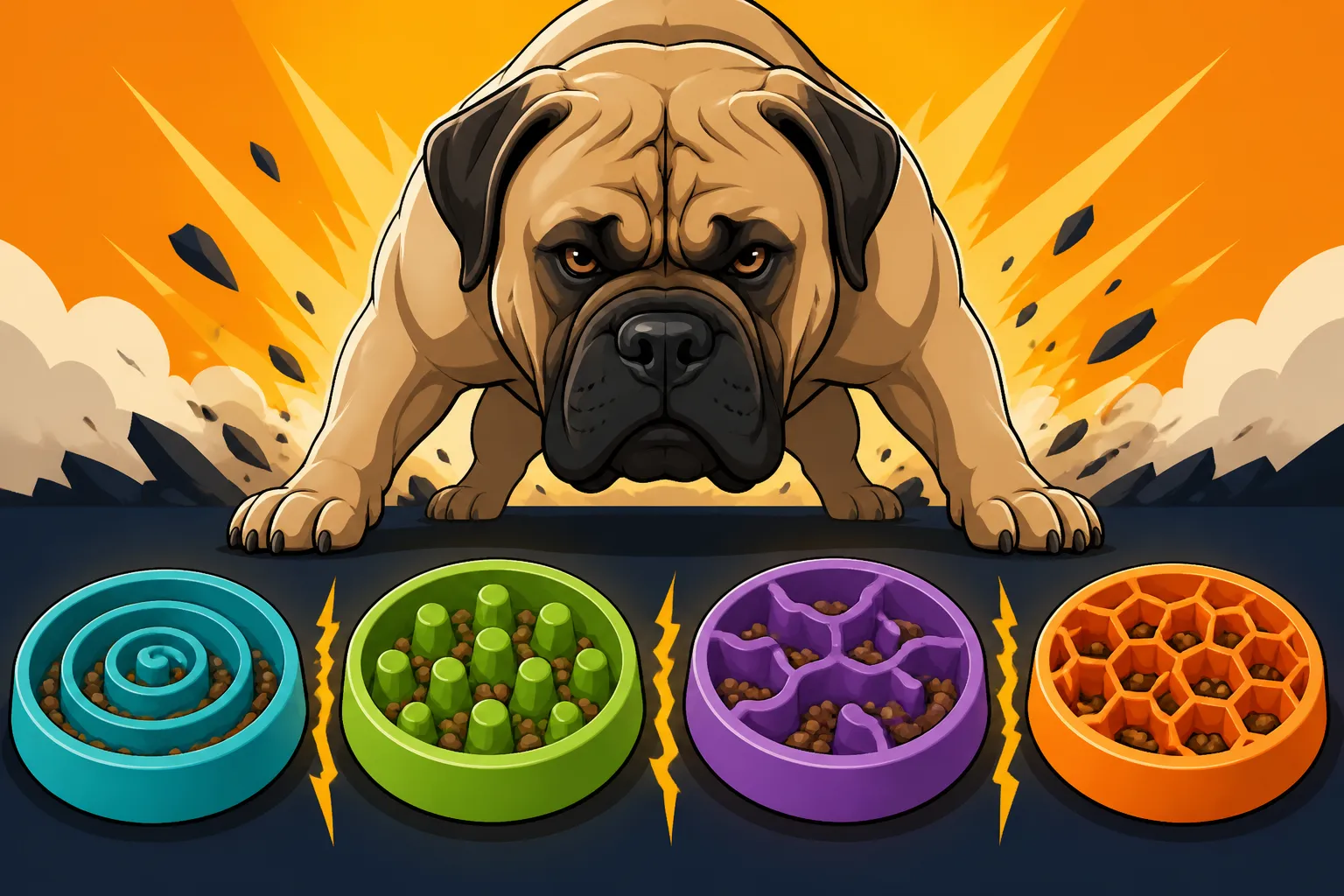
- Design: The internal maze should be deep and irregular, not just a few shallow humps. Designs that involve spirals, separate compartments, or raised bumps that force the dog to pick food out individually are ideal. This ensures they can't simply scoop large amounts with their snout.
Interactive Puzzle Feeders (Use with Caution and Supervision)
Some robust puzzle feeders can be a fun way to engage your Mastiff and slow down eating, but they come with caveats.
- Durability is Key: Most aren't designed for the strength of a Mastiff. Look for products made from extremely durable, hard plastics or composite materials. Avoid anything with small, easily detachable parts that could become choking hazards.
- Size Matters: The feeder needs to be large enough to hold a decent portion of food and be challenging without being frustratingly impossible.
- Supervision is a Must: Always supervise your Mastiff with interactive puzzle feeders, especially initially. They might try to solve the puzzle with brute force, potentially damaging the feeder or themselves.
Lick Mats and Spreads (Complements, Not Main Meals)
Lick mats, often made of silicone, are fantastic for wet food, yogurt, peanut butter, or even a small portion of moistened kibble. While they won't hold an entire Mastiff meal, they are excellent for:
- Extending Mealtime: You can put a portion of their meal, especially if you feed a mix of wet and dry, onto a large lick mat. This stretches out the eating experience significantly.
- Calming Effect: The repetitive licking action can be very soothing for dogs, reducing anxiety.
- Enrichment: It provides mental stimulation, turning mealtime into an engaging activity.
Look for extra-large, durable silicone options. You might find great choices on Chewy or Amazon that are designed for larger surface areas.
Elevated Feeders with Slow Feeder Inserts
If your Mastiff currently eats from an elevated feeder, you might be able to find a slow feeder bowl designed to fit into your existing stand. This combines the benefits of an elevated feeder (which some owners prefer for neck comfort, though its impact on bloat risk is debated) with the slow-eating mechanism. Ensure the insert is heavy-duty and securely fits.
Making the Right Choice: Key Considerations
Choosing the perfect slow feeder for your Mastiff can feel like a quest, but focusing on a few critical factors will help ensure you make an investment that truly benefits your big friend.
Material Matters for Durability and Hygiene
As mentioned, the material of your slow feeder is paramount for a Mastiff.
- Stainless Steel: This is often the gold standard. It's incredibly durable, resistant to chewing and corrosion, and very easy to clean (many are dishwasher safe). It's also non-porous, meaning it won't harbor bacteria like some plastics can.
- Heavy-Duty, Food-Grade Plastic: If choosing plastic, make sure it's thick, rigid, and explicitly labeled as food-grade and BPA-free. Look for brands known for producing tough dog products. Even then, regularly inspect it for chew marks or damage, as compromised plastic can harbor bacteria.
- Ceramic: While heavy and aesthetically pleasing, ceramic can chip or break. If it does, the sharp edges pose a risk. It's usually best avoided unless your Mastiff is particularly gentle and you're confident in its placement.
Design for Maximum Effectiveness
The internal design is what truly slows down eating.
- Deep and Intricate Mazes: Simple bumps won't cut it. Look for designs that create true barriers, forcing your Mastiff to use their tongue or nose to navigate the food. Spirals, interlocking patterns, or multiple deep chambers are excellent.
- Wide Footprint: A broader base usually means more maze surface area, which translates to a longer eating time.
- Avoid Overly Complex Designs with Small Cavities: While intricate is good, if the spaces are too small or narrow, your Mastiff might struggle to get the food out at all, leading to frustration. It needs to be challenging, not impossible.
Capacity and Stability
Always check the stated capacity of the slow feeder. A Mastiff's meal is substantial, and you shouldn't have to refill the bowl multiple times per feeding. Also, consider the stability. A truly non-slip base is essential. Rubberized feet that extend around the entire base are better than just a few small nubs. Some heavy feeders don't even need special feet because their weight alone keeps them planted.
Here's a quick comparison of common slow feeder types for Mastiffs:
| Feature | Stainless Steel Slow Feeder Bowl | Heavy-Duty Plastic Slow Feeder | Silicone Lick Mat (for wet food) |
|---|---|---|---|
| Durability | Excellent (chew-proof) | Good (can be chewed) | Good (flexible, but chewable) |
| Capacity | Excellent (find large sizes) | Good (find large sizes) | Low (supplemental only) |
| Effectiveness | High (deep mazes) | High (varied designs) | High (for wet food) |
| Stability | Excellent (often heavy, non-slip) | Good (non-slip base needed) | Variable (often suctions) |
| Ease of Clean | Excellent (dishwasher safe) | Good (dishwasher safe) | Excellent (dishwasher safe) |
| Cost Shape | Higher initial investment | Moderate | Lower |
Ease of Cleaning
Those intricate designs, while great for slowing eating, can be a pain to clean. Opt for slow feeders that are dishwasher safe or have a design that allows for easy handwashing with a brush. Trapped food particles can lead to bacterial growth, which is the last thing your Mastiff needs.
Many owners find success with heavy-duty stainless steel options found on platforms like Chewy or Amazon, as these retailers often carry a wider variety of sizes and durability levels suitable for giant breeds. When browsing, pay close attention to reviews from other Mastiff or giant breed owners. Their real-world experiences can be invaluable in identifying products that truly stand up to the test. Remember that a slow feeder is an investment in your Mastiff's health, helping to prevent life-threatening conditions and making mealtime a safer, more enjoyable experience for everyone. Don't forget, How Long a Mastiff Must Rest After a Meal is also critical to bloat prevention, even with a slow feeder.
Disclaimer
This article is for general informational purposes only and does not constitute professional advice. Laws, prices and regulations vary by location and change over time. Consult a qualified professional for guidance on your specific situation.