Whether Overfeeding a Mastiff Puppy Ruins Its Elbows
Bringing a Mastiff puppy home is an incredible joy, but it also comes with a mountain of responsibility, especially when it comes to their health and growth. One of the biggest worries new Mastiff parents often grapple with is whether they're feeding their giant-breed puppy correctly, particularly concerning the delicate development of their joints. It’s a completely valid concern, and this guide will delve into how overfeeding can indeed impact a Mastiff puppy’s elbows and what you can do to ensure healthy growth.
The Delicate Dance of Mastiff Puppy Growth
Anyone who's ever owned a Mastiff knows that these puppies aren't just large; they're in a league of their own. They gain weight at an astonishing rate, sometimes doubling in size in just a few weeks. This rapid growth spurt, while exciting to watch, is also a critical period for their developing skeletal system, particularly their joints. It’s not just about size; it’s about how they get to that size.
Why Rapid Growth is a Mastiff's Enemy
Imagine building a skyscraper without letting the concrete properly cure between floors. That’s a bit like what happens when a Mastiff puppy grows too fast. Their bones and cartilage are developing at an accelerated pace, and if they're forced to bear too much weight or grow too quickly, the delicate cellular structures can't keep up. This can lead to a host of orthopedic issues, including elbow dysplasia, hip dysplasia, and osteochondritis dissecans (OCD). The cartilage, which should be smooth and resilient, can become uneven, thicken abnormally, or even fail to form properly. This sets the stage for painful conditions that can plague a Mastiff throughout its (already too short) life. Why a Mastiff Puppy Must Grow Slowly is not just a suggestion; it's a fundamental principle of responsible Mastiff ownership. You're trying to achieve a robust adult, not the largest puppy at the dog park.
It's a common misconception that a chubby puppy is a healthy puppy. While a little puppy fat might look adorable on smaller breeds, on a Mastiff, it's a red flag. That extra weight puts immense pressure on still-forming joints, exacerbating any underlying genetic predispositions to conditions like elbow dysplasia. The body simply isn't ready to handle that kind of load. Think of it like a young sapling trying to support a fully leafed tree in a hurricane – it's just not equipped for it yet. The goal is steady, controlled growth, not breakneck expansion.
The Role of Genetics vs. Environment
It’s crucial to understand that orthopedic issues like elbow dysplasia aren't solely caused by overfeeding. Genetics play a huge, undeniable role. If a Mastiff puppy comes from parents with poor elbow or hip scores, or if there's a history of these conditions in the lineage, that puppy is already at a higher risk. Elbow Dysplasia Affects One Mastiff in Seven, highlighting just how prevalent these issues can be, even with the best care. Responsible breeders go to great lengths to screen their breeding stock for these genetic predispositions through certifications like those from the Orthopedic Foundation for Animals (OFA).
However, environmental factors, and particularly nutrition, act as powerful modifiers. A puppy with excellent genetics can still develop problems if overfed, and a puppy with a moderate genetic predisposition can have its condition worsened significantly by improper nutrition and care. Think of genetics as the blueprint and environment as the construction process. A flawless blueprint can still result in a flawed building if the construction materials are poor or the workers cut corners. Your goal as an owner is to provide the best possible "construction process" to support the genetic blueprint your puppy has.
The Dangers of Excess Calories and Nutrients
The sheer size of a Mastiff puppy can be deceiving. Many owners, with the best intentions, see their growing pup and think they need to feed them vast quantities of food to fuel their impressive growth. This can lead to an overabundance of calories and, perhaps more insidiously, an imbalance of crucial nutrients like calcium and phosphorus, which are vital for bone development.
How Overfeeding Stresses Growing Joints
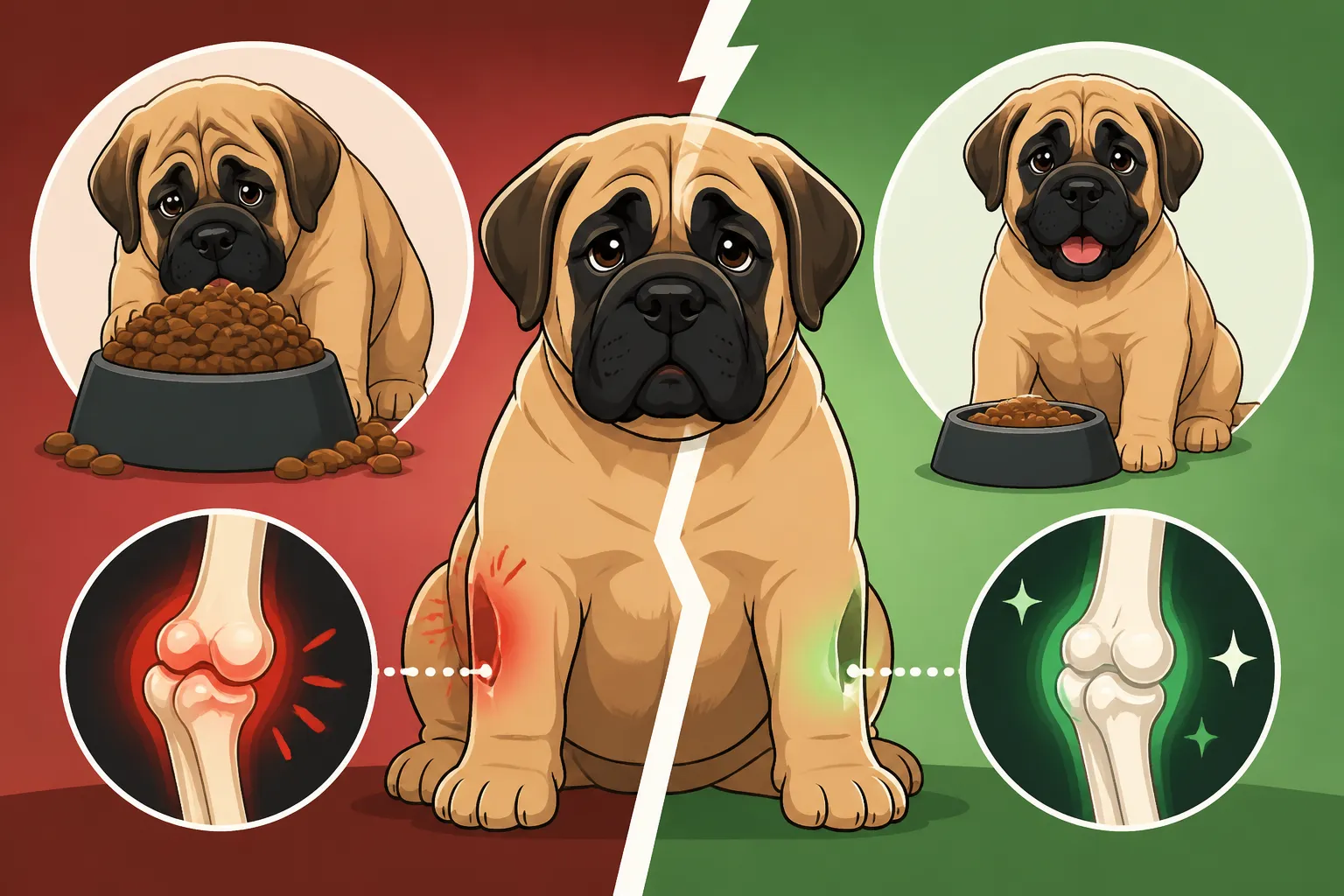
When a Mastiff puppy consumes too many calories, it grows too quickly, both in weight and skeletal length. This rapid growth doesn't allow the bones and cartilage to mature at a healthy, synchronized pace. The bones might elongate faster than the cartilage can properly ossify (turn into bone), leading to areas of weakness or abnormal development. The extra body weight literally grinds down immature joint surfaces, leading to inflammation and microscopic damage. This cumulative stress can result in osteochondrosis, a condition where cartilage fails to convert to bone, creating painful flaps or lesions within the joint. These lesions can then detach, causing pain, lameness, and eventual arthritis.
It's not just the weight gain; it's also the impact on specific nutrient ratios. Excess calories often come with excess calcium. While calcium is essential for strong bones, too much of it, especially during rapid growth, can actually interfere with proper bone mineralization and remodeling. The delicate balance of calcium and phosphorus is critical, and tipping this scale can lead to skeletal deformities and increased risk of joint disease. What Excess Calcium Does to a Mastiff's Elbows is a prime example of how even a good thing in excess can become detrimental during this sensitive developmental period.
The Misconception of "More is Better"
The idea that "a big dog needs lots of food, so let's give them more" is one of the most dangerous misconceptions for Mastiff puppy owners. We often project our own feelings about hunger and satiety onto our dogs, especially when they're still growing. It's natural to want to see our puppies thriving and robust. However, for a giant breed like the Mastiff, "robust" in puppyhood can quickly morph into "overweight" with dire consequences for their long-term health. A leaner Mastiff puppy might look a little lanky, but that controlled growth is exactly what their joints need.
This isn't to say your puppy should be starved; quite the opposite. They need high-quality nutrition. But they need controlled high-quality nutrition. Giving them extra scoops, allowing them to free-feed, or constantly offering rich treats contributes to a caloric overload that their developing bodies simply cannot handle. The focus shifts from supporting healthy development to merely achieving maximum size, often at the expense of structural integrity. Remember, you're raising a Mastiff, not a sumo wrestler.
Understanding Proper Nutrition for Mastiff Puppies
Navigating the world of puppy food can be overwhelming, with countless brands and formulas on the market. For a Mastiff puppy, making the right choices is paramount to their long-term health and joint integrity. It's about careful selection, precise measurement, and continuous monitoring.
Choosing the Right Puppy Food Formula
When selecting food for your Mastiff puppy, the most critical factor is finding a formula specifically designed for "large breed puppies" or "giant breed puppies." These formulas are intentionally crafted with lower caloric density and carefully controlled calcium and phosphorus levels. They aim to promote slow, steady growth rather than rapid weight gain, which is precisely what your Mastiff needs. Avoid generic "all life stages" or "small breed puppy" foods, as their nutritional profiles will likely be inappropriate.
Look for a food that provides a moderate protein content (typically around 23-26%) and a calcium level usually between 0.8% and 1.2% (on a dry matter basis), with a calcium-to-phosphorus ratio of roughly 1.1:1 to 1.3:1. Always check the guaranteed analysis on the food bag. Brands like Pro Plan Large Breed Puppy, Royal Canin Giant Puppy, and Eukanuba Large Breed Puppy are popular choices often recommended by veterinarians and experienced Mastiff breeders, and can often be found at retailers like Chewy or Amazon. Remember, the ingredient list is important, but the nutrient analysis and how it supports slow growth is even more so. Whether Large Breed Puppy Food Is Enough for a Mastiff really depends on ensuring those specific giant breed nutritional parameters are met.
Precision in Portion Control
Once you've chosen the right food, portion control becomes your superpower. Do not free-feed a Mastiff puppy. Ever. Free-feeding allows them to consume more calories than they need, leading directly to the problems we've discussed. Instead, follow the feeding guidelines provided by the food manufacturer, but use them as a starting point. The Feeding Chart a Mastiff Puppy Should Follow should always be adapted to your individual puppy's needs and activity level.
Divide the daily recommended amount into at least three meals for younger puppies (up to 4-6 months), gradually transitioning to two meals a day as they get older. This not only aids digestion but also prevents them from overeating in one sitting. Use a dedicated measuring cup and be precise. A few extra kibble pieces here and there can add up quickly for a giant breed. If you're unsure, a kitchen scale for accuracy can be a real game-changer. Remember, the goal isn't to make them full to bursting, but to provide adequate nutrition for sustained, healthy growth.
Monitoring Your Puppy's Body Condition
The feeding chart is a guide, but your puppy's body condition is the ultimate indicator of whether you're feeding too much or too little. You should be able to easily feel your Mastiff puppy's ribs with gentle pressure, but not see them prominently. When viewed from above, there should be a discernible waist tuck behind their ribs. If you can't feel the ribs, or if your puppy looks round and bulky, it's time to reduce their food intake.
Regularly assessing your puppy’s body condition is more important than relying solely on a number on a bag. Every puppy is an individual, and their metabolism and activity levels will vary. A quick check of a body condition score chart (easily found online) can help you stay on track. This vigilance is crucial because Mastiffs are prone to gaining weight easily, and even a few extra pounds on a young, growing frame can significantly impact their developing joints. This constant monitoring helps ensure they remain How Ribby a Mastiff Puppy Should Look – lean, not fat.
| Body Condition Score | Description | Feeding Adjustment |
|---|---|---|
| 1-2 (Underweight) | Ribs, spine, pelvic bones visible; no fat | Increase food |
| 3 (Ideal) | Ribs easily felt, not seen; waist visible | Maintain food |
| 4-5 (Overweight) | Ribs hard to feel; waist absent; fat deposits | Decrease food |
Beyond the Bowl: Other Factors Affecting Elbow Health
While nutrition is a massive piece of the puzzle, it's not the only factor that influences a Mastiff puppy's elbow health. Their environment, how they move, and even everyday activities play a significant role in shaping those massive joints. It's a holistic approach to raising a sound Mastiff.
The Impact of Exercise and Activity
Just like overfeeding, over-exercising a Mastiff puppy can be incredibly detrimental to their developing joints. Those growth plates are soft and vulnerable, and repetitive impact or strenuous activity can cause damage that leads to conditions like elbow dysplasia. This means no long runs, no intense agility, and absolutely no forced exercise like jogging beside a bicycle in their first year. Why a Mastiff Puppy Must Not Be Exercised Hard cannot be stressed enough. Their bodies simply aren't ready for it.
Instead, encourage short, frequent bursts of free play in a safe, soft environment like a grassy yard. Supervised play with other calm, appropriately sized dogs is fine, but avoid roughhousing that involves excessive jumping or twisting. Gentle walks of 10-15 minutes, a few times a day, are usually sufficient, increasing duration slowly as they mature. The general rule of thumb is five minutes of structured exercise per month of age, twice a day. So, a four-month-old puppy gets 20 minutes, twice a day. Listen to your puppy; if they're tired, let them rest.
Environmental Considerations at Home
Your home environment can also contribute to or alleviate stress on your Mastiff puppy's joints. Slippery surfaces like hardwood, tile, or laminate floors can be particularly problematic. Puppies often slip and slide, leading to splaying of their legs and undue stress on their hips, elbows, and stifles as they try to gain purchase. This can cause micro-traumas or exacerbate underlying joint laxity. Consider laying down runners, area rugs, or carpet in high-traffic areas where your puppy spends most of its time.
Furthermore, pay attention to obstacles like stairs. Repeatedly going up and down stairs, especially for very young or rapidly growing Mastiffs, can put immense strain on their developing joints. If possible, restrict stair access or carry your puppy up and down until they are older and their growth plates have closed. For an adult Mastiff, ramps can be a lifesaver for getting into vehicles or navigating steps, reducing the impact on their joints throughout their life. It's about creating an environment that supports their immense size and delicate growth, minimizing any unnecessary wear and tear.
Disclaimer
This article is for general informational purposes only and does not constitute professional advice. Laws, prices and regulations vary by location and change over time. Consult a qualified professional for guidance on your specific situation.