How Often a Mastiff Flattens a Bed
One of the many unique challenges of living with a magnificent Mastiff is contending with their sheer, undeniable mass. When a dog the size of a small pony decides to settle down for a nap, the physics involved are quite different from, say, a Chihuahua. This guide is all about tackling the very real problem of how quickly a Mastiff's bed succumbs to their weight, what to look for, and how to keep your gentle giant comfortable for as long as possible.
The Inevitable Truth: Why Mastiff Beds Don't Last
Let's face it: Mastiffs are massive. They are a breed built for substance, and while that substance translates to an incredibly loving and imposing presence, it also means that almost everything they interact with faces an uphill battle against compression. Their beds are at the forefront of this struggle, often flattening out far faster than beds for smaller breeds. It's not a question of if it will happen, but when and how often.
The Sheer Physics of a Mastiff's Weight
Imagine a dog that can easily weigh anywhere from 120 pounds to over 230 pounds, perhaps even more in some very large males. Now, picture that immense weight resting for hours each day, often concentrating on specific pressure points like elbows, hips, and shoulders. This isn't just a heavy static load; it's a dynamic one as they shift, flop, and settle. The downward force exerted by a resting Mastiff is substantial, and most conventional dog beds simply aren't engineered to withstand that kind of continuous, concentrated pressure.
Think about it in human terms: if you put a heavyweight boxer's worth of weight on a standard pillow every single day, how long would that pillow maintain its loft? Not long at all. A Mastiff's weight acts similarly on even robust dog beds. Each time they lie down, the fibers compress, the foam yields, and over time, it loses its ability to spring back. The larger and heavier your Mastiff, the more pronounced and rapid this compression will be.
This constant pressure means that what might be a perfectly adequate bed for a 50-pound Labrador Retriever becomes a thin pancake for a 180-pound Mastiff in a matter of weeks or months. It's a common frustration for Mastiff owners who find themselves constantly on the hunt for a new bed, only to see it quickly give way. This isn't a fault of the owner or even necessarily the bed; it's simply the reality of housing a truly giant breed.
Material Breakdown Over Time
Different bed materials offer varying degrees of resistance to a Mastiff's weight, but ultimately, all will eventually fail. Cheaper beds often use loose fiberfill, much like a regular pillow. While fluffy at first, this material quickly shifts, clumps, and becomes unsupportive, creating hollows where your Mastiff's body sinks right to the floor. It's like sleeping on a lumpy mattress that offers no cushioning where it's needed most.
Even beds made with higher-density foams, often marketed as "orthopedic," have their limits. These foams are designed to provide better support and distribute weight more evenly, slowing down the flattening process. However, even the best memory foam or orthopedic foam has a cellular structure that, under continuous heavy compression, will begin to break down. The air pockets within the foam cells collapse, and the foam loses its elasticity and rebound. It ceases to "remember" its original shape.
This material breakdown is often exacerbated by heat and moisture. While many quality beds have removable covers, the internal foam or filling can be affected by ambient humidity or any moisture that seeps through from accidents or drool. Over time, what was once a thick, supportive slab of foam can become a firm, unyielding mat or a collection of disconnected, flattened lumps, offering little to no cushioning between your Mastiff and the hard floor. This is why investing in durable, high-quality materials from the outset is crucial, even if it feels like a significant expense.
Factors Influencing Bed Lifespan
The longevity of your Mastiff's bed isn't solely dependent on their size; a multitude of other factors play a significant role. Understanding these can help you make more informed choices and potentially extend the life of your canine companion's comfort haven. It's a delicate balance of investment, usage, and care.
The Quality and Construction of the Bed
When it comes to Mastiff beds, quality isn't just a buzzword; it's a necessity. A cheap, big-box store bed, while appealing due to its initial lower price, will almost certainly flatten within weeks. These are often filled with low-density polyfill that quickly migrates and clumps, leaving your Mastiff essentially sleeping on the bare floor with a flimsy fabric covering. You're simply throwing money away in the long run.
High-quality beds, often found on reputable pet supply sites like Chewy or Amazon, or from specialty giant breed bed manufacturers, are constructed with the sheer mass of a Mastiff in mind. Look for descriptions that specify "human-grade orthopedic foam" or "high-density memory foam" slabs, not just shredded foam. These materials are much more resilient and designed to recover their shape. The thickness of the foam also matters; a bed that is 4-6 inches thick will fare much better than one that starts at only 2-3 inches. Investing in something like What an Orthopedic Bed for a Mastiff Costs upfront often saves money in constant replacements.
Beyond the filling, consider the overall construction. Does it have a robust, durable cover that can be easily removed and washed? A strong zipper and reinforced seams contribute to the bed's integrity, preventing rips that expose the inner workings to further damage. Beds with multiple layers of foam, perhaps a firm base layer with a softer memory foam top, also tend to hold their shape better and offer superior support. This kind of thoughtful design acknowledges the intense pressure a Mastiff exerts.
Your Mastiff's Sleeping Habits and Weight
Believe it or not, your individual Mastiff's quirks can dramatically impact how quickly their bed flattens. Some Mastiffs are meticulous sleepers, gently curling up in the same spot each time, distributing their weight relatively evenly. Others, however, are prone to "nesting" behaviors—circling, digging, and flopping down with a thunderous thud that tests the limits of even the sturdiest foam. This repeated impact, especially in the same spot, will inevitably accelerate the breakdown of the bed's internal structure.
Furthermore, the specific weight of your Mastiff within the breed standard plays a huge role. A female Mastiff weighing 140 pounds will likely be less destructive to a bed over time than a male Mastiff tipping the scales at 220 pounds. The greater the mass, the more significant the gravitational pull and the more profound the compression. It's worth considering if your Mastiff is on the higher end of The Weight Range a Male Mastiff Should Hold or The Weight Range a Female Mastiff Should Hold. A leaner Mastiff, while still heavy, may put slightly less stress on materials than an overweight one, which can also influence Keeping a Mastiff Lean on Purpose for their overall joint health.
Even the way your Mastiff rises can cause wear. If they struggle to get up, perhaps due to aging joints, they might push and pull at the bed with their paws, inadvertently tearing covers or dislodging internal stuffing. Young puppies, full of boundless energy, might chew on their beds or drag them around, adding another layer of wear and tear beyond just the weight. For puppies, the rapid growth also means they quickly outgrow beds, making it a temporary concern, but still one to plan for regarding How Fast a Mastiff Puppy Puts On Weight.
Environmental Conditions and Cleaning
While not as immediately obvious as weight, the environment and how you maintain the bed can also contribute to its lifespan. Extreme humidity or damp conditions, for example, can slowly degrade certain types of foam or natural fillings over time, fostering mildew and compromising their structural integrity. Similarly, exposure to direct, prolonged sunlight can break down materials, making them brittle and less resilient.
The frequency and method of cleaning also matter. While it's excellent practice to regularly wash your Mastiff's bed cover – and absolutely essential for managing drool and keeping things fresh – the inner components are more delicate. If the entire bed (insert and all) is machine washable, repeated cycles, especially with harsh detergents or high heat drying, can cause fiberfills to clump or foam to deteriorate faster than intended. Always follow manufacturer instructions precisely to avoid prematurely "killing" the bed's cushioning.
Consider the surface the bed rests on. If it's on a cold, hard concrete floor, the bed is doing all the work to insulate and cushion. If it's on carpet, the carpet itself offers some minor additional give, slightly reducing the direct impact on the bed's materials. Also, if you frequently move the bed around, perhaps from room to room, the constant folding, dragging, or even lifting can stress seams and internal components, leading to faster wear than if the bed stayed in one stationary spot.
Recognizing a Flattened Bed and What to Do
It's easy to just assume a big dog needs a big bed, but recognizing when that bed is no longer doing its job is critical for your Mastiff's comfort and long-term health. A flattened bed isn't just an aesthetic issue; it can contribute to joint pain and overall stiffness.
Signs Your Mastiff's Bed Is Failing
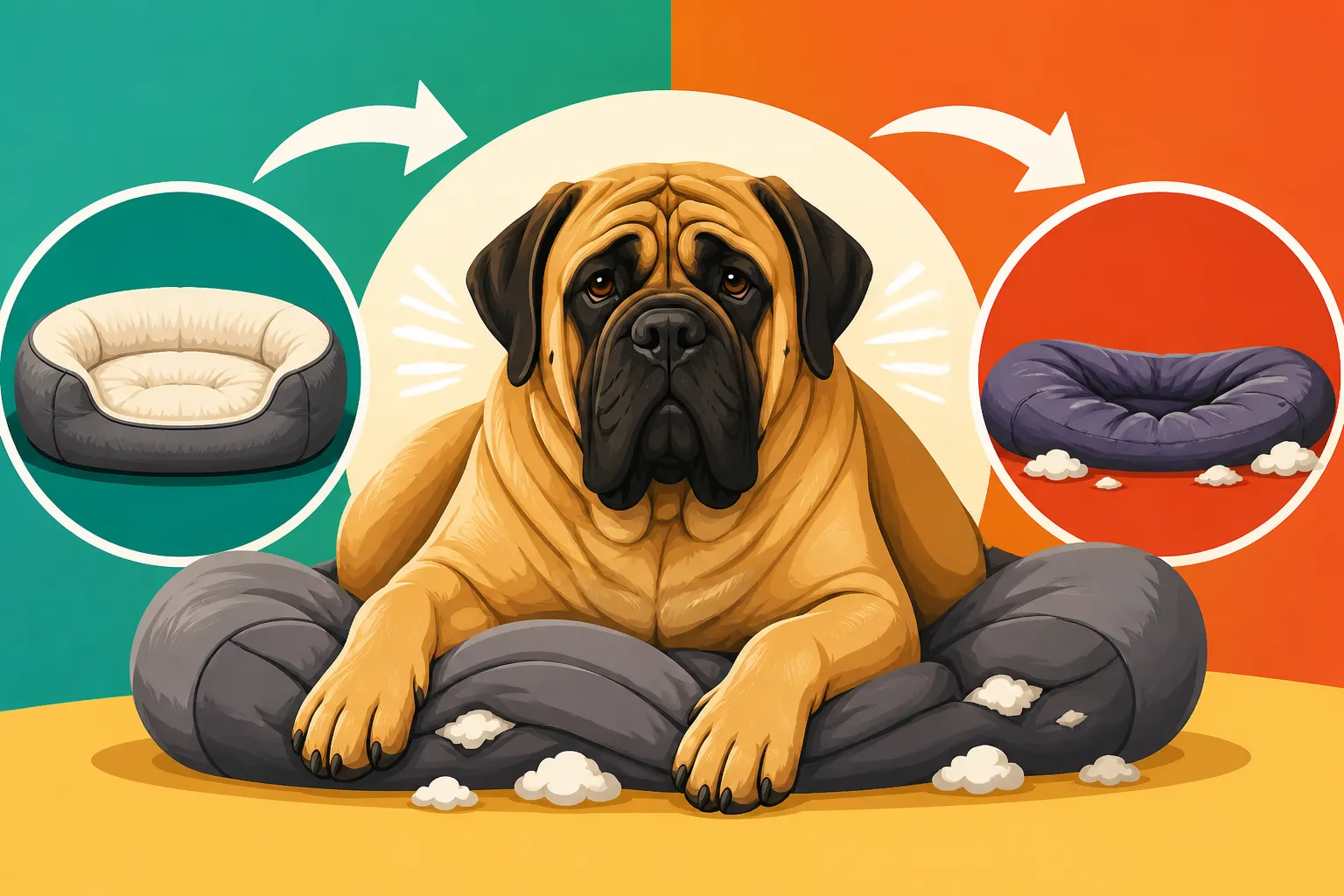
The most obvious sign of a flattened bed is visual: you'll see a noticeable dip or crater where your Mastiff usually lies. When they get up, the bed doesn't rebound to its original thickness; instead, it retains the impression of their body, often bottoming out completely to the floor. It looks like a sad, deflated pancake rather than a plush cushion. If you can feel the hard floor underneath with just a light press, it’s definitely past its prime.
Beyond the visual cues, observe your Mastiff's behavior. Are they shifting positions constantly, trying to find a comfortable spot? Do they start seeking out alternative sleeping locations, perhaps lying on a cool tile floor, a carpeted area, or even a different, more supportive piece of furniture? This isn't always about temperature regulation; it can be a clear signal that their bed is no longer providing the comfort they need. A dog that used to love its bed but now avoids it is trying to tell you something.
Another critical indicator is your Mastiff's mobility, especially when they first wake up. Do they seem stiff, slow to rise, or groan as they get to their feet? While some stiffness is normal for giant breeds, especially as they age, a lack of proper support during rest can exacerbate conditions like arthritis. If your Mastiff is already dealing with Arthritis in a Mastiff at Four or if you're concerned about Why an Old Mastiff Cannot Get Up, a failing bed will only make matters worse. They need proper cushioning to relieve pressure on their joints, and a flat bed offers none.
Practical Solutions for Restoring or Replacing
When you notice your Mastiff's bed starting to flatten, there are a few things you can try to extend its life, or you might need to commit to a full replacement. For beds filled with loose fiber, a simple trick can be to try and "fluff" the filling by hand, redistributing it to more evenly cushion your dog. Some owners even open the cover (if it has a zipper) and manually pull apart the clumps of fiberfill. This is a temporary fix, as the material will likely re-clump quickly, but it can buy you a little time.
For foam beds, especially those with shredded memory foam, you can sometimes "rejuvenate" them by tumbling the inner core in a dryer on a no-heat or air-fluff setting with a few tennis balls. This can help break apart compacted foam pieces and restore some loft. However, if the foam itself has broken down structurally, this will only have a minimal effect. Another common approach is adding a supplemental topper, like a thick layer of egg crate foam, under the main bed cushion. This adds an extra layer of shock absorption and can prolong comfort. You can often find foam mattress toppers at general retailers and cut them to size.
Ultimately, there comes a point where restoration isn't enough, and a full replacement is necessary. This is an investment, but a crucial one for your Mastiff's well-being. Look for beds specifically designed for giant breeds with high-density foam. Many reputable brands offer replacement foam inserts for their high-quality beds, which can be a more economical option than buying a whole new bed if the cover is still in good shape. Sites like Chewy and Amazon offer a wide variety of these specialized beds, allowing you to compare features and read reviews from other large dog owners to ensure you're making a good choice.
| Bed Type | Initial Cost (Shape) | Flattening Frequency | Support Level | Ideal For |
|---|---|---|---|---|
| Basic Fiberfill | Lower | Weeks to 2-3 months | Minimal | Small breeds, temporary use, budget-conscious (not recommended for Mastiffs) |
| Mid-Range Foam/Blend | Moderate | 3-6 months | Moderate | Medium to large breeds, some initial Mastiff comfort |
| Orthopedic High-Density Foam | Higher | 6-18 months (or more) | Excellent | Giant breeds, senior dogs, dogs with joint issues |
| Elevated Cot-Style | Moderate | Years (frame) | Excellent (airflow) | Warm climates, chewers, joint support, indoor/outdoor |
Proactive Bed Care and Longevity Tips
While your Mastiff's sheer size guarantees that beds will face a tough life, there are definite strategies you can employ to slow down the inevitable flattening and ensure your gentle giant enjoys maximum comfort for as long as possible. It's all about making smart choices from the get-go and maintaining them diligently.
Choosing the Right Bed from the Start
The single most impactful decision you can make is selecting the right bed when you first bring your Mastiff home, or when replacing an old one. This isn't the area to pinch pennies. Look specifically for beds marketed for "giant breeds" or "extra-large dogs." These often feature industrial-strength zippers, durable outer fabrics, and, most importantly, high-density, human-grade orthopedic foam. Don't be swayed by beds that are just "big"; they need to be built for big weight. Remember, a flat, unsupportive bed is worse than no bed at all for their joints.
Consider the internal construction of the bed. Solid slabs of high-density memory foam or supportive polyfoam are almost always superior to beds filled with shredded foam or fiberfill, as the latter will inevitably shift and clump under a Mastiff's weight. Look for thickness too; a bed that's at least 5-6 inches thick will offer much better cushioning and a longer lifespan than a thinner one. Reading reviews on sites like Amazon or Chewy from other Mastiff owners can be incredibly valuable in identifying brands that truly stand up to the test. This investment pays dividends in your dog's long-term comfort and potentially reduced vet bills for joint issues. This upfront planning directly relates to What a Bed That Holds a Mastiff Costs and How Thick a Bed a Mastiff Needs.
It's also crucial to choose a bed with a removable, washable cover. Mastiffs are notorious droolers, and accidents happen. Being able to easily strip and wash the cover not only keeps the bed hygienic but also prevents moisture from seeping into and damaging the foam core. Look for covers made from durable, thick fabrics that can withstand repeated washing without tearing or losing their shape. Some premium beds even offer waterproof liners underneath the main cover, adding an extra layer of protection for the expensive foam core against any liquid intrusion.
Maintaining Your Mastiff's Bed for Maximum Life
Once you've invested in a quality bed, a little ongoing care can go a long way in preserving its integrity. For beds with loose fiberfill or shredded foam, regular fluffing is essential. Just like you'd fluff a human pillow, vigorously shaking and punching the bed can help redistribute the filling and temporarily restore some loft. While this isn't a permanent fix, doing it daily or every other day can help prevent deep, permanent divots from forming too quickly.
For solid foam beds, consider rotating and flipping the mattress insert regularly, much like you would a human mattress. If your Mastiff always lies in the same orientation, rotating the bed 180 degrees every week or two can help distribute the compression more evenly across the surface. Flipping the foam insert (if the bed design allows for it) also ensures both sides get equal wear, effectively doubling its functional life. This simple habit prevents one area from bearing the brunt of the weight consistently.
Promptly address any spills, accidents, or excessive drool. While a washable cover is great, don't let moisture sit on the surface for extended periods before washing. If liquid penetrates the cover and reaches the foam, it can cause odor, mildew, and accelerated breakdown of the foam's structure. Regular vacuuming of the cover also helps remove dirt, dander, and loose hair, which not only keeps the bed cleaner but also prevents abrasive particles from wearing down the fabric.
Considering Alternatives for Comfort
Sometimes, even the best bed isn't enough, or perhaps you're looking for supplementary options to ensure your Mastiff always has a comfortable spot. Elevated cot-style beds, often made with a sturdy metal frame and a durable mesh or fabric sling, can be excellent alternatives. These offer superior airflow, which is wonderful for Mastiffs who can easily overheat, and eliminate the problem of flattening foam entirely since the dog's weight is suspended by the taut fabric. They are easy to clean and often incredibly durable, lasting for years.
Having multiple dedicated resting spots around the house can also alleviate pressure on a single primary bed. If your Mastiff has access to a quality bed in the living room and another in the bedroom, they're less likely to put all their daily resting hours into one piece of cushioning. This spreads the wear and tear, making each bed last longer. The question of Whether a Mastiff Needs Two Beds often comes down to this kind of practical management.
Finally, don't underestimate the importance of your home's flooring. Hardwood, tile, or laminate floors offer no give and can be tough on a Mastiff's joints, even with beds. Placing rugs or runners in high-traffic areas where your Mastiff walks or naps can provide additional cushioning and much-needed traction. This is especially important for What Bare Floors Do to a Growing Mastiff and for senior Mastiffs who may struggle with mobility. Ensuring proper What Flooring Suits a Mastiff throughout your home complements even the best bed by offering overall joint support.
Disclaimer
This article is for general informational purposes only and does not constitute professional advice. Laws, prices and regulations vary by location and change over time. Consult a qualified professional for guidance on your specific situation.