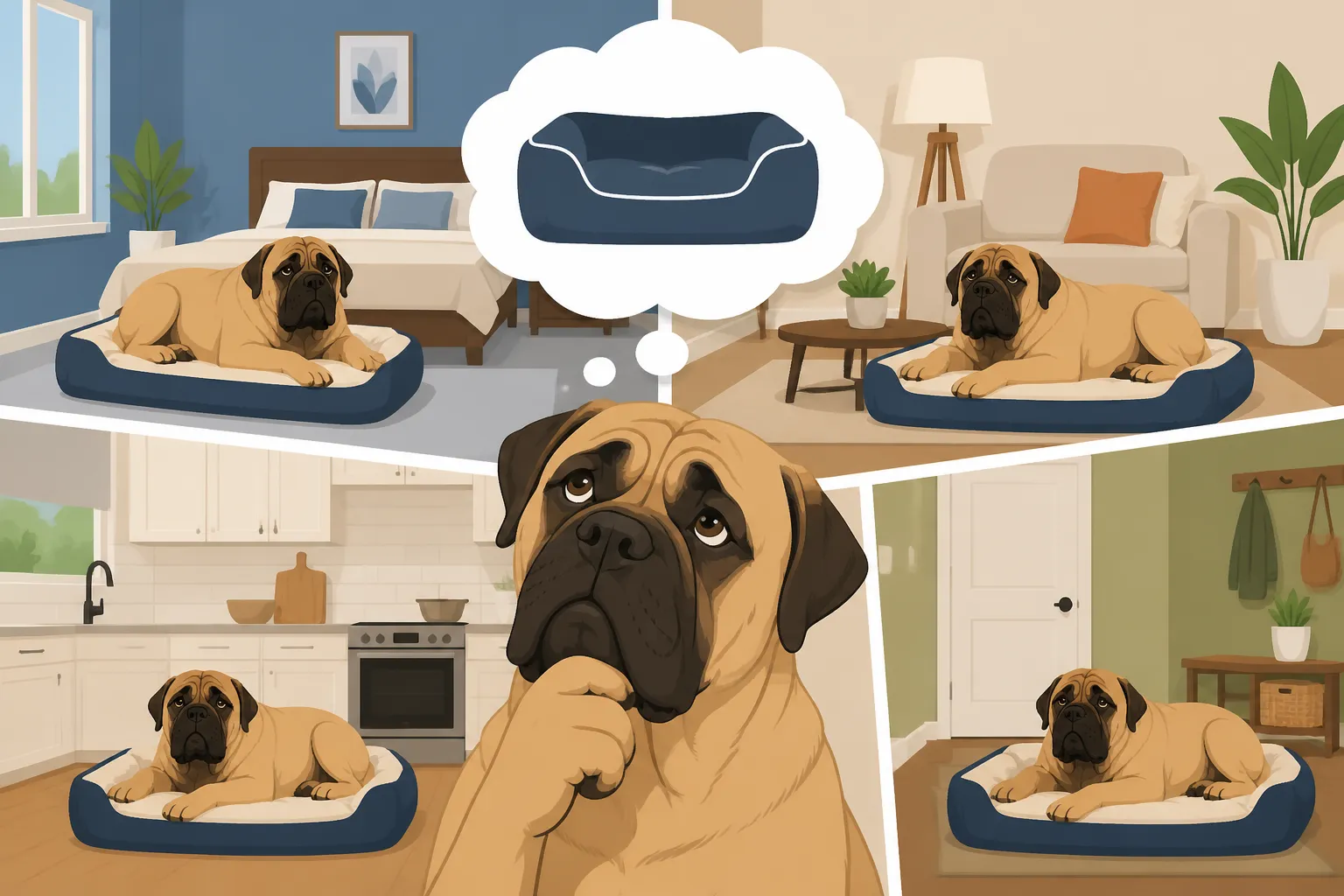
Whether a Mastiff Needs a Bed in Every Room
It’s a thought that crosses the mind of almost every Mastiff owner, especially those new to the breed: "Does my giant furry shadow need a bed in every single room of the house?" The truth is, the sheer size and weight of a Mastiff come with unique considerations for their comfort and long-term health, and figuring out how to provide adequate support throughout your home can feel like a monumental task. This guide will walk you through the essential factors, from orthopedic needs to practical logistics, to help you decide on the best bed strategy for your colossal companion.
Understanding Your Mastiff's Need for Support
When you live with a Mastiff, you quickly realize they aren't just big dogs; they're magnificent, heavy beings whose bodies require specific care. Their immense size, while awe-inspiring, also puts them at a higher risk for joint issues, making appropriate bedding a non-negotiable part of their daily life.
The Joint Stress of a Giant Breed
Imagine carrying an extra hundred pounds or more on your own frame, day in and day out. That's a tiny glimpse into what a Mastiff's skeletal system endures. Breeds like the Mastiff are predisposed to conditions such as hip and elbow dysplasia, which can be exacerbated by prolonged pressure on hard surfaces. Every time your Mastiff lies down, their entire body weight, often well over 150 pounds, compresses their joints and bony prominences.
Think about A Mastiff Lying Two Hundred Pounds on One Elbow All Day. That kind of sustained pressure on a hard floor can lead to discomfort, inflammation, and over time, contribute to the development of painful calluses and even hygromas – fluid-filled sacs that form over pressure points. A supportive bed distributes their weight evenly, cushioning those vulnerable spots and allowing their joints to rest properly. Without proper cushioning, even a short nap on a hard surface can stress their hips, elbows, and shoulders, accelerating wear and tear that they are already prone to due to their genetic makeup and rapid growth. Providing soft, supportive surfaces isn't a luxury for a Mastiff; it's a fundamental health requirement that can significantly impact their quality of life as they age.
Why Hard Floors Are a No-Go
Beyond the direct pressure on joints, hard floors like tile, hardwood, or concrete present a number of challenges for a Mastiff. The lack of traction can be particularly dangerous, especially for a puppy still learning coordination or an older Mastiff with weakening hindquarters. A quick turn or a sudden burst of energy on a slick surface can lead to slips, falls, and potentially serious injuries like strains, sprains, or even fractures. Imagine a two-hundred-pound dog losing its footing – the momentum alone can be devastating.
Not only do hard floors increase the risk of acute injury, but they also contribute to chronic problems. What Bare Floors Do to a Growing Mastiff is often underestimated; repetitive slipping and splaying of the legs can place unnatural stress on developing joints, potentially worsening predisposition to orthopedic conditions. Furthermore, the sheer coldness of tile or concrete can be uncomfortable, especially for an older dog with arthritis, making it harder for them to relax and get restorative sleep. While they might seek out a cool spot in summer, prolonged exposure to a hard, cold surface isn't ideal for their joint health. Runners, carpets, and strategically placed beds are crucial for mitigating these risks and creating a safer, more comfortable home environment for your giant companion. Without proper Traction: Why a Mastiff Cannot Live on Bare Hardwood, their daily movements become a continuous, low-level stressor on their musculoskeletal system.
Practical Considerations for Multiple Mastiff Beds
Deciding on the optimal number of beds isn't just about joint health; it's also about understanding your Mastiff's habits, the layout of your home, and the sheer logistics of accommodating such massive furniture.
Defining "Every Room" and Prioritizing Spaces
Let's be realistic: unless you live in a mansion, putting a Mastiff-sized bed in every single room might be an impractical fantasy. These beds are enormous, often taking up a significant portion of a room, and they aren't exactly easy to tuck away. So, rather than "every room," a more practical approach is to think about "every frequently used room" or "every room where my Mastiff spends significant time lying down."
Consider your Mastiff's routine. Where do they typically nap during the day? Where do they settle in the evening when the family is together? For many Mastiffs, the living room or family room is a prime relaxation spot. If you work from home, a bed in your office might be essential. And, of course, their primary sleeping area, whether that's your bedroom or a dedicated dog room, absolutely needs a top-notch bed. Whether a Mastiff Should Sleep in the Bedroom is a common question, and if the answer is yes, then a high-quality bed in there is a given. You might find your Mastiff naturally gravitates to certain areas, often following the family or seeking out a quiet corner. Those are the spaces to prioritize. Don't feel guilty about not having one in the guest bathroom or that rarely used formal dining room; focus on where your Mastiff actually spends their time.
The Size and Logistics of Mastiff Beds
The reality of Mastiff ownership often hits hardest when you start shopping for essentials. These aren't just "large" beds; they're often extra-large or giant beds, sometimes measuring four or five feet in length and several feet wide. This means they command a significant footprint in any room, which can be a challenge in smaller homes or open-concept spaces. Moving them for cleaning or rearranging furniture isn't a casual task either; some of the more substantial orthopedic beds can be quite heavy.
Another factor to consider is the bed's durability. Mastiffs, despite their gentle nature, are heavy and can be tough on bedding. A cheap, flimsy bed will flatten out in weeks, rendering it useless for joint support. You'll quickly discover How Often a Mastiff Flattens a Bed if you skimp on quality. You need something robust enough to withstand their weight day after day, offering consistent cushioning. This often means investing in higher-quality materials and construction. Think about not just the initial purchase but also the practicality of cleaning. Many Mastiff beds come with removable, washable covers, which is absolutely essential when dealing with drool, dirt, and occasional accidents. Imagine trying to spot-clean a five-foot-long dog bed without being able to remove the cover – it’s a nightmare. The sheer scale of Mastiff beds dictates that careful planning is required, not just for placement but also for maintenance and longevity.
Balancing Comfort, Cost, and Lifestyle
Equipping your home with enough supportive bedding for your Mastiff involves navigating the balance between providing optimal comfort and managing the financial and logistical realities of giant breed ownership.
Investment in Quality vs. Quantity
When it comes to Mastiff beds, the adage "you get what you pay for" holds particularly true. While the idea of having a bed in every single room sounds ideal, the cost of multiple high-quality, truly orthopedic beds can quickly add up. Instead of spreading your budget thin across many inferior beds, it's often wiser to invest in fewer, exceptionally good ones. A cheap, flimsy bed that flattens under a Mastiff's weight within a month is a waste of money and provides no real benefit to their joints.
Focus on getting one or two premium orthopedic beds for the primary resting areas – typically where your Mastiff sleeps at night and their main daytime hangout. These should feature dense, supportive foam that resists flattening, even under substantial weight. You can often find excellent options on retailers like Chewy or Amazon, where you can read reviews from other giant breed owners. Knowing What an Orthopedic Bed for a Mastiff Costs will help you budget, but remember that this is an investment in your dog's long-term health, potentially saving on vet bills for joint issues down the line. A truly supportive bed might seem expensive upfront, but its durability and therapeutic benefits far outweigh the cost of constantly replacing cheaper alternatives that fail to provide adequate support. Quality in this instance means longevity for both the bed and your Mastiff's joints. Many owners agree, Whether a Mastiff Needs Two Beds is a better approach than cutting corners on quality for more beds.
Alternatives and Supplements to Dedicated Beds
While dedicated orthopedic beds are ideal, they aren't the only solution. For areas where a full-sized bed might be too intrusive or where your Mastiff only spends short periods, there are practical alternatives that still provide crucial cushioning and traction. Large, plush area rugs can transform hard floors into more forgiving surfaces. These offer better grip and a degree of softness, which is particularly beneficial in hallways or transitional spaces where a Mastiff might be moving more quickly. You can often find durable, washable rugs online through retailers like Amazon, making cleanup manageable.
Another option is to repurpose thick, old duvets or comforters into washable floor cushions. While they won't offer the same orthopedic support as specialized foam, layering them can create a surprisingly soft and warm spot for a quick nap. Cooling mats or Whether a Cooling Bed Suits a Mastiff can also be placed on top of existing beds or on the floor in warmer climates, providing thermal comfort without sacrificing too much support. Remember that anything placed on a hard floor for a Mastiff needs to be stable enough not to slip, to prevent accidental falls. Even something as simple as a heavy-duty blanket can provide some relief from a cold, hard surface, making the floor more inviting for short rests. The goal is to minimize prolonged contact with unyielding surfaces, and sometimes creative, layered solutions can achieve this effectively.
Making the Decision: How Many Beds Are Right for YOUR Mastiff?
Ultimately, the perfect number of beds for your Mastiff isn't a one-size-fits-all answer. It's about observing your specific dog, understanding your home environment, and making informed choices that prioritize their well-being.
Assessing Your Home Layout and Your Dog's Habits
The first step in planning your Mastiff's bedding strategy is to become a detective of their daily life. Where do they go? How do they move around your home? Does your Mastiff typically follow you from room to room, settling wherever you are, or do they have a few preferred "sanctuaries" where they truly relax? For instance, Whether a Mastiff Follows You Room to Room will significantly impact how many beds you might need. If your Mastiff is your constant shadow, a bed in the living room, a second in the master bedroom, and perhaps a thick rug in your home office might be more appropriate than trying to put a giant bed in every single space.
Consider the number of levels in your home. If you have stairs, are there distinct areas on each floor where your Mastiff spends extended periods? You might need at least one quality bed on each accessible floor. Pay attention to specific behaviors: Do they always choose the sunniest spot? Do they prefer a quiet corner? Do they sprawl out or curl up tightly? These observations will guide you in placing beds where they will actually be used and appreciated, rather than just taking up space. Understanding their natural flow and preferred lounging spots is key to making practical and effective choices.
Creating Designated Comfort Zones
Once you've assessed your Mastiff's habits and your home's layout, the goal is to establish designated comfort zones that cater to their needs. A good starting point is ensuring your Mastiff has at least one top-tier, truly orthopedic bed in their primary sleeping area – usually the bedroom where they spend the night. This is where they get their longest stretches of rest, and superior support here is paramount.
For other high-traffic areas where your Mastiff frequently settles during the day, such as the living room, family room, or a den, consider adding a second high-quality orthopedic bed. This allows them to always have a comfortable, joint-friendly spot available without having to seek out their main sleeping bed. For less-frequently used areas or transitional spaces, strategically placed large, durable rugs can offer enough cushioning and traction for shorter stints. The idea isn't necessarily to have a bed in every single room, but rather to ensure that no matter where your Mastiff chooses to settle down for a nap or a long lounge, they have access to appropriate joint support. This thoughtful placement not only protects their body but also makes them a more integrated and comfortable part of your household.
To help you decide, here's a quick guide to common scenarios:
| Home & Mastiff Profile | Recommended Bedding Strategy | Key Considerations |
|---|---|---|
| Small Home / Apartment, Shadow Dog | 1-2 premium orthopedic beds in primary resting spots, thick rugs in high-traffic areas. | Maximize space; quality over quantity. Dog will follow owner to main bed. |
| Large Home, Dog Stays in Specific Rooms | 1 premium orthopedic bed in each preferred room (e.g., master bedroom, living room, den). | Focus on comfort in their chosen "zones"; less need for widespread coverage. |
| Multi-Level Home, Dog Accesses Both Levels | At least 1 premium orthopedic bed on each accessible floor, sturdy rugs near stairs. | Minimize stair use where possible; ensure safe footing on all levels. |
| Older Mastiff / Joint Issues | Premium orthopedic bed in every room they frequent, non-slip surfaces everywhere possible. | Maximum support and ease of movement are critical for comfort and preventing falls. |
| Young, Active Mastiff | 1-2 good orthopedic beds, focus on durable, washable covers, anti-slip mats. | Protect growing joints; prepare for potential accidents and chewing phases. |
This approach helps ensure your magnificent Mastiff is comfortable, protected, and fully integrated into your life, no matter which room they decide to grace with their presence.
Disclaimer
This article is for general informational purposes only and does not constitute professional advice. Laws, prices and regulations vary by location and change over time. Consult a qualified professional for guidance on your specific situation.