Whether a Mastiff’s Folds Need Drying After Cleaning
If you're a Mastiff owner, you've probably spent some time marveling at (and sometimes cleaning) those majestic, soulful folds on your dog's face and body. But the question that often comes up after a good wipe-down is, "Do I really need to dry these folds?" The short answer is a resounding yes, and in this guide, we're going to dive deep into why keeping those adorable wrinkles dry is absolutely critical for your Mastiff's skin health and comfort.
Understanding Mastiff Skin Folds and Their Purpose
Mastiffs are renowned for their imposing size and their distinctive, often deeply wrinkled faces and bodies. These folds are a defining characteristic of the breed, giving them their noble and often wistful expression. But beyond aesthetics, these skin folds are also a specific anatomical feature that requires vigilant care to prevent common skin issues. Ignoring them can lead to discomfort for your gentle giant, and nobody wants that.
The Anatomy of a Mastiff's Wrinkles
Those glorious wrinkles aren't just extra skin; they're a complex topography of dips, crevices, and overlapping layers. On a Mastiff, these folds are most prominent around the muzzle, eyes, and throat, but they can also be found in other areas like the armpits, groin, and even at the base of the tail in some individuals. This is the natural architecture of the breed, a legacy that's been admired for centuries. However, this unique skin structure creates perfect pockets where moisture and debris can easily become trapped, turning a beautiful feature into a potential problem zone if not managed properly.
Why Folds are Prone to Moisture and Irritation
Think about it: skin rubbing against skin, in an area that might not get much airflow. That's the recipe for trouble. When your Mastiff drinks water, eats, or even just drools (and let's be honest, they drool a lot!), moisture gets trapped deep within those folds. Rain, baths, or even just humidity in the air can contribute. This constant dampness softens the skin, making it more vulnerable to friction and irritation. It also creates a warm, moist environment – the absolute ideal breeding ground for various microorganisms that thrive in such conditions. This is why a simple splash of water can quickly become an incubator for problems if left unaddressed.
Common Areas of Concern on a Mastiff's Face and Body
While the facial folds are the most obvious, Mastiffs have several areas where moisture and skin issues can manifest. The deep wrinkles around their mouth and eyes are prime candidates for problems, as they are constantly exposed to saliva, food particles, and tears. The large dewlaps (loose skin under the throat) can also trap moisture, especially after drinking. Beyond the head, owners need to pay attention to the folds in their Mastiff’s armpits, groin, and even between their paw pads, particularly if your Mastiff tends to sweat there or get muddy on walks. Some Mastiffs also have a notable fold at the base of their tail, which can be easily overlooked but is just as susceptible to the same issues as those on the face. The Wrinkles and Folds a Mastiff Owner Cleans Every Week discusses this in more detail.
The Risks of Undried Skin Folds
It might seem like a small detail—just a bit of dampness—but leaving your Mastiff's skin folds wet after cleaning, or after any exposure to moisture, is an open invitation to a host of uncomfortable and potentially serious skin conditions. These aren't just minor irritations; they can cause significant pain, itching, and require veterinary intervention if not caught and treated early. Understanding these risks is the first step in preventing them.
Bacterial and Yeast Infections in Moist Environments
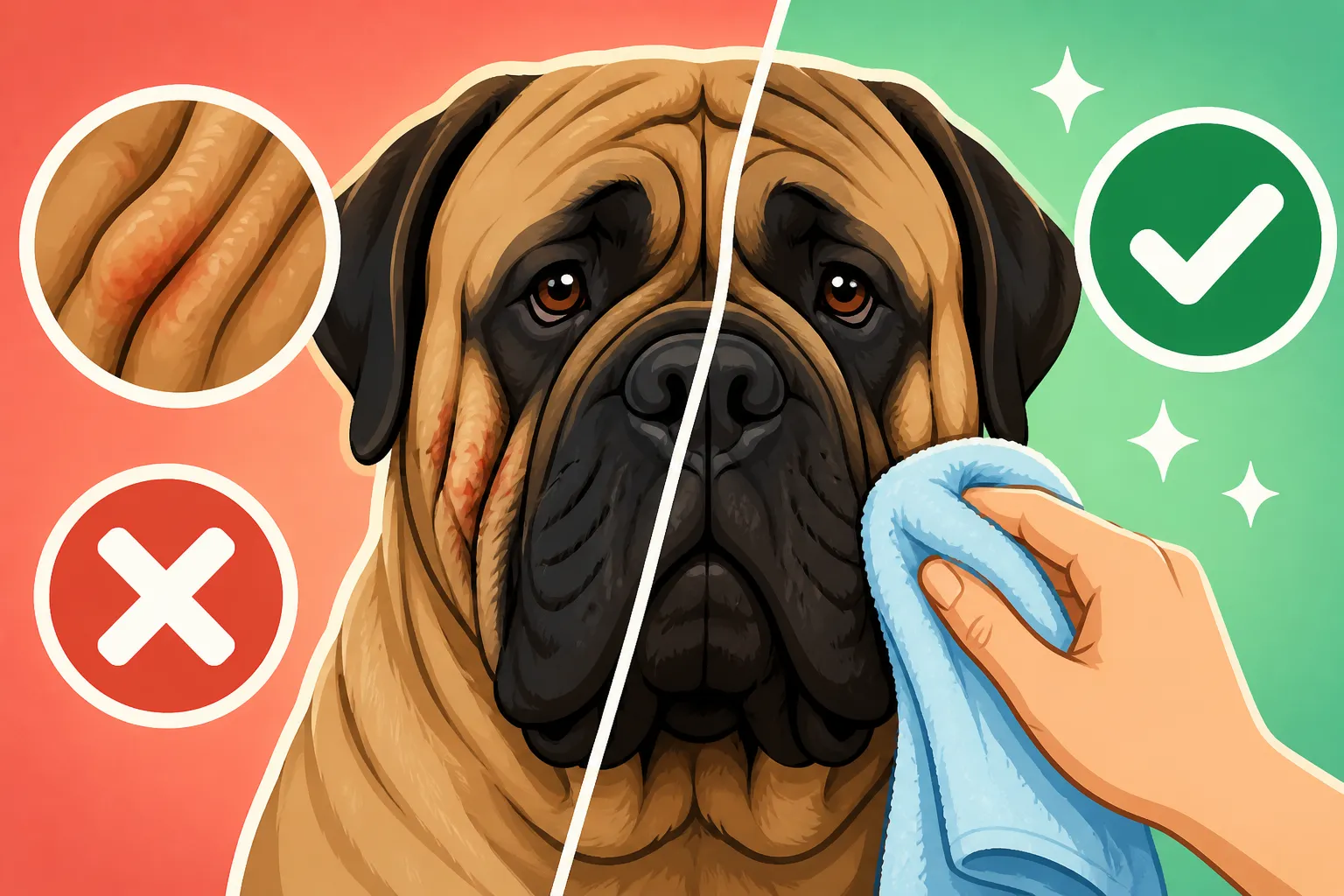
The number one enemy of a Mastiff's skin folds is persistent moisture, because it creates the perfect breeding ground for both bacteria and yeast. When skin stays wet, the natural protective barrier weakens, and the normal flora living on the skin can overgrow. Bacterial infections often manifest as red, inflamed patches that can be painful, itchy, and may even weep fluid. You might notice a foul odor or discharge. Yeast infections, particularly caused by Malassezia yeast, are also incredibly common in these moist, warm folds. These typically present as reddish-brown discoloration, greasiness, and a distinct, often sweet or musty smell, sometimes described as like "corn chips." Both types of infections make your Mastiff incredibly uncomfortable, leading to excessive rubbing or scratching, which only exacerbates the problem.
Imagine trying to keep a raw wound clean and dry if it's constantly trapped in a sweaty, dark environment – that's essentially what happens to the skin inside those folds. The trapped moisture and lack of airflow prevent the skin from healing and create a breeding ground for opportunistic microbes.
Skin Fold Dermatitis and Its Discomfort
Skin fold dermatitis, also known as intertrigo, is the general term for inflammation within the skin folds. It’s caused by a combination of friction, heat, moisture, and the subsequent overgrowth of bacteria or yeast. This condition can be incredibly painful for your Mastiff. The skin becomes red, raw, and ulcerated in severe cases. Your dog might show signs of discomfort such as constantly rubbing their face on furniture or the carpet, being reluctant to let you touch their face, or becoming withdrawn.
The constant irritation can lead to a vicious cycle: the dog licks or rubs the area to relieve the itch, which introduces more moisture and bacteria, worsening the inflammation. This is why proactive drying is not just about cleanliness, but about preventing a cascade of painful symptoms. The discomfort can significantly impact your Mastiff's quality of life, making even simple things like eating or sleeping difficult. For many owners, recognizing Signs a Mastiff's Fold Has Become Infected is crucial before the condition escalates.
The Long-Term Consequences of Chronic Moisture
Leaving folds chronically damp can lead to more than just acute infections. Over time, persistent inflammation and infection can cause permanent changes to the skin. The skin in affected areas can thicken, darken (hyperpigmentation), and become hairless. Scar tissue might form, making the folds even deeper and harder to clean and dry in the future. This creates a difficult cycle where the problem becomes harder to manage with each recurrence.
Chronic infections can also impact your Mastiff's overall health and wellbeing. They can lead to systemic issues if the infection spreads, and the constant pain and irritation can contribute to stress and behavioral changes. Furthermore, repeated trips to the vet for treatment of recurring skin fold dermatitis can become a significant financial and emotional burden. It’s a testament to the fact that prevention through consistent, thorough drying is far better than a cure. You can refer to How Often a Mastiff's Folds Need Cleaning to establish a routine that mitigates these risks.
The Art of Thorough Drying: Techniques and Tools
So, you've just cleaned your Mastiff's folds with a gentle wipe or during their bath. Now comes the crucial step: drying. This isn't just a quick pat; it's a methodical process that ensures every crevice is free of lingering moisture. Doing this right can make all the difference in preventing uncomfortable skin issues for your big friend. It requires patience and the right tools, but it's an essential part of responsible Mastiff care.
Gentle Towel Drying Methods
The first line of defense against moisture is a soft, absorbent towel. After cleaning, gently pat each fold dry. Don't rub vigorously, as this can irritate the delicate skin. Instead, press the towel firmly but kindly into each crevice, allowing it to soak up as much moisture as possible. For deeper folds, you might need to use the edge of a clean, dry washcloth or even a cotton ball or pad to reach into those tighter spots.
It’s a good idea to have several clean, dry towels on hand, especially for a full bath, as one towel might quickly become saturated. Focus on one fold at a time, making sure you lift and separate the skin to expose the hidden dampness beneath. This is where patience truly pays off. If you’re struggling to reach the very bottom of a deep fold, a clean microfiber cloth can be excellent, as its fine fibers are highly absorbent and can wick away moisture effectively. You'll find a great selection of super absorbent pet towels on platforms like Amazon.
The Role of Air Drying and Fans
While towel drying is crucial for initial moisture removal, air drying is the next vital step, especially for those areas that are difficult to reach or ventilate. After towel drying, allow your Mastiff to air dry thoroughly in a warm, dry room. Avoid letting them lie down on damp surfaces immediately after a cleaning or bath, as this can trap moisture against their skin.
For an extra boost, a cool-setting hairdryer (held at a safe distance and never pointed directly at the skin for too long) or a small, portable fan can be incredibly effective. The gentle airflow helps evaporate any residual moisture, ensuring the skin is completely dry. Always use the coolest setting on a hairdryer to prevent skin burns, and keep it moving. If using a fan, position it so that it gently circulates air around your Mastiff's face and body, paying special attention to those wrinkled areas. Just be sure your Mastiff is comfortable with the sensation and sound, introducing it slowly with positive reinforcement.
Recommended Drying Products and Powders
Sometimes, a little extra help is needed, especially for Mastiffs with very deep folds or those prone to recurring issues. After thorough towel and air drying, you can apply a small amount of a vet-approved drying powder. These powders often contain ingredients like zinc oxide or cornstarch (make sure it's not talc, which can be irritating or harmful if inhaled) which absorb moisture and create a barrier against further dampness. Always ensure the skin is completely dry before applying powder, as applying it to wet skin can trap moisture and worsen the problem.
Another option is to use pet-specific anti-fungal or antibacterial wipes if your vet recommends them, particularly for areas prone to yeast or bacterial overgrowth. These wipes can offer a secondary layer of protection after drying, addressing any lingering microbial concerns. You can explore a wide variety of these specialized cleaning and drying aids on Chewy's website, often with detailed descriptions and customer reviews to help you choose. Remember, any product you introduce should be specifically formulated for pets and approved by your veterinarian to ensure it's safe for your Mastiff's sensitive skin. What to Clean a Mastiff's Wrinkles With provides further insight into suitable cleaning agents.
Maintaining Fold Health Between Cleanings
Cleaning and thoroughly drying your Mastiff's folds isn't a one-and-done event; it's an ongoing commitment. The goal is to prevent moisture and debris from accumulating in the first place, reducing the need for intensive interventions. By integrating simple daily habits and considering broader lifestyle factors, you can help keep your Mastiff's skin healthy and comfortable between more thorough cleaning sessions. It's all about consistent, proactive care.
Daily Checks and Quick Wipes
Even on days when a full cleaning isn't scheduled, a quick daily check of your Mastiff's most prominent folds can save a lot of trouble. Gently lift the skin around their muzzle, eyes, and any other areas prone to dampness. Look for any redness, dampness, discharge, or unusual odors. If you spot anything, a quick wipe with a soft, dry cloth or a pet-specific cleansing wipe can often nip a potential problem in the bud.
These quick wipes are especially important after meals, particularly if your Mastiff is a messy eater, or after they've had a big drink. Food particles, saliva, and water can easily become trapped, providing sustenance for bacteria and yeast. Keeping a pack of gentle, unscented puppy wipes (check for ingredients that are safe for ingesting, since these are often near the mouth) handy can make these daily clean-ups fast and easy. Consistency is key here; a minute or two each day can prevent hours of discomfort and vet visits down the line. Whether a Mastiff's Nose Wrinkle Needs Daily Attention goes into detail on specific facial areas.
The Importance of a Balanced Diet for Skin Health
You might not immediately connect diet with skin folds, but what your Mastiff eats plays a huge role in their overall skin health. A high-quality, balanced diet provides the essential nutrients, fatty acids, and vitamins needed for a strong skin barrier and healthy coat. Deficiencies or allergies can manifest as skin problems, including increased inflammation or susceptibility to infections, which can worsen issues in the folds.
Consider a diet rich in omega-3 and omega-6 fatty acids, often found in fish oils or specially formulated foods. These can help reduce inflammation and improve skin integrity. Some Mastiffs may also benefit from novel protein diets if they have suspected food sensitivities contributing to skin irritation. Always consult with your veterinarian before making significant dietary changes. Brands like Ollie, which offer fresh, human-grade food, can be an excellent option for some Mastiffs, as their recipes are often formulated with high-quality ingredients that support overall health, including skin and coat condition. A healthy diet from the inside out helps their body's natural defenses against skin fold issues.
Environmental Factors and Mastiff Skin
Your Mastiff's environment also plays a significant role in their skin fold health. High humidity can make it much harder to keep folds dry, even with diligent wiping. If you live in a humid climate, consider using a dehumidifier indoors, especially in the rooms where your Mastiff spends most of their time. This can help reduce ambient moisture that might settle into their folds.
Furthermore, ensure their bedding is always clean and dry. Damp, dirty bedding can transfer moisture and bacteria back into their folds. Regularly washing their beds and blankets in hot water is a simple yet effective measure. Protecting your Mastiff from prolonged exposure to wet grass or puddles, especially after a bath, also helps. If they're going to be outside in damp conditions, a quick towel-down of their folds upon returning indoors is a smart habit. Providing a comfortable, dry, and clean resting environment is fundamental to preventing chronic skin issues. Consider Whether a Mastiff Gets Skin Fold Infections for a broader perspective on environmental impacts.
When to Seek Veterinary Help for Skin Fold Issues
Despite your best efforts, sometimes skin fold issues can still develop or worsen. It’s important to know when a problem is beyond home care and requires professional veterinary attention. Delaying treatment can lead to increased discomfort for your Mastiff and more complicated, expensive solutions down the road. Being observant and knowing the warning signs will ensure your gentle giant gets the help they need promptly.
Recognizing the Signs of Infection or Severe Irritation
Early detection is critical. While minor redness might respond to diligent cleaning and drying, certain signs indicate that an infection or severe irritation is taking hold. Look for:
- Intense Redness and Inflammation: More than just a slight pinkness, but deep red, angry-looking skin within the folds.
- Foul Odor: A strong, unpleasant smell, often yeasty or rotten, emanating from the folds.
- Discharge: Pus-like discharge, greenish-yellow weeping, or thick, brownish-red gunk.
- Pain or Sensitivity: Your Mastiff flinches, pulls away, or vocalizes when you try to touch the affected area.
- Lethargy or Loss of Appetite: If your dog is in significant discomfort, they might act generally unwell.
- Swelling: Noticeable puffiness around the folds.
- Bleeding: If the skin is so raw that it's bleeding.
If you observe any of these symptoms, it’s time to call your vet. Don’t try to self-diagnose or treat with human products, as many are harmful to dogs. A veterinarian can accurately diagnose the issue and prescribe appropriate treatment. It is covered further in Whether a Mastiff's Fold Infection Needs Antibiotics.
The Diagnostic Process for Skin Fold Dermatitis
When you take your Mastiff to the vet for suspected skin fold issues, they will typically start with a thorough physical examination. This includes carefully examining all affected skin folds, lifting them to get a clear view of the underlying skin. They’ll also ask you questions about your Mastiff’s history, diet, and your cleaning routine.
To accurately diagnose the type of infection (bacterial, yeast, or both), your vet will likely perform some basic diagnostic tests. These usually involve:
- Cytology: This is a simple procedure where a swab or a piece of tape is pressed onto the affected skin, then transferred to a microscope slide. The vet can then examine the cells to identify the presence and type of bacteria or yeast. This is often done right in the clinic.
- Skin Scraping: In some cases, to rule out parasites like mites, a skin scraping might be performed.
- Culture and Sensitivity: For more stubborn or recurrent bacterial infections, your vet might take a culture to identify the specific type of bacteria and determine which antibiotics will be most effective.
These tests are crucial for guiding the correct treatment plan, as different types of infections require different medications. They ensure that your Mastiff receives targeted therapy, rather than a generic approach that might not be effective.
Veterinary Treatment Options
Once a diagnosis is made, your vet will prescribe a treatment plan tailored to your Mastiff’s specific needs. Treatment for skin fold dermatitis often involves a combination of approaches:
- Topical Medications: These are applied directly to the affected skin. They can include medicated shampoos, antimicrobial wipes, creams, or ointments that contain antibiotics, antifungals, or anti-inflammatory agents. For example, your vet might recommend a medicated wipe available from Chewy or a similar pet supply retailer, or prescribe a specialized ointment.
- Oral Medications: For more severe or widespread infections, oral antibiotics or antifungals may be prescribed. Steroids might also be used orally to reduce severe inflammation and itching.
- Pain Relief: If your Mastiff is in significant pain, your vet may prescribe pain relief medication to keep them comfortable during the healing process.
- Lifestyle Adjustments: Your vet will also reinforce the importance of meticulous cleaning and drying routines, dietary considerations, and environmental management. They might advise specific cleansing solutions or powders to use.
In rare, severe, or chronically problematic cases that don't respond to medical management, surgical removal of the skin folds (known as a fold resection or cheiloplasty for facial folds) might be considered as a last resort. This is a significant procedure and is only recommended when all other avenues have been exhausted. However, with consistent care and prompt veterinary intervention when needed, most Mastiffs can live comfortably with their beautiful folds.
| Common Skin Fold Issues & Signs | Primary Cause | Key Symptoms | Recommended Action |
|---|---|---|---|
| Skin Fold Dermatitis (Intertrigo) | Moisture, friction, poor ventilation | Redness, inflammation, raw skin, foul odor, discharge, pain. | Thorough cleaning, meticulous drying, topical vet-approved ointments. Vet visit for severe cases. |
| Bacterial Infection (Pyoderma) | Bacterial overgrowth in moist folds | Red pustules, crusts, pus-like discharge, itching, foul smell. | Vet diagnosis (cytology), prescription antibiotics (topical/oral). Continued drying. |
| Yeast Infection (Malassezia Dermatitis) | Yeast overgrowth in moist folds | Greasy skin, reddish-brown discoloration, musty/sweet odor (corn chips), itching. | Vet diagnosis (cytology), prescription antifungals (topical/oral). Continued drying. |
| Hair Follicle Infection (Folliculitis) | Bacterial infection of hair follicles | Small red bumps, pustules around hair shafts within folds. | Vet diagnosis, similar treatment to pyoderma, careful grooming to keep follicles clear. |
| Ulceration | Severe, chronic irritation and infection | Open sores, bleeding, deep raw areas. | Immediate vet attention. Stronger topical/oral medications, potentially pain management. |
Disclaimer
This article is for general informational purposes only and does not constitute professional advice. Laws, prices and regulations vary by location and change over time. Consult a qualified professional for guidance on your specific situation.