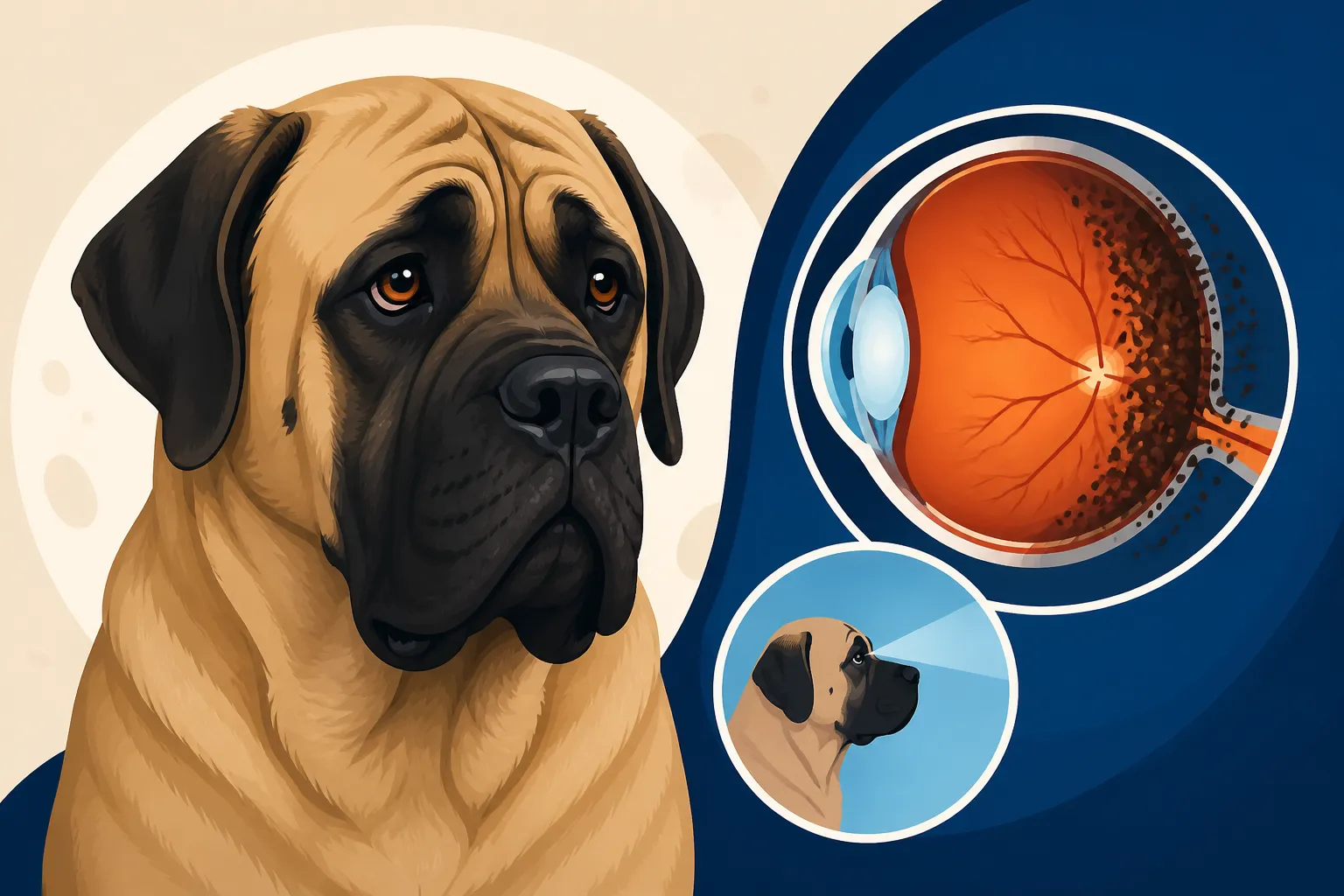
How Common Progressive Retinal Atrophy Is in Mastiffs
It’s truly disheartening to see our beloved Mastiffs, those gentle giants, facing health challenges, especially when it affects something as fundamental as their sight. Many Mastiff owners find themselves worrying about the silent threat of genetic eye conditions, wondering just how prevalent they truly are and what steps they can take. This comprehensive guide aims to shed light on Progressive Retinal Atrophy (PRA) in Mastiffs, detailing its commonality, genetic underpinnings, and what it means for you and your cherished companion.
Understanding Progressive Retinal Atrophy in Mastiffs
Progressive Retinal Atrophy (PRA) isn't a single disease but rather a blanket term for a group of inherited degenerative eye disorders that affect the retina, leading to blindness. For Mastiffs, specifically, a form of PRA known as progressive rod-cone degeneration (prcd) or more specifically, the rcd4 variant, has been identified as a significant concern within the breed. This condition systematically destroys the photoreceptor cells—the rods and cones—at the back of the eye, which are responsible for detecting light. It’s a cruel progression, often starting subtly and advancing gradually, leaving owners feeling helpless as their dog's world slowly dims.
What Happens to the Retina
Imagine the retina as the film in a camera. It captures light and sends those signals to the brain, allowing your dog to see. In a Mastiff with PRA, these crucial photoreceptor cells begin to deteriorate. Typically, the rods, which are responsible for vision in dim light and detecting movement, are affected first. This is why one of the earliest signs you might notice is your Mastiff becoming hesitant in low-light conditions or bumping into furniture in the evening, sometimes leading to the question of whether a Mastiff loses night vision first. As the disease progresses, the cones, responsible for day vision and color perception, also start to degrade. It's a slow, relentless march towards complete blindness, a journey that can take months or even years, depending on the individual dog and the specific genetic mutation. This process is generally not painful, but the loss of vision itself is profoundly disorienting and impactful for a dog.
Early Signs and Symptoms
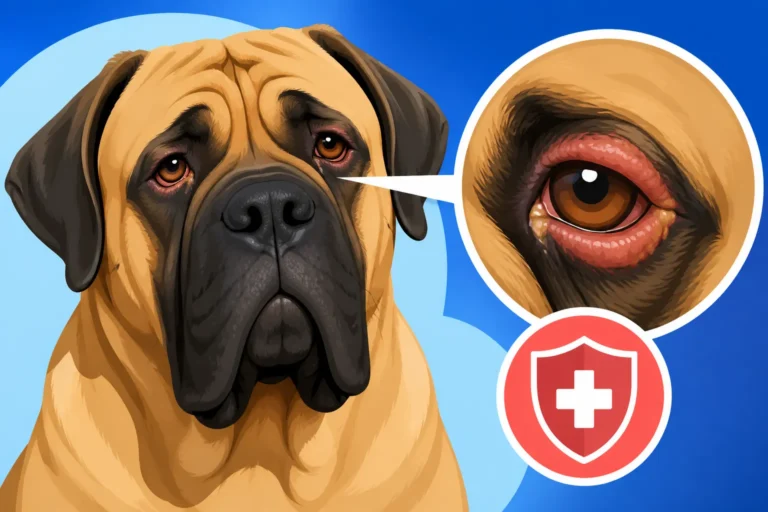
Recognizing the subtle cues that your Mastiff's vision might be failing can be challenging because these dogs are incredibly adaptable, relying on their other senses. Often, the first sign owners report is nyctalopia, or night blindness. Your Mastiff might be reluctant to go outside in the dark, stumble on familiar paths after dusk, or seem startled by unexpected movements in poorly lit rooms. As the condition advances, you might notice wider pupils, even in bright light, as the eye tries to let in more light to compensate for the failing retina. Their navigation skills might decline even in daylight, leading to bumping into objects or an increased hesitancy in new environments. They might become more clingy, relying on you more heavily for guidance. It's a sad realization when you first notice these changes, but understanding them can help you provide better support. You might also notice a dull, reflective sheen in their eyes, sometimes described as a "tapetal reflection," caused by the thinning of the retina.
The Genetic Reality: How Common is PRA in the Breed?
When we talk about how common Progressive Retinal Atrophy is in Mastiffs, it’s important to understand that this isn't a disease that affects every dog, but its genetic footprint is present within the breed. Unlike some conditions that are widespread, PRA in Mastiffs, specifically the rcd4 variant, is thankfully not at epidemic levels, but it is certainly prevalent enough to warrant serious attention from breeders and owners alike. The issue isn't just about affected dogs, but also about the carriers who silently pass the gene down through generations. The good news is that because it's a known genetic condition, we have tools to identify it and, theoretically, manage its occurrence within the breed.
Inheritance Patterns of Mastiff PRA
The specific form of PRA (rcd4) found in Mastiffs is inherited in an autosomal dominant pattern. This means that unlike many recessive genetic diseases where a dog needs two copies of the faulty gene to be affected, a Mastiff only needs one copy of the defective rcd4 gene to develop the disease. This is a critical distinction that many people find surprising, particularly when they learn why Mastiff Retinal Atrophy needs only one copy of the gene. What this means in practical terms is that if just one parent carries a single copy of the rcd4 gene, there's a 50% chance with each puppy that it will inherit that gene and eventually develop PRA. This is different from how some other genetic diseases operate and impacts breeding decisions significantly, as detailed in discussions around how dominant inheritance works in Mastiff PRA. It also means that even if a Mastiff carrier of PRA goes blind too, a carrier with just one copy won't necessarily go blind, but an affected dog (with one or two copies) will.
Prevalence and Risk Factors
Pinpointing an exact percentage of Mastiffs affected by PRA is tricky without comprehensive, mandatory testing across the entire global population. However, genetic studies and breed health surveys indicate that the rcd4 gene is present in the Mastiff gene pool. Reputable breeders actively screen for it, which has helped control its spread. But in lines where testing has been overlooked, the risk remains higher. It's not uncommon for owners to discover PRA symptoms in their Mastiff as it ages, often before they even knew about the genetic test. The primary risk factor is, simply put, genetics. If a Mastiff has an affected parent, or even a carrier parent (if the other parent is also affected, which is less common for dominant traits to produce affected offspring from a carrier parent), their risk increases dramatically. Age is also a factor in terms of symptom onset, with the condition typically manifesting later in life.
The table below provides a simplified overview of how the rcd4 gene is inherited and the resulting outcomes:
| Parent 1 Status | Parent 2 Status | Offspring Outcome | Risk of Affected Offspring |
|---|---|---|---|
| Clear | Clear | All Clear | 0% |
| Clear | Carrier | 50% Clear, 50% Carrier | 0% |
| Clear | Affected | 50% Carrier, 50% Affected | 50% |
| Carrier | Carrier | 25% Clear, 50% Carrier, 25% Affected | 25% |
| Carrier | Affected | 50% Carrier, 50% Affected | 50% |
| Affected | Affected | All Affected | 100% |
Note: For dominant conditions like rcd4 PRA in Mastiffs, an 'Affected' dog has at least one copy of the mutated gene and will develop the disease. A 'Carrier' for a dominant disease typically means they carry the gene but might not show symptoms or are not fully penetrant, but for rcd4 in Mastiffs, one copy does cause the disease. Therefore, "Carrier" in the table refers to a dog that inherited one copy and will be affected. The terminology can be confusing, but the key takeaway is that if a dog inherits one copy of the rcd4 mutation, it will develop PRA. This table assumes we are differentiating between "Clear" (no copies) and "Affected" (one or two copies). Most dogs with dominant disorders like rcd4 have one affected parent and inherit one copy. Getting two copies of a dominant gene is rare and often leads to more severe phenotypes.
Diagnosis, Progression, and Support for Affected Mastiffs
Receiving a diagnosis of Progressive Retinal Atrophy for your Mastiff can be devastating, but it's important to remember that it's not a death sentence. While there is currently no cure for PRA, understanding the progression of the disease and how to best support your Mastiff can significantly improve their quality of life. Early diagnosis through genetic testing can allow you to prepare, but even if symptoms have already appeared, there are many ways to adapt and help your dog thrive.
Diagnosing PRA: Beyond Symptoms
The definitive diagnosis for rcd4 PRA in Mastiffs relies on a specific DNA test that finds Mastiff PRA. This test can be performed at any age, even on a young puppy, offering valuable information for breeders and prospective owners pondering whether a Mastiff puppy can be tested before purchase. A simple cheek swab or blood sample is all that's needed, and specialized veterinary genetics labs can analyze it. While a veterinary ophthalmologist can conduct an eye exam and observe retinal changes typical of PRA, the genetic test confirms the specific rcd4 mutation. This distinction is crucial because other eye conditions, like cataracts or retinal detachments, can also cause vision loss, but only a DNA test will confirm the inherited PRA. Knowing what the Mastiff PRA test costs can help owners budget for this important screening. Some pet insurance providers, like Healthy Paws, may offer coverage for diagnostic testing or specialist consultations if the condition isn't pre-existing, which is something to consider for lifelong care.
The Progression of Vision Loss
The age a Mastiff's vision starts to go can vary, but generally, rcd4 PRA in Mastiffs has a relatively late onset compared to some other forms of PRA. Owners typically start noticing signs of vision impairment between 3 to 6 years of age, though it can sometimes be earlier or later. The progression is gradual, which can be both a blessing and a curse. It allows your Mastiff time to adjust to their diminishing sight, relying more on their acute sense of smell and hearing. However, it also means a prolonged period of uncertainty and adaptation. Owners often ask how fast a Mastiff loses its sight; for rcd4 PRA, it's usually a slow, steady decline over several months to a few years, eventually leading to complete blindness, addressing whether a Mastiff goes fully blind from PRA. This slow process gives you ample opportunity to implement supportive measures.
Supporting a Blind Mastiff
Living with a blind Mastiff requires patience, empathy, and some practical adjustments around the home. Consistency is key: try not to move furniture around unnecessarily, keep pathways clear, and maintain a predictable routine. Scent markers (like essential oils on furniture legs) can help your dog navigate. Use verbal cues consistently for direction (e.g., "step up," "watch out," "this way"). Keep them safe by using a leash during walks and being mindful of new environments. Ramps can be helpful for getting into vehicles or onto furniture if they were accustomed to it. Toys that crinkle, squeak, or dispense treats can help keep them engaged. Regular veterinary check-ups are still important to monitor overall health and ensure there aren't any secondary eye issues. Considering pet insurance from companies like Healthy Paws from a young age can be invaluable, offering peace of mind should other health issues arise, or for ongoing supportive care. Your Mastiff will rely on you more than ever, and with your love and support, they can still lead a fulfilling and happy life.
Responsible Breeding and the Future of Mastiff Eye Health
The goal of any responsible breeder is to produce healthy, sound dogs that embody the best traits of the breed. When it comes to genetic conditions like PRA, this means taking proactive steps to understand and mitigate its presence in breeding lines. The prevalence of rcd4 PRA in Mastiffs highlights the critical role breeders play in maintaining the long-term health and integrity of the breed. By making informed decisions, breeders can significantly reduce the incidence of this heartbreaking condition.
The Role of Genetic Testing in Breeding
For any Mastiff considered for breeding, genetic testing for rcd4 PRA is an absolute non-negotiable. As we've discussed, this is a dominant condition, meaning even one affected parent can pass it on. Knowing the genetic status of both sire and dam is paramount. A clear dog (N/N) does not carry the mutation and will not develop PRA from this gene, nor will it pass it on. An affected dog (N/P or P/P, where P is the PRA mutation) will develop the disease and will pass on the mutation to its offspring. It is universally recommended that affected Mastiffs should not be bred, a strong answer to whether a Mastiff with PRA should be bred. The Mastiff Club of America and other responsible organizations strongly advocate for genetic health testing as part of a comprehensive breeding program. Breeders should be transparent about their dogs' health testing results, which speaks to whether a breeder should show a Mastiff's PRA result.
Ethical Breeding Practices
Beyond just testing, ethical breeding involves a holistic approach. It means making difficult decisions, sometimes choosing not to breed an otherwise wonderful dog if it carries a harmful genetic trait. Responsible breeders strive to eliminate genetic diseases from their lines, not simply manage them. They understand that even if only one parent is clear and the other is affected, there's still a 50% chance of producing affected puppies. The idea that two clear Mastiffs can produce an affected puppy is a misconception for a simple recessive trait; for dominant rcd4 PRA, if both parents are truly genetically 'clear' (N/N), then no affected puppies will be produced from rcd4. However, if one or both parents are simply symptom-free but genetically affected (having inherited one copy), then affected puppies are indeed possible. The key is genetic testing, not just symptom observation. Breeders should be willing to discuss health guarantees, provide copies of genetic test results, and offer ongoing support to puppy buyers. This commitment not only protects the individual puppies but also safeguards the future health of the entire Mastiff breed.
The Future of Mastiff Eye Health
The ongoing research into canine genetics offers a beacon of hope for conditions like PRA. As our understanding deepens, and with widespread adoption of genetic testing, we can aspire to a future where PRA is significantly reduced, if not entirely eliminated, from the Mastiff breed. However, this future relies heavily on continued vigilance from breeders and informed choices from puppy buyers. Always choose a breeder who prioritizes health testing, including eye certifications and specific DNA tests for PRA. Don't be shy about asking for proof of these tests. When looking at health and lifespan, understanding the commitment required, including potential veterinary costs that could be aided by pet insurance like Healthy Paws, is part of responsible ownership. By working together, the Mastiff community can ensure that these magnificent dogs continue to see clearly for as long as possible.
Disclaimer
Please remember that the information provided in this guide is for educational purposes only and should not be considered a substitute for professional veterinary advice. Always consult with a qualified veterinarian or a board-certified veterinary ophthalmologist for any health concerns or before making any decisions about your Mastiff's care.