Whether a Mastiff Suits Someone Who Cannot Lift It
A Mastiff can be owned by someone who cannot lift it if the home, training, and emergency plans manage mobility needs.
Is this the right one for you?
Origins and temperament, size and coat, what living with one is actually like, and how it compares to the breeds people weigh against it.
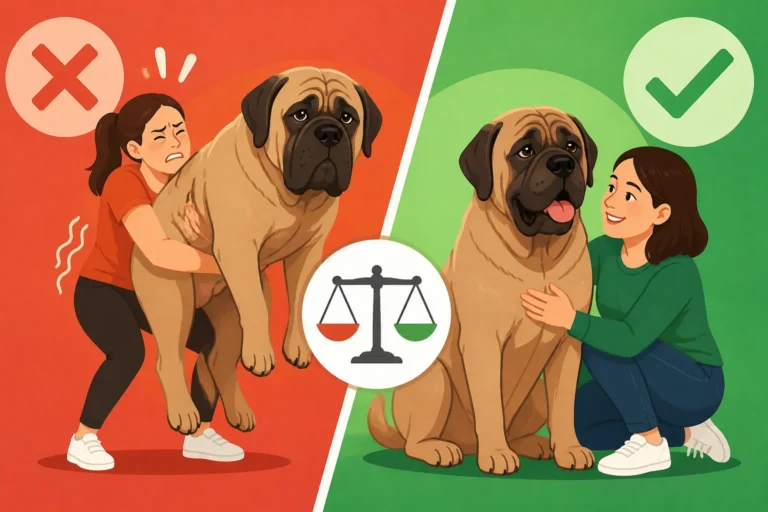
A Mastiff can be owned by someone who cannot lift it if the home, training, and emergency plans manage mobility needs.

Mastiff ownership during retirement requires evaluating physical strength, handling giant dog mobility, and managing daily care expenses safely.

Mastiff size and temperament safety risks around young children, including accidental falls and close supervision needs.

Mastiff yard requirements and home suitability details help owners evaluate apartment living, walks, and daily indoor routines.

Mastiff apartment living requires evaluating floor layouts, building access, and daily bathroom routines for giant dogs.

A Mastiff mix lifespan depends on size, health history, and genetics, offering no guaranteed extra years over purebreds.

Mastiff mix puppy traits, adult sizes, and health risks remain unpredictable because genes do not blend like paint.

The mastiff label appears across many large dog breeds because historical writers used the term for powerful, heavy-built workers.

Tibetan Mastiffs and English Mastiffs are distinct guardian breeds with separate histories, environments, builds, and coats.

Mastiff and Saint Bernard drooling levels compared, explaining breed anatomy and factors influencing daily saliva mess.