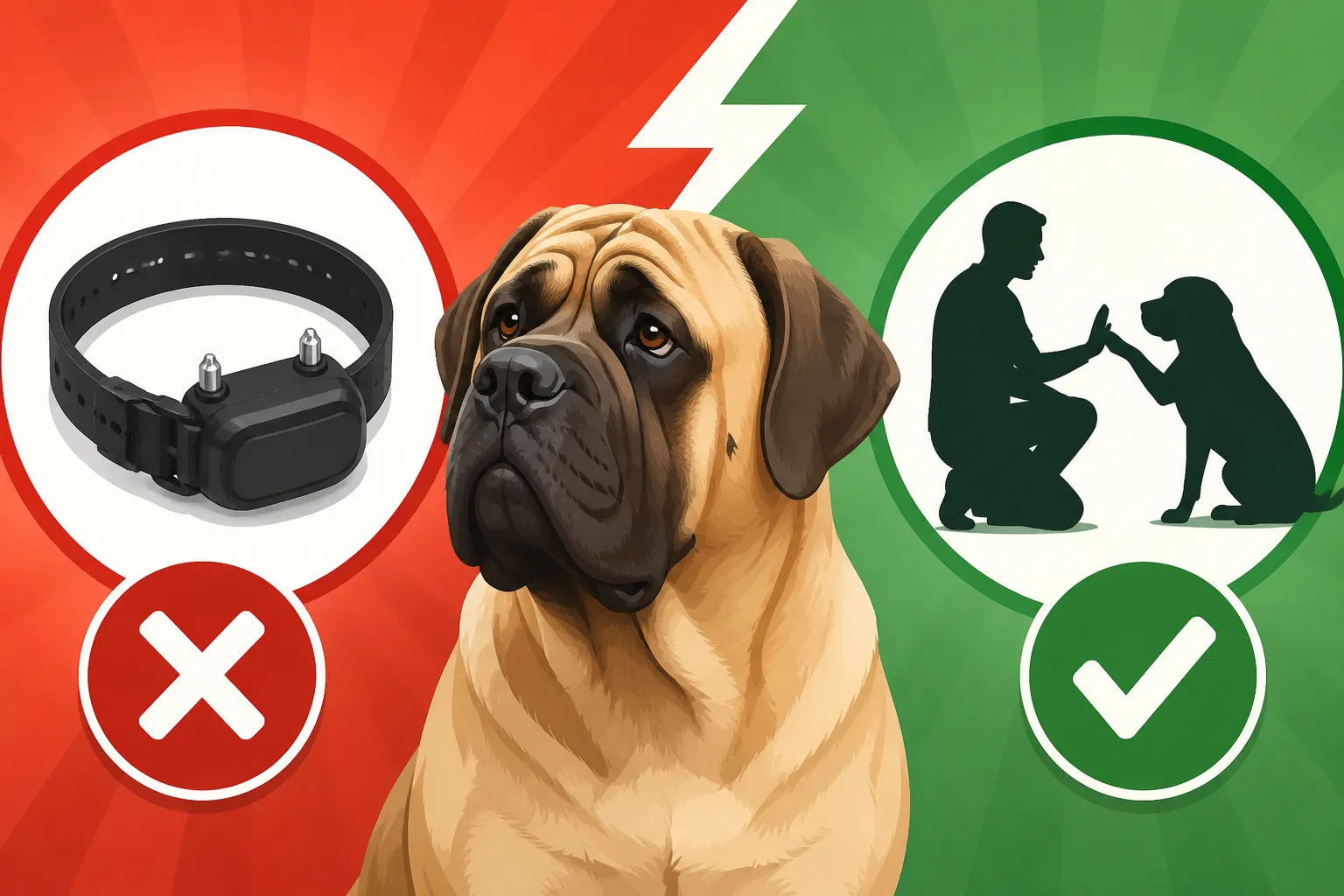
Whether an E-Collar Belongs on a Mastiff
When you're sharing your life with a magnificent Mastiff, the idea of maintaining control, especially on walks or in novel situations, can feel like a monumental task. These gentle giants are incredible companions, but their sheer size and strength can sometimes make an owner feel overwhelmed, leading many to explore every available training tool, including methods like e-collars. It's a common dilemma: how do you safely and effectively communicate with a dog that outweighs you by a significant margin? This guide aims to thoroughly explore the question of whether an e-collar is a suitable or even advisable tool for training your beloved Mastiff.
Understanding E-Collars in the World of Dog Training
The term "e-collar" itself often sparks immediate debate and misunderstanding among dog owners and trainers. It’s a piece of equipment that many consider either a miracle solution or an inhumane device, and the truth, as with most things in life, lies somewhere in the nuanced middle. For a Mastiff owner, understanding what these collars are, how they are designed to function, and the different philosophies surrounding their use is the first crucial step.
What an E-Collar Is (And Isn't)
Let's clarify what we're talking about. An e-collar, short for electronic collar, is a training device that delivers a stimulus to a dog via remote control. Historically, these were often referred to as "shock collars," a term that immediately brings up images of pain and punishment. While some early models might have been quite harsh, modern e-collars typically offer a wide range of settings, from a barely perceptible vibration or tingle to a more noticeable static pulse. Think of it more like the static you might feel when touching a doorknob after shuffling across carpet, rather than a painful electric shock. Many reputable trainers advocate for using the lowest possible level that simply gets the dog's attention, much like a tap on the shoulder. Some models even include a spray function, releasing a burst of citronella or plain air, which serves as a novel, startling sensation rather than a physical correction.
How E-Collars Are Typically Used in Training
When used responsibly and by a knowledgeable handler, e-collars are often presented as a communication tool. The idea is to pair a low-level stimulation with a known command, or to use it as an interruption for unwanted behaviors at a distance. For instance, if your Mastiff is fixated on something across the park and ignoring your "come" command, a trainer might advise a very low vibration to re-engage their attention, followed immediately by praise and a reward when they turn towards you. It’s supposed to be about guiding, not punishing. The goal is often to create a reliable recall or to curb dangerous behaviors like chasing wildlife, especially in breeds with immense power and potential for mischief. The effectiveness, proponents argue, comes from the consistency and timing of the stimulation, not its intensity.
The Spectrum of Opinions on E-Collar Application
The debate surrounding e-collars is fierce and deeply rooted in differing philosophies of animal training. On one side, you have advocates who see them as an invaluable tool for safety and off-leash control, especially for powerful breeds where physical restraint or traditional positive reinforcement might not be enough in high-distraction environments. They emphasize that proper use involves careful conditioning, starting at very low levels, and always pairing the stimulation with positive reinforcement. It’s about creating a clearer line of communication, particularly over long distances.
On the other side, many trainers and animal welfare organizations strongly oppose e-collar use. They argue that even low-level static can cause fear, anxiety, and stress, potentially damaging the bond between dog and owner. They worry about misuse by inexperienced owners, leading to a dog that shuts down, becomes fearful, or even aggressive. Their philosophy centers on building behavior solely through positive reinforcement, rewards, and clear, fear-free communication. They believe that any reliance on aversive tools, no matter how mild, can have unintended negative consequences for a dog's emotional well-being. For a breed as sensitive as a Mastiff, this debate becomes even more critical.
The Unique Temperament of a Mastiff and Training Approaches
Mastiffs are not your average dog. Their history as guardians, combined with their incredible size, has shaped a temperament that is often described as noble, gentle, and deeply devoted. Understanding this inherent nature is paramount when considering any training method, especially one that involves aversive stimuli.
Mastiff Sensitivity and Trust
One of the most defining characteristics of a Mastiff is their surprising sensitivity, something many people don't expect from such a massive animal. They are deeply attuned to their owner's emotions and intentions. A harsh tone, a sharp tug on the leash, or an unexpected correction can cut them to the quick. They don't typically respond well to intimidation or force. Instead, they thrive on trust, respect, and a clear, consistent relationship built on positive interactions.
When you bring a Mastiff into your home, you're not just getting a pet; you're inviting a deeply loyal soul who sees you as their anchor. The Sensitivity Nobody Expects in a Two Hundred Pound Mastiff is a common revelation for new owners. This sensitivity means that training methods that might be tolerated by other, less emotionally complex breeds can be genuinely detrimental to a Mastiff. They learn best when they feel safe, understood, and motivated by reward and praise, rather than fear of correction.
Why Force-Based Training Can Backfire on a Mastiff
Given their sensitive nature, force-based training methods, which include the misapplication of e-collars, are very likely to backfire with a Mastiff. Instead of fostering compliance, you might inadvertently instill fear, distrust, or even a stubborn refusal to cooperate. A Mastiff forced into submission isn't truly learning; they are merely reacting to avoid discomfort. This can lead to a dog that is physically present but mentally disengaged, or worse, one that develops anxiety, reactivity, or even aggression as a defense mechanism.
Imagine trying to teach a child by constantly scolding them or giving them a mild electric shock every time they make a mistake. They might stop the unwanted behavior in the short term, but their spirit would be crushed, and their desire to learn would vanish. The same principle applies to a Mastiff. Their intelligence isn't quick and flashy; it's deliberate and thoughtful. They need time to process, and they need to feel that their efforts are valued. Why Harsh Correction Ruins a Mastiff is a topic that resonates deeply with anyone who has lived with these dogs; their trust is hard-won and easily shattered.
The Power of Positive Reinforcement for Giants
The good news is that Mastiffs respond beautifully to positive reinforcement. They are incredibly eager to please the people they love and adore a good treat or a happy "good dog!" Their intelligence, while sometimes appearing stubborn, is actually quite profound. They'll assess a situation, think about what you want, and if they feel rewarded for trying, they'll offer the desired behavior again.
Using methods that focus on rewarding good choices – whether it's sitting patiently, walking nicely on a leash, or coming when called – builds a stronger, more joyful bond. This approach makes training a collaborative effort, not a power struggle. It also encourages your Mastiff to think and make good decisions, rather than just waiting for a command or avoiding a negative stimulus. Tools like clickers, high-value treats, and enthusiastic praise are far more effective in shaping a confident, well-behaved Mastiff. Many online programs, such as those offered by BAXTER & Bella, lean heavily into these positive, relationship-building methods, which are ideal for a Mastiff's temperament. What Actually Motivates a Mastiff often comes down to their desire for connection and pleasing their beloved humans.
Practical Considerations and Potential Pitfalls with E-Collars on a Mastiff
While the philosophical debate about e-collars is important, there are also very real, practical concerns that Mastiff owners must weigh if they consider using such a device. The sheer scale of these dogs introduces unique challenges that aren't always present with smaller breeds.
Navigating a Mastiff's Immense Size and Strength
Let's be realistic: a Mastiff is a powerhouse. An adult male can easily exceed 200 pounds. While an e-collar might offer a perceived "remote control" advantage, it doesn't diminish their physical capabilities. If a Mastiff decides to charge after a squirrel, or plant its feet and refuse to move – a common Mastiff maneuver – an e-collar, even on a higher setting, might not be enough to override their ingrained drive or stubborn streak. And relying on an e-collar to stop a 200-pound dog could be catastrophic if that stimulation causes them to panic or react unpredictably.
Furthermore, applying an e-collar correctly on a Mastiff requires a precise fit. Their thick necks, substantial jowls, and loose skin mean that ensuring the contact points are consistently touching the skin can be a challenge. A collar that's too loose will be ineffective, while one that's too tight could cause discomfort or skin irritation. Finding accessories, even training specific ones, for a Mastiff's unique dimensions is often tricky. You'll find many standard training tools are simply not built for their massive size, often requiring custom or specialized equipment, which you might find by carefully searching for "giant breed" options on platforms like Amazon.
Behavioral Risks and Unintended Consequences of E-Collar Misuse
The biggest risk with e-collars, especially for a sensitive breed like the Mastiff, is misuse or misinterpretation. A Mastiff might associate the static pulse not with their unwanted behavior, but with something entirely unrelated – a passing child, another dog, or even you. This misassociation can lead to fear-based aggression or extreme shyness. A dog that is constantly being corrected, even mildly, without truly understanding why, can quickly become a shut-down, anxious animal.
Consider a Mastiff who is reactive on a leash. If an e-collar is used to correct their lunging or barking, they might not learn to be calm around other dogs; instead, they might learn that other dogs predict an unpleasant sensation, intensifying their fear and reactivity. This isn't just theory; it's a documented phenomenon in animal behavior. Instead of solving the problem, you could be creating a deeper, more dangerous one. Leash Reactivity in a Two Hundred Pound Mastiff is a serious issue that demands thoughtful, positive intervention, not tools that could exacerbate fear.
| Training Tool | How it Works | Pros for a Mastiff | Cons for a Mastiff |
|---|---|---|---|
| E-Collar (Static) | Delivers static pulse or vibration via remote control | Can provide remote interruption/communication for some dogs | High risk of fear/anxiety in sensitive Mastiffs; potential for misuse; misassociation; may not override strong drives; difficult fit due to jowls |
| Long Line | Extra-long leash (15-50ft) for supervised freedom | Allows practice of recall and distance commands safely | Requires constant attention; can get tangled; still requires physical intervention if Mastiff is determined |
| Front-Clip Harness | Leash attaches at chest, turns dog when they pull | Reduces pulling without neck pressure; good for control | Can restrict shoulder movement if not fitted correctly; may rub under armpits; not for off-leash |
| Head Halter | Fits over muzzle, gives control similar to horse halter | Excellent leverage for control, redirects focus from pulling | Requires careful introduction and positive conditioning; some dogs dislike feeling on muzzle; can look like a muzzle |
| Clicker Training | "Click" marks desired behavior, followed by reward | Builds clear communication; reinforces positive behavior; low impact; fosters trust | Requires consistent timing and treats; slower process for some behaviors; not for remote correction |
Exploring Effective Alternatives for Mastiff Training
Thankfully, there are numerous humane and effective alternatives to e-collars for training a Mastiff. These methods focus on building a strong foundation of trust, clear communication, and positive motivation.
- Long Lines: A long line (15-50 feet) is an invaluable tool for teaching recall and practicing distance commands in a safe, open area. It gives your Mastiff the feeling of freedom while still allowing you to intervene physically if needed. This is much better than relying on remote correction, especially when teaching your Mastiff important behaviors like "come" before they A Mastiff Does Not Pull You Over, It Simply Stops.
- Front-Clip Harnesses: For managing a pulling Mastiff, a well-fitted front-clip harness can be a game-changer. By attaching the leash at the dog's chest, it redirects their forward momentum whenever they pull, gently turning them to the side. This makes walks more manageable without putting pressure on their sensitive neck.
- Head Halters: For Mastiffs that are particularly strong pullers or easily distracted, a head halter can offer excellent control. It works much like a horse's halter, allowing you to guide their head, and where the head goes, the body follows. Again, proper introduction with positive reinforcement is key.
- Positive Interrupters: Instead of an e-collar, use a distinctive sound (like a kissy noise, a specific word, or a whistle) to interrupt unwanted behavior, immediately followed by redirecting to an appropriate behavior and rewarding it. This creates a positive association with your interruption.
- Environmental Management: Sometimes the simplest solution is managing the environment. If your Mastiff is struggling with recall at the dog park, avoid it for a while. Work on foundational skills in a less distracting area. This reduces the need for any kind of aversive correction.
- Professional, Positive Reinforcement Trainers: Perhaps the most important alternative is seeking guidance from a qualified trainer who specializes in positive reinforcement and has experience with giant breeds. They can help you implement strategies that work with your Mastiff's unique temperament, not against it.
Making a Responsible Training Decision for Your Gentle Giant
Ultimately, the decision of what training tools to use rests with you. But when it comes to a Mastiff, that decision carries extra weight due to their physical power and deep emotional capacity. Prioritizing their well-being and maintaining a trusting relationship should always be at the forefront.
When to Seek Expert, Mastiff-Savvy Trainer Guidance
If you're finding yourself contemplating an e-collar, it's a strong indicator that you need professional help. This isn't a failing on your part; managing a Mastiff is a significant undertaking, and even experienced dog owners seek out specialized guidance. Look for trainers who:
- Are certified through reputable organizations (e.g., CCPDT, KPA-CTP).
- Emphasize positive reinforcement and force-free methods.
- Have direct experience working with Mastiffs or other giant breeds.
- Can teach you how to Teaching a Mastiff Before It Outweighs You using humane and effective techniques.
- Focus on teaching you how to train, rather than just training your dog for you.
A good trainer will help you understand your Mastiff's motivations, identify the root cause of challenging behaviors, and equip you with the skills and confidence to address them in a way that strengthens your bond. They can provide tailored advice, whether it's for house training, leash manners, or even Getting a Mastiff Through the Canine Good Citizen Test.
Prioritizing a Lifetime of Trust and Communication
Your Mastiff's lifespan, while sometimes shorter than we'd wish, is a precious journey. Building a relationship founded on trust, mutual respect, and clear, positive communication will enrich both your lives immensely. While the lure of a quick fix from an e-collar might seem tempting for managing a powerful dog, the potential costs to your Mastiff's emotional health and your shared bond are simply too high for many of us.
Instead, invest your time and energy into understanding your Mastiff, celebrating their unique quirks, and using methods that foster their confidence and willingness to cooperate. The rewards of positive training extend far beyond a well-behaved dog; they result in a happy, confident companion who loves and trusts you unequivocally. Remember, your Mastiff isn't just a pet; they are a family member who deserves your patience, understanding, and the most humane approach to their education.
Disclaimer
This article is for general informational purposes only and does not constitute professional advice. Laws, prices and regulations vary by location and change over time. Consult a qualified professional for guidance on your specific situation.