Whether a Prong Collar Belongs on a Mastiff
It's an all too familiar scene for many Mastiff owners: your gentle giant, who is usually so calm at home, suddenly transforms into a freight train on leash. The sheer power of a two hundred pound dog can be overwhelming, leading many to search desperately for a tool that promises control. This guide aims to thoroughly explore the use of prong collars on Mastiffs, delving into whether they are a suitable or safe option for our sensitive behemoths, and offering insight into more effective, humane training approaches.
Understanding the Mechanics of a Prong Collar
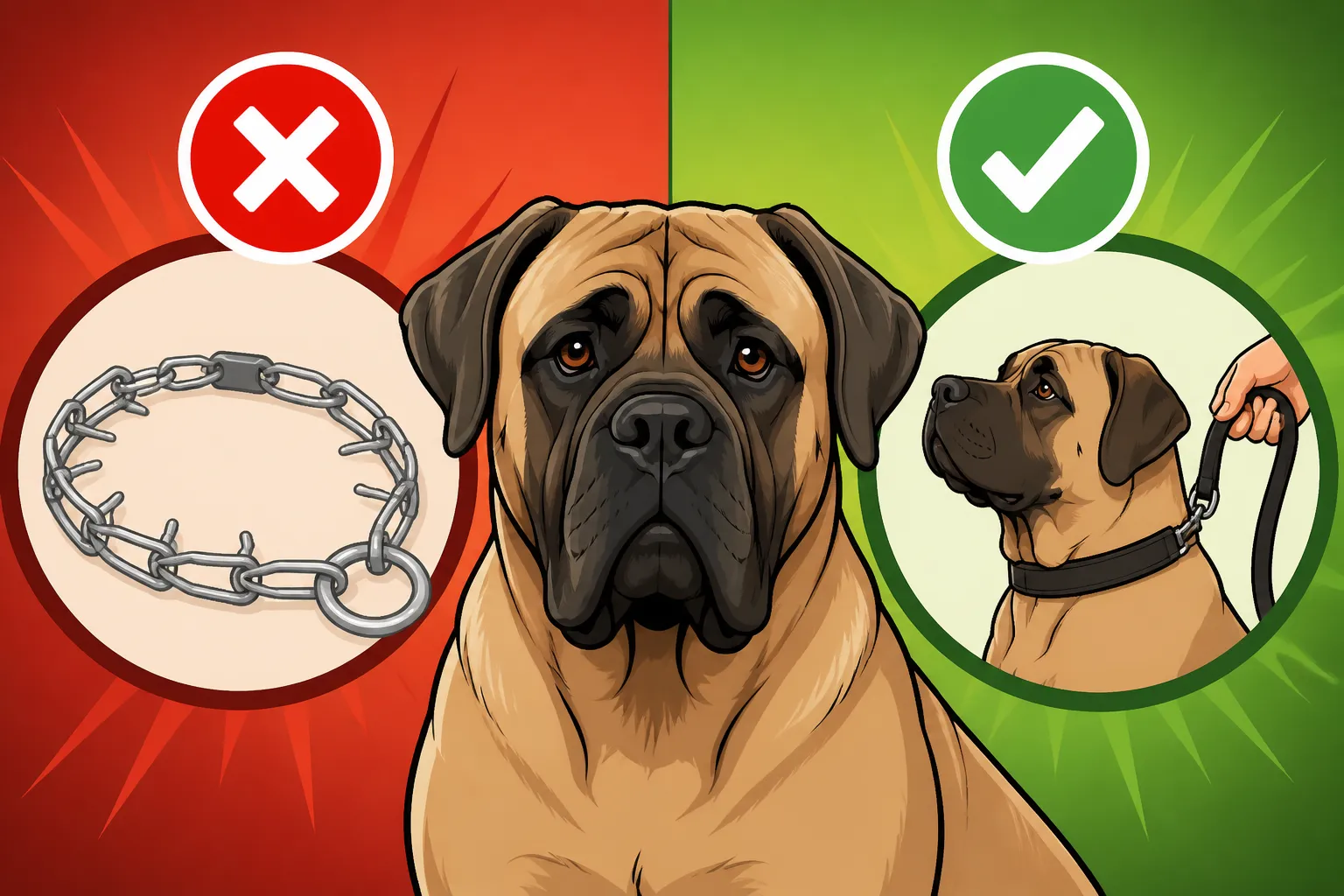
When you're struggling to manage a powerful Mastiff on a walk, the idea of a tool that can instantly curb pulling can sound incredibly appealing. Prong collars, sometimes called "pinch collars," are designed to do just that by applying pressure around the dog's neck. They consist of a series of metal links, each with blunt, inward-facing prongs that pinch the skin when the leash is tightened. The intention is to mimic the corrective nip a mother dog might give her puppies, or to create a sensation that discourages pulling without causing actual puncture wounds if used correctly.
However, the reality of how these collars feel to a dog, especially a Mastiff, can be quite different from the theoretical explanation. The pressure is distributed around the entire neck, often at a very sensitive spot, and it can be intense. For a Mastiff, whose neck is already substantial, the prongs are engaging with a significant amount of skin and muscle, and the sensation is anything but subtle. It's a constant reminder of discomfort or the threat of it, which is meant to interrupt unwanted behavior, but it doesn't teach the dog what to do instead.
The perceived effectiveness often comes from the dog reacting to the discomfort or pain by ceasing the pulling immediately. This is less about the dog learning proper leash manners and more about them learning to avoid the unpleasant sensation. In essence, it suppresses the behavior rather than truly training an alternative. Owners might see an immediate improvement and mistake this suppression for actual understanding or cooperation, when in fact, the dog is simply trying to escape the negative stimulus. Why a Mastiff Pulls on a Leash can shed more light on the motivations behind this common behavior.
The Mastiff's Unique Temperament and Physicality
Our Mastiffs are truly special creatures, possessing a unique blend of immense physical power and often, a surprising level of sensitivity. It's a dichotomy that makes them incredibly endearing but also requires a thoughtful approach to training. What might work for a terrier or a shepherd simply isn't always the right fit for a Mastiff, and this holds especially true for corrective tools like prong collars. Their sheer size and weight mean that any physical pressure applied can be magnified, and their mental makeup means they respond differently to training methods.
Sensitivity and Trust in a Giant Breed
Despite their imposing appearance, Mastiffs are known for being incredibly sensitive dogs. They bond deeply with their families and thrive on gentle leadership and positive reinforcement. Harsh corrections, loud voices, or tools that inflict pain or discomfort can easily damage this delicate trust. A Mastiff who is corrected with a prong collar might not understand the why behind the discomfort; they might simply associate the pain with the walk itself, or even worse, with the person holding the leash. This can lead to a breakdown in the bond and a dog who becomes fearful, withdrawn, or even reactive, which is the last thing you want with a dog of this magnitude. The Sensitivity Nobody Expects in a Two Hundred Pound Mastiff dives deeper into their emotional nature.
Imagine your Mastiff, who looks up to you for guidance and reassurance, suddenly experiencing a sharp, pinching sensation every time they lean into the leash. It can be confusing and frightening for them. Their perception of you as a safe, loving leader can erode, making future training endeavors much more challenging. They learn to avoid the unpleasant sensation, but not necessarily to walk politely because they want to. This can manifest as a dog who becomes hesitant, spooky, or even develops defensive behaviors if they feel continuously threatened by the training tool.
Physical Risks and Deep Chest Structure
Beyond the psychological impact, there are very real physical risks when using a prong collar on a Mastiff. Our Mastiffs have deep chests and powerful neck muscles, but also delicate structures within their throats. The placement of a prong collar, if incorrect, can put pressure on the trachea, esophagus, and even the thyroid gland. While the prongs are blunt, the force exerted by a pulling Mastiff against those points can be substantial.
Consider a sudden lunge or a moment where your Mastiff decides to Stopping a Mastiff That Plants Itself and Will Not Move. If they pull suddenly, the prongs can dig in, potentially causing bruising, skin abrasions, or even more serious internal damage over time. The throat area contains crucial nerves and blood vessels, and repeated harsh corrections could lead to long-term issues. Given their propensity for certain health concerns, adding unnecessary physical strain to their neck and throat area is something responsible Mastiff owners should seriously consider avoiding. Why a Mastiff Is Dosed by Lean Weight and Not Scale Weight highlights the importance of understanding their physical unique traits.
Potential Risks and Drawbacks of Prong Collars
While some trainers advocate for prong collars as a short-term solution for strong pullers, it's essential for Mastiff owners to weigh the potential risks and long-term drawbacks against any perceived immediate benefits. For a breed as physically imposing and emotionally sensitive as the Mastiff, these risks can be particularly significant. It’s not just about stopping a behavior; it’s about fostering a trusting relationship and ensuring the well-being of your beloved companion.
Risk of Injury and Pain
As mentioned, the physical structure of a Mastiff, combined with their immense strength, makes them particularly vulnerable to injury from a prong collar. The prongs, even if blunt, can cause trauma. Imagine the weight of a two-hundred-pound dog surging forward. That force is then concentrated through the prongs into the sensitive tissues of the neck. This can lead to superficial skin irritation, punctures, or more insidious internal damage to the larynx, trachea, or cervical spine over time. These are not minor concerns; they can lead to chronic pain, difficulty breathing, or other medical complications that our Mastiffs are already prone to.
Moreover, if the collar is ill-fitting, or if the handler lacks the precise timing and technique often touted as necessary for these tools, the risk of injury skyrockets. A collar that is too loose can move around and chafe, while one that is too tight can exert constant, excessive pressure. Many owners, in their frustration, might inadvertently apply corrections that are too harsh or too frequent, turning a tool meant for "communication" into an instrument of fear and pain. The goal should always be the health and comfort of our dogs, not just obedience at any cost.
Psychological Impact and Behavior Escalation
The psychological toll a prong collar can take on a Mastiff is perhaps even more concerning than the physical risks. These collars work by creating an aversive experience. When a dog experiences discomfort or pain regularly, they don't necessarily learn what to do; they learn to associate the unpleasantness with external stimuli – the environment, other dogs, or even people – that were present when the correction occurred. This can lead to increased fear, anxiety, and reactivity.
For example, a Mastiff corrected with a prong collar every time they see another dog might develop fear-based aggression towards other canines. Instead of learning to walk calmly past them, they learn that other dogs predict pain. This can lead to lunging, barking, or even snapping as a defensive mechanism to keep the perceived threat (and the associated pain) away. This is called behavior escalation, and it's a dangerous path, especially with a dog of a Mastiff's size. Why Harsh Correction Ruins a Mastiff emphasizes this critical point. The dog’s trust in its owner, which is paramount for effective training, can also be severely undermined, leading to a Mastiff that is less responsive, less engaged, and ultimately, less happy.
Ethical and Effective Alternatives for Mastiff Training
Given the potential physical and psychological harm, many professional trainers and ethical dog owners strongly advocate for positive, humane training methods, especially for a breed like the Mastiff. The good news is that there are incredibly effective ways to teach your Mastiff excellent leash manners and build a stronger bond without resorting to pain or fear. These methods focus on rewarding desired behaviors, understanding your dog's motivations, and using equipment that enhances communication rather than inflicts discomfort.
Positive Reinforcement and Relationship Building
The cornerstone of effective Mastiff training is positive reinforcement. This means rewarding your dog for doing what you want them to do. When your Mastiff walks nicely on a loose leash, mark that moment with a verbal cue like "yes!" or a clicker, and immediately follow with a high-value treat, praise, or a favorite toy. Mastiffs are often highly food-motivated, making treats an excellent tool. Over time, your Mastiff will learn that walking politely is rewarding, and they'll choose to do it more often.
This approach not only teaches the desired behavior but also strengthens the bond between you and your Mastiff. They learn that you are a source of good things, not pain or discomfort, which makes them more eager to cooperate and engage in training. Consistency is key here. Every walk is a training opportunity. Consider enrolling in online courses, such as those offered by BAXTER & Bella, which focus on positive, force-free methods and can provide structured guidance tailored to giant breeds. What Actually Motivates a Mastiff can offer more insights into their learning styles.
Appropriate Leash Training Tools
Choosing the right equipment is crucial for a Mastiff. Forget about prong collars and choke chains. Instead, focus on tools that give you control without causing pain or injury.
- Front-Clip Harnesses: These harnesses clip at the dog's chest. When your Mastiff pulls, the leash redirects them gently to the side, turning their body and making it harder for them to pull forward with full force. Brands like Easy Walk or Sense-ation harnesses are popular and widely available on platforms like Amazon. They don't put pressure on the trachea and are much safer for your Mastiff's neck and throat.
- Head Halters: Also known as head collars, these tools fit over your dog's snout, similar to a halter on a horse. They provide excellent control because "where the head goes, the body follows." When your Mastiff tries to pull, gentle pressure is applied to the bridge of their nose, guiding their head back towards you. They require some acclimatization and positive association (lots of treats!), but they are very effective for strong dogs and prevent any pressure on the neck. Gentle Leader is a well-known brand in this category, also available on Amazon.
- Flat Buckle Collars (for ID only): A simple, well-fitting flat buckle collar should be used for identification tags and never for primary leash attachment with a pulling Mastiff. The pressure on the neck from a flat collar when a Mastiff pulls can still be significant and damaging.
Here’s a quick comparison of popular leash training tools for Mastiffs:
| Feature | Prong Collar | Front-Clip Harness | Head Halter (Head Collar) |
|---|---|---|---|
| Mechanism | Applies pressure via inward-facing blunt prongs | Redirects dog's body by clipping at the chest | Guides dog's head/snout direction |
| Primary Sensation | Discomfort/pain (aversive) | Gentle redirection, no pain | Gentle guidance on the snout, no neck pressure |
| Effectiveness for Pulling | Suppresses pulling via aversion | Reduces pulling by changing leverage | Excellent control, reduces pulling significantly |
| Risk of Injury | High (neck, trachea, psychological) | Low (well-distributed pressure) | Low (gentle guidance, requires positive intro) |
| Impact on Trust | Can erode trust | Builds positive association with walks | Can build positive association, if introduced well |
| Recommended for Mastiffs? | Generally NOT recommended | Highly recommended | Highly recommended (with positive introduction) |
Seeking Professional Guidance
If you're still struggling with leash manners, don't hesitate to seek help from a qualified professional. Look for trainers who are certified in positive reinforcement methods and have experience with giant breeds. A good trainer can observe you and your Mastiff, identify specific triggers or challenges, and create a customized training plan. They can teach you techniques like "leash pressure release," "engage-disengage games," and proper lure-and-reward tactics that are far more effective and humane than relying on aversive tools. Investing in professional guidance early on can save you a lot of frustration and potential harm to your Mastiff in the long run. Teaching a Mastiff Before It Outweighs You is a great philosophy to adopt when bringing home a puppy. Remember, the goal is always to have a well-behaved, happy Mastiff who enjoys their walks as much as you do, fostering a lifelong partnership built on trust and mutual respect.
Disclaimer
This article is for general informational purposes only and does not constitute professional advice. Laws, prices and regulations vary by location and change over time. Consult a qualified professional for guidance on your specific situation.