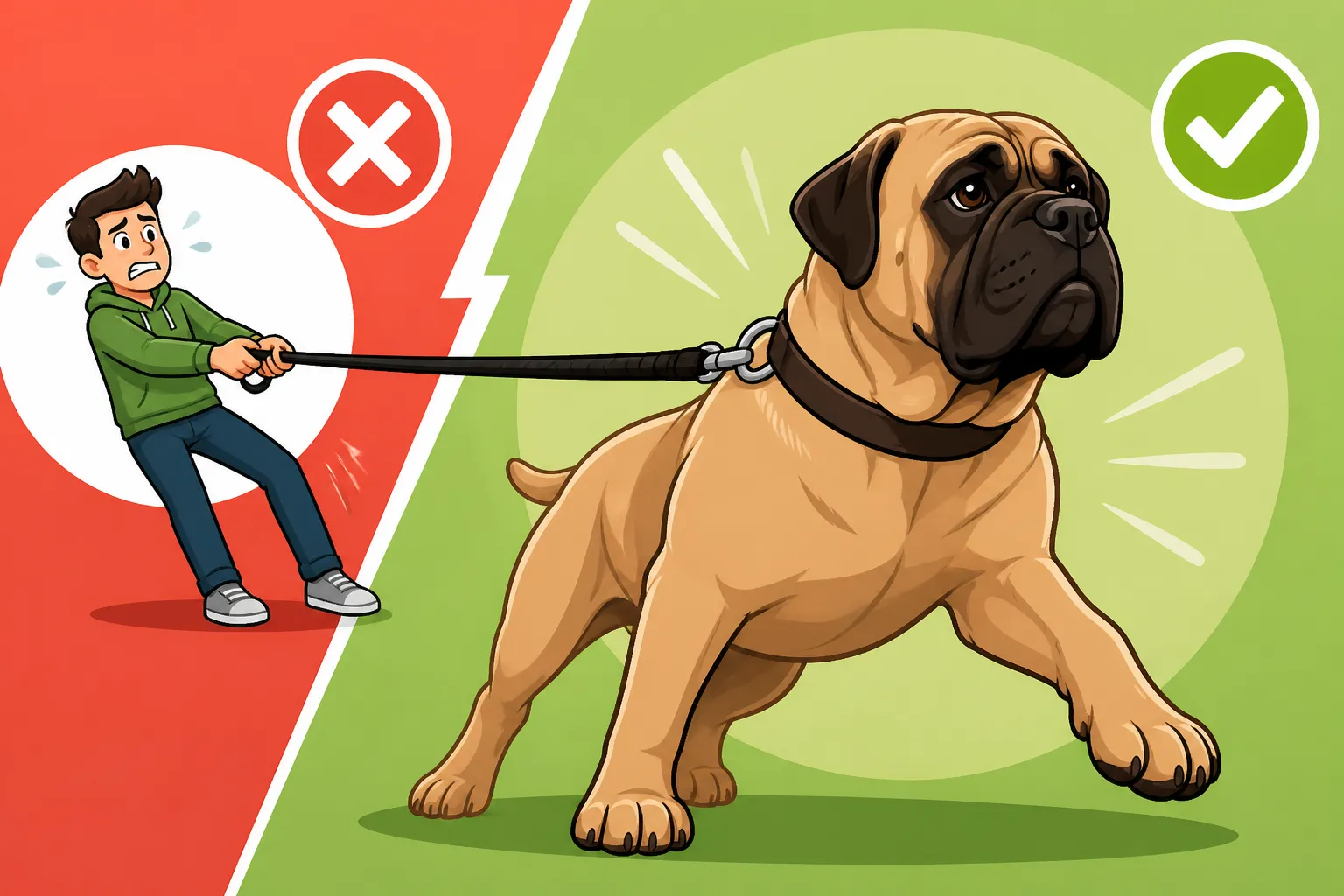
Whether a Mastiff Pulls on a Leash
That moment when your giant Mastiff spots a rogue squirrel, a friendly face, or an intriguing scent down the block, and suddenly you're being dragged along like a ragdoll in a very lopsided tug-of-war. It’s a common, incredibly frustrating, and frankly, sometimes dangerous scenario for Mastiff owners. This guide is here to tackle the blunt reality of leash pulling with such a massive dog, explore the unique challenges you face, and offer realistic, empathetic strategies to help you regain control and actually enjoy those walks together, rather than fearing them.
The Sheer Physics of a Mastiff on a Leash
Let's be brutally honest: walking a Mastiff is not like walking a Beagle. The sheer scale of these dogs means that every interaction with the leash is amplified by their immense weight and power. It's a fundamental truth that many new Mastiff owners grapple with, often to their surprise.
Understanding the Force
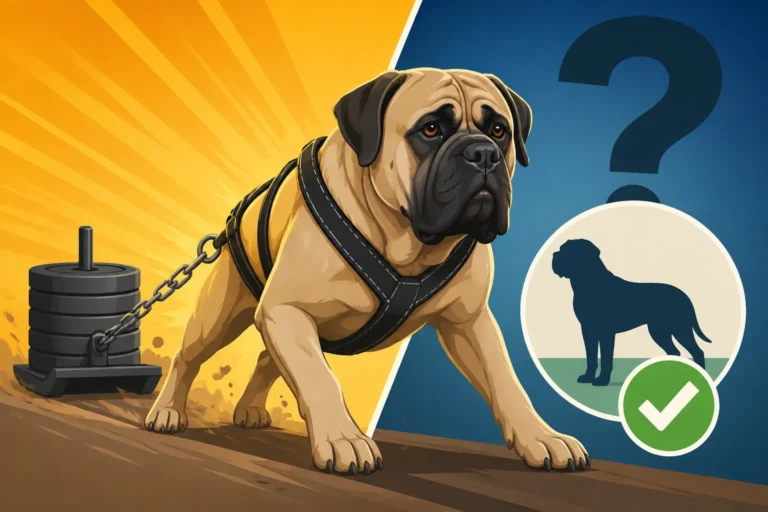
Imagine a two-hundred-pound animal, bred for generations for strength and presence, suddenly deciding it wants to go there. The amount of force they can generate, even without malicious intent, is staggering. A Mastiff doesn't necessarily pull out of defiance; often, it's just pure, unadulterated enthusiasm, curiosity, or the simple desire to get somewhere faster than you'd prefer. Their center of gravity is low, their stride is powerful, and their muscle mass is formidable. When they lean into a pull, it’s not just a gentle tug; it's a force that can pull you off your feet, wrench your shoulder, or send you sprawling if you're unprepared. How Much Force a Mastiff Can Apply on a Leash explores this further, but suffice it to say, it's a lot.
Think about a time you tried to move a piece of heavy furniture by yourself. You might brace, you might grunt, and you might even manage to shift it a few inches. Now imagine that piece of furniture suddenly having its own agenda and deciding to move you. That's often the dynamic on the end of a leash with an untrained Mastiff. Their solid bulk means they have incredible leverage, and if they dig their paws in or suddenly surge forward, you're fighting an uphill battle against raw, unadulterated mass. It’s not a contest you want to be in without the right tools and strategies.
The Mastiff's Motivation for Pulling
It's easy to get frustrated and assume your Mastiff is being stubborn or naughty when they pull, but often, their motivations are quite innocent, even if the results are catastrophic for your shoulder.
One primary driver for pulling is simply curiosity. The world is a fascinating place, full of smells, sights, and sounds that a Mastiff wants to investigate. That interesting patch of grass where another dog relieved itself? Irresistible. The distant sound of children playing? Must investigate. A Mastiff’s nose is incredibly powerful, and they are hardwired to explore. When a scent trail calls to them, their natural instinct is to follow it, and their size makes it easy for them to just forge ahead, dragging you along for the ride. They aren't consciously trying to upset you; they're just following their instincts.
Another common reason is simply excitement. Maybe it's the thrill of finally getting out for a walk after a long day, or seeing a familiar friendly face. Some Mastiffs, despite their imposing size, are surprisingly social and just want to greet every person and dog they encounter. They might lunge forward with happy barks and a wagging tail, completely oblivious to the fact that they've just nearly dislocated your arm. Their enormous hearts are often as big as their bodies, and their desire to connect can manifest as a powerful, uncontrolled pull. Understanding that it's often not malicious intent, but rather a strong natural drive, can help you approach the problem with more patience and a training-oriented mindset.
Why Standard Training Falls Short for Giants
Many conventional leash training methods, perfectly effective for smaller or even medium-sized breeds, can prove utterly useless or even dangerous when applied to a Mastiff. This isn't because Mastiffs are inherently untrainable, but because their unique physical attributes demand a different approach.
The "Just Stop Walking" Method
A popular and often effective technique for teaching a dog not to pull is to simply stop walking the moment the leash tightens. The idea is that the dog quickly learns that pulling makes the walk halt, and a loose leash makes it continue. For a motivated, medium-sized dog, this can work wonders. However, with a Mastiff, this method often backfires spectacularly.
When a two-hundred-pound Mastiff decides to plant its feet, it becomes an immovable object. If you stop walking when they pull, they might just decide to sit down or lie down right there and refuse to budge. Now you're left with a massive dog that has decided the walk is over, and you simply cannot physically compel it to move. You can pull, coax, or even try to drag, but a Mastiff that doesn't want to move, won't move. A Mastiff Does Not Pull You Over, It Simply Stops highlights this immovable characteristic. This isn't stubbornness in a malicious sense; it’s simply their size dictating the terms. You standing there, frustrated, while your Mastiff lounges comfortably on the sidewalk, does little to teach them that pulling is undesirable. Instead, they might learn that stopping you is a viable option for changing the course of the walk.
Traditional Collar Limitations
Flat collars, while necessary for ID tags, are generally inadequate for leash training a pulling Mastiff. A flat collar puts all the pressure on their throat and windpipe, which can cause them to choke, cough, or damage their trachea, especially given the immense pressure a Mastiff can exert. It doesn't teach them anything, and it can be genuinely painful or harmful.
Similarly, traditional choke chains or prong collars, while sometimes used for strong-willed dogs, come with significant caveats for a Mastiff. The sheer force involved means that any sudden correction can cause serious injury to their neck and spine. Beyond the physical risks, Mastiffs are known for their sensitive nature. Why Harsh Correction Ruins a Mastiff explains how these gentle giants can become withdrawn, fearful, or even shut down if subjected to harsh physical corrections. A training tool that causes pain or fear isn't just inhumane for a Mastiff; it actively damages the trust and bond you're trying to build, making future training far more difficult. It's not about being soft; it's about understanding the specific temperament and physical vulnerability of a giant breed.
Tools That Can Make a Difference
Since traditional collars and methods often fall short, it’s essential to invest in the right equipment designed to manage a Mastiff's considerable power and encourage better leash manners without causing harm or fear.
Front-Clip Harnesses and Head Halters
When it comes to managing a pulling Mastiff, specific tools can shift the dynamic from a battle to a more manageable conversation. Front-clip harnesses are often a game-changer. Unlike back-clip harnesses that simply give your dog more leverage to pull you forward, a front-clip harness redirects their momentum. When your Mastiff pulls, the leash attachment point on their chest causes them to turn back towards you, rather than powering straight ahead. This makes it incredibly difficult for them to pull with their full body weight, giving you more control and teaching them that pulling leads to a change in direction, not forward progress. Many owners find success with reputable brands available on Amazon or at local pet stores.
Brands like Easy Walk or Freedom No-Pull harnesses are popular choices, and it's worth investing in a sturdy one built for large breeds. Make sure to get one that fits correctly; a poorly fitting harness can chafe or be ineffective. Whether a Front Clip Harness Stops a Mastiff Pulling is a great resource if you're considering this option.
Head halters, sometimes called Halti or Gentle Leader collars, are another excellent option. These work similarly to a horse's halter, giving you control over the dog's head, and where the head goes, the body often follows. If your Mastiff tries to lunge or pull, a gentle pull on the leash will turn their head, again disrupting their ability to throw their full weight into the pull. This provides immense control with minimal physical effort from you, making walks much safer and more enjoyable. They are especially useful for Mastiffs who are highly reactive to other dogs or people, as they allow you to redirect their gaze and attention with ease. While some dogs initially dislike the sensation of a head halter on their muzzle, with patient introduction and positive reinforcement (like treats!), most Mastiffs adjust quickly.
Beyond the Physical Aids
Beyond the primary training tools, there are other physical aids and considerations that can greatly enhance your walking experience with a Mastiff. A good, strong leash is non-negotiable. Forget flimsy nylon leashes; you need something durable, preferably leather or heavy-duty nylon with sturdy hardware. A six-foot length is standard, but you might even consider a shorter leash for more control in busy areas, or a longer one for sniff-walks in open, safe spaces.
Consider a hands-free leash if you need to keep your hands free, but ensure it's a type that attaches securely to your waist or hips, distributing any pull across your core rather than just your arm. However, remember that even with a hands-free leash, a sudden, strong pull from a Mastiff can still unbalance you. Therefore, it's best used once your Mastiff has made significant progress in loose-leash walking.
Additionally, a good pair of gripping gloves can protect your hands from rope burn, especially when you're working with a Mastiff that's still learning. These aren't just accessories; they're vital safety equipment when you're handling a dog with the strength of a Mastiff. Ultimately, the goal is to build a foundation of polite leash manners, but these tools act as invaluable aids in the meantime, making the learning process safer and more effective for both of you. Whether a Mastiff Should Wear a Harness or a Collar further explores these choices.
| Leash Walking Tool | Description | Mastiff Suitability | Pros | Cons |
|---|---|---|---|---|
| Flat Collar | Standard collar around the neck, leash clips on top. | Poor for pulling; risk of choking/tracheal damage. Best for ID tags only. | Easy to put on, holds ID tags. | No pulling control, can cause injury, ineffective for training. |
| Martingale Collar | Loop tightens slightly when pulled, preventing escape. | Better than flat collar for preventing head slippage, but still no real pulling control. | Prevents escape for dogs with thick necks, less pressure than choke. | Does not teach loose-leash walking, still relies on neck pressure. |
| Back-Clip Harness | Leash clips on the back, distributes pressure across chest. | Worsens pulling by giving more leverage. Avoid for Mastiffs that pull. | Comfortable, good for dogs that don't pull, distributes pressure evenly. | Gives Mastiffs more power to pull you, minimal control. |
| Front-Clip Harness | Leash clips on the chest, redirects dog's momentum. | Excellent for pulling Mastiffs; turns dog when they pull, reducing leverage. | Reduces pulling force, gentle redirection, safer for neck, great for control. | Can tangle legs if not fitted correctly, some dogs dislike chest pressure. |
| Head Halter (Halti) | Fits over snout and behind ears, allows control of the head. | Highly effective for strong pullers; gives maximum control with minimal effort. | Precise control, gentle redirection, prevents lunging, makes managing a powerful dog much easier. | Some dogs resist initially, requires patience for introduction, can be mistaken for a muzzle by others. |
Strategic Training Approaches for the Giant Breed
Training a Mastiff isn't just about using the right tools; it’s fundamentally about understanding their unique temperament and applying consistent, positive reinforcement methods that resonate with their intelligent, sensitive nature.
Positive Reinforcement and Consistency
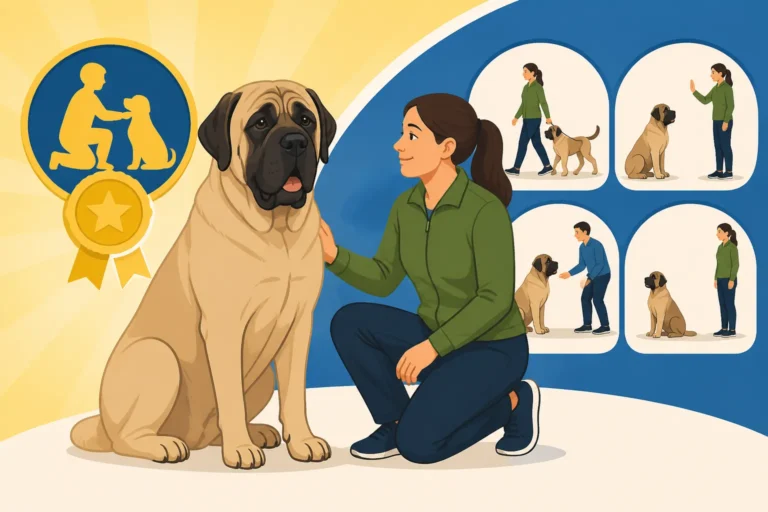
Mastiffs respond beautifully to positive reinforcement. They thrive on praise, affection, and especially food rewards. These gentle giants are not motivated by harsh words or physical reprimands, which can easily damage their trust and lead to fear or shutdown. Instead, focus on rewarding desired behaviors. When your Mastiff walks beside you with a loose leash, even for a step or two, immediately mark that behavior with a verbal cue like "Yes!" or a clicker, and follow it with a high-value treat. Repeat this process relentlessly, gradually increasing the duration of loose-leash walking before the reward.
Consistency is absolutely critical. Every walk, every time the leash is on, should be a training opportunity. If you let them pull "just this once," you're undermining all your hard work. Recruit every member of the household to be on the same page with training techniques and commands. Mastiffs are intelligent, but they need clear, consistent communication to understand what's expected of them. Because they are often described as deliberate thinkers rather than quick responders, patience is paramount. What Actually Motivates a Mastiff emphasizes that finding what truly excites your dog, whether it's a specific treat, a favorite toy, or enthusiastic praise, will make your training sessions much more effective.
Remember that Mastiffs don't have infinite attention spans for repetitive drills. Keep training sessions short, positive, and engaging. Five to ten minutes of focused work a few times a day is far more effective than one long, tedious session. This approach respects their processing speed and keeps them enthusiastic about learning. Whether a Mastiff Is Slow or Deliberate delves into this aspect of their cognition. Celebrate every tiny success, because with a Mastiff, those small victories add up to monumental progress over time.
Early Socialization and Exposure
The journey to a well-behaved Mastiff on a leash begins long before they reach their imposing adult size. Early socialization and exposure to the world are paramount, especially given their potential for guarding instincts and their sheer bulk. A well-socialized Mastiff puppy is far less likely to react fearfully or over-enthusiastically to new sights, sounds, people, and other dogs, which are all common triggers for leash pulling and lunging.
Start early, from the moment your puppy's veterinarian gives the go-ahead for safe outings. Expose your Mastiff puppy to a variety of environments: quiet parks, sidewalks (avoiding crowded areas until they're older and more confident), different types of flooring, car rides, and the sounds of urban life. Introduce them to a wide range of friendly, vaccinated people of all ages and appearances, as well as calm, well-behaved dogs. Always ensure these experiences are positive and controlled. A bad experience during their critical socialization period can have lasting negative effects.
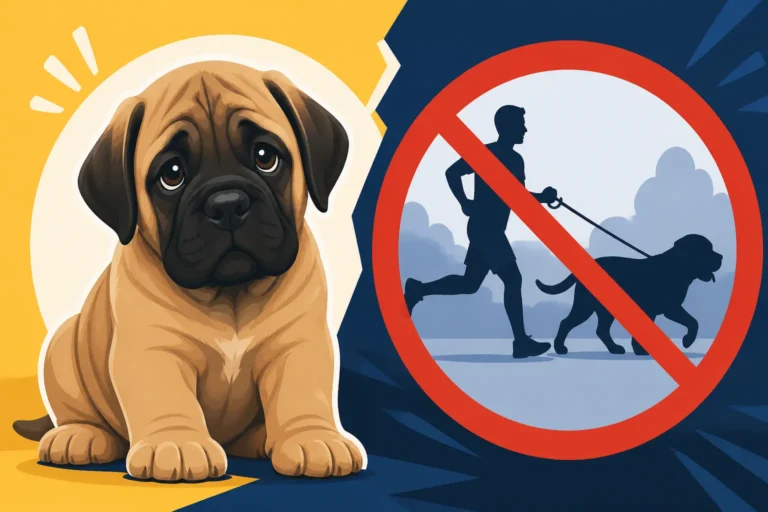
During these outings, practice loose-leash walking in low-distraction environments first. Use your front-clip harness or head halter even when they are small, so they become accustomed to the feel of it. Reward them for staying by your side and ignoring distractions. The goal is to build confidence and neutrality, so they don't feel the need to lunge towards or away from everything they encounter. A puppy that learns the world is a safe and interesting place, and that walking politely keeps the adventure going, will grow into a much more pleasant adult walking companion. And remember, gentle exercise is key for puppies; The Mastiff Puppy You Are Not Allowed to Exercise reminds us of the importance of not overdoing it in their formative months.
The Reality of Walking a Mastiff
Let's face it: even with the best tools and training, walking a Mastiff is always going to be a unique experience. There are inherent aspects of their nature and physiology that mean your walks might look a little different than those of someone with a smaller, more sprightly breed.
Accepting the Mastiff's Pace
Mastiffs are not built for speed or endurance. They are not the type of dog you take for a brisk jog or a long, demanding hike in the mountains. Their massive bodies, prone to joint issues and overheating, mean they have a slower, more deliberate pace. Why One Hour a Day Is Enough for a Mastiff emphasizes this point. If you try to force a Mastiff to maintain a pace faster than they are comfortable with, they might resist, plant their feet, or simply shut down, making the walk unpleasant for everyone.
Embrace the "sniffari." Mastiffs love to explore the world with their powerful noses. Allow them time to sniff and investigate interesting scents. These aren't just potty breaks; they're mental enrichment opportunities. Incorporate regular sniffing breaks into your walks, perhaps designating certain areas for exploration and other stretches for practicing polite walking. Think of it as a leisurely stroll with a very large, scent-driven companion. This understanding helps shift your perspective from expecting a brisk workout to enjoying a calm, investigative outing, which ultimately makes your Mastiff more cooperative and less prone to pulling out of frustration or unmet needs.
Building a Partnership, Not a Battle
Ultimately, walking a Mastiff should be a partnership, not a constant struggle for dominance or control. It requires a significant amount of patience, understanding, and consistent effort on your part. You are managing a powerful, intelligent creature, and your relationship with them on the leash should reflect the bond you share.
Recognize that there will be days when your Mastiff is more distracted, more energetic, or simply more inclined to pull. On those days, scale back your expectations. Perhaps choose a quieter route, opt for a shorter walk, or focus purely on practicing short bursts of loose-leash walking in a low-distraction environment. Don't be afraid to turn around and go home if a walk becomes unproductive or dangerous. The goal is to set both of you up for success.
Investing in further education, like online courses from positive reinforcement trainers (such as those offered by BAXTER & Bella), can also provide ongoing support and new strategies. Remember, every Mastiff is an individual, and what works for one might need adjustment for another. The journey of teaching a Mastiff to walk politely on a leash is a marathon, not a sprint. But with the right tools, consistent positive training, and a deep well of patience, you can transform those daunting leash walks into enjoyable, bonding experiences for both you and your magnificent companion. Teaching a Mastiff Before It Outweighs You is a vital concept to embrace from day one.
Disclaimer
This article is for general informational purposes only and does not constitute professional advice. Laws, prices and regulations vary by location and change over time. Consult a qualified professional for guidance on your specific situation.