How a Mastiff Judges a Stranger at the Door
Bringing a Mastiff into your home means welcoming a giant heart, but it also means dealing with a dog that naturally perceives the world, and especially strangers, through the lens of protection. Many Mastiff owners find themselves in a tricky dance when the doorbell rings, wondering if their gentle giant will greet a visitor with a polite sniff or a rumbling, suspicious stare that can unnerve even the bravest delivery person. This guide is here to walk you through the nuances of how your Mastiff assesses strangers, how to foster appropriate reactions, and practical strategies to make every doorway interaction calm and safe for everyone involved.
The Mastiff's Innate Guarding Instinct: A Gentle Giant's Nature
The Mastiff, with its imposing size and calm demeanor, possesses a deep-seated instinct to guard its home and family. This isn't a learned behavior in the way a trick is learned; it's woven into their very DNA, a legacy of centuries spent protecting estates and livestock. While they might seem like big, cuddly lumps on the sofa, beneath that gentle exterior lies a watchful guardian. Understanding this intrinsic nature is the first step in appreciating and managing how your Mastiff interacts with anyone new who approaches your space. It's not about being aggressive, but about an inherent sense of responsibility for their family and territory.
The Silent Observer: How Mastiffs Assess Situations
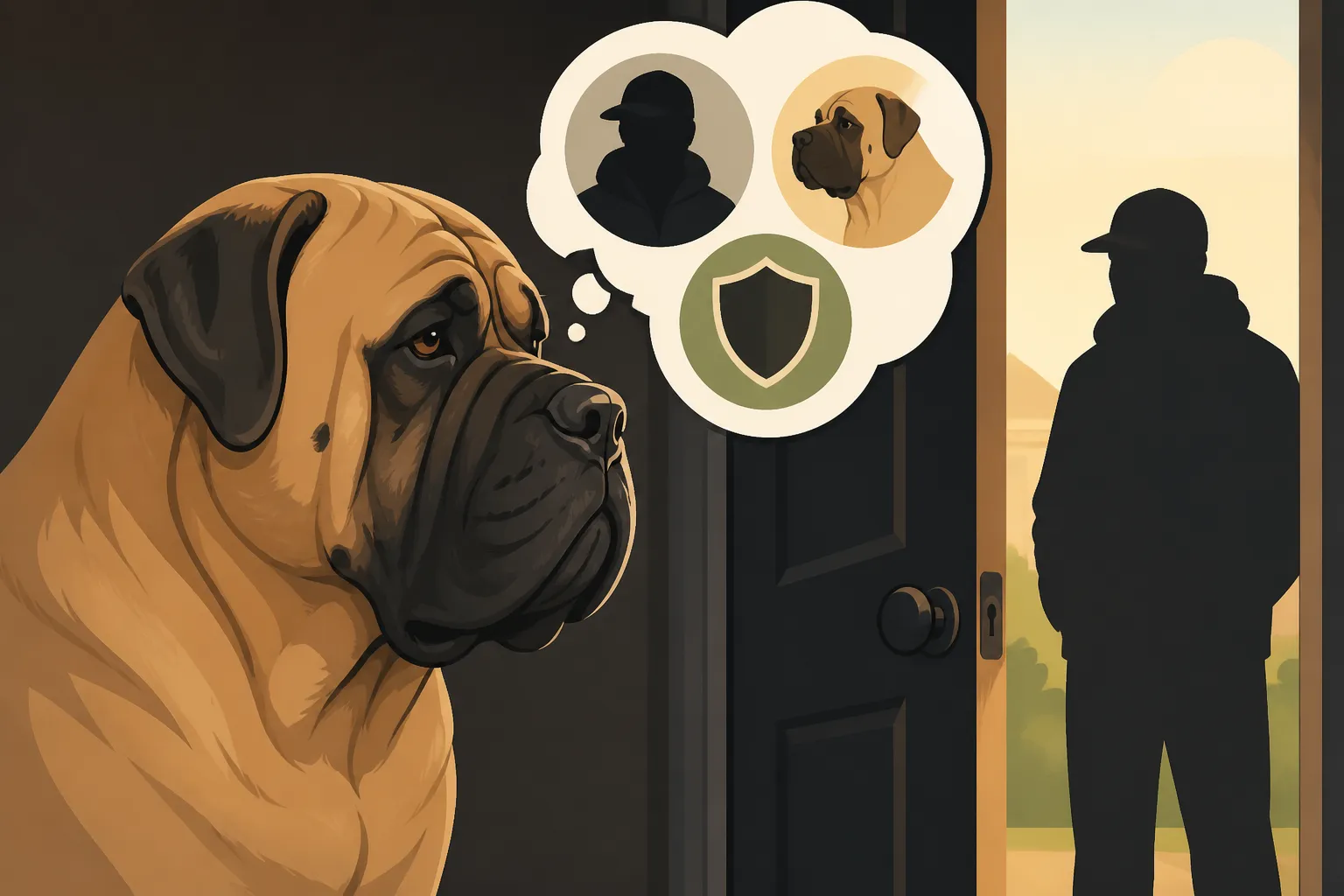
A Mastiff doesn't usually bark hysterically at every leaf that blows by. Instead, their assessment of a stranger often begins long before that person reaches your front door. They are incredibly sensitive to changes in their environment, subtle shifts in tone, and unusual movements. When a stranger approaches, a Mastiff might first react with an intense stillness, a low, guttural rumble deep in their chest, or simply by standing up and placing themselves between you and the perceived "threat." Their large heads will be up, ears swiveling, eyes fixed, processing every bit of information. They are absorbing body language, listening to voices, and detecting scents, all in an effort to determine if this new presence is friend or foe, or simply neutral. This quiet observation can often be more intimidating than a barking frenzy because it speaks to a deep, calculating intelligence rather than mere reaction.
Understanding Their "Watch Dog" vs. "Guard Dog" Role
It's really important to distinguish between a Mastiff's role as a "watch dog" and a "guard dog." Many people assume that because of their size, Mastiffs are aggressive guard dogs, ready to attack. In reality, a well-socialized Mastiff is typically a watch dog first and foremost. They will alert you to the presence of strangers, often with that deep, impressive bark that vibrates through the house, or by planting themselves directly in your path to the door. This alarm signal is usually enough to deter most unwelcome visitors. A true "guard dog" would be trained to physically engage with an intruder, a role that Mastiffs can fulfill but is not their default, nor is it desirable for most pet owners. Their sheer size and presence are often sufficient deterrents. The goal for a pet Mastiff is to have them effectively act as a watch dog, providing a warning, rather than escalating to physical guarding.
The Fine Line Between Protection and Over-Reactivity
Here's where things can get challenging for Mastiff owners. Because their protective instincts are so strong, it's easy for a Mastiff to cross the line from watchful guardian to over-reactive. This might manifest as excessive barking, lunging at the door, or displaying aggressive postures towards perfectly harmless visitors. This over-reactivity isn't necessarily true aggression; it's often rooted in a lack of proper socialization, fear, or simply not knowing how to handle the situation calmly. When a Mastiff feels uncertain or overwhelmed, their protective drive can go into overdrive. It’s a common frustration for owners who want their dog to be a gentle protector, not a liability. How a Mastiff Guards Without Being Taught touches on this innate trait, and it's something we need to guide, not suppress. A Mastiff's enormous strength means that even playful or fear-based reactions can be dangerous, making careful management and training absolutely crucial.
Early Socialization: Building a Mastiff's Confidence, Not Fear
Socialization is absolutely paramount for a Mastiff, arguably more so than for many smaller breeds. You are raising a dog that will eventually weigh over a hundred pounds, possibly over two hundred pounds, and their early experiences will profoundly shape how they perceive and react to the world, especially to strangers. A well-socialized Mastiff is a confident Mastiff, one that can process new information and situations without resorting to fear or excessive defensiveness. Without proper socialization, their natural protective instincts can easily tip into anxiety-driven aggression or fear-based reactivity, which, given their size, can be incredibly difficult, and even dangerous, to manage.
The Critical Window for Puppy Socialization
The period between 3 and 16 weeks of age is often called the "critical socialization window" for puppies, and for a Mastiff, it's especially vital. During this time, every positive exposure helps build a foundation of confidence and resilience. This means intentionally introducing your Mastiff puppy to a wide variety of sights, sounds, smells, people, and other friendly, vaccinated dogs. Think about all the different types of people they might encounter: men with beards, women with hats, children of various ages, people with mobility aids, even people in uniforms. Each positive experience, carefully managed and kept brief, helps them categorize these encounters as normal and non-threatening. Skipping this crucial phase, or limiting their world too much, sets the stage for a Mastiff who views anything new or unfamiliar with suspicion and fear, ultimately leading to undesirable reactions as an adult. Remember, you're looking to help them understand the world is a generally safe place.
Exposing Your Mastiff Puppy to a Diverse World
Beyond just meeting people, a Mastiff puppy needs to experience the rich tapestry of life. This includes different environments: quiet parks, bustling (but not overwhelming) street corners, various floor textures, car rides, and even the sounds of construction or traffic from a safe distance. Take short, controlled trips to pet-friendly stores where they can observe from a distance, or sit on a bench outside a coffee shop, letting them watch people come and go. Always ensure these experiences are positive, using plenty of high-value treats and praise. The key is quality over quantity – brief, happy exposures where your puppy feels safe and has good outcomes are far more valuable than long, stressful ones. Socializing a Mastiff Puppy Before It Gets Heavy is a concept every Mastiff owner must embrace, as managing an unsocialized adult of this size is a monumental task.
Avoiding Overwhelm and Negative Associations
While exposure is key, it’s equally important to avoid overwhelming your Mastiff puppy, which can create negative associations. A bad experience during this critical window can leave a lasting imprint. Never force your puppy into an interaction they clearly don't want. If they show signs of fear, like tucking their tail, trying to hide, or stiffening, remove them from the situation calmly and reassess. Don't let strangers rush up and pet your puppy without permission, especially if the puppy isn't soliciting attention. Some well-meaning people might try to lean over them or make loud noises, which can be terrifying for a young, sensitive Mastiff. You are your Mastiff's advocate and protector, especially during these formative weeks. Keep introductions short, sweet, and always end on a positive note. Remember, The Sensitivity Nobody Expects in a Two Hundred Pound Mastiff means their early experiences shape them deeply, so make them good ones.
Reading Your Mastiff's Cues: Body Language Speaks Volumes
Your Mastiff is constantly communicating with you, and nowhere is this more evident than when a stranger is present. Because Mastiffs are often quiet and reserved, their body language becomes a critical tool for understanding their comfort level. Learning to read these subtle signals can help you intervene appropriately, preventing escalation and ensuring everyone's safety. Ignoring these cues can lead to misunderstandings, stress for your dog, and potentially unwanted behaviors.
Subtle Signals: Ear, Tail, and Facial Expressions
A Mastiff's communication is rarely as overt as a frantic bark. Instead, pay close attention to the smaller details. Their ears might prick forward, indicating alert interest, or flatten slightly if they are feeling uneasy. The tail, often held low, might give a slow, deliberate wag if they're assessing in a neutral way, or become rigid and slightly raised if they're on high alert. A Mastiff's face can tell you a lot too. Are their brow furrowed? Is there tension around their eyes or mouth? A hard stare with unblinking eyes can signal suspicion or a challenge, while a soft gaze indicates a more relaxed posture. Conversely, if their lips are tight, or you see the whites of their eyes (whale eye), they might be feeling stressed or defensive. Understanding these nuances helps you know if your Mastiff is simply observing or if they're actually feeling threatened.
The "Mastiff Lean" and Its Meaning
Ah, the famous "Mastiff lean"! This behavior, where your giant dog presses their full weight against you or a visitor, can be quite charming, but it's important to understand what it might signify. Sometimes, it's simply a sign of affection or seeking comfort, especially if they are leaning into a family member. However, when directed towards a stranger, it can carry more weight, pun intended. A lean can be a way for them to assert their presence, to subtly test a person's reaction, or to create a physical barrier between you and the new person. It’s their polite way of saying, "I'm here, I'm big, and I'm watching." While rarely aggressive, it's a clear indication that they are engaging with the stranger and assessing them. Teach guests to react calmly, gently stroking the Mastiff's back, rather than pushing them away, which can be interpreted negatively.
When to Step In: Recognizing Stress or Discomfort
Knowing when to intervene is key to preventing situations from escalating. If you observe stiff body posture, a hard stare, low growling, lip licking, yawning (out of context), or turning their head away, these are all signs that your Mastiff is uncomfortable or stressed. If they start to "block" you or stand between you and a guest, it’s their way of taking charge of the situation, which isn't ideal. This is your cue to step in. Acknowledge their concern calmly, then redirect their attention with a cheerful tone or a treat, and physically move them to a designated "place" or another room. The goal is to show your Mastiff that you've got this, and they don't need to take on the responsibility of managing the stranger. Early intervention prevents them from feeling the need to escalate their protective behaviors.
Managing Doorway Encounters: Setting Your Mastiff Up for Success
The front door is often ground zero for stranger interactions, and for a Mastiff, it can be a highly charged area. Without clear rules and consistent management, this space can become a source of stress and over-reactivity. The key is to establish a routine that helps your Mastiff understand their role (or lack thereof) when someone comes to the door, ensuring safety and calm for everyone. This isn't about suppressing their natural instincts entirely, but channeling them into acceptable behaviors.
Establishing Clear Boundaries at the Door
One of the most effective strategies is to teach your Mastiff that the front door is your domain, not theirs, when visitors arrive. This means they don't get to rush the door, jump on guests, or even stand directly in the entryway. A simple but incredibly powerful command is "place," which directs them to a specific bed or mat away from the door. You can practice this extensively with friends or family knocking. When the doorbell rings, calmly tell your Mastiff "place" and reward them heavily with treats when they go there and stay. Consistency is vital; every time someone approaches, they go to their place. Teaching a Mastiff Before It Outweighs You is crucial for these early lessons, as trying to physically manage a full-grown Mastiff who wants to rush the door is an impossible task. A physical barrier, like a sturdy baby gate (an essential for a Mastiff household, often found on Amazon), can be invaluable during this training phase to prevent them from breaking their "place" command.
The Role of the Leash and Crate in Controlled Greetings
Sometimes, the "place" command alone isn't enough, especially for more excitable Mastiffs or during the early stages of training. This is where a leash and a crate become invaluable tools. For planned visitors, you can have your Mastiff on a leash, offering treats for calm behavior as the visitor approaches and enters. This allows you to maintain control and prevent jumping or lunging. The leash acts as a gentle reminder of boundaries. For unexpected visitors, or if your Mastiff struggles with impulse control, crating them in another room before opening the door can be the safest and most stress-free option. Introduce the crate as a positive, safe space with toys and treats, so it's not seen as a punishment. Whether a Mastiff Should Be Crated When Guests Arrive isn't a sign of failure, but a responsible management strategy for a powerful breed. Once the guest is settled, you can then do a controlled, on-leash introduction if appropriate.
Preparing for High-Traffic Delivery Days
In today's world, delivery drivers are frequent visitors, and their quick stops can be a constant source of stress for Mastiffs who take their guarding duties seriously. These are often brief, unpredictable interactions that don't allow for a full "place" command routine. To manage this, consider strategies that prevent direct door-to-dog contact. If you know a package is coming, watch for the delivery truck and either secure your Mastiff in a back room beforehand or put them on a leash far from the door. You can also put a sign on your door asking drivers to leave packages in a designated spot or ring once and leave, minimizing the time they spend directly at your entrance. For particularly anxious Mastiffs, playing calming music or white noise can help muffle outside sounds. It's all about minimizing the triggers and taking control of the interaction before your Mastiff feels they have to.
Training for Calm Introductions: Positive Reinforcement is Key
Training a Mastiff for calm introductions isn't about making them love every single stranger, but about teaching them a polite and acceptable way to behave when new people enter their territory. Given their sensitive nature and immense size, positive reinforcement methods are not just effective, they are essential. Harsh corrections can easily backfire, eroding trust and potentially making a Mastiff more fearful or reactive. Why Harsh Correction Ruins a Mastiff is something every Mastiff owner should remember when teaching new behaviors.
Desensitization and Counter-Conditioning Strangers
Desensitization and counter-conditioning are powerful tools for teaching your Mastiff to associate strangers with positive experiences. Start small and at a distance. If your Mastiff reacts to people walking past your window, close the blinds or move them further away. If they bark when someone is at the end of your driveway, reward them for not reacting. Gradually, over many sessions, decrease the distance or increase the intensity of the trigger, always pairing the presence of the "stranger" with something highly positive, like their favorite treats (soft, high-value ones work best, often available on Amazon) or a beloved toy. The goal is to change their emotional response from "stranger equals threat" to "stranger equals good things happen." This takes patience and consistency, but it fundamentally shifts their perception.
Teaching a "Place" Command for Doorbell Rings
We touched on the "place" command earlier, but it deserves emphasis as a cornerstone of calm greetings. This command teaches your Mastiff to go to a designated spot (like a bed or mat) and remain there until released. Start training "place" in a low-distraction environment. Lure them to their spot, say "place," and immediately reward them for being on it. Gradually build up the duration they stay there, then add distractions. The ultimate goal is for them to go to their place when the doorbell rings or a knock sounds, and stay there calmly while you answer the door and interact with your visitor. Practice this often, even when no one is actually at the door, to make it a deeply ingrained habit. Use a release word, like "okay" or "free," to signal when they can leave their place. This gives them a clear job to do, which can be very reassuring for a Mastiff.
Practicing Polite Greetings with Trusted Visitors
Once your Mastiff has a solid "place" command, you can start practicing polite greetings with trusted friends or family members who understand the process. Have your guest stand a few feet inside the door. Keep your Mastiff on a leash initially. When your Mastiff is calm, offer a quick "hello" to the guest, and then immediately reward your Mastiff for their calm demeanor. The guest should ignore your Mastiff at first, not making eye contact or trying to pet them until your Mastiff is truly relaxed. After a minute or two of calm, the guest can then offer a treat and a gentle pet, perhaps under the chin. If your Mastiff gets too excited or reactive, calmly redirect them back to their "place" or away from the guest. This helps your Mastiff learn that calm behavior gets rewards and positive interactions. Online training programs, such as those offered by BAXTER & Bella, can provide structured lessons and support for teaching these foundational skills.
Addressing Reactivity: When a Mastiff's Judgment Goes Wrong
Even with the best intentions and early socialization, some Mastiffs can develop reactivity towards strangers. This isn't necessarily a sign of a "bad" dog; often, it's a manifestation of fear, anxiety, or simply a lack of appropriate coping mechanisms when faced with new people or situations. Reactivity in a Mastiff, given their sheer size and strength, is a serious concern that requires careful, consistent intervention. It's vital to address these behaviors proactively, not just for the safety of others, but for your Mastiff's well-being.
Identifying the Root Cause of Doorway Reactivity
Before you can effectively address reactivity, you need to understand why your Mastiff is reacting. Is it fear? Are they lunging and barking because they feel threatened and want the stranger to go away? Is it territorial aggression, where they genuinely feel their space is being invaded? Or is it barrier frustration, where they want to greet (or investigate) but are prevented by a leash or door, leading to an outburst? Observe closely: does their body tense up? Do they try to retreat or hide, or do they puff themselves up and try to intimidate? Knowing the root cause helps tailor the appropriate training approach. For instance, a fearful Mastiff needs confidence building and positive association, while a territorially aggressive one might need more structured management and a clear understanding that you are in control. What Becomes of an Undersocialized Mastiff often includes reactivity as a significant challenge.
Seeking Professional Help for Challenging Behaviors
If your Mastiff's reactivity is significant – involving lunging, aggressive barking, growling, or attempts to bite – it's strongly recommended that you seek help from a certified professional dog trainer or a veterinary behaviorist. This is not a battle to fight alone, especially with a dog of this size. A professional can assess your Mastiff's specific triggers, body language, and the underlying cause of their behavior. They can then develop a tailored behavior modification plan using humane, force-free methods. Trying to correct serious reactivity with punishment can exacerbate fear and aggression, making the problem worse. They might recommend specific tools, management strategies, or even medication if anxiety is a major component. Organizations like the Certification Council for Professional Dog Trainers (CCPDT) or the American College of Veterinary Behaviorists can help you find qualified professionals in your area.
Safety First: Managing a Reactive Mastiff at Home
While you are working on behavior modification, safety must be your absolute top priority. This means implementing strict management protocols to prevent any negative incidents.
- Doorbell Management: If your Mastiff reacts to the doorbell, consider disabling it and asking visitors to call or text you instead.
- Secure Confinement: When you expect visitors, or for deliveries, keep your Mastiff in a securely locked room (with durable toys or a chew bone to keep them occupied) or in a sturdy crate in a quiet area of the house.
- Leash Up: Always keep your Mastiff on a leash when a stranger is present, even inside the house, until you are confident in their training. A strong, comfortable harness and leash, often found on Amazon, are crucial.
- Clear Communication: Put a "Beware of Dog" or "Please Do Not Pet" sign on your gate or front door.
- Educate Guests: Inform any expected guests in advance about your Mastiff's needs and how they should interact (or not interact) upon arrival.
The safety of your guests, your family, and your Mastiff depends on vigilant management.
Living with a Protective Mastiff: A Lifelong Commitment
Owning a Mastiff is a unique experience, marked by their profound loyalty and inherent desire to protect. This commitment extends throughout their entire life, requiring consistent management, ongoing training, and a deep understanding of their needs. Living successfully with a protective Mastiff isn't about eliminating their instincts, but rather about guiding them, giving them appropriate outlets, and ensuring they feel secure and understood in their role as cherished family members. It's a journey that demands patience, consistency, and a whole lot of love.
Consistent Management for a Happy Household
Bringing a Mastiff into your home means establishing a consistent routine for every interaction, especially concerning strangers. This isn't just about training; it's about everyday habits. Ensure all family members are on the same page with commands, management techniques (like using a "place" command or crating for visitors), and how they interact with the Mastiff themselves. Inconsistency sends mixed signals, which can confuse a Mastiff and undermine their confidence. For example, if some family members allow the Mastiff to rush the door, while others try to correct them, the Mastiff will never truly understand what is expected. A calm, structured environment provides predictability, which helps your Mastiff feel secure and reduces the need for them to take on the "guarding" role themselves. Remember, The First Year With a Mastiff Puppy That Doubles in Size sets the foundation for a lifetime of interaction.
Educating Guests on Mastiff Etiquette
Most people are not familiar with the nuances of interacting with a giant, protective breed like a Mastiff. It falls to you, the owner, to educate your guests. Explain calmly but firmly that your Mastiff needs a moment to assess new people, and that rushing in, loud noises, or direct eye contact can be perceived as threatening. Ask guests to ignore your Mastiff upon entry and allow the dog to approach them if it chooses. Advise them to offer the back of a hand for a sniff rather than reaching directly over the head. If your Mastiff has a "place" command, explain why they are there and ask guests not to approach them while they are on their spot. For children, clear rules are especially important, emphasizing gentle interactions and no teasing. A good relationship between your Mastiff and your guests begins with clear communication and respectful boundaries.
The Responsibility of a Giant, Guardian Breed
Owning a Mastiff is a profound responsibility. Their size, strength, and protective instincts mean that their behavior has significant implications for both your household and the wider community. It means being proactive about socialization, consistent with training, and always vigilant about management. It means understanding that they are not just large dogs; they are guardians with a deep sense of loyalty, who thrive when they feel their human leaders have everything under control. Your commitment to their training and well-being directly impacts their ability to navigate the world calmly and confidently. Ultimately, the way your Mastiff judges a stranger at the door is a reflection of your commitment to guiding them, not just with a firm hand, but with wisdom, empathy, and consistent positive leadership. This understanding ensures a peaceful home and a happy, well-adjusted Mastiff.
Disclaimer
This article is for general informational purposes only and does not constitute professional advice. Laws, prices and regulations vary by location and change over time. Consult a qualified professional for guidance on your specific situation.