How Often a Mastiff Whelps Without Surgery
Bringing new Mastiff puppies into the world is an exciting prospect, but for many breeders and owners, it also brings a significant amount of anxiety. Unlike some smaller breeds that can often manage births with minimal human intervention, the reality for our giant, beloved Mastiffs is often quite different, with surgical intervention becoming a much more common necessity than many first-time breeders might anticipate. This guide will delve into the complexities of Mastiff whelping, exploring why natural births are frequently challenging and what you can realistically expect.
Understanding the Mastiff's Unique Whelping Challenges
When you're dealing with a dog that can easily weigh over 150 pounds, every aspect of its biology operates on a grand scale, and that includes reproduction. The sheer size of a Mastiff, while magnificent, presents inherent challenges when it comes to bringing a litter into the world. It’s not just about the dam's size, but the size of her puppies and the mechanics of their passage.
The Anatomy of a Giant Breed Birth
Think about the structure of a Mastiff: large, heavy bones, powerful musculature, and of course, those adorable, massive heads. While the dam's pelvis is certainly robust, it still has its limits, and a Mastiff puppy's head can be disproportionately large relative to that opening. It’s a bit of a paradox; you have this enormous mother, yet her puppies can still get stuck. This isn't usually due to a narrow birth canal in the way you might see in some toy breeds, but rather the sheer volume and solidity of a Mastiff pup.
Their substantial bone structure means that even a well-positioned puppy can present a snug fit. Unlike smaller breeds where puppies are often more flexible and can navigate the birth canal with relative ease, a Mastiff pup often feels like trying to pass a small, dense boulder. This can lead to prolonged labor, increased strain on the mother, and a higher risk of complications that necessitate urgent veterinary care.
Factors Contributing to Difficult Births
Several factors contribute to the higher rate of complications in Mastiff whelping. One major culprit is uterine inertia, which simply means the uterus gets "tired" and stops contracting effectively. Imagine pushing a weight that's equivalent to your own body mass out of a tight space, multiple times. It's exhausting! A Mastiff dam's uterus has to work incredibly hard, and sometimes, it just gives out. This can happen whether it's her first litter or a subsequent one.
Another significant factor is the size of the litter. Surprisingly, both very large and very small litters can cause issues. In a very large litter, the individual puppies might be slightly smaller, but the sheer number exhausts the dam. In a small litter, say only one or two puppies, those puppies often grow exceptionally large within the uterus, increasing the likelihood of them becoming too big for a natural birth. Modern breeding practices, which sometimes emphasize ever-larger dogs with more massive heads, can inadvertently exacerbate these issues, pushing the boundaries of what's physiologically manageable for a natural birth. Breeders really need to understand How Large a Mastiff Litter Usually Runs to set proper expectations.
Finally, prolonged labor is a serious concern. Every hour that labor stalls increases the risk to both the dam and the puppies. Puppies can become oxygen-deprived, and the dam can become dangerously exhausted or develop infections. This is where vigilant monitoring and prompt veterinary intervention become absolutely critical.
The Reality: Why C-Sections Are So Common for Mastiffs
Given the challenges inherent in Mastiff physiology and gestation, it’s not surprising that C-sections are a far more common occurrence in this breed than in many others. It’s not a sign of poor breeding or an unhealthy dam; it's often a necessary measure to ensure the survival of both mother and puppies. Preparing for this possibility is a cornerstone of responsible Mastiff breeding.
When a Natural Birth Becomes Risky
The decision to proceed with a C-section isn't taken lightly, but it often becomes a matter of urgency. Stalled labor is a primary indicator. If the dam has been actively pushing for a significant period without producing a puppy, or if there's a long gap between puppies, it’s a red flag. A puppy might be stuck in the birth canal, presenting in an abnormal position (such as a breach birth or a head-first presentation where the head is simply too wide).
Fetal distress, identified through monitoring the puppies' heartbeats, is another critical sign. If the heart rates drop, it means the puppies are in trouble and need to be delivered quickly. In these scenarios, every minute counts. The "time is ticking" concept is intensely relevant here, as oxygen deprivation can rapidly lead to irreversible damage or death for the puppies. Waiting too long out of a desire for a "natural" birth can have tragic consequences, making a planned or emergency C-section the safest, most humane choice. Knowing Why Anesthesia Is Riskier in a Mastiff means careful planning with the veterinary team is paramount.
The Breeder's Role in Planning for the Unexpected
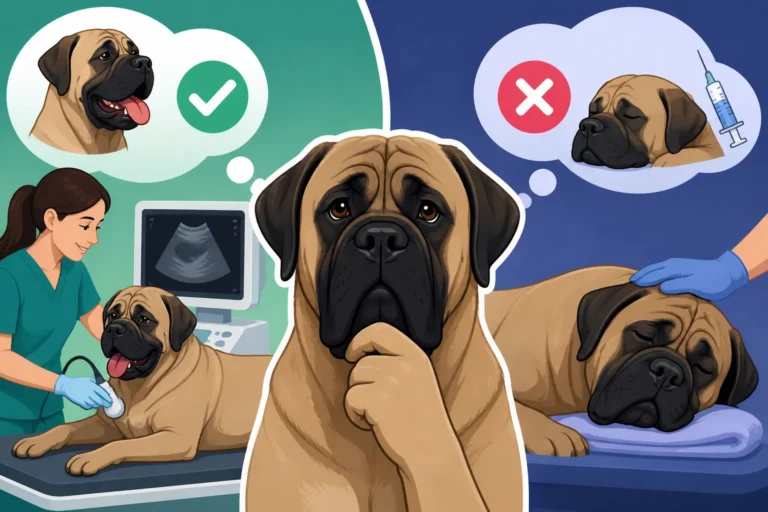
Responsible Mastiff breeders understand that a C-section is a very real possibility and plan for it financially and logistically. This starts long before labor even begins. Pre-whelping vet visits are crucial. Your veterinarian can perform ultrasounds to get a puppy count and check their viability, and often, radiographs (X-rays) are done in the last week of pregnancy. These X-rays are invaluable, as they can reveal the number of puppies, their general size, and whether any appear to be disproportionately large for the dam's pelvis. This information allows the vet and breeder to make an informed decision about the likelihood of a natural birth succeeding.
Having an emergency veterinary clinic on standby is non-negotiable. Whelping often happens in the middle of the night, and you need to know exactly where to go and who is equipped to handle a large breed emergency C-section. This isn't the time to be searching for an open clinic. Financial preparedness is equally important; a C-section, especially an emergency one overnight, can be a significant expense. This is where pet insurance, like plans from Healthy Paws, can be a lifesaver, though it's important to understand what is covered regarding breeding and whelping expenses. You should always discuss coverage details with any provider well in advance. Understanding What an Emergency Mastiff Cesarean Runs Overnight is a stark reminder of the financial commitment.
Statistics and Expectations for Mastiff Whelping
So, what's the actual likelihood of your Mastiff whelping without surgical intervention? While it's impossible to give a universal, hard percentage that applies to every Mastiff everywhere, the general consensus among experienced Mastiff breeders and veterinarians is that C-sections are very common, often more common than fully natural births.
How Often Do Mastiffs Whelp Naturally?
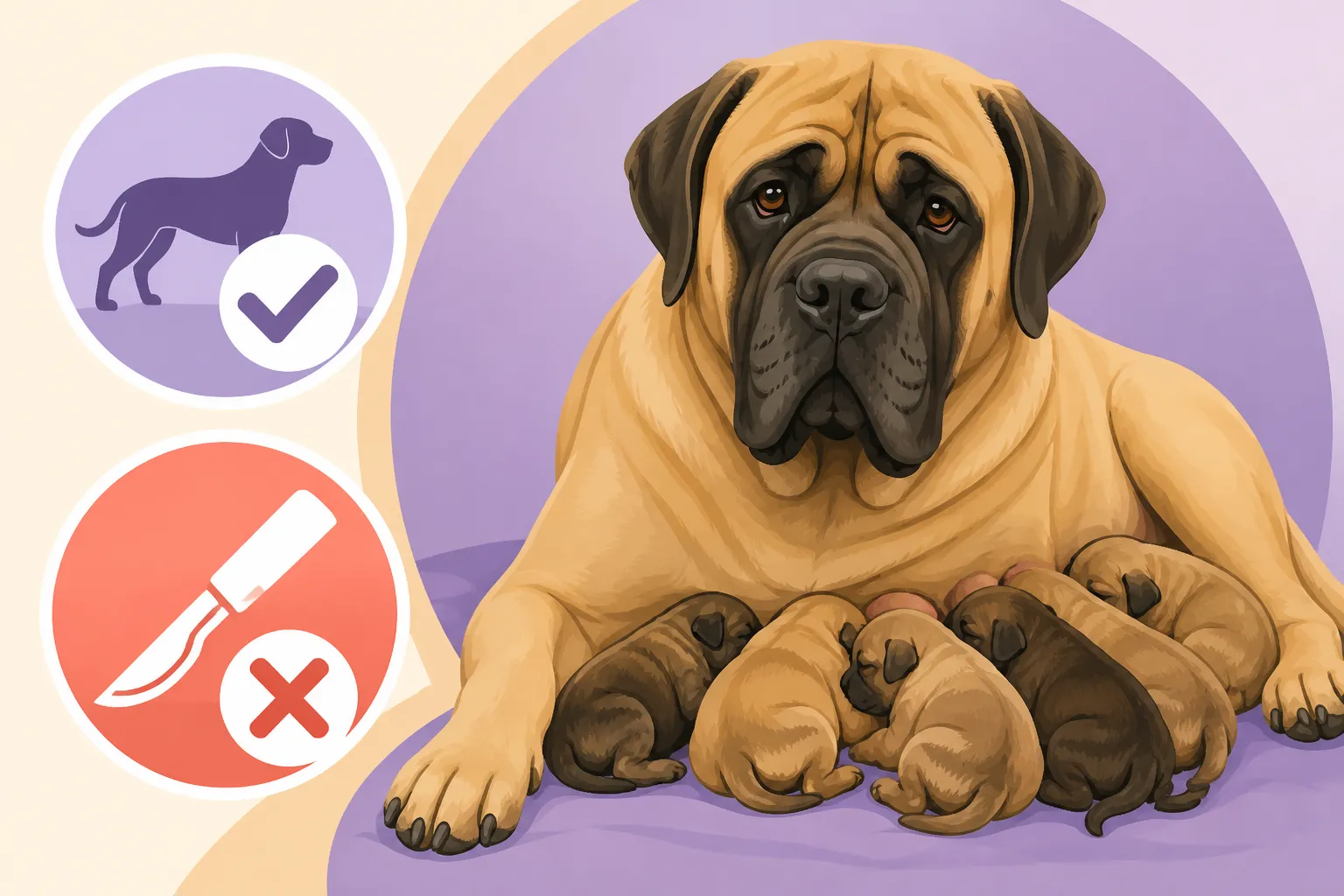
To answer the core question, it is significantly less common for a Mastiff to whelp an entire litter entirely naturally and without complications compared to many smaller or medium-sized breeds. While some Mastiff dams can have natural births, many breeders prepare for, and often experience, some form of intervention. It’s not unusual for a Mastiff to start labor naturally, deliver one or two puppies, and then stall, requiring a C-section for the remaining litter.
Therefore, rather than asking "how often does it happen without surgery?" it's more pragmatic to ask, "how often should I be prepared for surgery?" The answer to the latter is: almost always. A significant percentage of Mastiff litters, often well over half, will involve a C-section at some point, whether it's a planned procedure based on X-ray findings or an emergency intervention when labor falters. This isn't a failure; it's a responsible choice to prioritize the health and safety of the dam and her precious puppies. This can influence the overall [Cost & Ownership] of a litter.
Mitigating Risks and Supporting Natural Birth Attempts
Even with the high probability of surgical intervention, breeders still take steps to support the dam and give a natural birth the best possible chance. Proper nutrition during pregnancy is vital. Overfeeding a pregnant Mastiff dam can lead to excessively large puppies and increase the dam's own body fat, making labor harder. A balanced diet, appropriate for a large breed pregnant dog, is essential. It's often recommended to avoid puppy food for the dam, as it can be too rich in calcium and protein, which can lead to problems for the puppies' developing bones. This links to concepts like The Protein and Calcium Ceiling for a Mastiff Puppy, emphasizing controlled growth.
Regular, gentle exercise throughout pregnancy helps keep the dam fit and her muscles toned, which can aid in contractions during labor. However, this should always be low-impact and carefully monitored. During labor itself, close monitoring is absolutely critical. Knowing the normal progression of labor, recognizing signs of distress in the dam or puppies, and being ready to call the vet at the first sign of trouble are paramount. Many breeders keep detailed logs of temperature drops, contractions, and puppy arrivals. Sometimes, a natural birth progresses beautifully, and those moments are truly special, but you must be prepared for the alternative.
Post-Whelping Care and Recovery, Surgical or Otherwise
Whether your Mastiff dam has a natural whelping or undergoes a C-section, the period immediately following birth is crucial for her recovery and the well-being of her new litter. This is a time of intense demands on the mother's body, and her human family needs to be ready to provide comprehensive support.
Caring for a Dam After a C-Section
A Mastiff who has undergone a C-section will need specific care to ensure her recovery. Pain management is a top priority; your vet will prescribe appropriate medications to keep her comfortable, allowing her to focus on her puppies. Incision care involves monitoring the surgical site for any signs of infection, swelling, or redness. You’ll need to ensure she doesn't lick or chew at the sutures, possibly using an E-collar if necessary.
While C-sections deliver puppies quickly, they can sometimes cause a slight delay in the dam's milk coming in fully or her maternal instincts kicking in due to the residual effects of anesthesia. You'll need to closely monitor the puppies to ensure they are nursing effectively and gaining weight. Sometimes, supplemental feeding might be required initially. It's a delicate balance of managing her recovery while supporting her in caring for a potentially large litter. Getting the right supplies for both mom and puppies, often from places like Chewy, can make a big difference during this demanding period. You also want to ensure the dam has a comfortable, clean, and spacious whelping area, preferably with a special What a Bed That Holds a Mastiff Costs to support her immense weight.
Supporting the Mother After Natural Whelping
Even after a seemingly smooth natural birth, the dam isn't out of the woods. You'll need to monitor her closely for retained placentas, which can lead to serious uterine infections. She should pass a placenta for each puppy, and keeping a careful count is essential. Signs of uterine infection (metritis) include fever, lethargy, loss of appetite, and foul-smelling discharge. Mastitis, an infection of the mammary glands, is also a risk, especially with large litters. Checking her teats regularly for heat, swelling, or pain is important.
Ensuring she has adequate nutrition and hydration is paramount. Producing milk for a Mastiff litter is incredibly draining. She'll need a high-quality, calorie-dense diet. Many breeders opt for premium puppy formulas for the dam during lactation, as these are designed for growth and high energy needs. Brands like Ollie can provide nutrient-rich, fresh food options, but remember that the sheer volume a lactating Mastiff needs can be substantial. Keep fresh water available at all times, perhaps in multiple locations. Her recovery, whether from surgery or intense natural labor, is key to the puppies' survival and her overall health. Remember, Mastiffs are considered old at five, so caring for a dam in her prime, especially after whelping, is a critical component of Caring for a Mastiff Past Five later down the line.
Here’s a quick overview of considerations for both scenarios:
| Feature | Natural Whelping | C-Section |
|---|---|---|
| Immediate Risks | Uterine inertia, dystocia (stuck puppy), dam exhaustion, retained placenta | Anesthesia risks, surgical complications, infection at incision site |
| Dam's Recovery | Generally faster physical recovery if uncomplicated, but can be very draining | Slower physical recovery due to surgery, pain management needed |
| Puppy Monitoring | Ensure all puppies are accounted for and nursing well | Close monitoring for nursing, supplemental feeding might be needed if dam is groggy |
| Veterinary Involvement | Potentially less if smooth, but emergency help needed for complications | High, requires planned or emergency surgical team |
| Costs | Lower if uncomplicated, but emergency C-section can be substantial | Higher, almost always involves significant veterinary fees |
| Post-Care Focus | Monitoring for infection, retained placenta, mastitis, dam nutrition | Incision care, pain management, monitoring for infection, dam nutrition |
The journey of whelping a Mastiff litter is undeniably demanding, but with proper planning, vigilant care, and a strong partnership with your veterinarian, it can also be incredibly rewarding. The goal is always a healthy mother and a thriving litter, and sometimes, the best path to that goal involves surgery.
Disclaimer
This article is for general informational purposes only and does not constitute professional advice. Laws, prices and regulations vary by location and change over time. Consult a qualified professional for guidance on your specific situation.