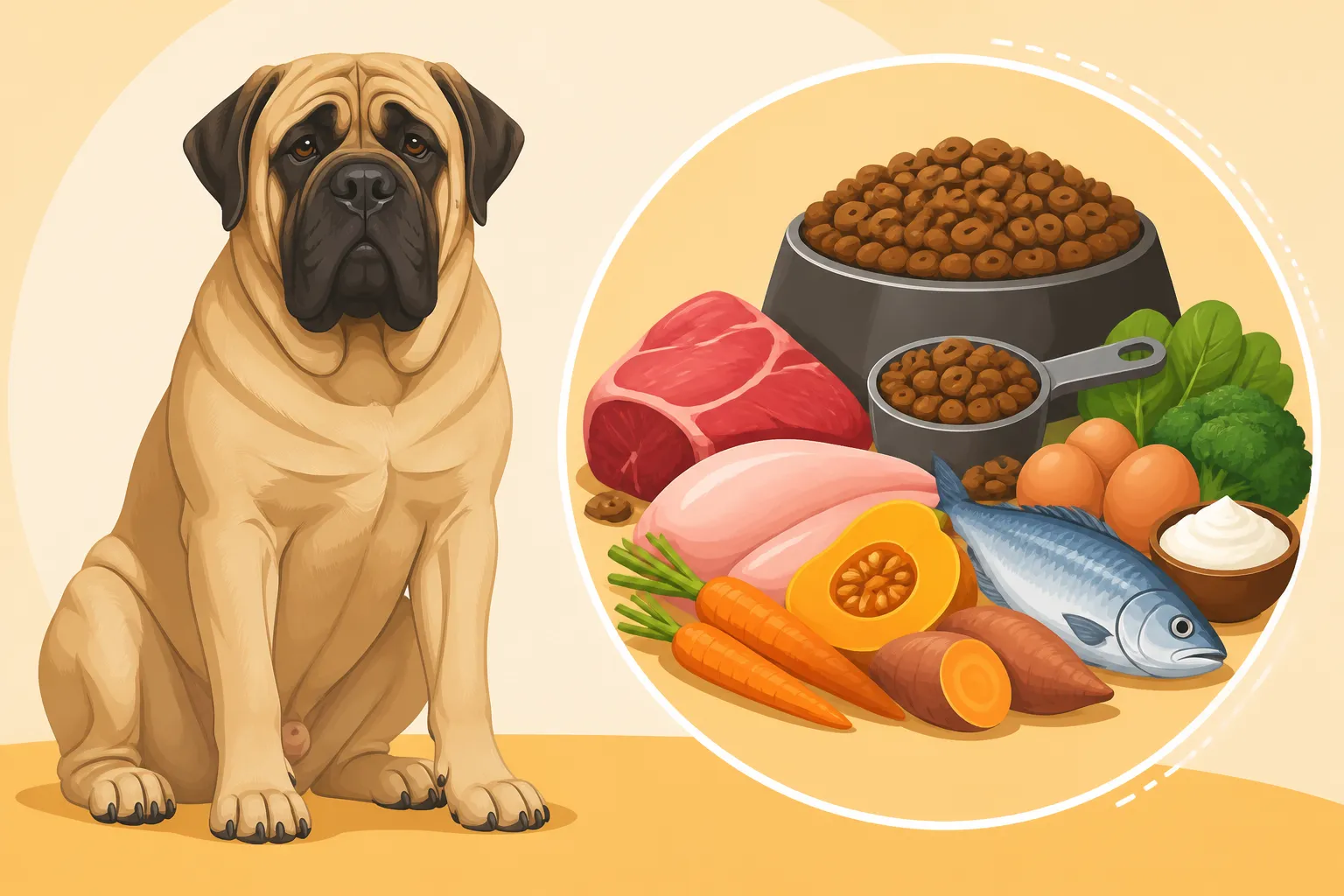
How Much a Mastiff Eats in a Month
One of the biggest eye-openers for new Mastiff owners, or even those just dreaming of welcoming one of these gentle giants into their lives, is the sheer volume of everything they consume – especially food. It's not just about what they eat, but how much and how that translates into a monthly grocery bill that can make your jaw drop. This guide is all about helping you understand the factors that dictate a Mastiff's monthly food intake, how much that truly costs, and how to manage it without compromising their health.
Understanding a Mastiff's Nutritional Needs
Before we even get to the shopping list, it's crucial to grasp that a Mastiff isn't just a bigger version of a Labrador. They are a unique giant breed with specific nutritional requirements that differ significantly from smaller or even medium-sized dogs. Ignoring these foundational needs can lead to serious health issues down the line, costing far more than any savings on cheaper food.
The Basics of Giant Breed Metabolism
Mastiffs, like other giant breeds, have a slower metabolism compared to their smaller canine cousins. This might seem counterintuitive given their massive size, but it's a critical distinction. While a high-energy Jack Russell Terrier might burn through calories like a furnace, a typical adult Mastiff spends a significant portion of its day in repose. Their energy output is generally lower on a per-pound basis. However, this doesn't mean they eat less overall; it means their nutritional needs are geared more towards maintaining their immense structure and supporting slow, steady growth rather than fueling constant bursts of activity.
During puppyhood, this slower metabolic rate is particularly important. Mastiff puppies must grow at a controlled, moderate pace. Rapid growth, often fueled by inappropriate food high in calories or unbalanced calcium-to-phosphorus ratios, can put immense strain on their developing bones and joints. This can tragically lead to debilitating orthopedic problems like hip and elbow dysplasia. It’s a delicate balance: they need enough nutrients to build that enormous frame, but not so much that they grow too fast. This specific growth requirement is a huge part of why "all-life-stages" foods aren't always ideal for giant breed puppies.
Key Nutrients and Caloric Requirements
For a Mastiff, the dietary bedrock consists of protein, fat, carbohydrates, and a carefully balanced array of vitamins and minerals. Protein is essential for muscle development and maintenance, crucial for a dog that carries 150 to over 200 pounds of lean mass. Good quality protein sources are key. Fats provide concentrated energy and support healthy skin and coat, while carbohydrates offer sustained energy.
The magic, or perhaps the challenge, lies in the caloric density and overall balance. A typical adult Mastiff might need anywhere from 2,500 to 4,000 calories per day, sometimes even more for very active individuals or during growth spurts in adolescence. But this is where the "it depends" factor truly kicks in. Their caloric needs are highly individualized. A sedentary, spayed female Mastiff living a comfortable life mostly on the sofa will require fewer calories than an intact male Mastiff who enjoys daily, long walks and still has a bit of youthful vigor. Overfeeding, even by a little bit each day, quickly adds up for a dog of this size and can lead to unhealthy weight gain, exacerbating joint issues and shortening their already Six to Ten Years Is What a Mastiff Gets.
The calcium and phosphorus balance is another critical nutritional component, especially for growing puppies. Too much calcium can interfere with proper bone development in large breeds. This is why standard puppy foods, designed for smaller breeds, are often inappropriate. You'll want to look for foods specifically formulated for "large and giant breed puppies" or "all life stages" foods with very specific, controlled calcium levels. Always remember that a Mastiff is dosed by its lean weight, not its scale weight, when it comes to medications and supplements, and this principle can often be applied to thinking about their dietary needs too. Understanding Why a Mastiff Is Dosed by Lean Weight and Not Scale Weight gives you insight into their unique physiology.
Factors Influencing Monthly Food Consumption
It would be wonderfully simple if all Mastiffs ate the same amount, but the reality is far more nuanced. Just like people, every Mastiff is an individual, and their dietary needs fluctuate based on several key factors. Understanding these will help you tailor their meals and predict your monthly spend more accurately.
Age and Life Stage
A Mastiff's life is a journey through distinct stages, each with its own dietary demands.
Puppyhood
This is arguably the most critical period for a Mastiff's development and diet. Mastiff puppies are not just cute; they are rapidly growing behemoths in the making. Their bones, joints, and organs are all developing at an astonishing rate. While they need ample nutrition to support this growth, the key word here is controlled growth. Overfeeding a Mastiff puppy, especially with foods that are too high in calories, protein, or calcium, can lead to irreversible damage. We often see owners try to "power feed" their puppies to get them bigger faster, but this is a dangerous misconception. A too-rapid growth rate can predispose them to orthopedic diseases like hip and elbow dysplasia, which can cause pain and lameness for life. It's often recommended to feed Mastiff puppies three to four smaller meals a day, rather than two large ones, to aid digestion and prevent bloat.
The transition from puppy food to adult food typically happens around 12 to 18 months of age, sometimes even later for very large individuals who are still filling out. The goal is to keep them lean, allowing their skeletal structure to mature properly without excess weight. This is also the stage where you learn that Why a Mastiff Puppy Must Not Be Exercised Hard is not just a suggestion, but a crucial part of their healthy development.
Adulthood
Once a Mastiff reaches full maturity, usually between two and three years of age when their growth plates have closed and they’ve finished filling out, their dietary needs shift to maintenance. The focus here is on sustaining their large frame, muscle mass, and energy levels without allowing them to become overweight. An adult Mastiff's diet will largely depend on their activity level. A Mastiff that enjoys daily, deliberate walks and playtime will naturally require more fuel than one whose primary exercise consists of walking from the sofa to the water bowl.
Keeping an adult Mastiff at a healthy weight is paramount for their long-term joint health and overall well-being. Even a few extra pounds on a dog this size can put significant strain on their joints, potentially worsening existing conditions or leading to new ones. Learning How Little an Adult Mastiff Eats for Its Size can be surprising for new owners, as their needs are often less than what you might intuitively expect for a dog that weighs over 150 pounds.
Seniority
As a Mastiff enters its golden years, typically around five or six (a sobering thought, given their short lifespan), their metabolism often slows further. Their activity levels might decrease due to natural aging or the onset of arthritis. At this stage, their dietary requirements often decrease, and many benefit from a senior-specific formula that might be lower in calories but still high in quality protein to maintain muscle mass. Some senior foods also include joint-supporting supplements. Regular vet check-ups become even more crucial to monitor their weight and adjust their diet as needed. It's about ensuring comfort and quality of life for their precious remaining years.
Activity Level and Individual Metabolism
Not all Mastiffs are created equal, even within the same breed. Their daily activity and inherent metabolism play a huge role in how much food they truly need.
The Couch Potato vs. The Active Companion
While Mastiffs are known for their calm, even lazy, demeanor indoors, some are more active than others. A Mastiff that genuinely enjoys a daily long stroll, perhaps accompanying you on errands, or engaging in some light play in the yard, will naturally burn more calories than one who prefers to be a regal floor rug. Even moderate activity, such as the recommended Why a Mastiff Only Needs One Hour a Day, can significantly impact caloric needs compared to a completely sedentary lifestyle.
It's also important to remember that external factors like climate can influence activity. A Mastiff living in a cooler environment might be more inclined to move around than one in a hot, humid climate where overheating is a serious concern.
The "Easy Keeper" Phenomenon
You might hear the term "easy keeper" among breeders and experienced owners. This refers to a dog that seems to maintain a healthy weight on relatively less food compared to breed averages. Conversely, some Mastiffs are "hard keepers" and seem to need more food to maintain their condition. These individual metabolic differences are real and can make a substantial difference in your monthly food bill. It's a matter of observing your own dog's body condition – are they gaining too much weight, or are their ribs becoming too prominent? Adjust accordingly, always aiming for a lean body.
Food Type and Quality
The type and quality of food you choose will drastically affect both the quantity needed and the overall monthly cost.
Kibble vs. Wet vs. Raw vs. Fresh-Cooked
Most Mastiffs are fed a high-quality dry kibble, simply because of the sheer volume involved. Kibble is generally the most cost-effective and calorie-dense option. Feeding a Mastiff exclusively on wet food would be an astronomical expense, as you'd need dozens of cans per day to meet their caloric requirements.
Raw or fresh-cooked diets are gaining popularity, but they present significant logistical and financial challenges for a Mastiff. Imagine preparing 4-8 pounds of fresh food daily! Not only is it incredibly time-consuming, but the cost of human-grade meat and vegetables in those quantities becomes prohibitive for most households. This is precisely Why Fresh Food Is Impractical at Mastiff Volumes for many owners. Services like Ollie offer pre-portioned fresh food, which can be fantastic for convenience and quality, but the cost scales dramatically with a Mastiff's size. While a small dog might thrive on a fresh-cooked diet for a manageable price, a Mastiff can quickly rack up a bill equivalent to feeding another human.
The Value of Giant Breed Formulas
Choosing a food specifically formulated for large or giant breeds is crucial. These formulas are designed with lower calorie density and, most importantly for puppies, controlled calcium and phosphorus levels to support slow, healthy growth. They also often include joint-supporting ingredients like glucosamine and chondroitin, which are invaluable for a breed prone to orthopedic issues. While these foods might seem more expensive per bag, their tailored nutritional profile can prevent costly health problems down the road, and sometimes the higher nutrient density means you feed slightly less by volume.
You might find a wide range of giant breed formulas at retailers like Chewy, offering convenience for bulk purchases and home delivery, which is a lifesaver when you're buying a 30-40 lb bag every few weeks.
Health Conditions and Special Diets
A Mastiff's health can significantly impact their dietary needs, often leading to specialized (and more expensive) food choices.
Allergies and Sensitivities
Many dogs, including Mastiffs, can develop food allergies or sensitivities, often manifesting as skin issues, chronic ear infections, or digestive upset. Identifying and managing these usually involves a prescription diet from your vet or a limited-ingredient diet. These specialized foods, which might exclude common allergens like chicken or beef, are invariably more expensive than standard kibble. For example, a Mastiff prone to Ear Infections in a Mastiff might benefit from a hypoallergenic diet.
Metabolic Conditions
Certain health conditions require very specific dietary interventions. For instance, intact male Mastiffs are predisposed to Cystinuria Type III and the Intact Male Mastiff, a condition that can lead to bladder stones. Managing this often involves a prescription diet designed to alter urine pH and reduce cystine stone formation. These diets are strictly vet-prescribed and come at a premium price.
Joint Health Supplements
While not technically "food," joint supplements like glucosamine, chondroitin, and fish oil are often considered part of a Mastiff's essential daily intake, especially as they age or if they have existing orthopedic issues. These are crucial for supporting their massive joints and are an additional monthly cost on top of their food bill. These supplements can be expensive, and they represent just one more line item that makes Why a Mastiff Costs More Per Year Than a Dog That Lives Twice as Long a stark reality.
Estimating Monthly Food Quantities and Cost
So, what does all this mean for your wallet? Let's get down to the numbers, keeping in mind that these are estimates, and your Mastiff's actual needs may vary. The sheer scale of a Mastiff means that even small differences in daily intake quickly become large differences in monthly cost.
Calculating Daily Intake
The first step in estimating your monthly food bill is understanding your Mastiff's daily caloric needs, which then translates into a quantity of food.
Reading Food Labels: A Starting Point
Every bag of dog food comes with a feeding guide, usually a chart that suggests a daily amount based on your dog's weight. For example, a premium giant breed kibble might recommend 6-8 cups per day for a 150-pound adult Mastiff. However, these are just starting points, not gospel. They represent an average, and your dog is an individual. Factors like age, activity, metabolism, and even the ambient temperature can influence how much they truly need.
A better approach is to use the label's guidelines as an initial reference and then monitor your Mastiff's body condition. You should be able to easily feel, but not necessarily see, their ribs. They should have a defined waist when viewed from above, and a slight tuck in their belly when viewed from the side. If you're seeing ribs, increase food slightly; if you can't feel them without pressing, decrease it. Remember that What a Mastiff's Weight Does to Every Line on the Vet Invoice means that maintaining a healthy weight is paramount to minimizing future veterinary expenses.
A Hypothetical Example
Let's take a hypothetical 180-pound adult Mastiff with a moderate activity level.
- Average Daily Calorie Need: Let's estimate around 3,200 calories per day.
- Selected Kibble: A high-quality giant breed formula that provides 350 calories per cup.
- Daily Cups: 3,200 calories / 350 calories/cup = ~9.14 cups per day.
- Monthly Cups: 9.14 cups/day * 30 days = ~274 cups per month.
Now, consider a typical 30-pound bag of kibble, which might contain roughly 120-130 cups of food.
- Bags per month: 274 cups / 120 cups/bag = ~2.28 bags per month.
So, you're looking at needing almost 2.5 large bags of food every single month for this one hypothetical Mastiff. This quick calculation alone shows you the scale of the commitment.
Kibble vs. Other Diets: Volume and Price Differences
The choice of diet dictates not only the volume but dramatically impacts the cost.
Dry Kibble: The Workhorse
For most Mastiff owners, dry kibble is the only practical option. A 30-pound bag can range from $50 for a decent quality brand to over $90 for a premium, specialized giant breed formula. If our hypothetical Mastiff needs 2.5 bags a month, that's potentially $125 to $225 per month just for kibble. This is a significant baseline expense, and it doesn't include treats, supplements, or any "extras."
Wet Food: A Luxurious Treat
While Mastiffs might enjoy wet food, it's generally reserved as a mixer or a treat due to its cost. A 13-ounce can might contain 300-400 calories. To meet our hypothetical Mastiff's 3,200-calorie need, you'd need about 8-10 cans per day. At $3-4 per can, that's $24-40 per day, or $720 – $1200 per month! This is clearly not a sustainable primary diet for a Mastiff.
Raw/Fresh-Cooked: The Premium Choice
As discussed, raw or fresh-cooked diets are an undertaking for a Mastiff. If you were to prepare it yourself using human-grade ingredients, the raw meat, organs, and vegetable components alone could easily run into several hundred dollars a month. A subscription service like Ollie, which delivers fresh, human-grade food, is fantastic for convenience, but the cost for a 180-pound dog could easily be $400 – $600+ per month, depending on the specific plan and ingredient choices. This option, while nutritionally rich, is a substantial financial commitment.
| Diet Type | Estimated Daily Cups/Cans/Lbs (180lb Mastiff) | Estimated Monthly Cost (Range) | Pros | Cons |
|---|---|---|---|---|
| Dry Kibble | 9-10 cups | $125 – $225 | Most cost-effective, easy storage, nutritionally complete | Less palatable for some, processing methods, potentially lower moisture content |
| Wet Food | 8-10 cans | $720 – $1200 | Highly palatable, high moisture content, often fewer fillers | Extremely expensive at Mastiff volumes, large storage needs, may not be nutritionally complete alone |
| Raw/Fresh-Cooked | 4-8 lbs | $400 – $800+ | High palatability, fresh ingredients, perceived health benefits | Very expensive, significant preparation/storage, risk of pathogens (raw), nutritional balance can be tricky |
Comparing Brands and Formulas
The dog food market is flooded with options, and navigating it for a Mastiff requires a discerning eye.
Generic vs. Premium Brands
Generic or store-brand dog foods might offer an enticingly low price point, but they often skimp on quality ingredients. Fillers, lower quality protein sources, and less digestible components mean your Mastiff might need to eat more to get the same nutritional value, potentially negating any cost savings. More importantly, they may lack the specific nutritional balance crucial for giant breeds, especially growing puppies.
Premium brands, while more expensive per bag, typically use higher quality ingredients, leading to better digestibility, fewer stool issues, and overall better health. These often translate to feeding slightly less food by volume because it's more nutrient-dense. Retailers like Chewy offer a vast selection of premium and prescription diets, making it easier to compare prices and find specific formulations without leaving your home.
Grain-Inclusive vs. Grain-Free
The debate around grain-free diets has been ongoing, with some concerns raised by veterinary cardiologists about a potential link between certain grain-free, legume-rich diets and dilated cardiomyopathy (DCM) in some breeds. While the science is still evolving, for a Mastiff, a well-formulated grain-inclusive diet from a reputable brand that meets AAFCO guidelines is often a safe and excellent choice. Avoid making dietary decisions based on trends; always prioritize sound, evidence-based nutrition.
Large Breed Specific Formulations
We've touched on this, but it bears repeating: for Mastiff puppies, a large and giant breed specific puppy food is non-negotiable. It helps ensure the correct calcium-to-phosphorus ratio and a controlled calorie count to prevent excessively rapid growth. For adults, while not as critical as in puppyhood, large breed adult formulas often include ingredients to support joint health, which is a huge bonus for these heavy dogs. Investing in these specialized formulas early can genuinely help prevent Arthritis in a Mastiff at Four, pushing back the onset of debilitating joint pain and improving their quality of life.
Practical Tips for Managing a Mastiff's Food Bill
Living with a Mastiff means budgeting for a big appetite. While the costs can be substantial, there are smart strategies to manage your monthly food bill without sacrificing your dog's health or well-being.
Buying in Bulk and Subscription Services
When you have a Mastiff, "stocking up" takes on a whole new meaning. It's not about an extra bag, it's about buying enough to last more than a week.
The Advantages of Large Bags
Purchasing the largest available bags of kibble is almost always the most cost-effective approach. The price per pound is significantly lower in 30-40 pound bags compared to smaller ones. Think of it like this: you're essentially getting a "bulk discount" every time you shop. This is where retailers like Chewy shine, as they can deliver these hefty bags right to your door, saving you the struggle of lugging them from the pet store.
Of course, buying in bulk requires adequate storage. You'll need an airtight container large enough to hold a full bag, or even multiple bags, to keep the food fresh and prevent pests. This often means investing in a sturdy, food-grade plastic bin with a secure lid. Considerations around Where a Mastiff Owner Stores a Month of Food are very real, as these containers take up considerable space.
Embracing Auto-Ship and Subscription Services
Many online retailers and even some pet food brands offer auto-ship or subscription services. This means your Mastiff's food is automatically delivered to your home on a regular schedule (e.g., every 3-4 weeks), often with a discount. This not only saves you money but also ensures you never run out of food, which is a real logistical challenge with a Mastiff's consumption rate. Services like Chewy offer flexible auto-ship options, allowing you to adjust delivery frequency easily. For those considering fresh food, Ollie operates on a subscription model, delivering pre-portioned meals, which can simplify logistics even if the cost is higher.
This strategy can also help you budget, as the food cost becomes a predictable recurring expense rather than a sudden, large outlay. For some Mastiff owners, the question of Whether a Mastiff Owner Should Buy by the Pallet isn't entirely a joke, given the volume they go through!
Smart Snacking and Avoiding Waste
Treats are an important part of training and bonding, but for a Mastiff, they need to be managed carefully to avoid unnecessary caloric intake and wasted food.
Mindful Training Treats
Mastiffs respond well to positive reinforcement, and treats are an effective motivator. However, the calories in treats add up quickly for a giant breed. Instead of large, calorie-dense treats, opt for small, low-calorie options, or break larger treats into tiny pieces. You can also use small pieces of their regular kibble as training rewards. This helps keep their total daily caloric intake in check. It's worth considering Whether Training Treats Count Against a Mastiff's Calories – the answer is absolutely, yes they do! Always factor them into the daily food allowance.
Some safe human foods like plain cooked chicken, carrots, green beans, or apple slices (without seeds) can also make excellent, low-calorie treats. Just be sure to introduce new foods slowly and in moderation.
Precise Meal Measurement
Eyeballing your Mastiff's food portion is a recipe for either overfeeding or underfeeding. Invest in a reliable measuring cup specifically for dog food. While it might seem like a small detail, consistently feeding an extra half-cup per day to a Mastiff adds up to an extra 15 cups per month, which can mean an extra half-bag of food and several unwanted pounds on your dog over time. Precision helps you maintain their ideal body condition and keeps your food costs consistent.
Avoiding waste also means storing food properly to prevent spoilage. An airtight container not only keeps it fresh but also protects it from moisture and pests, ensuring every last kibble is safe for consumption.
Consulting Your Veterinarian for Personalized Advice
Your veterinarian is your most valuable resource for navigating your Mastiff's dietary needs throughout their life. They see your dog regularly and can provide truly personalized advice.
Tailoring Diet to Health and Age
Routine vet check-ups are essential for monitoring your Mastiff's weight, body condition score, and overall health. Your vet can advise on when to transition from puppy to adult food, or from adult to senior formula. They can also recommend dietary adjustments if your Mastiff gains or loses too much weight, or if they develop health issues that require specific nutritional support, such as a prescription diet for allergies, kidney disease, or conditions like cystinuria.
Never hesitate to discuss changes in appetite, digestive issues, or any concerns about your Mastiff's weight with your vet. They can help you decipher feeding guides and ensure your Mastiff is getting the optimal nutrition for their individual needs, which can change as they age or if they develop conditions that require a specific feeding strategy. For example, if your Mastiff starts experiencing any signs related to urinary issues, your vet might recommend specific dietary changes even before diagnosing something like What Cystinuria Type III Does to a Mastiff.
Proactive Health Management
A well-balanced diet is a cornerstone of proactive health management. By providing optimal nutrition, you're not just feeding your Mastiff; you're investing in their long-term health, which can help mitigate some of the high bills that arrive front-loaded in a Mastiff's life. While you can't prevent every health issue, good nutrition supports a strong immune system, healthy joints, and a better quality of life. This is particularly important for a breed with a shorter lifespan like the Mastiff, where every healthy year is precious.
Disclaimer
This article is for general informational purposes only and does not constitute professional advice. Laws, prices and regulations vary by location and change over time. Consult a qualified professional for guidance on your specific situation.