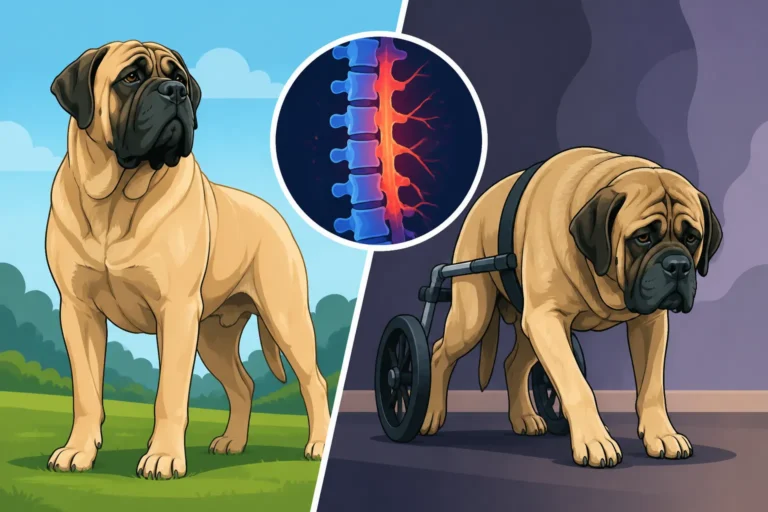
Whether a Smaller Mastiff Lives Longer
It's a heartbreaking reality that Mastiffs, with their incredible hearts and imposing presence, often grace our lives for far too short a time. Many of us, myself included, have wondered if there's a secret to extending those precious years, and the idea of a "smaller" Mastiff living longer often comes up. This guide will delve into the nuances of Mastiff size, genetics, and health to explore whether a more moderate build genuinely offers a longer lease on life for these magnificent giants.
The Heartbreaking Reality of the Mastiff Lifespan
Let's be blunt: the lifespan of a Mastiff is one of the toughest pills to swallow for any owner or aspiring owner. When you fall in love with these gentle giants, you're signing up for a shorter journey than with many other breeds, often just Six to Ten Years Is What a Mastiff Gets. It feels unfair, doesn't it? You pour so much love, effort, and expense into them, only to have them leave you too soon. This isn't just a random occurrence; it's a pattern seen across most giant breeds, and it's rooted in their sheer size and accelerated growth.
Why Giant Breeds Have Shorter Lives
The scientific community has explored this phenomenon extensively, and the general consensus points to several interconnected factors. First, giant breeds experience rapid growth spurts that put immense strain on their developing bodies. Imagine packing years of growth into just a few months; it's a metabolic marvel but also a metabolic burden. This rapid growth can predispose them to orthopedic issues like hip and elbow dysplasia, which can begin in puppyhood. Secondly, there's the concept of "accelerated aging." While smaller dogs might take 7-10 years to reach middle age, a Mastiff can be considered old by the time it's five years old. This means that cell turnover, the accumulation of cellular damage, and the onset of age-related diseases seem to happen at a much faster rate. It's like their biological clock runs on fast forward.
Common Health Challenges Tied to Size
Beyond general aging, a Mastiff's colossal size directly contributes to a predisposition to specific, life-limiting health issues. Their deep chests make them highly susceptible to bloat, a life-threatening condition where the stomach twists. Their immense weight puts constant stress on their joints, leading to conditions like arthritis at an alarmingly young age, even if they were cleared of things like Why a Mastiff's Hips Fail Under Its Own Weight or Elbow Dysplasia Affects One Mastiff in Seven as puppies. Cardiac issues, certain types of cancer like osteosarcoma, and even the risks associated with anesthesia are all amplified by their sheer scale. It's not just about more dog; it's about more everything when it comes to their physiological burdens.
Deconstructing "Smaller" in a Mastiff Context
When we talk about a "smaller Mastiff," it's crucial to understand what that actually entails within the breed's standard. We're not talking about a Mastiff that looks like a Labrador; we're talking about one that might be on the lower end of the breed's accepted weight and height ranges, or perhaps one that hasn't been deliberately bred for extreme mass.
What the Breed Standard Says About Size
The American Kennel Club (AKC) breed standard for Mastiffs specifies a minimum height for males and females at the shoulder, but generally emphasizes "massiveness" as a defining characteristic. It doesn't put a maximum weight, only stating that dogs should be "symmetrical, a grand, massive, powerful dog, with a kindly expression." A male Mastiff typically stands 30 inches and up at the shoulder and weighs anywhere from 160 to 230 pounds, while females are usually 27.5 inches and up, weighing 120 to 170 pounds. Within these ranges, there's a considerable difference between a 160-pound male and a 230-pound male, or a 120-pound female and a 170-pound female. A "smaller" Mastiff is likely one that falls towards the lower end of these acceptable ranges, possessing good bone and substance but without excessive or exaggerated bulk. These are the dogs that are still undeniably Mastiffs, just not the extreme examples you sometimes see.
The Problem with "Oversized" Mastiffs
Unfortunately, there's a persistent misconception that "bigger is better" when it comes to Mastiffs, leading some breeders and owners to actively strive for dogs that push the upper limits of size, sometimes even beyond. This pursuit of exaggerated mass often comes at a significant cost to the dog's health. An "oversized" Mastiff, perhaps a male topping 250 or 280 pounds, carries an even greater burden on its skeletal structure, heart, and metabolic system. This extreme size often exacerbates all the health problems giant breeds already face. The ligaments and tendons struggle to support such immense weight, and the heart has to work harder to pump blood through a larger body. It's important to remember that the goal of a Mastiff should be functional mass, not just mass for its own sake.
Why Moderation Might Offer an Edge
While there's no magic bullet that guarantees a long life for any Mastiff, a Mastiff that falls within the more moderate, yet still impressive, range of the breed standard might indeed face slightly fewer physiological challenges than one bred for extreme size. A 170-pound male Mastiff, while still a giant, puts less stress on its joints and heart than a 230-pound male Mastiff. The difference isn't about being a different breed, but about alleviating some of the sheer physical demands inherent in their enormous stature. This isn't about promoting runts or undersized dogs, but rather appreciating a well-balanced, functionally massive dog over one that is simply "big for big's sake."
The Science Behind Size and Longevity
The relationship between body size and lifespan in dogs is a fascinating area of study, often highlighting a frustrating paradox: smaller dogs tend to live longer, but within giant breeds, there can be subtle differences. It's not just about the number on the scale, but what that number represents in terms of body composition and biological processes.
Metabolic Rate and Oxidative Stress
Larger dogs generally have a higher metabolic rate than smaller dogs when considered per unit of body mass, and they reach maturity faster. This accelerated metabolism can lead to increased oxidative stress—a buildup of harmful free radicals that damage cells and tissues. Think of it like a car engine running at higher RPMs; it gets more wear and tear over time. For a Mastiff, this means their organs and systems are working harder, faster, which can contribute to the accelerated aging mentioned earlier. A Mastiff that is overly heavy for its frame, even if it's within the "normal" range, might experience even greater metabolic stress.
Joint and Skeletal Strain
This is perhaps the most obvious impact of size. Every step a Mastiff takes, every time it lies down or gets up, its joints are under immense pressure. Imagine carrying an extra 50 pounds around all day, every day – that's the difference between a moderately sized Mastiff and an oversized one. This constant stress can lead to the early onset and progression of degenerative joint diseases. Even with excellent genetics and preventative care, the sheer weight is a significant factor. Owners might consider supplements from a young age, and resources like Joint Supplements for a Mastiff can offer guidance. Pet insurance providers, such as Healthy Paws, often cover treatments for these conditions, though it's always wise to understand policy specifics regarding pre-existing conditions.
Organ Size and Function
While a Mastiff's body is larger, its organs don't always scale up proportionally to handle the increased load. The heart, for instance, has to work harder to circulate blood throughout a massive body, potentially leading to earlier cardiac issues. Similarly, the kidneys and liver are processing a greater volume of blood and waste products. The sheer volume of cells in a larger body also means more opportunities for cell mutations that can lead to cancer. It's a complex interplay of factors where every system is challenged by the dog's impressive physical form.
Nurturing Longevity in Any Mastiff
While genetics and initial size play a role, there's a tremendous amount an owner can do to maximize the health and potentially extend the life of their beloved Mastiff, regardless of whether they are on the smaller or larger end of the breed spectrum.
Optimal Nutrition and Weight Management
Perhaps the single most impactful thing you can do for your Mastiff's longevity is to keep them lean. A Mastiff should maintain a healthy, athletic weight, with ribs easily felt but not seen. Avoid the temptation to "bulk them up" or let them become overweight, even slightly. Every extra pound on a Mastiff is like adding a heavy backpack to a human; it adds strain. A balanced diet, appropriate for a giant breed, is essential. During puppyhood, this means controlling their growth rate, avoiding excessive protein and calcium, as discussed in Restraining the Growth of a Mastiff Puppy. As adults, it means carefully monitoring portion sizes and ensuring they're eating high-quality food. You want to see that waist tuck, and a good vet will always encourage a lean body condition score.
Controlled Exercise and Joint Care
Gentle, consistent exercise is crucial, but intense, high-impact activities should be avoided, especially in puppies. The Mastiff Puppy You Are Not Allowed to Exercise highlights the importance of protecting their developing joints. Regular, moderate walks are perfect, helping to build muscle tone without overtaxing their frames. As they age, swimming can be an excellent low-impact option. Provide soft, orthopedic bedding to cushion their joints when resting. Consider proactive joint support supplements and regular veterinary check-ups to catch any signs of discomfort early. Remember, even minor lameness can indicate significant issues in a giant breed.
Proactive Veterinary Care and Early Detection
Regular veterinary visits are non-negotiable for a Mastiff. Given their predispositions, it's vital to be proactive. Discuss screening for conditions like bloat, and seriously consider preventative measures like a gastropexy, which can significantly reduce the risk of gastric torsion. Regular health checks can catch early signs of cardiac issues, cancer, or other age-related conditions. Don't dismiss subtle changes in behavior or appetite; with Mastiffs, early intervention can make a huge difference. Investing in comprehensive pet insurance, perhaps through a reputable provider like Healthy Paws, can help make these often expensive veterinary treatments more manageable, allowing you to focus on your Mastiff's care rather than the financial strain.
Managing Environmental Stressors
A Mastiff's environment also plays a role in their overall well-being. Ensuring they have non-slip flooring, especially as they age, can prevent injuries and maintain their mobility, a topic explored in Traction: Why a Mastiff Cannot Live on Bare Hardwood. Keeping them cool in warm weather is essential, as their massive bodies can easily overheat. A quiet, stable home environment reduces stress, which contributes to overall health. Furthermore, understanding the Why Anesthesia Is Riskier in a Mastiff and other unique needs of the breed means you can advocate for the best care should they need surgery or other medical procedures.
Here's a quick overview of how size might correlate with common health concerns:
| Mastiff Size Category | Typical Weight Range (Adult Male) | Potential Health Advantages (Relative) | Potential Health Risks (Relative) | Key Considerations for Owners |
|---|---|---|---|---|
| Moderate/Standard | 160-200 lbs | Less joint strain, slightly lower metabolic load | Still prone to bloat, joint issues, cancer (as all Mastiffs) | Focus on lean weight, controlled exercise, proactive vet care |
| Larger/Standard | 200-230 lbs | Still within breed standard, impressive presence | Increased joint strain, higher metabolic load, potentially greater cardiac burden | Vigilant weight management, robust joint support, monitoring for early signs of disease |
| Oversized/Exaggerated | 230+ lbs | Impressive to some (but not breed standard) | Significantly increased risk for all giant breed health issues, reduced mobility | Avoid breeding for this size; requires intensive management of health and mobility |
Ultimately, while a Mastiff on the lower end of the breed standard's weight might theoretically have a slight advantage in terms of physical burden, proactive care, meticulous weight management, and vigilant health monitoring will always be the most powerful tools in an owner's arsenal to help any Mastiff live its fullest, healthiest life. The goal is a functionally massive dog, not merely a large one.
Disclaimer
This article is for general informational purposes only and does not constitute professional advice. Laws, prices and regulations vary by location and change over time. Consult a qualified professional for guidance on your specific situation.