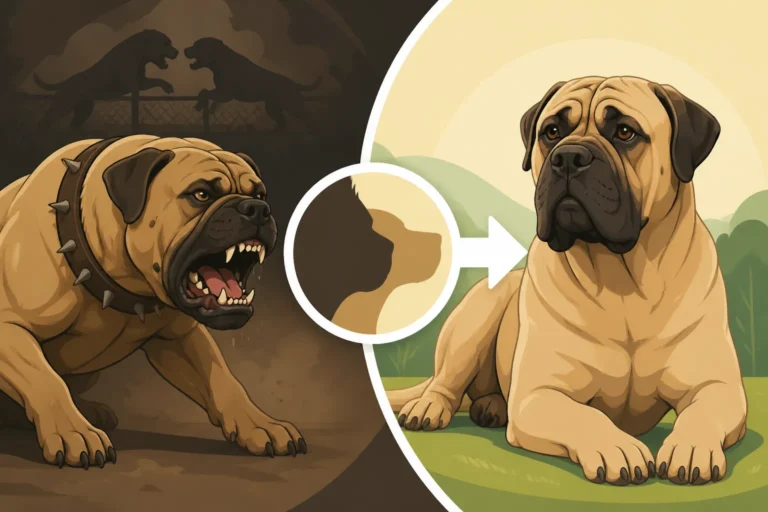
The Push to Breed Healthier Mastiffs
A Mastiff can look impressive in the show ring and still inherit serious health risks, so a health certificate or a long pedigree is not enough to prove a breeding program is responsible. This guide explains what healthier Mastiff breeding involves, which checks matter, why genetic diversity belongs in the conversation, and what puppy buyers can ask before committing.
What healthier Mastiff breeding actually means
“Healthier” does not mean a breeder can promise a puppy will never become ill. It means making thoughtful decisions to reduce avoidable risks, prioritize sound structure and temperament, and be candid about the conditions that remain possible. Because Mastiffs are giant dogs with a relatively short average lifespan, those choices matter both to individual families and to the breed as a whole.
Health testing is a starting point, not a guarantee
Health screening helps breeders make better-informed choices. The Mastiff Club of America’s recommended health checks and the Orthopedic Foundation for Animals’ records can help buyers understand whether parents have been evaluated for issues such as hip and elbow dysplasia, cardiac disease, and eye conditions. DNA testing can also identify specific inherited risks, including progressive retinal atrophy and Type III cystinuria.
A test result has to be interpreted in context. A dog that is clear for one inherited condition may still develop an unrelated illness, and a normal evaluation at one age cannot predict every health outcome for life. Likewise, a dog with a particular genetic result may still be a suitable breeding candidate when paired carefully to avoid producing affected puppies. The aim is informed selection, not treating one result as a complete health report.
Ask for the registered names of both parents and the records behind the breeder’s claims. You can then check whether results belong to those dogs, whether the test is appropriate for the condition being discussed, and whether evaluations were completed at the relevant age. The Four CHIC Tests a Mastiff Breeder Must Clear explains the core screening conversation, while Which DNA Tests a Mastiff Breeder Should Add covers the role of additional DNA testing.
Soundness and daily function matter as much as paperwork
Health is not only a set of test results. A Mastiff should be able to move comfortably, breathe without obvious distress, eat and rest normally, and function in ordinary home life. Breeders should pay attention to mobility, body condition, skin and eye comfort, and how dogs cope with heat and exercise. A massive frame or exaggerated features should not be treated as more important than a dog’s ability to live comfortably.
This is one reason the dogs chosen for breeding should be assessed over time, not just at a single show or health appointment. A young dog may have passed an early check but later develop a condition that changes how its relatives should be considered. Responsible breeders keep track of health developments in their own dogs and in puppies they have produced, then use that information when planning future pairings.
Ask how the breeder defines a successful adult dog beyond appearance. Do they stay in touch with puppy families? Do they collect information about health and lifespan? Are they willing to discuss problems that have occurred in their lines? Open answers are more useful than a sweeping claim that a line is “healthy” or “problem-free.”
How breeding choices can reduce inherited risk
No single test or breeding rule can make every Mastiff healthier. Progress comes from combining screening, careful mating choices, honest record-keeping, and a willingness to adjust plans when new information emerges.
Match dogs to reduce risk, not simply to produce a desired look
A responsible pairing considers the health and temperament of both dogs, their close relatives, and the traits each may pass to puppies. If one dog carries a known genetic variant, a breeder may be able to avoid producing affected puppies by choosing a suitable mate and testing the resulting litter when appropriate. For some conditions, a simple “never breed a carrier” rule can unnecessarily shrink the pool of breeding dogs without improving outcomes as effectively as careful pairing.
That does not mean every dog should be bred. A dog with significant health concerns, poor mobility, unstable temperament, or a family history that raises substantial concern may not be a suitable candidate. The decision should account for more than whether a dog can physically reproduce or has a desirable appearance. Buyers can learn more about test interpretation in How Dominant Inheritance Works in Mastiff PRA and Why One Affected Mastiff Parent Is Enough.
Breeders should also distinguish between a genetic predisposition and a guaranteed outcome. A DNA test may identify a particular inherited risk, but it does not replace physical examinations, veterinary care, or attention to how the dog and its relatives actually fare. The Whether a Mastiff Carrier of PRA Goes Blind Too article is one example of why the meaning of a genetic result depends on the condition and inheritance pattern involved.
Preserve diversity while selecting for health
A narrow gene pool can make it harder to reduce disease risk. If breeders repeatedly use a small number of popular sires, desirable traits may spread quickly, but so can unwanted inherited risks. Overusing a successful dog can also reduce genetic variety across future generations, even when that dog appears healthy.
Genetic diversity is not a reason to ignore health testing. It is a reason to balance multiple goals: avoid producing puppies with known, preventable disorders, select for sound function and temperament, and avoid making the breeding population unnecessarily narrow. A breeder may need to consider less obvious relatives, compare pedigrees, and look beyond a dog’s show record when planning a litter.
This work is gradual. A responsible program may make progress through generations rather than producing a dramatic change in a single litter. Buyers should be wary of claims that one “perfect” pairing will fix the breed, just as they should be wary of claims that a particular bloodline is automatically healthier because it is rare, expensive, or heavily promoted.
Lifespan and family health history deserve attention
A dog’s relatives can offer useful clues, especially when breeders have reliable records. Ask about the ages and causes of death of close relatives, as well as significant diagnoses and the ages at which they appeared. No family history can guarantee what will happen to a puppy, but a breeder who can discuss patterns thoughtfully is better equipped to make informed decisions than one who has not gathered that information.
Mastiffs are known for having shorter lifespans than many smaller breeds, and their size can bring particular physical demands. That makes it important to discuss not only inherited diseases but also weight, joint health, and the dog’s comfort as it ages. Learn more about the broader lifespan picture in Six to Ten Years Is What a Mastiff Gets and The Push to Breed Heavier Mastiffs.
| Breeding consideration | What a responsible approach looks like | What to ask |
|---|---|---|
| Health screening | Appropriate examinations and DNA tests for both parents, with results available for review | Can I see the registered names and health records for both parents? |
| Genetic risk | Results interpreted according to the specific condition and inheritance pattern | What does each result mean for the puppies in this pairing? |
| Structure and movement | Dogs selected for comfortable, functional movement rather than size alone | Have either parent or close relatives had mobility problems? |
| Temperament | Stable, manageable behavior considered alongside physical health | How do the parents behave in ordinary home situations? |
| Family history | Health and lifespan information collected from relatives and previous litters | What health issues have appeared in this family, and at what ages? |
| Follow-up | The breeder stays in contact and uses information from puppies to guide future choices | Will you want updates as the puppy grows, and what support do you offer? |
What puppy buyers can do to support healthier breeding
Choosing a breeder is not a guarantee against future illness, but buyers can reward transparency and avoid supporting practices that prioritize appearance or convenience over welfare. It is reasonable to take time, compare answers, and walk away if important records are unavailable.
Ask specific questions and verify the answers
A good conversation goes beyond, “Are the parents healthy?” Ask which health checks were performed, when they were done, and where the results can be confirmed. Ask whether the breeder has seen health problems in previous litters, what happens if a puppy develops a serious inherited condition, and how they decide which dogs are suitable for breeding.
Look for answers that include nuance. A breeder should be able to explain why a particular test was used, what it can and cannot tell them, and how the results influenced the pairing. Be cautious if someone dismisses all health concerns as “normal for the breed,” refuses to discuss family history, or promises that a puppy is guaranteed to be disease-free.
You can also ask how the breeder supports puppies after they go home. Responsible breeders usually want to remain a resource and may ask families to share veterinary updates. This ongoing relationship can provide valuable information about the litter and help guide later breeding decisions. The Whether an Untested Mastiff Litter Is Worth Buying guide offers more questions to consider before making a commitment.
Look beyond price, color, and impressive size
A high price does not prove that a breeder has done thorough health work, and a low price does not by itself explain why testing or care may be missing. Request documentation rather than relying on advertising language. Ask whether the breeder’s priorities include sound movement, stable temperament, and long-term health—not only color, head shape, or exceptional weight.
A puppy should also be raised in a way that prepares it for life with people. Early social experiences, safe handling, and age-appropriate care cannot prevent inherited disease, but they influence a dog’s ability to adapt and can make veterinary care less stressful. Ask how the puppies are raised and how the breeder chooses a puppy for each household.
Once your puppy comes home, keep veterinary records organized and discuss nutrition, growth, and preventive care with your veterinarian. Some families order routine supplies through retailers such as Chewy, while others use local pet shops; either way, a shopping list cannot replace individualized veterinary advice. In particular, giant-breed puppies need thoughtful growth management, not rapid weight gain for its own sake.
Support the dog, not just the breeding program
Even carefully bred Mastiffs need lifelong care. Keep your dog at a healthy body condition, follow veterinary guidance, and report significant diagnoses to the breeder. If a health issue appears, sharing accurate information can help the breeder understand whether it is isolated or part of a wider pattern. That conversation may be difficult, but it is one of the ways buyers can contribute to better decisions for future litters.
Ask for a written contract and read it before paying a deposit. Understand what it says about health conditions, veterinary documentation, and the breeder’s responsibility if you can no longer keep the dog. A strong relationship should not end when the puppy leaves the breeder’s home.
A retailer such as Chewy may be one option for restocking food or everyday supplies, but the breeder’s guidance and your veterinarian’s recommendations should shape choices that affect a growing Mastiff’s health. As your dog matures, keep records of weight, mobility, and veterinary findings, and share relevant updates with the breeder. Some families find it useful to keep invoices and product notes from Chewy or other suppliers alongside those records, especially when tracking a change in diet or routine.
What meaningful progress looks like
Healthier Mastiff breeding is not a promise of perfect dogs. It is a consistent effort to make better-informed choices, protect genetic diversity, avoid preventable inherited disease, and put comfort and function ahead of extreme size or appearance. Progress depends on breeders who are willing to share records and learn from outcomes, and buyers who ask for evidence rather than accepting reassuring slogans.
The most useful question is not simply whether a breeder tests. It is whether testing, family history, temperament, structure, and puppy follow-up all play a real role in the decisions they make. When those parts fit together, breeding has a better chance of producing Mastiffs that can move comfortably, live well with their families, and contribute positively to the breed’s future.
Disclaimer
This article is for general informational purposes only and does not constitute professional advice. Laws, prices and regulations vary by location and change over time. Consult a qualified professional for guidance on your specific situation.