The Mastiff Against a Neapolitan Mastiff
Deciding between two magnificent giant breeds like the Mastiff and the Neapolitan Mastiff can feel overwhelming. You're not just choosing a dog; you're choosing a lifestyle, a family member who will literally take up a lot of space and command a huge part of your heart and resources. Many prospective owners get caught up in the visual drama of these dogs, perhaps not fully appreciating the nuanced differences in their history, temperament, and daily care that truly shape the ownership experience. This guide aims to clear up that confusion, offering a realistic, side-by-side look at these two incredible, albeit distinct, giants.
A Look Back: The Histories That Shaped Them
Understanding where these breeds come from is the first step in truly appreciating their unique characteristics and why they behave the way they do today. Both are ancient breeds with deep roots, but their specific paths diverged, leading to the dogs we know now. It's not just about what they look like; it's about what they were bred to do and how those instincts manifest in your home.
The Ancestry of the English Mastiff
The English Mastiff, often simply referred to as the Mastiff, boasts a lineage stretching back millennia. Its ancestors were massive dogs, often referred to as Molossers, brought to Britain by Phoenician traders or even Roman legions. Imagine dogs powerful enough to stand alongside Roman soldiers in battle, or later, to guard vast English estates. These were dogs bred for formidable presence and protective instincts, but also for a certain level of stable temperament to function within a household, even a castle, as a watchful guardian. They weren't just brute force; they were discerning protectors.
Over centuries, these dogs were refined in England, evolving from war dogs and bear-baiting participants (though that era is thankfully long past) into the gentle giants we recognize today. The emphasis shifted more towards an impressive, docile family guardian rather than an aggressive fighter. This is why you often hear them described as "nanny dogs" to children, a testament to their inherent calm and protective nature when properly socialized. Their history steeped in guarding grand estates meant they needed to be observant, imposing, and discerning, rather than quick to aggression. You can explore The Mastiff That Stood Over Sir Piers Legh at Agincourt for more historical context.
The Neapolitan Mastiff's Roman Roots
The Neapolitan Mastiff, or Mastino Napoletano, has an equally ancient, but perhaps even more intensely focused, history. Originating in the Campania region of Italy, near Naples, these dogs are direct descendants of the Roman Molossus dogs used in the arenas and as guard dogs for homes and farms. While the English Mastiff evolved in a climate of estate guarding and companionship, the Neapolitan Mastiff was honed in a more utilitarian, often harsh, agricultural environment. Their role was absolute protection, often working alone to deter intruders, human or animal, from isolated farmsteads.
This intense guarding heritage means the Neapolitan Mastiff often carries a more pronounced guarding instinct and can be more reserved, even suspicious, of strangers. They needed to be self-sufficient and capable of making decisions about threats without human intervention. This breed wasn't simply a deterrent by size; it was a formidable, active defender. Their physical characteristics, especially their abundant loose skin, were also functional, serving as protection against bites in a fight, a clear indication of their more demanding past.
Size, Stature, and Those Distinctive Features
When you see a Mastiff and a Neapolitan Mastiff side-by-side, the similarities in their sheer size are obvious, but the differences in their overall build, coat, and most notably, their skin and wrinkles, become quite striking. Both are undeniably impressive, but they achieve that impression in slightly different ways.
The English Mastiff's Majestic Presence
The English Mastiff is often taller and can be just as, if not more, heavy than its Neapolitan cousin, carrying its bulk in a more athletic, albeit still massive, frame. They are truly immense dogs, known for their deep chests and substantial bone. A male Mastiff can easily stand 30 inches or more at the shoulder and weigh upwards of 160 to 230 pounds, sometimes even more. Females are slightly smaller but still imposing. Their coat is short and dense, typically fawn, apricot, or brindle, always with a dark mask.
What sets them apart visually from the Neapolitan is their wrinkle pattern. While they certainly have wrinkles, especially on their forehead and around their eyes, they are generally less abundant and less pendulous than the Neo's. They carry their skin relatively tighter, giving them a look of dignified strength rather than extreme looseness. Their expression is often described as noble and gentle, reflecting their calm demeanor. You might want to understand What a Mastiff Actually Weighs to appreciate their scale.
The Neapolitan Mastiff's Unmistakable Loose Skin
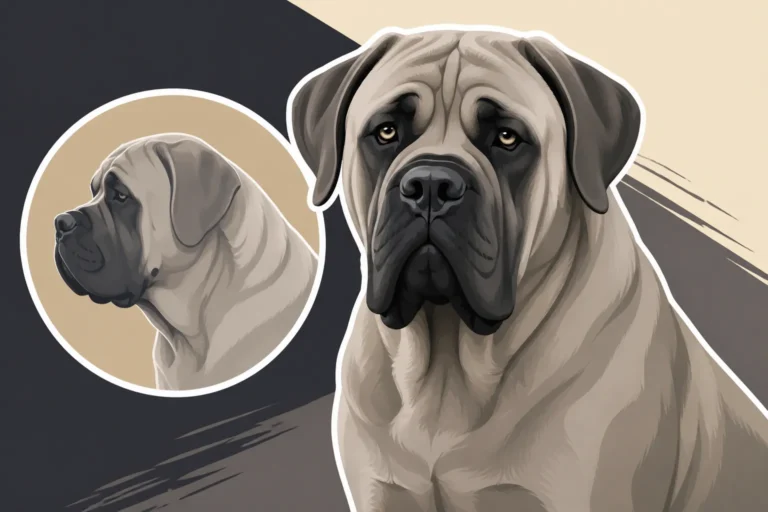
The Neapolitan Mastiff is perhaps the more immediately recognizable of the two due to its absolutely profuse, loose skin. This breed is defined by its dramatic folds and wrinkles, particularly around the head, neck, and dewlap, which hang in heavy drapes. They tend to be slightly shorter in stature than the English Mastiff, typically ranging from 24 to 31 inches at the shoulder, but they are often heavier boned and more compact, giving them a truly massive, almost lumbering appearance. Weights typically range from 110 to 150 pounds for females and 150 to 200 pounds for males, though some can exceed this.
Their coat is short, dense, and typically blue, black, mahogany, or tawny, with minimal or no brindle. The loose skin isn't just for show; it's a historical feature that protected them from attacks. This extreme skin, however, comes with its own set of care requirements, which we'll delve into later. Their eyes are often deeply set within their folds, giving them a serious, somewhat somber expression that perfectly matches their protective nature. To understand another breed's skin, compare this with How a Neapolitan Mastiff's Skin Differs.
| Feature | English Mastiff | Neapolitan Mastiff |
|---|---|---|
| Typical Height | 27-30+ inches at shoulder | 24-31 inches at shoulder |
| Typical Weight | 160-230+ lbs (Males), 120-170+ lbs (Females) | 150-200+ lbs (Males), 110-150+ lbs (Females) |
| Body Build | Athletic, powerful, deep-chested | Massive bone, broad, lower-slung, very heavy |
| Skin/Wrinkles | Moderate wrinkles on face, slight dewlap | Profuse, loose skin, heavy folds on face and neck |
| Coat Colors | Fawn, apricot, brindle (always with dark mask) | Blue, black, mahogany, tawny (can have brindle) |
| Overall Impression | Dignified, noble, gentle giant | Formidable, serious, ancient guardian |
Temperament: Gentle Giants vs. Serious Guardians
Both breeds are known for their protective instincts and loyalty, but the way they express these traits can differ significantly, largely due to their historical roles. It's crucial to understand these nuances, especially if you have children, other pets, or frequent visitors.
The English Mastiff's Docile Devotion
The English Mastiff is often hailed as a "gentle giant," and for good reason. They possess a remarkably calm, docile, and affectionate temperament, especially with their immediate family. They bond deeply with their people and crave companionship, often described as wanting to be a "lap dog," despite their massive size. They are typically good with children, displaying patience and a protective instinct that makes them watchful guardians without being overly reactive. Many owners will attest that A Mastiff in a House With Small Children is a natural fit, provided the children are taught respect.
However, their protective nature means they are often reserved with strangers. They rarely bark without reason but will place their massive bodies between their family and perceived threats. They are not typically aggressive but are formidable deterrents simply by their presence. Early and consistent socialization is paramount to ensure they are well-adjusted and confident, rather than fearful or overly shy. Training them before they outweigh you is essential, as a fully grown Mastiff has incredible strength. Their stubbornness, often misidentified as slowness, is actually a sign of their deliberate thought process, as discussed in The Stubbornness That Is Actually a Mastiff Thinking.
The Neapolitan Mastiff's Reserved Vigilance
The Neapolitan Mastiff takes its guardian role very, very seriously. They are intensely loyal and affectionate with their family, but their affection often comes with a strong sense of purpose: protecting their loved ones. With strangers, they are typically aloof, suspicious, and can be quite intimidating. This isn't aggression for aggression's sake, but a deep-seated instinct to guard their territory and people. They need a confident, experienced owner who understands and can manage their strong protective drives.
Socialization for a Neapolitan Mastiff must be extensive and ongoing, introducing them to a wide variety of people, places, and sounds from a young age. Without it, they can become overly wary or fearful, which can lead to reactivity. They are generally not recommended for first-time dog owners due to their strong will and guarding instincts. While they can coexist with children in their family, supervision is always essential due to their sheer size and potential for accidental knocks. They tend to be quieter and less demonstrative than many breeds, observing their surroundings with a keen, watchful eye. Their natural inclination to guard means they will put themselves between you and a stranger, a topic detailed in Why a Mastiff Puts Itself Between You and a Stranger.
Health, Lifespan, and Care Considerations
Both of these magnificent breeds come with significant health considerations, largely due to their giant size and, in the case of the Neapolitan, its distinctive physical features. Owning either means being prepared for a potentially shorter lifespan and specific veterinary needs.
English Mastiff Health & Maintenance
Like all giant breeds, English Mastiffs are prone to certain health issues, and their lifespan is generally shorter than smaller dogs. Six to Ten Years Is What a Mastiff Gets is a realistic expectation. Common concerns include hip and elbow dysplasia, Bloat in the Deepest Chest of Any Breed: the Mastiff, various cancers, and heart conditions. Reputable breeders will perform comprehensive health screenings on their breeding stock to minimize the risk of passing on genetic conditions. These include OFA certifications for hips and elbows, cardiac exams, and eye certifications. You can check out The Four CHIC Tests a Mastiff Breeder Must Clear for more details.
Daily care involves managing their substantial drool (yes, they drool!), cleaning facial folds to prevent skin infections, and ensuring proper nutrition to support their large frames without encouraging excessive growth in puppies. They need a quality large-breed dog food, and many owners supplement with joint care products you can find at places like Chewy. Regular vet check-ups are critical, and owners should be vigilant for any signs of discomfort or changes in behavior. Their short coat is relatively low maintenance, but regular brushing helps manage shedding.
Neapolitan Mastiff Health & Maintenance
The Neapolitan Mastiff shares many of the general giant breed health concerns like hip and elbow dysplasia, heart issues, and bloat. However, their unique physical characteristics introduce additional challenges. The extensive skin folds require meticulous daily cleaning to prevent bacterial or yeast infections (pyoderma). These folds can trap moisture and debris, leading to irritation and odor if not properly cared for. The Wrinkles and Folds a Mastiff Owner Cleans Every Week is a crucial read for Neo owners.
Cherry eye and entropion/ectropion (eyelid abnormalities) are also more prevalent due to their heavy facial skin, often requiring surgical correction. Their sheer mass also puts extra strain on their joints, making careful exercise management, especially during puppyhood, vital. Nutrition is also paramount, similar to the English Mastiff, focusing on slow, steady growth for puppies. A robust supply of cleaning wipes and specialized shampoos, available from retailers like Chewy, will become a staple in a Neo owner's home. Given their complex health profile, it's wise to consider pet insurance, as discussed in What Insuring a Mastiff for Its Six to Ten Years Costs.
Training and Exercise: Guiding a Gentle Giant
Training these massive dogs is less about brute force and more about consistent, positive reinforcement. Their size alone dictates that they must be well-mannered and controllable. Exercise needs, while surprisingly moderate for such large dogs, must also be approached carefully to protect their developing joints.
Training the English Mastiff
Training an English Mastiff should begin the moment they come home as a puppy. Their sheer size means that even minor behavioral issues can become major problems as an adult. Leash training is paramount; while they are not known for being high-energy, a fully grown Mastiff can easily pull an unprepared adult off their feet. A Mastiff Does Not Pull You Over, It Simply Stops describes their typical walking style, but proper leash manners are still essential. Positive reinforcement, patience, and consistency are key. Harsh corrections are counterproductive for this sensitive breed, as highlighted in Why Harsh Correction Ruins a Mastiff.
Their exercise needs are moderate. Adult Mastiffs typically need one good walk a day, perhaps 30-60 minutes, and playtime in a secure yard. They are not built for endurance or high-impact activities. Over-exercising a Mastiff puppy can be detrimental to its developing joints, so controlled, gentle play is preferred. The Mastiff Puppy You Are Not Allowed to Exercise provides critical guidance on this.
Training the Neapolitan Mastiff
Training a Neapolitan Mastiff requires an even higher degree of confidence, consistency, and understanding of their protective nature. They are intelligent but can be independent thinkers. Early and intensive socialization is non-negotiable to ensure they develop into confident, well-adjusted adults rather than fearfully aggressive ones. Obedience training must be firm but fair, always using positive reinforcement. Given their strong guarding instincts, a professional trainer experienced with guardian breeds can be invaluable.
Their exercise needs are similar to the English Mastiff—moderate. They enjoy a daily walk and time in a securely fenced yard, but they are not jogging companions. Again, strenuous exercise during puppyhood should be avoided to protect their heavy joints. Due to their imposing size and inherent protectiveness, they are generally not suitable for dog parks. Instead, controlled encounters with known, stable dogs are preferred to maintain their socialization.
Living With a Mastiff vs. a Neapolitan Mastiff
Bringing either of these breeds into your home means making significant adjustments to your living space, routine, and budget. These aren't dogs that just fit in; they require dedicated planning and commitment.
The Realities of English Mastiff Ownership
Living with an English Mastiff means sharing your space with a dignified, affectionate, and sometimes clumsy giant. They need plenty of indoor space, as they are not outdoor dogs, and a comfortable, orthopedic bed is a must to protect their joints. Because A Mastiff Lying Two Hundred Pounds on One Elbow All Day can lead to calluses and discomfort, multiple beds around the house, easily sourced from Chewy, are a good idea. Drool is a fact of life, and you'll become accustomed to having towels strategically placed. They thrive on being part of the family and do not do well with isolation.
Their sheer size also impacts practicalities like vehicle choice and veterinary care. Not all standard veterinary clinics are equipped to handle a dog of this magnitude, both in terms of lifting equipment and appropriate dosage knowledge. Finding a vet comfortable with giant breeds is essential. While they are usually quite calm indoors, they still require adequate mental stimulation and interaction to prevent boredom.
The Realities of Neapolitan Mastiff Ownership
A Neapolitan Mastiff brings a very different dynamic to the home. Their intense loyalty and protective nature mean they will be constantly aware of their surroundings. You need to be prepared for their aloofness towards strangers and be diligent in managing their interactions with the outside world. Their extreme drooling and the need for daily wrinkle cleaning means a significant commitment to hygiene. Walls, floors, and even ceilings can bear the marks of a head shake, a phenomenon affectionately termed Drool Physics and the Mastiff Head Shake.
Like the English Mastiff, they need substantial indoor space and multiple orthopedic beds. Because of their guarding instincts, a securely fenced yard is non-negotiable, and they should never be left unsupervised with strangers or unknown dogs. Owners must be prepared for the extra veterinary challenges associated with their unique skin folds and potential eye issues. Their appearance, while striking, comes with ongoing care demands that are often more intensive than those of the English Mastiff.
Making Your Choice: Which Giant Is Right For You?
Choosing between the English Mastiff and the Neapolitan Mastiff is a deeply personal decision that should be made with a clear understanding of what each breed demands. Both are incredible dogs, but they are certainly not for everyone.
The English Mastiff is generally a better fit for families or individuals looking for a truly gentle giant with a somewhat more approachable demeanor, albeit still a serious guardian. They are incredibly loving and loyal, adapting well to family life, and while they require significant commitment in terms of space and care, their needs are perhaps less specialized than the Neapolitan. Their protective nature is more observational and less overtly territorial, making them slightly easier to integrate into diverse social situations with proper socialization. If you're ready for the commitment, but prefer a dog whose primary 'job' is family companionship and presence, the English Mastiff might be your perfect match.
The Neapolitan Mastiff is for the experienced, confident dog owner who truly understands and appreciates the intense guarding instinct and unique physical care requirements of the breed. They thrive in a structured environment with clear leadership and consistent training. Their aloofness with strangers is a feature, not a bug, and potential owners must be prepared to manage this diligently. If you are seeking a formidable, ancient guardian whose devotion is absolute and whose appearance is truly singular, and you are prepared for the intensive daily care of their skin and eyes, then the Neapolitan Mastiff could be the profound companion you're looking for.
Ultimately, both breeds offer an unparalleled bond and the unique experience of sharing your life with a true canine giant. Your choice hinges on your lifestyle, experience, and willingness to meet the specific demands of these magnificent animals.
Disclaimer
This article is for general informational purposes only and does not constitute professional advice. Laws, prices and regulations vary by location and change over time. Consult a qualified professional for guidance on your specific situation.