What a Mastiff Did at Agincourt in 1415
There's a persistent, heartwarming tale in the Mastiff world, one that gets passed around at dog shows and breeder gatherings, about a brave Mastiff who stood by its fallen master on the brutal fields of Agincourt. It paints a vivid picture of loyalty and unwavering devotion amidst unimaginable chaos. But how much of this legendary account is truly rooted in historical fact, and what does it tell us about the Mastiff's ancient spirit? This guide will delve into the historical context of medieval warfare and the role of dogs, especially the Mastiff, to explore the origins and plausibility of this cherished story.
The Battlefield of Agincourt: A Brutal Reality
To understand the legend, we first need to understand the stage upon which it supposedly unfolded: the Battle of Agincourt in 1415. This wasn't a neatly choreographed affair but a terrifying, muddy, and incredibly violent clash of armies.
Setting the Scene: France, 1415
Imagine northern France in the early 15th century, a land torn by the Hundred Years' War. King Henry V of England had laid siege to Harfleur, and after a costly victory, was attempting to march his exhausted, diseased, and vastly outnumbered army through enemy territory to Calais. The French forces, much larger and better-rested, intercepted them near the village of Agincourt. The battlefield itself was a narrow strip of recently ploughed land, flanked by dense woods, which would play a crucial role in the battle's outcome. It was a miserable, wet autumn, and the ground was a churned-up quagmire, making movement incredibly difficult for armored knights.
The English army, comprising a small core of heavily armoured knights and a much larger contingent of longbowmen, faced a French host dominated by heavily armored cavalry and foot knights. The conditions were ripe for carnage, with the English using their archers' devastating arrow storms and the narrow terrain to their advantage against the less organized French charges. It was a day of mud, blood, and a desperate struggle for survival, where many nobles on both sides met their end, often drowned in their heavy armor in the deep mud, or suffocated under piles of bodies. How Roman Troops Brought Mastiffs to England
The Nature of Medieval Warfare
Medieval warfare was a far cry from modern combat. It was often a series of sieges, skirmishes, and pitched battles that could last for hours, sometimes even days, until one side broke. Hand-to-hand combat was the norm, with swords, axes, maces, and spears being the primary weapons. The sight, sound, and smell of battle were overwhelming – the clang of steel, the screams of men and horses, the dust, and the pervasive scent of blood and fear. There was little to no concept of humanitarian aid for the wounded on the battlefield itself; those who fell were often at the mercy of their opponents or the elements.
Knights, like Sir Piers Legh, were central figures, often leading their retinues into the thickest fighting. Their heavy armor provided protection but also limited their mobility, especially on a muddy field. Communication was difficult, command structures could easily break down, and individual acts of bravery or despair were common. It was a brutal, personal, and chaotic experience, where survival often depended on sheer luck, strength, and the steadfastness of one's companions.
The Role of Dogs in Medieval Society
Dogs, especially large, powerful breeds, were integral to medieval life, not just for companionship but for practical purposes. They served as hunters, herders, and guardians. Large 'bandogges' or 'mastiff-type' dogs were highly valued for their strength and protective instincts. They guarded livestock, homes, and even castles. Their presence was a deterrent to both human intruders and wild animals. It wasn't uncommon for dogs to accompany their masters on journeys or even to battle, acting as camp guardians, helping with scouting, or simply offering comfort during long, arduous campaigns.
While not typically deployed as front-line combatants in the same way warhorses were, their sheer presence and intimidating appearance could certainly play a psychological role. They were companions, often fiercely loyal, and their capabilities were well-understood in a society that relied heavily on animals for labor and protection. However, the chaos of a pitched battle like Agincourt would have presented significant challenges for any animal not specifically trained for such extreme conditions. [The Ancient Lineage of the Mastiff]
Mastiffs in Medieval England: More Than Just Pets
The Mastiff, or rather the ancient precursors to what we recognize as the modern Mastiff, had a long and storied history in England long before the Battle of Agincourt. They weren't just lounging by the fire; they were working dogs of considerable renown.
The Ancient Lineage of the Mastiff
The roots of the Mastiff trace back thousands of years to the ancient Molosser dogs of Asia, brought to Britain by various invaders and traders. These were large, powerful dogs, often described as war dogs, guardians, and protectors. The Romans, upon invading Britain, reportedly marvelled at the ferocity and size of the native British dogs, even taking some back to Rome to fight in arenas. These early 'Mastiff-type' dogs were distinct from smaller hunting dogs and were bred for their impressive physical attributes and guarding instincts.
By the medieval period, these dogs were well-established across the British Isles. They were known as 'bandogges' (tied dogs) because they were often chained by day and loosed at night to guard property. They were robust, formidable animals, perfectly suited to the demands of a time when personal and property security often relied on strong, brave dogs. The characteristics that define the modern Mastiff – its immense size, powerful build, and inherent guarding nature – were already very much present in its medieval ancestors. Where the Mastiff Came From Before Britain
Working Roles of Mastiffs Before Agincourt
Before Agincourt, Mastiff-type dogs performed a variety of crucial roles that went far beyond mere companionship. They were estate guardians, protecting manor houses, castles, and their inhabitants from raiders and wolves. Their imposing presence alone was a significant deterrent. They were also used for hunting large game like wild boar and bears, where their strength and courage were indispensable in bringing down dangerous prey. These were not pampered pets but working animals integral to the safety and sustenance of medieval communities.
Furthermore, they were sometimes employed in various forms of baiting, though this practice, thankfully, declined over time. The key takeaway is that these dogs were valued for their physical capabilities, their loyalty, and their protective instincts. They were bred and kept for purpose, a purpose that often involved facing danger and guarding their charges with their lives. The English Castles Mastiffs Guarded
Early Military Applications of Canines
While the direct use of Mastiff-type dogs as offensive weapons on the battlefield was more prevalent in ancient times (think the Assyrians or even early Roman legions using Molossers with spiked collars), their role had evolved by the 15th century. Dogs were not typically used as frontline shock troops at Agincourt. However, throughout history, dogs have served in various military capacities. They were used by scouts, to carry messages, and as camp sentries, providing an early warning system against nocturnal raids or approaching enemies.
Their acute senses of smell and hearing made them invaluable for detecting danger long before humans could. While the image of a Mastiff charging alongside a knight into the main fray might be romantic, the practicalities of medieval battle suggest a more nuanced role. Their value would have been in their intelligence, their ability to scent out hidden foes, and their unwavering loyalty to their handlers in the often chaotic and dangerous environment of a military encampment. Whether Mastiffs Were Used as War Dogs
The Legend of Sir Piers Legh and His Faithful Mastiff
Now we arrive at the heart of the matter: the celebrated legend that intertwines the Mastiff with the iconic battle of Agincourt. This is the story that resonates deeply with Mastiff enthusiasts and speaks to the breed's legendary loyalty.
The Story as It's Often Told
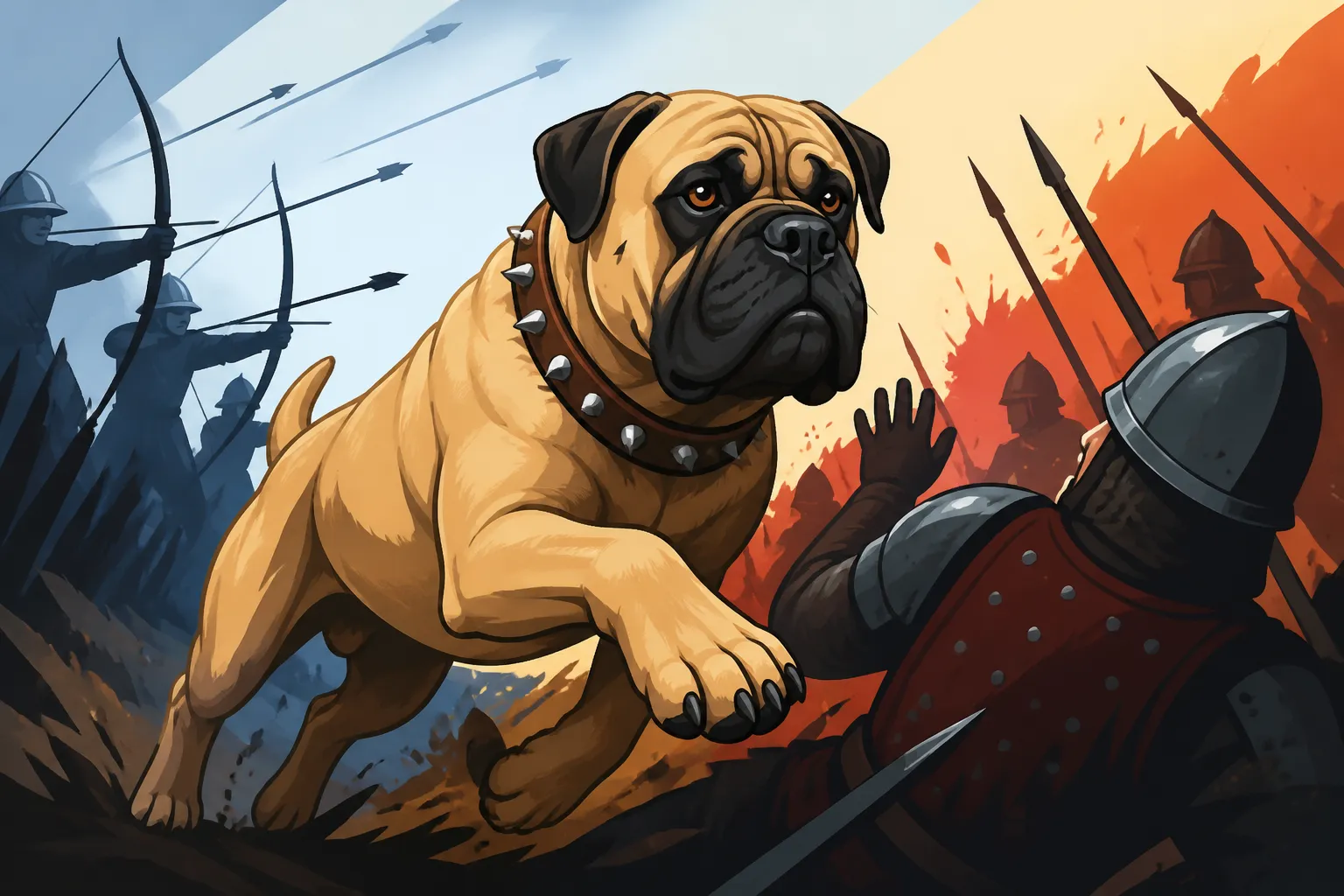
The legend recounts that Sir Piers Legh, a knight from Lyme Hall in Cheshire, rode into the Battle of Agincourt with his loyal Mastiff by his side. During the ferocious battle, Sir Piers was grievously wounded, falling from his horse. As he lay on the muddy field, helpless and perhaps left for dead, his faithful Mastiff stood guard over him, protecting him from scavengers, looters, and further harm. The dog reputedly remained by his master's side throughout the night and into the next day, until Sir Piers was eventually found and rescued. The story often ends with the Mastiff being brought back to England and becoming the progenitor of the famous Lyme Hall Mastiff line, a strain renowned for its purity and influence on the breed. Who Sir Piers Legh Was to the Mastiff
This tale paints a beautiful picture of canine devotion, a steadfastness that cuts through the brutality of war. It's a powerful narrative, offering a moment of poignant humanity amidst the widespread slaughter. For many, it encapsulates the very essence of the Mastiff: a gentle giant, fierce in protection when needed, and utterly devoted to its family.
Sir Piers Legh: A Knight of Agincourt
Sir Piers Legh was a real historical figure. He was indeed a knight from Lyme Hall who fought at the Battle of Agincourt in 1415. Historical records confirm his presence at the battle and that he was severely wounded there. Family histories and legends suggest he was left for dead on the field but was later discovered and brought back to his estates, where he eventually recovered, albeit with lasting injuries. This much of the story aligns with documented history, adding a layer of credibility to the core narrative of a knight wounded at Agincourt.
The Legh family of Lyme Hall were indeed prominent landowners, and their estate became synonymous with the Mastiff breed due to their long-standing and influential breeding program. The idea that a specific event, like the rescue of Sir Piers, could kickstart or significantly influence such a breeding line is certainly compelling. It grounds the legend in a tangible historical lineage, making it all the more captivating for those who appreciate the breed's heritage.
Examining the Historical Evidence
While the core facts of Sir Piers Legh's participation and wounding at Agincourt are documented, the specific detail of his Mastiff guarding him on the battlefield is primarily anecdotal and forms part of the Legh family lore, rather than being recorded in official historical accounts of the battle. This isn't unusual for such personal details from that era; extensive written records of individual soldiers' experiences, let alone their dogs, are rare. Historical documents tend to focus on broader military movements, noble casualties, and the political implications of battles.
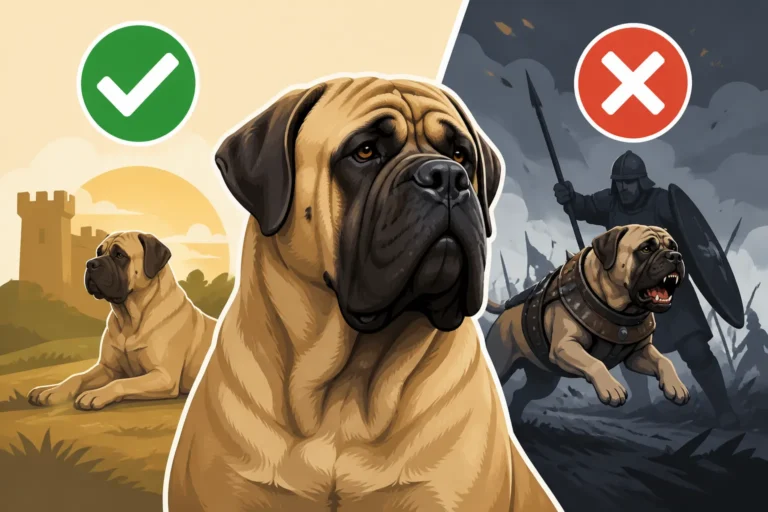
The legend gained significant traction later, particularly as the Mastiff breed became more formalized and its history was celebrated. It is entirely plausible that a loyal dog would have followed its master to war or guarded him if he fell. However, to state it as a verified historical fact requires contemporary written evidence that simply does not exist. It's important to distinguish between cherished family legend and verifiable historical record. Whether the Agincourt Mastiff Story Is Documented The power of the story lies not necessarily in its absolute historical certainty, but in its resonance with the perceived character of the Mastiff breed.
Here's a quick comparison of general medieval dog roles versus the Agincourt legend:
| Aspect | General Role of Dogs in Medieval Warfare | Agincourt Mastiff Legend |
|---|---|---|
| Primary Function | Guarding camps, hunting, companions, early warning | Protecting fallen master on active battlefield |
| Deployment | Likely away from main combat, in camps/on journeys | Directly in the immediate aftermath of combat |
| Training Required | Basic obedience, guarding, hunting skills | Extraordinary loyalty, courage, field awareness |
| Historical Verification | Documented in general historical accounts | Primarily family legend, anecdotal |
| Impact on Breed | Contributed to the development of powerful breeds | Formative story for the Lyme Hall Mastiff line |
| Nature of Role | Practical and diverse | Singular act of unwavering devotion |
The Practicalities of a Mastiff on the Agincourt Field
While the legend is compelling, it's also worth considering the immense practical challenges a dog would face on such a battlefield.
The Chaos and Logistics of Battle
Picture the scene at Agincourt: thousands of heavily armed men, horses charging, arrows raining down, cannons occasionally firing (though less effectively than later centuries), the ground a treacherous mix of mud and bodies. The noise would have been deafening, the smells overpowering, and the movements utterly unpredictable. In such an environment, keeping a large dog under control, let alone directing it to guard a specific fallen individual amidst the ongoing fight or its immediate aftermath, would have been incredibly difficult. Dogs, even highly trained ones, can be spooked by such sensory overload. A dog reacting instinctively to danger might flee, or conversely, become aggressive in an uncontrollable way.
Furthermore, the logistics of supplying an army meant that every resource, including food, was precious. Feeding a large Mastiff throughout a long campaign would have been an additional burden. While medieval soldiers certainly had personal dogs, bringing a large breed like a Mastiff directly into the front lines of a major battle seems less likely from a purely practical standpoint. They were more suited to supporting roles away from the direct, sustained combat.
Protection and Companionship on Campaign
Beyond the heat of battle, dogs undoubtedly provided invaluable companionship and protection during long medieval campaigns. Knights and soldiers spent months, sometimes years, away from home. A dog would have been a comforting presence, easing the loneliness and stress of military life. On the march, a large dog could deter highwaymen or wild animals, offering an additional layer of security to a travelling party. At night, in encampments, their keen senses would have been an early warning system against intruders or enemy scouts.
It's very probable that Sir Piers Legh, like many knights of his era, had dogs that accompanied him on his campaigns. These dogs would have been loyal companions and useful guardians of his tent and possessions. So, the presence of a Mastiff-type dog with a knight on campaign is not far-fetched at all. The question simply becomes whether that dog remained a companion and camp guardian, or played the specific, dramatic role described in the Agincourt legend. Why a Mastiff Was Chained by Day
The Unsung Roles of Camp Dogs
The roles of dogs in medieval military settings extended beyond just guarding individuals or property. They would have been part of the broader camp ecosystem. They might have helped keep rats and other vermin under control, a vital function in preventing disease in crowded encampments. They could have been used to track game for supplementary food, or even to track lost soldiers or enemy movements. While not glamorous, these 'unsung' roles were crucial for the overall well-being and security of the army.
Even if the Agincourt legend is more symbolic than literal, it certainly captures the deep bond that would have existed between a knight and his canine companion. The sheer usefulness and loyalty of dogs would have made them indispensable members of any medieval retinue, whether on the battlefield or in the domestic setting of a manor.
Legacy and Symbolism: What the Mastiff Represents
Regardless of its absolute historical veracity, the Agincourt legend has deeply influenced the perception and history of the Mastiff breed.
The Enduring Power of the Agincourt Legend
The story of Sir Piers Legh's Mastiff has transcended its origins as a family tale and become a cornerstone of Mastiff lore. It's taught to new owners, cited by breeders, and widely shared amongst enthusiasts as a testament to the breed's noble character. This enduring power comes from its ability to perfectly encapsulate the protective, loyal, and steadfast qualities for which Mastiffs are renowned. It’s a narrative that appeals to the heart, speaking to the deep, almost primal bond between humans and their dogs, especially those breeds bred for guardianship.
This legend helps define the Mastiff's identity, positioning it not just as a large dog, but as a dog with a heroic past, imbued with an ancient spirit of devotion. For many, it's a key part of What the Mastiff Club of America Offers a Buyer and its efforts to preserve and celebrate the breed's heritage. The tale serves as a powerful reminder of the deep history of canine companionship and the extraordinary loyalty these animals can offer.
The Mastiff as a Symbol of Loyalty
Beyond the specific battle, the Mastiff has become an archetype of loyalty and guardianship. Its formidable size and calm demeanor, coupled with an inherent protective instinct, make it a natural symbol of steadfast devotion. Owners often describe their Mastiffs as "shadows," quietly following them from room to room, always aware of their presence and ready to intervene if a perceived threat arises. This isn't just a modern phenomenon; it's a trait that has been valued in Mastiff-type dogs for centuries. The Mastiff That Stood Over Sir Piers Legh at Agincourt
The Agincourt story reinforces this image, portraying the Mastiff as the ultimate protector, willing to brave the horrors of a battlefield to shield its master. It speaks to an unwavering commitment that resonates with human ideals of fidelity and courage. This symbolism is perhaps more important than historical precision, as it continues to shape how we understand and appreciate this magnificent breed today.
Modern Perceptions vs. Historical Realities
While the romantic image of the Mastiff guarding its knight is powerful, it's essential to balance modern perceptions with historical realities. The Mastiffs of 1415, while undoubtedly large and formidable, would have looked somewhat different from today's highly refined show dogs. They were working animals, bred for function over strict aesthetic standards, often leaner and perhaps more rugged in appearance. Their lives were undoubtedly harder, and their training would have been geared towards practical utility in a much harsher world.
Today, Mastiffs are primarily cherished family companions, though their guarding instincts remain. We value their calm temperament, their patience with children, and their imposing presence as a deterrent. The Agincourt legend serves as a bridge, connecting our modern Mastiffs back to their ancient, heroic roots, reminding us of the enduring qualities that have made this breed a beloved guardian for centuries. It's a testament to the fact that some stories, even if embellished by time, capture a fundamental truth about a breed's soul.
Disclaimer
This article is for general informational purposes only and does not constitute professional advice. Laws, prices and regulations vary by location and change over time. Consult a qualified professional for guidance on your specific situation.