Whether Two People Are Needed to Trim a Mastiff’s Nails
The sheer size and incredible strength of a Mastiff can make routine care tasks feel like a Herculean effort, and trimming those formidable claws is often at the top of that list. Many owners find themselves wrestling with a dog that outweighs them by a hundred pounds or more, wondering if they're doing it right, or even can do it alone. This guide will dive deep into the realities of Mastiff nail trims, exploring when a second set of hands is essential for safety and sanity, and how to approach the task even if you're flying solo.
The Unique Challenges of Mastiff Nail Trims
Trimming a Mastiff's nails isn't just about grabbing a pair of clippers and going for it. Their impressive size and often sensitive nature create a unique set of hurdles that owners of smaller breeds rarely encounter. It's a task that demands patience, preparation, and often, an extra pair of hands.
Size and Strength of a Mastiff
Let's be real, a Mastiff isn't just a big dog; it's a massive dog. We're talking about an animal that can easily tip the scales at 150 to over 200 pounds, sometimes even more. When a creature of that size decides it doesn't want its nails trimmed, it doesn't just wiggle a little; it can become an immovable object or a surprisingly powerful force. Trying to physically restrain a Mastiff safely while also manipulating a paw and operating a nail clipper can be incredibly difficult, if not downright dangerous. Imagine trying to hold a squirming toddler with one hand while trying to cut their fingernails with the other – now multiply that challenge by about fifty.
Their sheer weight means that if they decide to pull away, you could easily lose your balance, or worse, they could injure themselves or you. The strain on your back, knees, and arms is significant. Even if your Mastiff is usually a gentle giant, a sudden lurch can send a paw flying, leading to an accidental nick of the quick or even a serious injury. It's not about malice; it's simply the physics of handling such a large, powerful animal. You quickly realize that the strategies you used for a Labrador or a Golden Retriever just don't scale up. Thinking about how challenging it can be just to Whether a Mastiff Can Be Lifted at All makes you appreciate the difficulty of holding them steady for a precise task like nail trimming.
Fear and Resistance in Large Breeds
Mastiffs, despite their formidable appearance, are often incredibly sensitive souls. They pick up on our stress, and a negative experience can linger far longer than you'd expect. If a nail trim becomes a struggle, if they get hurt, or if they simply feel overwhelmed, their natural resistance can escalate into genuine fear. This isn't stubbornness in the way some breeds are stubborn; it's often a deep-seated apprehension. A Mastiff that decides it's afraid of the clippers or the process can plant its massive feet and become utterly unmovable.
Once that fear sets in, future trims become exponentially harder. They might hide, shy away from their paws being touched, or even try to snap or growl – not out of aggression, but out of self-preservation. It's crucial to understand The Sensitivity Nobody Expects in a Two Hundred Pound Mastiff when approaching any grooming task with them. Their immense size means that any show of fear or discomfort is amplified, making gentle, consistent handling from puppyhood absolutely paramount. Without a positive foundation, you can quickly find yourself in a situation where every nail trim is a battle, further solidifying their negative associations.
The Elusive Quick and Avoiding Pain
One of the biggest anxieties for any dog owner during a nail trim is hitting the quick. This is the living part of the nail, containing blood vessels and nerves, and cutting it is painful and can cause bleeding. For Mastiffs, especially those with dark nails, locating the quick can be incredibly challenging. You might be trimming what appears to be a safe amount, only to have your dog yelp and pull away.
A single painful experience can set back weeks or months of positive conditioning. Your Mastiff remembers. They remember the sting, the surprise, and the blood. Future attempts will be met with increased resistance, making an already difficult task nearly impossible. The consequences of hitting the quick extend beyond just the immediate pain; it erodes trust and makes the dog dread the clippers. This is particularly problematic because neglecting nail trims isn't an option for such heavy dogs. Overly long nails can splay their toes, put undue stress on their joints, and contribute to painful gait issues, especially considering What Bare Floors Do to a Growing Mastiff. It's a delicate balance of careful trimming and making sure the experience remains as positive as possible to prevent a cycle of fear and pain.
When Two People Are a Lifesaver
For many Mastiff owners, the idea of a two-person nail trim isn't a luxury; it's a necessity. It transforms a potentially stressful and dangerous wrestling match into a manageable, safer, and often quicker task for everyone involved.
Roles and Responsibilities of Each Person
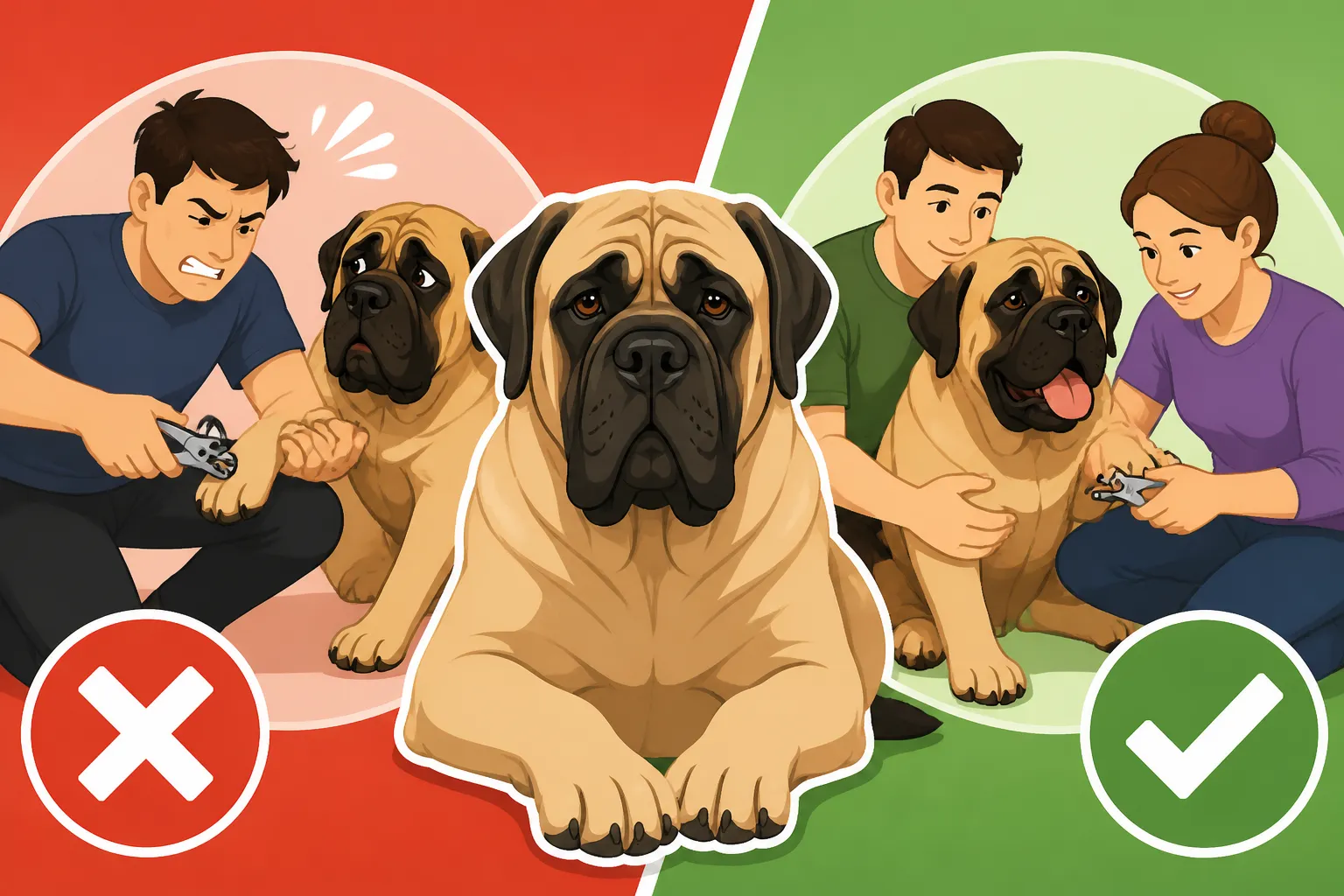
When you have a second person, you can effectively divide and conquer. Typically, one person takes on the crucial role of "handler" or "comforter," while the other is the "trimmer." The handler's job is paramount: their primary focus is the Mastiff's comfort and emotional state. This person is responsible for keeping the dog calm, offering continuous verbal praise in a soothing voice, and, most importantly, providing high-value treats. Think peanut butter on a lick mat, a frozen Kong, or a steady stream of their absolute favorite soft treats. Their hands are free to gently pet and reassure, maintaining a calm connection with the dog. They might also provide gentle, steady physical support, like leaning against the dog's side to prevent shifting, or having an arm draped over their back.
The trimmer, on the other hand, can then fully concentrate on the technical aspect of the job. Their hands are free to carefully position the paw, examine each nail for the quick, and make precise cuts. They don't have to worry about the dog squirming or trying to pull away, as the handler is managing that. This division of labor not only makes the process more efficient but significantly safer. It reduces the chance of accidental nicks and ensures that the Mastiff feels supported and distracted rather than restrained and afraid. It’s a team effort that leverages two sets of skills for the best possible outcome.
Safety and Stress Reduction for Everyone
Having two people fundamentally elevates the safety of the nail trimming process. For the Mastiff, it means a calmer, less physically forceful experience. The handler's presence and constant positive reinforcement help to mitigate anxiety, making the dog less likely to panic or struggle. This significantly reduces the risk of accidental injury caused by sudden movements, both for the dog (like a quick cut or a pulled muscle) and for the humans involved (like being knocked over or receiving a scrape). When you're dealing with a couple hundred pounds of dog, even an unintended bump can cause problems.
For the humans, it alleviates immense physical strain and mental stress. No longer are you trying to contort your body to hold a giant paw, balance the dog, and accurately use clippers all at once. The physical burden is shared, making it much more comfortable for both people. Mentally, the pressure is off. You can focus on your specific role, knowing your partner has the other aspect covered. This leads to a more relaxed atmosphere overall, which your sensitive Mastiff will absolutely pick up on. This reduced stress is invaluable, creating a more positive association with nail trims over time, which can ultimately lead to a more cooperative Mastiff. Sometimes, if a Mastiff has developed significant apprehension, even seeking guidance from a professional trainer can be beneficial, especially if you're exploring methods like Whether a Mastiff Needs a Professional Trainer.
Handling a Reluctant or Uncooperative Mastiff
Let's face it, not every Mastiff walks onto the grooming table with a wagging tail. Some might have had bad experiences, others might just be naturally wary, and then there are the ones who simply don't feel like cooperating today. This is where a second person moves from being "helpful" to "essential." For a truly reluctant Mastiff, one person can gently but firmly provide stability, ensuring the dog doesn't bolt or flail, while the other works quickly and efficiently on the nails. This isn't about brute force; it's about providing a steady presence and preventing escalation.
For example, if your Mastiff tries to pull their paw away, the handler can calmly and gently hold them close, perhaps with a soft arm around their body, while continuing to offer treats and praise. The trimmer can then take a moment, re-evaluate, and try again, without the added stress of also trying to manage the dog's body. If you've got a Mastiff that tends to lie down and become a dead weight, one person can encourage them to shift or offer a treat lure, while the other is ready to work on the exposed paw. It’s about creating a controlled environment where the dog feels safe, even if they aren't thrilled about the activity. The goal is always to avoid a full-blown struggle, which can traumatize the dog and make future attempts even harder.
Strategies for Solo Mastiff Nail Trims
While two people often make nail trimming a breeze, it's not always an option. Life happens, and sometimes you're the only human around. Don't despair! With the right preparation, tools, and a heaping dose of patience, a solo Mastiff nail trim is absolutely achievable. The key is to start early and build a foundation of trust and positive association.
Desensitization and Positive Reinforcement from Puppyhood
The absolute best strategy for successful solo nail trims begins when your Mastiff is a tiny puppy. Seriously, start now. Even before they truly need their nails trimmed, begin handling their paws constantly. Gently touch their toes, rub their pads, and tap their nails. Make this a positive experience every single time with treats and praise. Get them used to the sound and feel of clippers or a Dremel even before using them. Hold the tool near their paw, let them sniff it, then offer a treat. Repeat this many times. This process, known as desensitization, helps them associate the tools and touch with good things.
When you do start trimming, do it in very short sessions. Maybe just one nail at a time, followed by a jackpot of treats and affection. The goal is to build a positive emotional response, not to get all the nails done in one go. Remember, you're competing with a deeply ingrained instinct in dogs to protect their paws. Every positive, calm experience chips away at that natural wariness. This early work on Socializing a Mastiff Puppy Before It Gets Heavy extends to all aspects of handling, including their paws. It means that by the time they are a 150-pound adult, they've hopefully learned that nail trims are just another normal, non-threatening part of life that comes with tasty rewards. Companies like Ollie, known for their focus on quality dog nutrition, also understand the importance of positive reinforcement, as good treats are often the best motivators.
Tools and Techniques for Easier Trims
Choosing the right tools can make a significant difference when you're working alone. Forget flimsy clippers; you need heavy-duty, sharp clippers designed for large, thick nails. Dull clippers crush the nail rather than cutting it cleanly, which is painful for your Mastiff and makes them more resistant. Scissor-style clippers are often preferred for their strength and control. Brands available on Chewy or Amazon offer many options, so read reviews to find ones that are sturdy and comfortable in your hand.
Another excellent option, especially for solo trims, is a Dremel or a similar rotary tool. Whether a Dremel Suits a Mastiff's Nails is a common question, and the answer is often a resounding yes. Grinding the nails down gradually, rather than cutting, allows for more control and significantly reduces the risk of hitting the quick. It's a slower process, but for a solo trimmer, it can be a game-changer. Introduce the Dremel slowly, letting your Mastiff get used to the sound and vibration before ever touching it to their nails. Again, pair it with lots of treats and praise. Some owners find that having their Mastiff lie down, perhaps with their head resting comfortably, makes it easier to access their paws while keeping them relaxed.
Positioning and Comfort for Your Mastiff
When it's just you, creating a comfortable and secure environment for your Mastiff is paramount. Don't try to force them into an awkward position that makes them feel vulnerable or unbalanced. Often, the best approach is to let them lie down in a relaxed position on a soft mat or their bed. This provides stability and often makes them feel less threatened. You can then kneel beside them, gently lifting one paw at a time.
Consider placing a non-slip mat under them, especially if you have hard floors, to prevent slipping if they do shift. Some Mastiffs do better if they're lying on their side, while others are more comfortable on their belly, allowing you to reach their back paws more easily. Experiment to find what works for your individual dog. You might find that sitting on the floor with your Mastiff resting its paw in your lap works well, or if they're particularly good at "down-stay," you can manage while they're fully extended. Always work in a quiet, calm environment free of distractions, as this helps your Mastiff remain focused and relaxed.
Maintaining Nail Health Between Trims
Trimming your Mastiff's nails isn't just a once-in-a-while chore; it's an ongoing commitment to their overall health and comfort. Regularity is key, and understanding what contributes to good nail health can save you a lot of hassle and your Mastiff a lot of discomfort in the long run.
Importance of Regularity and Short Nails
For a Mastiff, keeping nails short is absolutely vital. Their immense weight means that long nails can have a disproportionately negative impact on their joint health and posture. When nails are too long, they push back on the nail bed, forcing the toes to splay and altering the natural alignment of the paw. This puts strain on the toe joints, knuckles, and even higher up into the leg and spine. Over time, this can contribute to arthritis, pain, and an uneven gait. It's a significant factor in how comfortably your Mastiff moves, especially as they age.
Regular trims, ideally every 2-4 weeks depending on how fast your Mastiff's nails grow, prevent the quick from growing out. The quick grows with the nail, so if you only trim infrequently, the quick will be longer, making it harder to get the nails truly short without causing pain. Frequent, small trims allow the quick to recede, eventually letting you get those nails nice and tight to the paw. This not only keeps your Mastiff comfortable but also improves their traction on smooth surfaces. It's truly about preventing long-term orthopedic issues. Just think about Keeping a Mastiff's Nails Short Enough for Traction and how critical it is for their massive frame.
Environmental Factors and Activity
While regular trimming is essential, certain environmental factors and types of activity can contribute to natural nail wear. Walks on abrasive surfaces like concrete, asphalt, or rough pavement can help to grind down a Mastiff's nails between trims. If your Mastiff regularly walks on these types of surfaces, you might find their nails don't grow quite as quickly or require trimming as frequently as a dog who mostly walks on grass or soft indoor carpets.
However, it's a common misconception that simply walking your Mastiff will eliminate the need for trims entirely. Whether a Mastiff's Nails Wear Down Naturally is a complex question. While some wear does occur, for a Mastiff, it's rarely enough to keep their nails at an optimal length. Even with daily walks on pavement, their nails, especially the dewclaws (if present), will still need attention. Indoor-only Mastiffs, or those who primarily spend time on soft surfaces, will need more frequent trims. Factors like genetics, diet, and individual nail growth rate also play a role. Therefore, while encouraging walks on rougher terrain can help, it should never replace a consistent trimming schedule.
Comparison of One-Person vs. Two-Person Nail Trimming
| Feature | One-Person Nail Trim | Two-Person Nail Trim |
|---|---|---|
| Safety | Higher risk of injury to dog or handler if dog struggles. | Lower risk of injury due to divided attention and stable handling. |
| Stress Level | Can be very stressful for both dog and handler, especially if dog is resistant. | Generally lower stress for all involved, especially with good coordination. |
| Efficiency | Can be slower and more challenging; requires frequent breaks if dog is resistant. | Often quicker and more efficient, allowing for focused attention on each task. |
| Required Skills | High level of desensitization, dog cooperation, and handler dexterity. | Handler focuses on calm, comfort, and distraction; trimmer focuses on technique. |
| Best For | Highly cooperative, desensitized Mastiffs; quick touch-ups. | Reluctant or fearful Mastiffs; puppies learning; full trim sessions. |
| Equipment | Tools that offer more control (e.g., Dremel often preferred). | Standard clippers or Dremel equally effective, depending on preference. |
| Trust Building | Requires extreme patience and consistent positive reinforcement. | Easier to maintain positive associations due to shared workload and less struggle. |
Conclusion
Ultimately, the question of whether two people are needed to trim a Mastiff's nails isn't a simple yes or no. For many, it's a practical necessity that makes a challenging task significantly safer and less stressful for everyone involved. Having one person dedicated to calming and treating, while the other focuses on the precision of the trim, can be a game-changer, especially for a giant breed prone to anxiety or those who haven't had consistent early training.
However, if you're flying solo, don't despair! With diligent desensitization from puppyhood, consistent positive reinforcement, the right tools like sturdy clippers or a Dremel, and a calm approach, a single person can absolutely manage a Mastiff's nail care. The key is understanding your Mastiff's temperament, building trust, and making every nail trim a calm, rewarding experience. Whichever approach you take, remember that your Mastiff's comfort and joint health depend on those nails being kept short and tidy.
Disclaimer
This article is for general informational purposes only and does not constitute professional advice. Laws, prices and regulations vary by location and change over time. Consult a qualified professional for guidance on your specific situation.